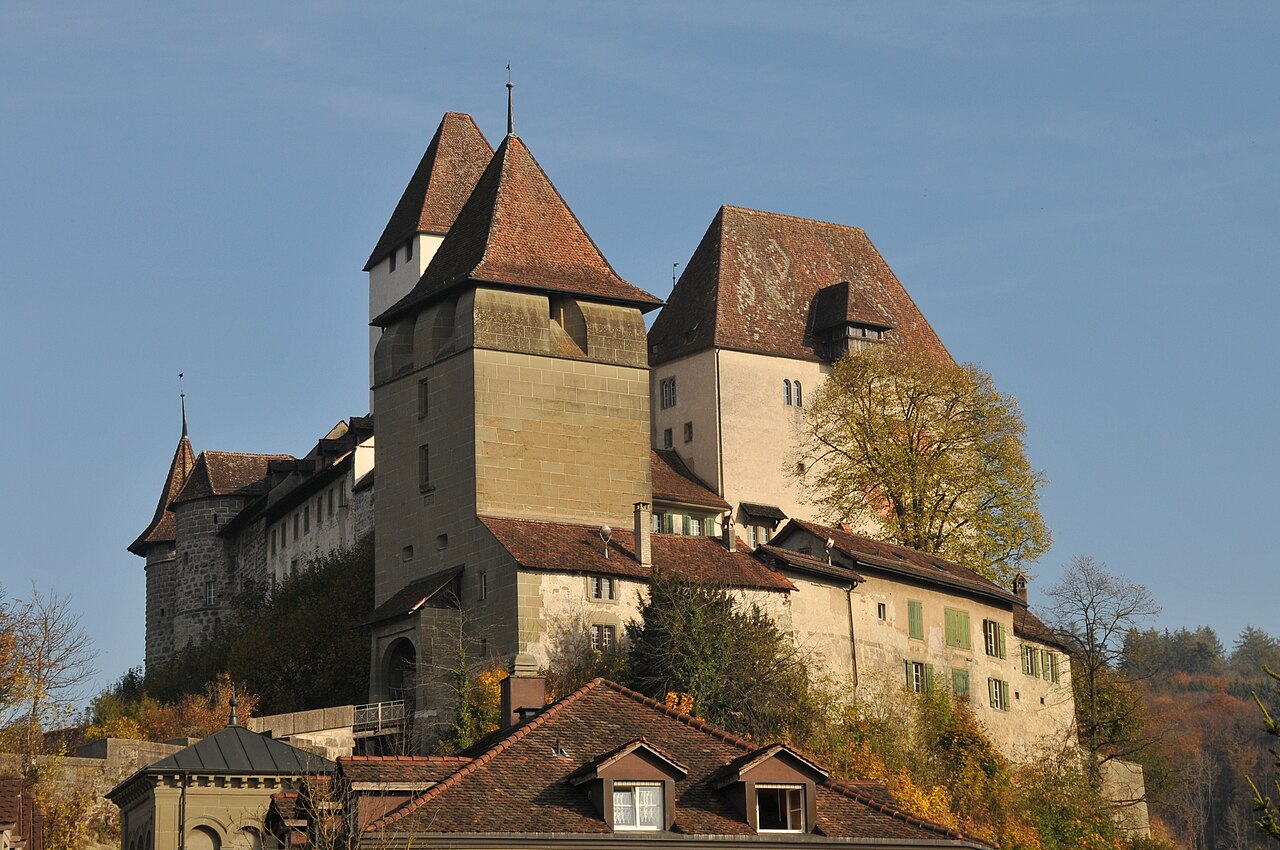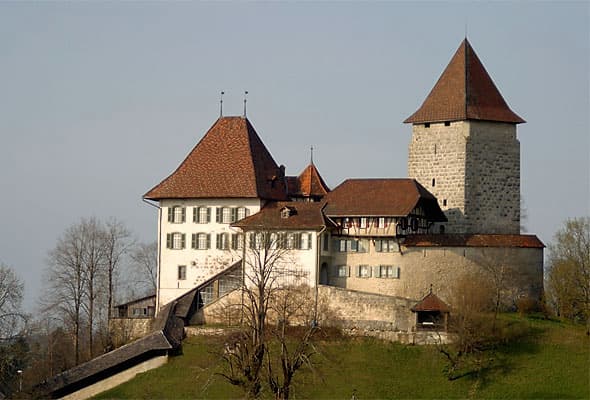
Trachselwald Castle
Trachselwald Castle is a remarkable example of a medieval hill castle located in the municipality of Trachselwald, Switzerland. With origins dating back to the 11th century, it stands as a testament to the region's feudal history and architectural evolution. The castle's strategic position overlooking the Grüene valley and the Emme River side valley provided both defensive advantages and control over the surrounding lands during the High Medieval period.
The castle's earliest recorded mention is from 1131, linked to the ruling family known as the barons of Trachselwald. While some evidence suggests a possible foundation in the 10th century, architectural and dendrochronological data support a more likely construction date in the 11th or 12th century. The castle initially belonged to a succession of noble families, including the barons of Rüti bei Lyssach and later the barons of Sumiswald. A pivotal moment in its history occurred during the Burgdorf War of 1383, when Burkhard von Sumiswald surrendered Trachselwald Castle to the forces of Bern. This led to the city's acquisition of the castle and its lands in 1408, marking Bern's first territorial expansion into the Emmental region beyond Burgdorf.
Architectural features and construction phases
The core of Trachselwald Castle is its imposing square keep, measuring approximately 10 meters on each side with walls up to 2.7 meters thick. Constructed from tuff stone cut into roughly squared blocks, the keep exemplifies High Medieval defensive architecture. The use of tuff stone indicates construction before 1200, supported by dendrochronology dating of wooden beams from 1251 to 1253. Alongside the keep, part of the main residential building was erected during this initial period, establishing the castle's fundamental layout.
Surrounding the keep was likely an elliptical ring wall, which still exists and defines the castle's distinctive silhouette. This wall encloses a well-preserved courtyard, making Trachselwald one of Switzerland's most intact medieval castles. In the 14th century, the original two-story keep was doubled in height, enhancing its defensive capabilities and residential space.
The 16th and 17th centuries saw significant expansions with the addition of a palas (a grand residential hall), a dungeon, and other buildings constructed in a Romanesque style. These additions featured larger windows and thinner walls compared to the original keep, reflecting evolving architectural trends. In 1641, a stair tower was built, attributed to a master craftsman from Prismell, featuring a Baroque upper chamber topped with a pointed "helmet" roof. A granary was added in 1683 to support the castle's logistical needs.
Renovations during the 17th and 18th centuries further shaped the palas, resulting in its current appearance. In 1751, a new decorative gatehouse was constructed alongside the establishment of a French garden, enhancing the castle's aesthetic and status as a noble residence. The castle's roofs, including those on the main tower and palas, are characterized by high-hipped designs, contributing to its distinctive medieval profile.
Historical significance and notable events
Trachselwald Castle played a crucial role in regional administration and justice over the centuries. After Bern acquired the castle, it was transformed into a sheriffhood center, overseeing local governance and law enforcement. The castle's prison cells, including the infamous "murderers' boxes," bear witness to its judicial function. One notable prisoner was Niklaus Leuenberger, the leader of the Swiss Peasant War uprising, who was held captive here in 1653 before his execution in Bern.
The castle endured turmoil during the 1798 French invasion of Switzerland, suffering looting but escaping destruction by fire. Its role as the administrative center of the Trachselwald district continued into the modern era until administrative reforms in 2009 dissolved the district offices.
In addition to its military and administrative functions, Trachselwald Castle served educational purposes in the 19th and early 20th centuries. From 1835 to 1876, it housed a school for underprivileged children founded by the writer Albert Bitzius. Later, between 1892 and 1928, it operated as a cantonal compulsory education center for youth. Among its pupils were notable cultural figures such as folklorist Emanuel Friedli and writer Carl Albert Loosli.
The castle also has a poignant history as a site of religious persecution. It was used to imprison Mennonite prisoners, victims of faith-based oppression. This chapter of its history is commemorated in a dedicated exhibit opened in 2021, highlighting the experiences of this religious community within the castle walls.
Preservation and current condition
Today, Trachselwald Castle is recognized as one of Switzerland's most well-preserved medieval castles. Its elliptical ring wall and original structures remain largely intact, offering valuable insight into medieval fortress design and construction techniques. The castle's interiors retain 17th and 18th-century furnishings, enhancing its historical ambiance and providing a glimpse into the domestic life of its past inhabitants.
The castle's distinctive silhouette, marked by its high-hipped roofs and robust defensive walls, continues to dominate the landscape of the Emme River side valley. Its preservation allows visitors to experience a tangible connection to the region's medieval heritage and the complex layers of history embedded in its walls.
Notable architectural elements
- Square keep with thick tuff stone walls from the 12th century
- Elliptical ring wall enclosing the courtyard
- Palas and dungeon added in the 16th/17th century in Romanesque style
- Stair tower built in 1641 with Baroque features
- Granary constructed in 1683
- Decorative gatehouse and French garden from 1751
- 17th and 18th-century interior furnishings
- Prison cells including "murderers' boxes"
- High-hipped roofs on main tower and palas
Visitor information and cultural significance
Trachselwald Castle is not only a monument of architectural and historical importance but also serves as a cultural site that educates about regional history, medieval life, and religious persecution. Its preservation and exhibits provide a rich experience for visitors interested in Swiss history, medieval architecture, and the social dynamics of the past centuries.
Visitors can explore the castle's extensive grounds, admire the well-maintained structures, and learn about its multifaceted history through informative displays. The castle's location in the scenic Emmental region also makes it a compelling destination for those interested in combining cultural heritage with natural beauty.
Frequently asked questions (FAQ)
- How do I get to Trachselwald Castle?
- Trachselwald Castle is located in the municipality of Trachselwald in the Bern region of Switzerland. It is accessible by car and local public transportation, with nearby parking available. Visitors can follow signposts from the town center to reach the castle situated on a hill.
- What is the historical significance of Trachselwald Castle?
- Trachselwald Castle played a key role as a medieval administrative center and prison. It was the site where peasant leader Niklaus Leuenberger was held during the Swiss Peasant War. The castle also served as a district governor's seat until 2009, reflecting its long-standing regional importance.
- Can I visit the interior of Trachselwald Castle?
- Yes, visitors can tour parts of the castle interior, including historic prison cells and rooms furnished with 17th and 18th-century decor. Guided tours are available to provide insights into the castle's architecture and history.
- When is the best time to visit Trachselwald Castle?
- The best time to visit Trachselwald Castle is during the warmer months from late spring to early autumn when the weather is favorable for exploring the castle grounds and gardens. Seasonal events may also enhance the visitor experience.
- Are there any special exhibits at Trachselwald Castle?
- Yes, the castle features a dedicated exhibit on the persecution of Mennonite prisoners, opened in 2021. This exhibit provides a poignant look at the religious history associated with the castle.
Photo gallery

Information
Website
Visit websiteSources & official resources
Verify the information above using these authoritative references.
Loading map...
Visitor reviews
No reviews yet. Been here? Write the first review and help other travelers!
Write the first reviewVisited this castle? Share your experience
Your review helps other travelers and adds first-hand knowledge to our encyclopedia.