Spittel Castle
Spittel Castle, located in Sumiswald, Switzerland, traces its origins back to the early 13th century. Founded in 1225 by Lüthold von Sumiswald, the castle was initially established as a hospital, which is reflected in its name "Spittel," derived from the German word for hospital. This early function set it apart from many other castles of the region, serving a charitable and medical purpose rather than purely military or residential.
Historical background and foundation
The castle's foundation in the High Medieval period situates it within a time of significant territorial consolidation and feudal development in the Swiss plateau. Lüthold von Sumiswald, a local noble, founded the complex to provide care for the sick and travelers, a relatively uncommon role for castles, which were typically centers of defense or noble residence. Over the centuries, Spittel Castle evolved in its function and structure, adapting to the changing needs of the community and its owners.
Architectural evolution and restoration
The original medieval structure underwent substantial changes, especially following a devastating fire in 1730. The fire destroyed much of the castle, necessitating a comprehensive restoration that shaped the castle's current appearance. This reconstruction occurred during the Post-Renaissance period, which influenced the architectural style and materials used in the rebuilding process.
Post-fire reconstruction features
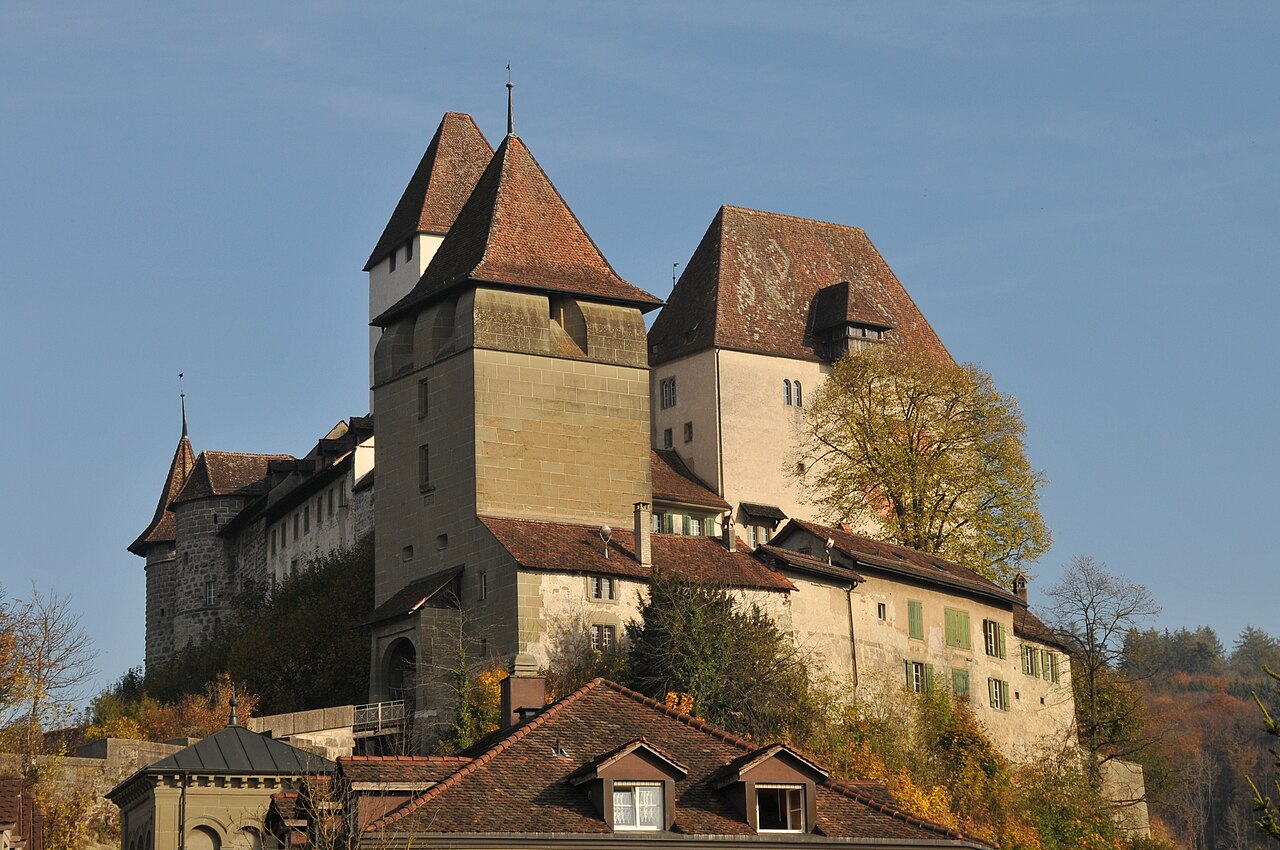
The restoration after the 1730 fire introduced elements typical of the Post-Renaissance architectural style, characterized by simpler, more functional design compared to the ornate Renaissance and Baroque styles. The castle's walls were rebuilt with durable local stone, and the roofline was adjusted to better withstand the alpine climate. The layout retained some medieval defensive features, but the emphasis shifted towards residential comfort and utility.
Structural and architectural characteristics
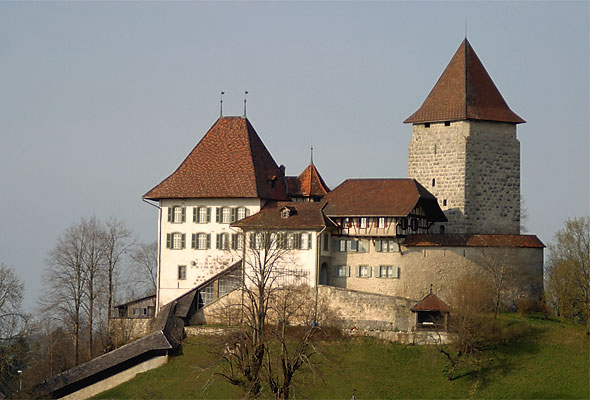
Spittel Castle is classified as a lowland castle due to its location in the relatively flat terrain of the Emmental region rather than on a hill or rocky outcrop. The castle complex includes a main residential building, former hospital wards, and ancillary structures arranged around a courtyard. Defensive features are modest, reflecting the castle's original purpose and the peaceful nature of the region during much of its history.
Key architectural elements
- Main building: The central structure houses the former hospital rooms and living quarters, with thick stone walls and small, functional windows.
- Courtyard: An enclosed courtyard provided space for outdoor activities and access between buildings.
- Gatehouse: A simple gatehouse marks the entrance, lacking heavy fortifications but sufficient for controlling access.
- Roof and chimneys: The steeply pitched roof and prominent chimneys reflect adaptations to the local climate.
Later uses and current status
After its initial hospital function, Spittel Castle served various roles, including noble residence and administrative center for the surrounding lands. Its relatively peaceful setting in Sumiswald spared it from major military conflicts, helping preserve its structural integrity. Today, the castle is well preserved and maintained as a heritage site, reflecting the layered history of the region and its architectural transitions.
Preservation and public access
The castle is currently under the ownership of local authorities or heritage organizations committed to its upkeep. Visitors can explore the exterior and some interior spaces, gaining insight into the castle's unique history as a hospital and its architectural evolution through the centuries. Interpretive materials and guided tours may be available during certain seasons, enhancing the educational experience.
Frequently asked questions (FAQ)
- When was Spittel Castle originally built and by whom?
- Spittel Castle was originally built in 1225 by Lüthold von Sumiswald as a hospital, reflecting its unique charitable purpose.
- What architectural style characterizes Spittel Castle today?
- The castle's current appearance reflects the Post-Renaissance style, resulting from the extensive restoration after the 1730 fire.
- Is Spittel Castle open to the public for visits?
- Yes, Spittel Castle is well preserved and accessible to visitors, with some interior areas open and guided tours available seasonally.
- What type of castle is Spittel Castle classified as?
- Spittel Castle is classified as a lowland castle due to its location in the flat terrain of the Emmental region rather than on elevated ground.
- What are notable architectural features of Spittel Castle?
- Key features include the main residential building with thick stone walls, an enclosed courtyard, a simple gatehouse, and a steeply pitched roof adapted to the alpine climate.
Information
Current owner
Municipality
Loading map...
Visitor reviews
No reviews yet. Been here? Write the first review and help other travelers!
Write the first reviewVisited this castle? Share your experience
Your review helps other travelers and adds first-hand knowledge to our encyclopedia.