Burgdorf Castle
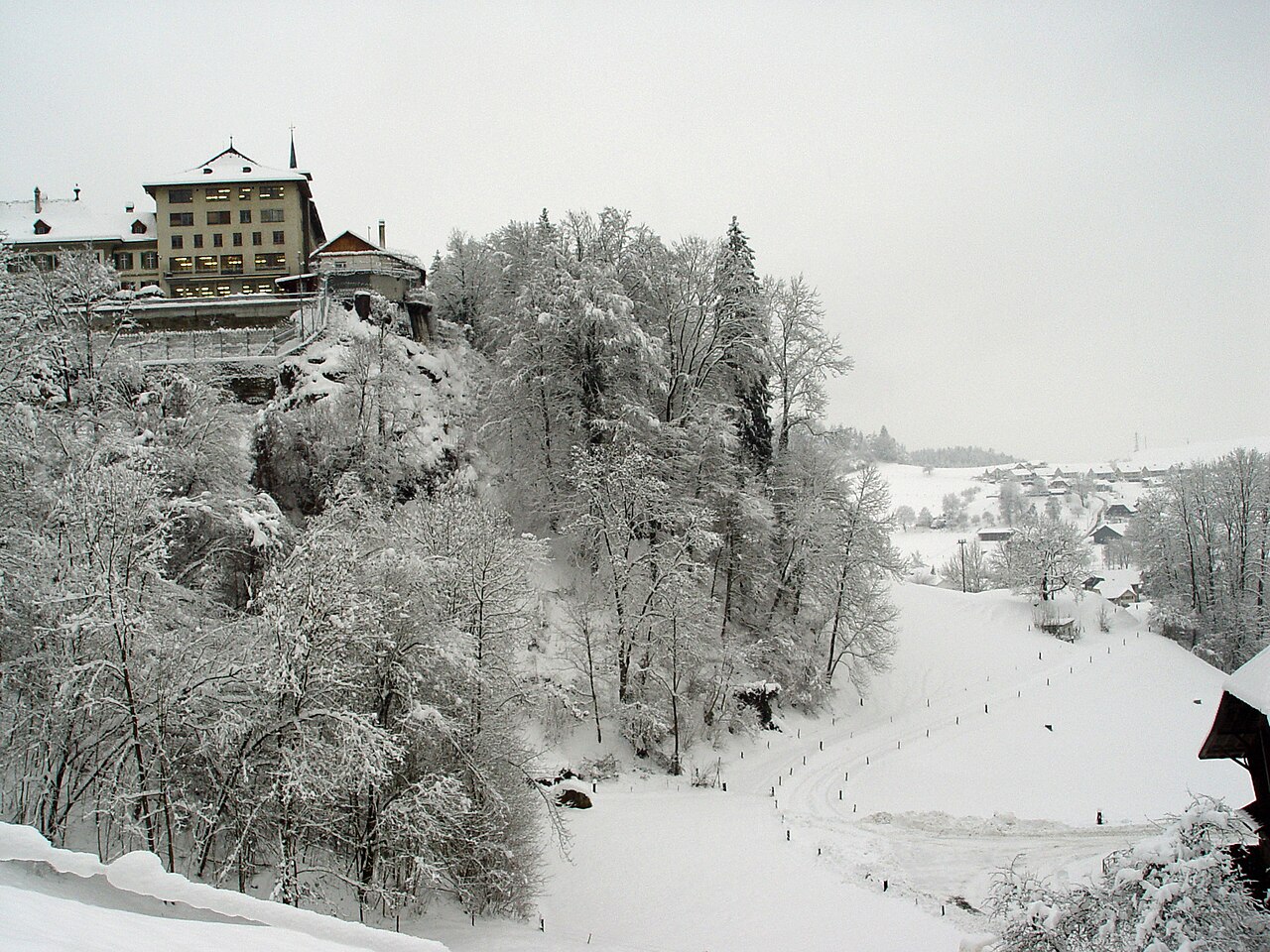
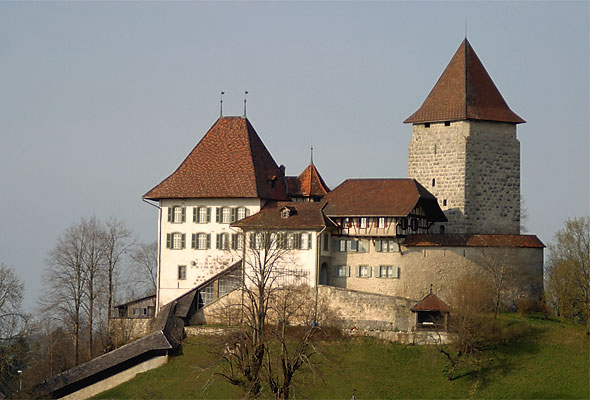
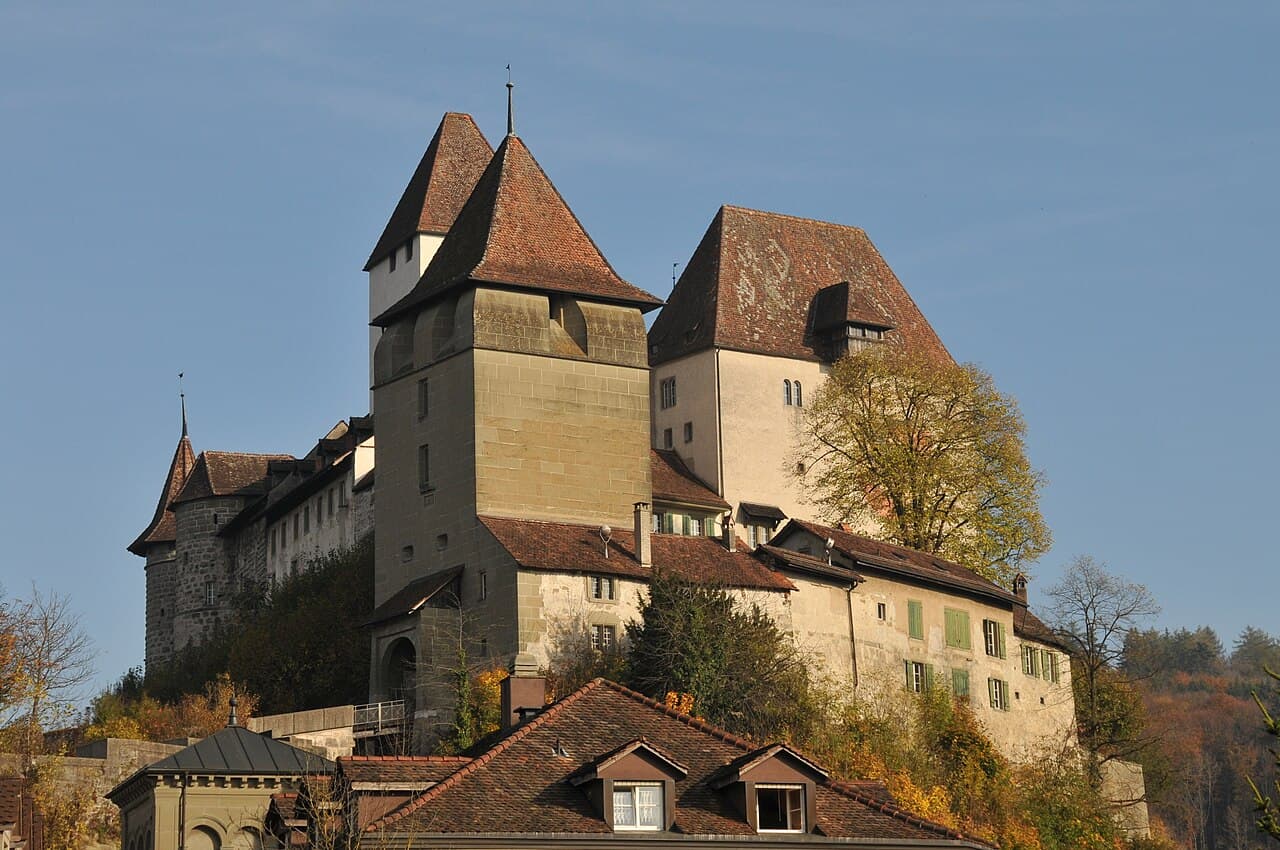
Burgdorf Castle stands prominently on a hill overlooking the town of Burgdorf in the canton of Bern, Switzerland. This 11th-century hill castle has played a significant role throughout the High medieval period and beyond, serving as a seat of power for various noble families and later as an administrative center. Its strategic location on the left bank of the Emme river provided both natural defense and control over the surrounding region.
Early history and construction
The origins of Burgdorf Castle trace back to the late 11th century, during a time when the land was under the rule of the Kingdom of Burgundy. After 1080, the territory came under the control of the Dukes of Zähringen, who are credited with building the initial fortifications. The earliest recorded mention of the castle dates to 1080, indicating its importance as a defensive and administrative site.
The original castle structure was modest, consisting primarily of a gatehouse and an attached defensive wall. Around 1200, under the direction of Duke Berthold V of Zähringen, the castle underwent significant expansion. Berthold V added a tower, a donjon (a fortified main tower or keep), and a large hall that connected these elements, enhancing both the castle's defensive capabilities and its residential functions.
The kyburg era and castle expansion
Following the extinction of the Zähringen line, ownership of Burgdorf Castle passed to the Counts of Kyburg. Under their rule, the castle became the capital of the county, and the counts themselves acted as the mayors of the adjacent town. The Kyburgs undertook further fortifications to strengthen the castle's defenses, reflecting the turbulent political climate of the time.
Key architectural additions during the Kyburg period included the extension of the northern curtain wall and the construction of two half-round towers, which provided improved vantage points and defensive coverage. The eastern end and western hall of the castle were also expanded, increasing the space available for administrative and residential use.
Transition to habsburg control and the neu-kyburg conflict
When the Kyburg family line died out in 1264, Burgdorf Castle passed to Eberhard of Habsburg through his marriage to Anna of Kyburg. Eberhard assumed the title of Count of Neu-Kyburg and continued to use the castle as a seat of power. The 14th century saw increasing financial difficulties for the Neu-Kyburgs, culminating in a notable conflict in 1382.
On 11 November 1382, Count Rudolf II of Neu-Kyburg launched a raid against the city of Solothurn in an attempt to force debt forgiveness. This attack on an allied city provided the city of Bern with a pretext to sever its ties with the Neu-Kyburgs. In March 1383, a combined Bernese-Solothurn army besieged Burgdorf for 45 days but failed to capture it. Ultimately, the Neu-Kyburgs were compelled to sell Burgdorf and Thun castles and towns to Bern in April 1384 for 37,800 guilders.
Bernese administration and architectural modifications
After acquisition by Bern, Burgdorf Castle became the seat of the Bernese administrator, marking a shift from noble residence to governmental center. The Bernese made several architectural modifications to suit administrative needs and to modernize the castle.
In 1540, the additions made by the Kyburgs to the large hall were demolished, reflecting changing functional requirements. A new gatehouse was constructed in 1559 on the old foundations, improving access control. The donjon was enhanced with a small stair tower in 1580, facilitating internal movement. Later, in 1729, a new wing was added to the east of the courtyard, containing apartments and a granary, demonstrating the castle's adaptation to administrative and storage functions.
Role during the helvetic republic and later uses
The turbulent period of the 1798 French invasion and the establishment of the Helvetic Republic saw Burgdorf Castle's role evolve once again. The last Bernese administrator, Rudolf of Erlach, took precautions to protect the castle's valuable government records by relocating them to a nearby church. The castle itself was spared from plunder and destruction during this upheaval.
Under the Helvetic Republic, the castle was repurposed as a military hospital, reflecting the changing needs of the time. In 1800, the renowned educator Heinrich Pestalozzi established a school within the castle walls, marking its use in educational reform. By 1804, the cantonal administration had taken over the castle, converting it into government offices.
Museum establishment and preservation efforts
Recognizing the historical and cultural value of Burgdorf Castle, renovations were undertaken in 1886. These efforts culminated in the opening of the Castle Museum in the so-called Knight's Hall. The museum preserves and exhibits artifacts related to the castle's extensive history and the region's heritage.
Today, Burgdorf Castle is a Swiss heritage site of national significance. Its well-preserved structures, including the donjon, curtain walls, gatehouse, and various halls, offer visitors a tangible connection to medieval Swiss history and architecture. The castle's continuous adaptation over centuries illustrates the evolution of fortified residences into administrative and cultural centers.
Architectural features and layout
The castle's layout reflects its development through multiple historical phases. The core includes the original gatehouse and donjon, surrounded by fortified curtain walls enhanced with half-round towers added during the Kyburg period. The large hall served as a central gathering and administrative space, while later additions provided residential apartments and storage.
The castle's position on a hill overlooking the Emme river allowed for natural defense and control of the surrounding landscape. Its robust construction and strategic fortifications exemplify typical High medieval hill castle architecture in the region.
Visitor experience and cultural significance
Visitors to Burgdorf Castle can explore a site that encapsulates over eight centuries of Swiss history. The castle's museum offers insights into medieval life, noble families, and the political shifts that shaped the region. The preservation of original architectural elements alongside later modifications provides a layered understanding of castle evolution.
As a prominent landmark in Burgdorf, the castle also hosts cultural events and exhibitions, contributing to the town's identity and tourism. Its status as a heritage site ensures ongoing conservation efforts, allowing future generations to appreciate this historic monument.
Frequently asked questions (FAQ)
- What is the historical significance of Burgdorf Castle?
- Burgdorf Castle, dating back to the 12th century, played a crucial role in the power dynamics of the region. It served as a noble residence and a strategic fortification, reflecting the architectural styles of its time while also being a symbol of local governance.
- When is the best time to visit Burgdorf Castle?
- The best time to visit Burgdorf Castle is during the spring and early autumn months, when the weather is mild and the surrounding landscapes are particularly beautiful. This allows for a more enjoyable exploration of the castle and its grounds.
- What are the opening hours for Burgdorf Castle?
- Burgdorf Castle is open to visitors from Tuesday to Sunday, typically from 10 AM to 5 PM. It's advisable to check the official website for any seasonal changes or special events that may affect these hours.
- Can I access all areas of Burgdorf Castle?
- While many areas of Burgdorf Castle are accessible to visitors, some sections may have restricted access due to preservation efforts. Guided tours are available and provide an informative experience, showcasing the most significant parts of the castle.
- Is it possible to purchase tickets online for Burgdorf Castle?
- Yes, visitors can purchase tickets online through the official Burgdorf Castle website. This option helps to avoid long queues and ensures a smoother entry into the castle.
- What nearby attractions are worth visiting when at Burgdorf Castle?
- In addition to Burgdorf Castle, nearby attractions include the charming Old Town of Burgdorf and the picturesque Emmental region. These locations offer a blend of cultural and natural experiences, perfect for a full day of exploration.
- What architectural styles can be seen at Burgdorf Castle?
- Burgdorf Castle showcases a blend of Romanesque and Gothic architectural styles, characteristic of its historical period. The castle's sturdy stone walls and impressive towers are a testament to the defensive architecture of the Middle Ages.
- How do I get to Burgdorf Castle using public transport?
- Burgdorf Castle is easily accessible via public transport, with regular trains and buses connecting it to major cities in Switzerland. Visitors can take a train to Burgdorf station, followed by a short walk to the castle.
- What are the ticket prices for visiting Burgdorf Castle?
- Ticket prices for Burgdorf Castle are quite reasonable, with discounts available for students and seniors. Children under a certain age may enter for free, making it an affordable outing for families.
Photo gallery

Information
Loading map...
Visitor reviews
No reviews yet. Been here? Write the first review and help other travelers!
Write the first reviewVisited this castle? Share your experience
Your review helps other travelers and adds first-hand knowledge to our encyclopedia.