Towie Barclay Castle
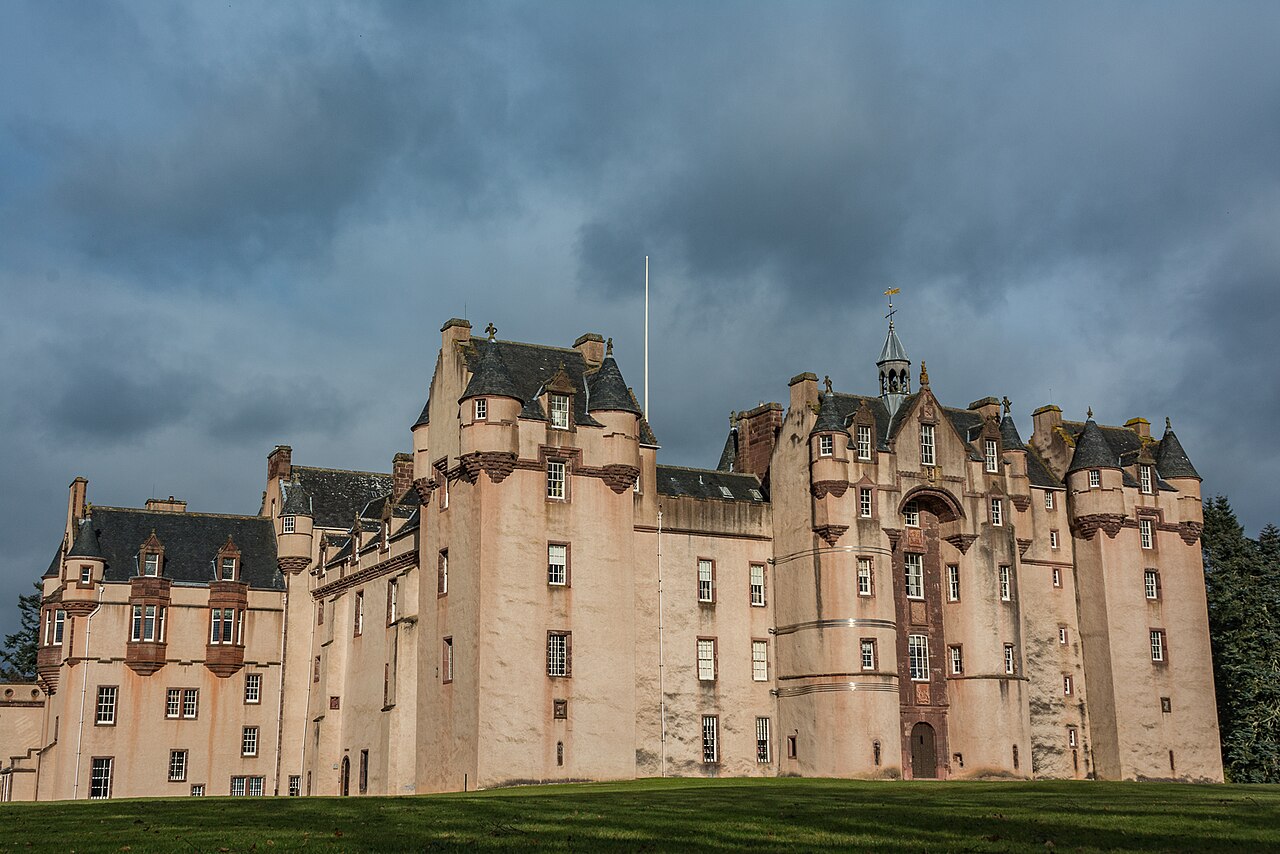
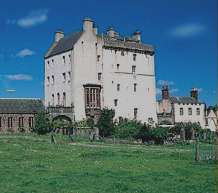
Towie Barclay Castle stands as a remarkable example of a Scottish hill castle steeped in centuries of history near the town of Turriff in Aberdeenshire, Scotland. Established by the Scottish Clan Barclay whose roots at the site date back to the 11th century, the castle embodies a rich blend of medieval heritage, architectural significance, and historical events that shaped the region.
The origins of the castle trace back to land granted to Clan Barclay by King Malcolm III of Scotland in the 11th century. Early evidence suggests a structure existed by the 12th century, marked by an inscription commemorating Sir Alexander Barclay of Tolly, who died in 1186. This early presence established the clan's local influence, though their history was marked by a notorious incident involving an attack on a nearby nunnery. This event led to a legendary curse pronounced by the 12th-century poet Thomas the Rhymer, who foretold that the castle would bring fortune to women but misfortune to men. This legend deeply influenced the clan's legacy and decisions, including the eventual sale of the castle in the mid-18th century.
16th-century construction and architectural features
The castle as it appears today primarily dates from 1593, when Clan Barclay constructed the current quadrangular keep. This design reflects the mid-16th-century architectural style, characterized by a nearly square plan typical of Scottish keeps of the period. Built predominantly from rubble stone, the castle combines defensive and domestic elements to form a compact fortified residence.
Main hall and vaulted ceilings
The main hall is a notable feature, measuring approximately 30 feet by 20 feet (9.1 by 6.1 meters). It boasts a distinctive vaulted ceiling divided into two sections supported by ribbed and cross vaulting. The vaults spring from consoles adorned with leaf motifs and shields bearing the symbols of the four Evangelists, lending the hall a unique ecclesiastical ambiance.
Above the hall's entrance lies a small vaulted gallery, accessible by a stair from the upper floor. This gallery served as a private chapel or prayer room for the baron, featuring ribbed vaulting decorated with Christian symbols such as the monogram I.H.S., a heart, and pierced hands. The chapel could be opened to the main hall via a sliding curtain, and niches on either side likely held religious statues, emphasizing its spiritual function within the castle.
Entrance and defensive design
The entrance lobby also features sophisticated ribbed and cross vaulting, a regional variation in stone ceiling construction. Above the lobby is a small private room overlooking the door, while a narrow passage adjacent to the entrance leads to the stairwell. This passage includes a gunloop, a small opening designed for firearms, allowing defenders to monitor and protect the entrance. A stone pillar inside shields the defender, balancing visibility with protection.
The ground floor contains vaulted cellar rooms equipped with small gunloops, enhancing the castle's defensive capabilities. One cellar connects to the main hall by a private staircase, allowing discreet movement between floors. The main staircase to the first floor combines a straight flight with a turn around a tower corner, arriving at a large landing outside the main hall.
Historical events and changes through the centuries
In the 17th century, Towie Barclay Castle was involved in national conflict. On 13 May 1639, during the First Bishops’ War—a precursor to the Wars of the Three Kingdoms—the castle grounds witnessed the first fatality at the skirmish known as the "Trot of Turriff." This event highlights the castle's role in Scotland's turbulent history.
Ownership changed several times over the following centuries. In 1752, Charles Maitland Barclay sold the castle to James Ogilvy, 5th Earl of Findlater. Later, in 1792, the Earl transferred ownership to Robert Gordon’s Hospital in Aberdeen. This transition brought significant alterations: the castle’s turrets and defensive embrasures were removed, its height was reduced by two storeys, and the surrounding moat was filled in. These modifications reflected evolving attitudes toward fortified residences and the declining need for military defense.
20th-century restoration and preservation
By the mid-20th century, Towie Barclay Castle had fallen into disrepair despite a new roof added in 1874. The castle entered a new phase in the late 1960s when musician Marc Ellington and his wife Karen acquired the property. Over seven years, they undertook a meticulous restoration funded by Ellington’s music career and overseen by Karen Ellington.
The restoration preserved the original 16th-century stonework on the castle’s lower floor while reconstructing the upper levels with modern techniques. Their efforts maintained the character of the original stone vaulting and decorative details, connecting contemporary visitors to the castle’s rich architectural heritage. This work earned recognition with a Saltire Society Award in 1973, underscoring its importance in Scottish heritage preservation.
Today, the castle remains in the Ellington family’s hands and is protected as a Category A listed building, with an associated barn holding Category B status. The castle stands as a testament to Scotland’s medieval and early modern history, architectural tradition, and ongoing preservation efforts.
Architectural significance and regional context
The design elements of ribbed and cross vaulting within Towie Barclay Castle are rare among Scottish castles but find parallels at Balbegno, Gight, Delgaty, and Edzell Castles. This indicates a regional architectural tradition blending residential and ecclesiastical styles. The castle’s compact quadrangular plan, defensive features such as gunloops, and vaulted interiors illustrate the transitional nature of late medieval Scottish castle architecture, balancing fortification with domestic comfort.
The removal of turrets and moat in the late 18th century reflects broader shifts in castle use, from military stronghold to stately residence. Despite these changes, the preservation of the lower masonry and vaulted interiors retains the castle’s medieval character and offers valuable insight into Scottish castle construction during the late 16th century.
Frequently asked questions (FAQ)
- How do I visit Towie Barclay Castle?
- Towie Barclay Castle is privately owned and not generally open to the public. Visitors should check for any special open days or events before planning a visit.
- What is the historical significance of Towie Barclay Castle?
- Towie Barclay Castle has a rich history dating back to the 11th century and played a role in the First Bishops’ War in 1639, marking it as an important site in Scottish history.
- When was the castle originally built?
- The current structure primarily dates from 1593, though the site has been associated with Clan Barclay since the 11th century.
- Can I see the vaulted ceilings inside the castle?
- The castle’s distinctive ribbed and cross vaulted ceilings are a highlight of its architecture, but access to the interior is limited due to private ownership.
- Why was the castle’s height reduced and turrets removed?
- In 1792, the castle was altered to reflect changing needs, removing defensive features like turrets and reducing its height by two storeys as it transitioned from fortress to residence.
Information
Current owner
Private owner
Loading map...
Visitor reviews
No reviews yet. Been here? Write the first review and help other travelers!
Write the first reviewVisited this castle? Share your experience
Your review helps other travelers and adds first-hand knowledge to our encyclopedia.