Tower of A Pena
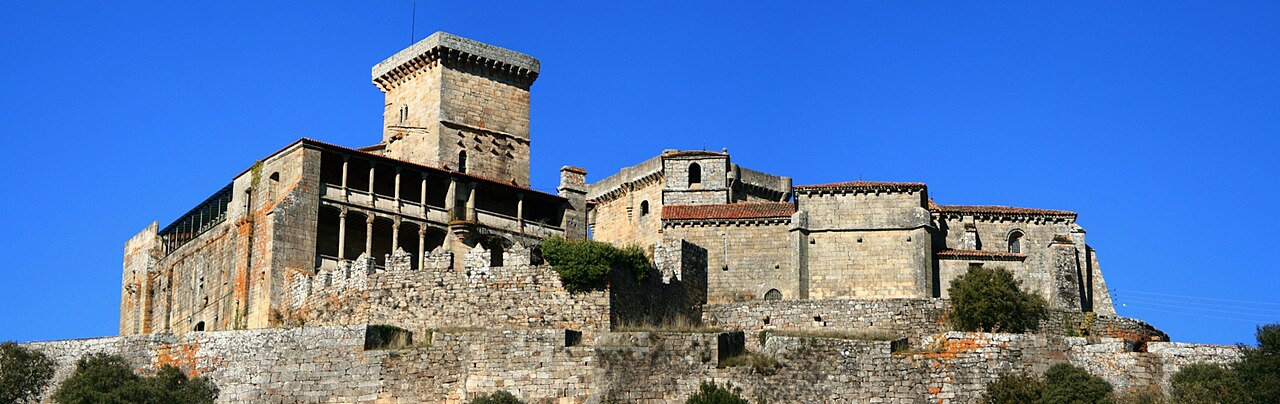
The Tower of A Pena stands as a significant example of medieval military architecture in Xinzo de Limia, Spain. Constructed during the medieval period, this hill castle was part of a strategic network established by the Kingdom of Castile to guard the border region of La Limia against incursions from Portugal. Its location atop a hill at approximately 747 meters above sea level provided commanding views over the vast plain, historically dominated by the now-drained Antela Lagoon. This vantage point was critical for surveillance and defense in a region marked by frequent conflict and territorial disputes.
Historical significance and ownership
The tower's history is deeply intertwined with the turbulent medieval Iberian conflicts. In 1386, the fortress was notably captured during a military campaign led by John of Gaunt, Duke of Lancaster, reflecting its strategic importance in the cross-border wars of the era. Over subsequent centuries, ownership passed through several noble families, beginning with the Viedma family, who were the original founders and builders of the tower, as evidenced by their coat of arms prominently displayed above the entrance.
Later, the fortress came under the control of the House of Monterrey through inheritance, and eventually the House of Lemos acquired it by marriage. This transition sparked prolonged legal disputes between the Monterrey and Lemos families, highlighting the tower's value not only as a military asset but also as a symbol of noble power and territorial control.
Despite the decline of medieval warfare, the tower retained a defensive role well into the early modern period. Oral traditions from local communities recount conscription practices that included service at the Tower of A Pena or the nearby Monterrey fortress, indicating its continued military relevance. However, by the 18th century, the tower was abandoned as a military post and incorporated into the Mayordomía, an administrative stewardship related to the governance of Xinzo de Limia.
In recognition of its cultural and historical importance, the tower was designated a Bien de Interés Cultural, a protected heritage status in Spain. In 2009, stewardship was transferred from the central government to the Xunta de Galicia, placing it under regional care alongside other historic fortifications.
Architectural features and construction
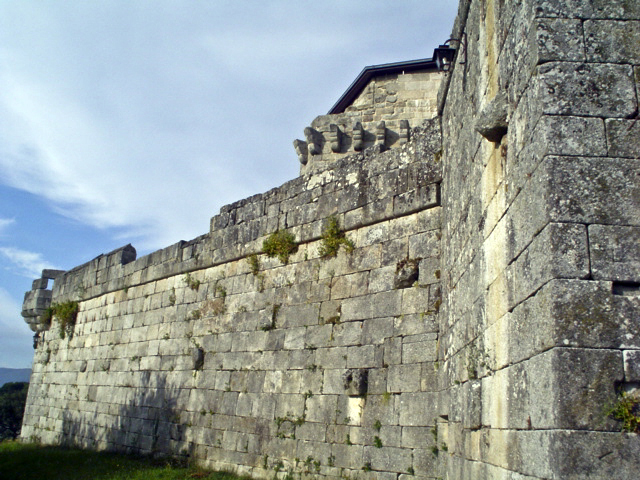
The Tower of A Pena is characterized by its robust square plan, measuring approximately 10 meters on each side. The walls, constructed from finely cut ashlar blocks laid in horizontal courses, reach a thickness of about 2.4 meters, underscoring the tower's defensive purpose. The presence of mason's marks on the stones provides valuable insight into the medieval craftsmanship and construction techniques employed.
One of the tower's defining architectural elements is its elevated entrance, positioned above ground level to enhance security. Originally accessed via a now-lost wooden staircase, the doorway is supported by corbels shaped like eight-petaled leaves, which uphold a lintel topped by a relieving arch. Above this arch, the Viedma family coat of arms is prominently displayed, marking the tower's noble origins.
The interior is arranged over three floors, each featuring barrel vaulted ceilings, a hallmark of medieval stone construction. The ground floor vault is notably taller than typical designs, accommodating an intermediate wooden floor that likely separated storage areas from living quarters, reflecting the dual domestic and defensive functions of the tower.
Surrounding the main tower are the remains of an oblong defensive wall that conforms to the natural contours of the hill. This enclosure once included arrow slits (ventanas saeteras), narrow vertical openings designed to allow archers to defend the fortress while remaining protected, emphasizing the tower's military role.
Nearby archaeological evidence, such as a stone quarry, indicates that the building materials were sourced locally, linking the tower intimately with its surrounding landscape and resources.
Strategic location and landscape context
Situated on a hill overlooking the La Limia plain, the Tower of A Pena's location was chosen for its strategic defensive advantages. The elevation allowed defenders to monitor movements across the plain and the extensive Antela Lagoon that once covered much of the area before its drainage in the 20th century. This natural barrier, combined with the tower's fortifications, formed a formidable defense against invasions.
The surrounding terrain and the remnants of the defensive wall demonstrate how the fortress was integrated into the natural topography, maximizing its defensive capabilities while adapting to the landscape's irregularities.
Current condition and preservation
Today, the Tower of A Pena remains partially preserved with its main structural elements intact and accessible for external examination. The loss of the original wooden stairway limits access to the interior, but this absence has also contributed to the preservation of the tower's stone fabric by reducing wear and vandalism.
While some risks from vandalism exist, ongoing efforts by the Xunta de Galicia aim to protect and maintain the site as a valuable cultural landmark. Visitors can appreciate the tower's medieval defensive architecture and its historical significance within the broader context of Iberian border conflicts.
Cultural heritage and tourism
The Tower of A Pena serves as a tangible link to the medieval history of the Galicia region and the complex interactions between Castile and Portugal. Its designation as a Bien de Interés Cultural highlights its importance as part of Spain's national heritage.
Although the tower is not extensively developed as a tourist site, it attracts visitors interested in medieval architecture, military history, and regional heritage. Its commanding views and evocative ruins offer a compelling experience for those exploring the historical landscape of Xinzo de Limia.
Frequently asked questions (FAQ)
- What is the historical significance of the Tower of A Pena?
- The Tower of A Pena played a crucial defensive role during the medieval conflicts between the Kingdom of Castile and Portugal, serving as a border fortress and witnessing key events such as its capture by John of Gaunt in 1386.
- Can visitors access the interior of the Tower of A Pena?
- Access to the interior is limited due to the loss of the original wooden staircase, but the tower's exterior and defensive features can be explored safely by visitors.
- Why is the Tower of A Pena important for regional heritage?
- The tower is designated as a Bien de Interés Cultural, recognizing its cultural and historical importance in Galicia and its role in medieval Iberian border defense.
- When was the Tower of A Pena built?
- The exact construction date is uncertain, but the tower was built during the medieval period as part of Castile's defensive network.
- Who currently manages the Tower of A Pena?
- Since 2009, the tower has been under the stewardship of the Xunta de Galicia, which manages its preservation and cultural promotion.
Information
Current owner
Xunta de Galicia
Loading map...
Visitor reviews
No reviews yet. Been here? Write the first review and help other travelers!
Write the first reviewVisited this castle? Share your experience
Your review helps other travelers and adds first-hand knowledge to our encyclopedia.