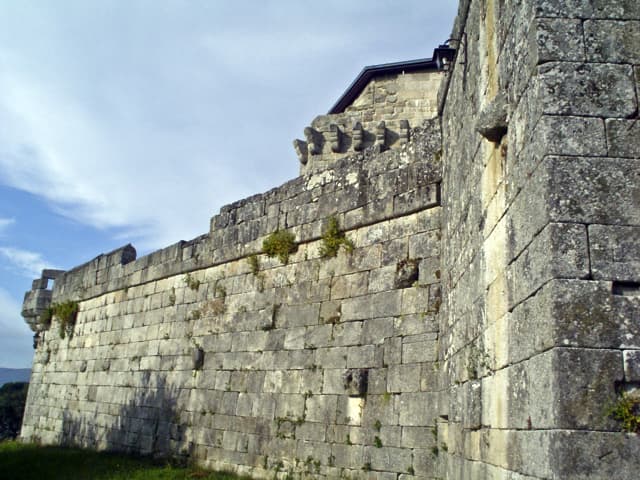
Maceda Castle
Maceda Castle stands as a significant example of a high medieval hill castle in the Galicia region of Spain. Originally constructed in the late 11th century, the castle's architecture reflects a complex evolution spanning several centuries, showcasing a fusion of defensive and residential elements that illustrate the shifting needs and styles from the medieval period through the Early Modern era.
The castle's oldest core is the imposing square keep tower, built under the auspices of the Kingdom of León. This tower, constructed with finely cut ashlar granite masonry, features a distinctive rounded arch entrance and narrow vertical arrow slits on its lower level, designed for defense. The upper levels of the keep have been modified over time, reflecting adaptations from purely military functions to more domestic uses.
Architectural design and fortifications
The castle is characterized by its concentric layout, comprising two enclosures. The inner enclosure centers on the keep and is surrounded by a fortified curtain wall that creates a protected bailey. This wall is crowned by an adarve—a narrow walkway for patrolling defenders—and includes openings for crossbowmen (ballesteras). The enclosure's roughly quadrilateral shape is reinforced by a combination of square and circular towers at the corners and buttresses along the walls, enhancing its defensive capabilities.
One of the castle's remarkable features is a deep cistern carved into the bedrock, descending approximately seventy meters to access the waters of the nearby Chaioso River. This cistern was crucial for sustaining the castle's inhabitants during sieges and dry spells, exemplifying the strategic foresight in its design.
Historical context and ownership
The castle was initially established by royal order in the 11th century as a stronghold of the Kingdom of León. It later passed into the hands of the Novoa family through the marriage of María Fernández, daughter of the Count of Trava and Countess Teresa de Leão of Portugal, to Xoán Ares de Novoa. This alliance integrated the castle into a powerful noble lineage with regional influence.
During the turbulent 15th century, the castle was involved in the Irmandiña Revolt, a popular uprising against feudal lords. It was attacked and destroyed by forces led by Diego de Lemos, reflecting the social and political unrest of the period. Despite this damage, the castle was rebuilt and adapted over the following centuries.
Ownership shifted in the 17th century to Alonso de Lanzós e Novoa, a descendant of a leader of the Irmandiña rebels, illustrating the complex allegiances and legacies tied to the fortress. The 18th century saw further changes in stewardship, including the Tabuada family and later connections to the Pazo de Fefiñáns in Cambados.
Residential transformation and restoration
In the Early Modern period, the castle underwent significant modifications to serve as a more comfortable noble residence. Additions included miradores abalaustrados—balconies with decorative railings—and a solarium (solana) designed for leisure and sunlight exposure. These features contrast with the original military architecture, highlighting the castle's adaptation to changing tastes and functions.
After centuries of neglect and deterioration, the castle was acquired by the local municipality in 1993, initiating restoration efforts. These works aimed to preserve the castle's historical elements while stabilizing the structure. Some restoration choices sparked debate among experts regarding their fidelity to the original design, but the castle today remains a valuable cultural and architectural landmark.
Cultural significance and legends
Maceda Castle holds a place in local tradition and lore, including the belief that King Alfonso X was raised within its walls and learned the Galician language there. While this story is part of regional heritage rather than documented history, it underscores the castle's symbolic role in Galicia's cultural identity.
The castle's blend of medieval fortifications and later residential features offers visitors insight into the evolution of noble residences in northwestern Spain. Its strategic location on a hill provides commanding views of the surrounding landscape, emphasizing its historical military importance.
Architectural details and materials
The construction of Maceda Castle prominently features ashlar granite blocks, meticulously cut and laid in regular courses. The visible mason's marks on the stones attest to the skilled craftsmanship of medieval stonemasons. The combination of square and circular towers enhances both defense and architectural variety.
The castle's curtain walls and battlements are designed to provide effective protection against attackers, with walkways for guards and openings for projectile weapons. The incorporation of a deep cistern highlights the importance of self-sufficiency in medieval fortifications.
Visiting Maceda Castle today
Today, Maceda Castle is a restored monument open to the public, offering a tangible connection to Galicia's medieval past. Visitors can explore the keep tower, the defensive walls, and the inner courtyard, gaining an appreciation for the castle's layered history and architectural complexity.
The castle's location in the municipality of Maceda makes it accessible for those interested in medieval architecture, Spanish history, and regional culture. Its preservation allows for educational and cultural activities that celebrate the heritage of Galicia and the Kingdom of León.
Frequently asked questions (FAQ)
- How do I get to Maceda Castle?
- Maceda Castle is easily accessible by car or public transport from nearby cities. If traveling by car, you can take the A-52 motorway and follow local signs to Maceda. Public transportation options include regional buses that connect to the town.
- What is the historical significance of Maceda Castle?
- Maceda Castle dates back to the 12th century and is an important example of medieval military architecture in Spain. It played a significant role in the region's defense during various conflicts throughout its history. The castle is also a symbol of the local heritage and has been preserved for educational purposes.
- When was Maceda Castle built?
- Construction of Maceda Castle began in the late 12th century, during a period of territorial expansion and consolidation in the region. Over the centuries, it has undergone various renovations and restorations to maintain its structural integrity. Today, it stands as a testament to the architectural styles of that era.
- Can I take guided tours of Maceda Castle?
- Yes, guided tours are available at Maceda Castle, allowing visitors to gain deeper insight into its history and architecture. The tours typically include access to key areas of the castle and informative commentary from knowledgeable guides. It is recommended to book in advance during peak tourist seasons.
- Why is Maceda Castle considered an architectural marvel?
- Maceda Castle is considered an architectural marvel due to its impressive stone construction and strategic location on a hilltop. The design showcases elements of medieval military architecture, including thick walls, towers, and a fortified entrance. Its preservation allows visitors to appreciate the craftsmanship of the time.
- Is it possible to visit Maceda Castle year-round?
- Yes, Maceda Castle is open to visitors year-round, although opening hours may vary seasonally. It's best to check the official website or contact local tourist information for the most current visiting hours. This flexibility allows visitors to explore the castle at their convenience.
- What are the ticket prices for Maceda Castle?
- Ticket prices for Maceda Castle are generally affordable, with discounts available for students and seniors. Admission fees typically help support the maintenance and preservation of the castle. It is advisable to check the official website for the latest pricing information before your visit.
- When is the best time to visit Maceda Castle?
- The best time to visit Maceda Castle is during the spring and autumn months when the weather is mild and pleasant. These seasons also tend to attract fewer crowds, allowing for a more enjoyable experience. Summer can be quite hot, while winter may bring colder temperatures.
- What nearby attractions can I explore after visiting Maceda Castle?
- After visiting Maceda Castle, you can explore several nearby attractions, including the picturesque town center of Maceda and its local shops. Additionally, the surrounding region offers beautiful walking trails and scenic landscapes perfect for nature lovers. Don’t miss the opportunity to taste local cuisine in nearby restaurants.
Photo gallery

Information
Website
Visit websiteSources & official resources
Verify the information above using these authoritative references.
Loading map...
Visitor reviews
No reviews yet. Been here? Write the first review and help other travelers!
Write the first reviewVisited this castle? Share your experience
Your review helps other travelers and adds first-hand knowledge to our encyclopedia.



