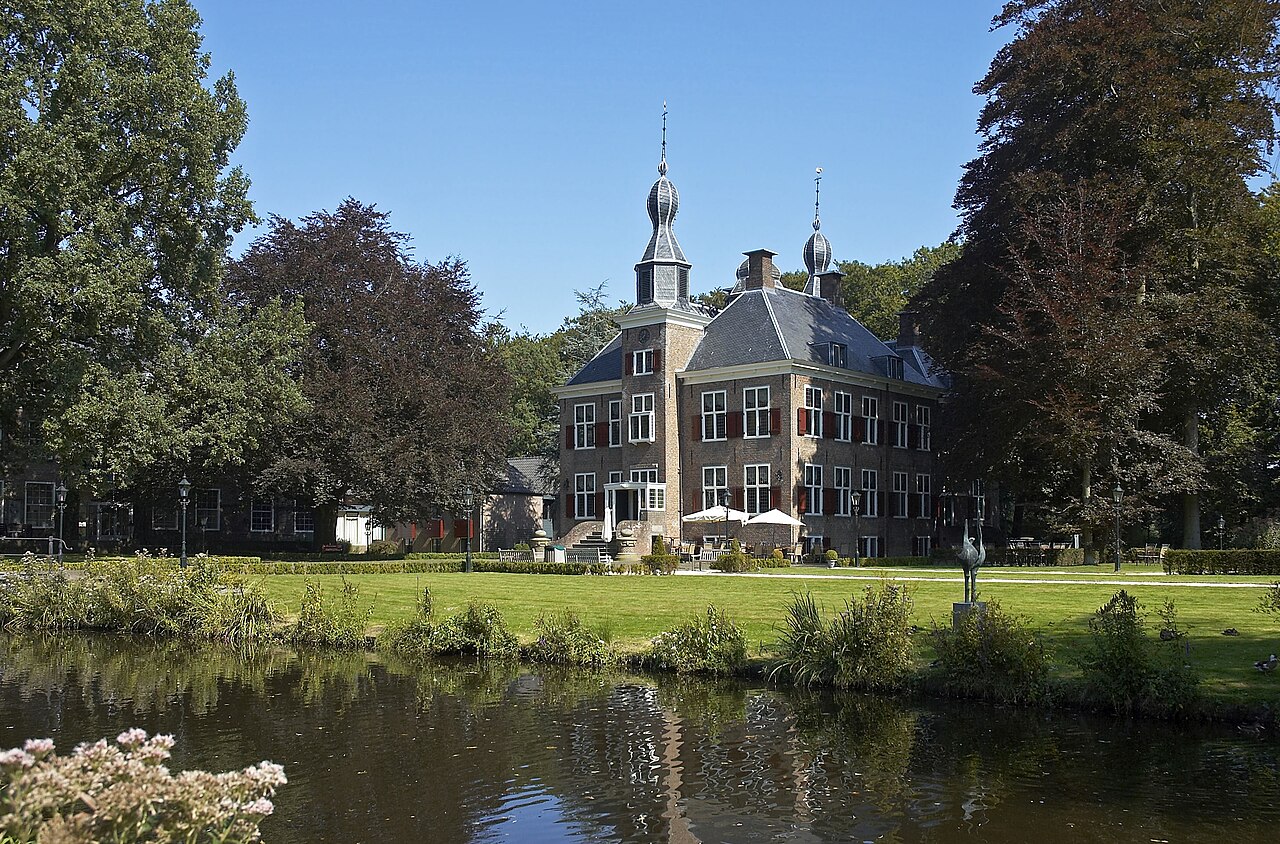
Toutenburg Castle
Toutenburg Castle, locally known as Kasteel Toutenburg, is a historic site located near Vollenhove in the province of Overijssel, Netherlands. This castle, originally constructed in the early 16th century, stands as a testament to the region's feudal past and architectural evolution during the Renaissance period. Though now largely a ruin, Toutenburg Castle's remains offer valuable insights into Dutch castle construction and noble life during a turbulent era of political and military change.
Historical background and construction
The construction of Toutenburg Castle began in 1524 and was completed by 1552. It was commissioned by George Schenck van Toutenburg, a prominent nobleman and military leader who served as the sheriff (schout) of Vollenhove and later as stadtholder of Groningen, appointed by Emperor Charles V in 1536 due to his military successes. George Schenck hailed originally from Tautenburg in the German region of Thuringia, and through his marriage to Anna de Vos van Steenwijck, he acquired the land on which the castle was built.
Toutenburg was designed as a moated, rectangular fortress featuring two residential wings and two curtain walls, enclosing a square courtyard dominated by a freestanding keep. The main entrance was located on the west side, marked by a gate flanked by two circular towers, while the east side was fortified with two additional circular corner towers. This layout reflects a blend of defensive architecture and residential comfort, characteristic of Renaissance-era noble residences in the Low Countries.
Architectural features and design
The castle's design incorporated moats as a defensive measure, a common feature in Dutch castles due to the flat, water-rich landscape. The rectangular plan with curtain walls and circular towers provided both strong defense and an imposing appearance. The freestanding keep in the courtyard served as a last line of defense and a symbol of lordly authority.
Architectural details such as the gatehouse with its twin circular towers and the corner towers on the east side were typical of the period's military architecture, designed to provide flanking fire and surveillance. The castle's moated island setting further enhanced its defensibility and status as a fortified residence.
Ownership, decline, and ruin
After George Schenck's death in 1540, the castle passed to his son Carel, who lived there until his death in 1571. Ownership then transferred to George's elder brother Frederik, and subsequently to the Van Haersolte and Van Boetzelaer families. Rutger van Boetzelaer undertook repairs in 1627, but from the early 18th century, the castle began to deteriorate significantly.
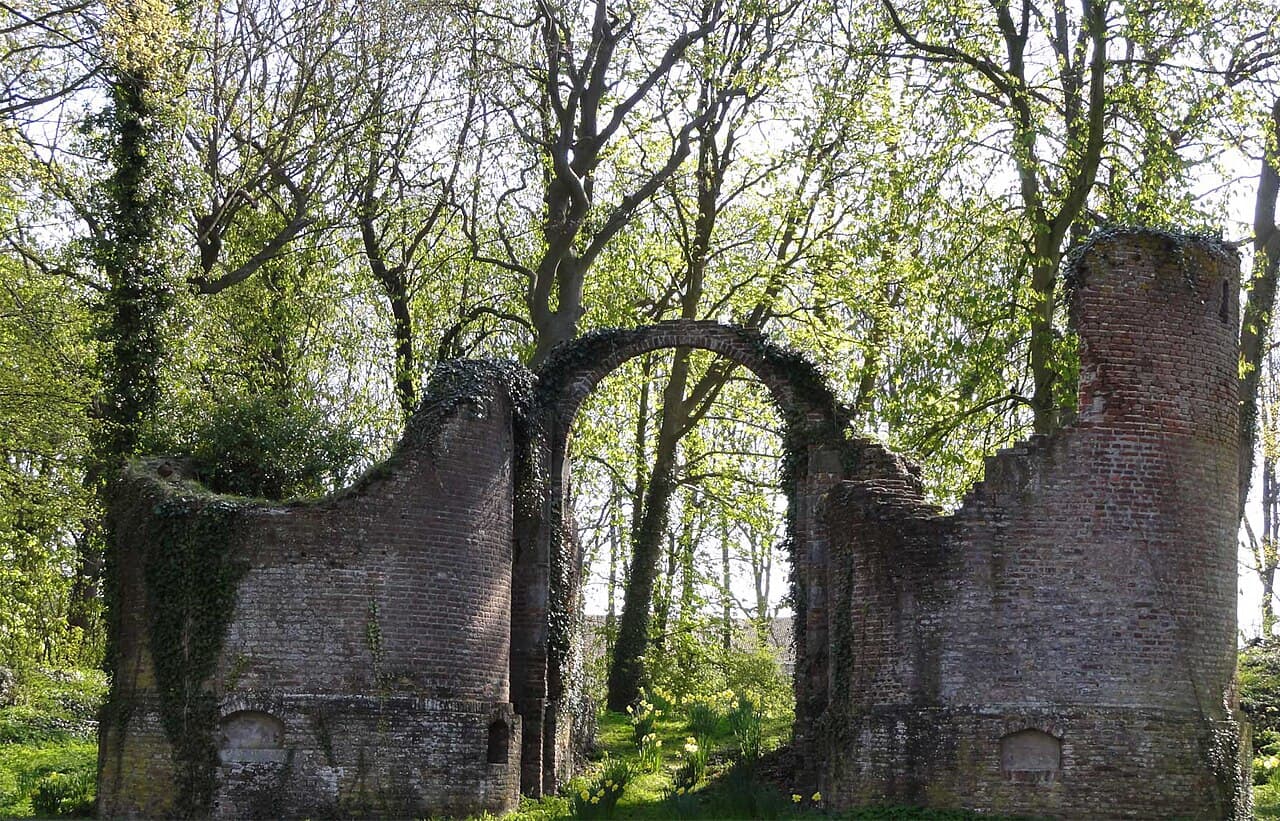
By 1745, the castle was no longer regularly inhabited, and its condition worsened. In 1787, the decay was so severe that rebuilding was deemed impossible. Stones from the castle were sold and repurposed for local construction projects, including the Great Church in Vollenhove. In 1810, the remaining ruins were acquired by the owner of the neighboring Oldruytenborgh Manor, who demolished most of the structure to use its materials for repairs, leaving only part of the gate building intact as a romantic garden ruin.
Archaeological significance and preservation
Today, the surviving gatehouse fragment stands on a roughly rectangular moated island, accessible visually but not physically to the public. The ruins are owned by the Vollenhove city council since 1947 and have been used for cultural activities, including outdoor performances in the 1950s.
Archaeological excavations at the site have uncovered structural remains and artifacts such as pottery shards and a distinctive weather vane from the castle's tower. These findings are preserved and displayed at Vollenhove's Cultural Historical Center, providing valuable material culture evidence of the castle's occupation and architectural details.
Historical visual records, including a drawing from circa 1760 and a print by Claes Jansz. Visscher from 1617, offer important depictions of the castle's original appearance and its prominence within the town's landscape before its decline.
Cultural and historical legacy
Though largely lost to time, Toutenburg Castle remains a significant cultural landmark in Overijssel. Its story reflects the shifting fortunes of noble families, the military and political history of the Netherlands during the Renaissance, and the architectural trends of fortified residences in the region.
The castle's ruins and associated archaeological finds continue to engage historians, archaeologists, and visitors interested in medieval and Renaissance heritage. The freely accessible park surrounding the moated island invites reflection on the castle's past, while the preserved artifacts and models at the local cultural center ensure its history remains vibrant and accessible.
Visiting information
The park area around the ruins is open to the public, offering a peaceful setting for visitors to appreciate the historical site. However, the moated island with the remaining gatehouse fragment is not accessible to visitors to preserve the fragile ruins.
Historical context in the region
Toutenburg Castle was part of a network of noble estates in Overijssel, playing a role in regional governance and defense during the 16th and 17th centuries. Its construction under George Schenck, a key figure appointed by Emperor Charles V, highlights the castle's importance in the political and military landscape of the time.
Frequently asked questions (FAQ)
- When was Toutenburg Castle built and by whom?
- Toutenburg Castle was constructed between 1524 and 1552 by George Schenck van Toutenburg, a nobleman and military leader serving under Emperor Charles V.
- What architectural features characterized Toutenburg Castle?
- The castle featured a moated rectangular plan with two residential wings, curtain walls, circular towers flanking the gatehouse and corners, and a freestanding keep in the courtyard.
- Is it possible to visit Toutenburg Castle today?
- Visitors can freely access the surrounding park, but the moated island with the gatehouse ruins is not open to the public to protect the fragile remains.
- What happened to the castle after it fell into disrepair?
- By the late 18th century, the castle was too dilapidated to rebuild. Stones were sold for local construction, and most of the ruins were demolished in 1810, leaving only part of the gatehouse.
- Where can I learn more about the history and artifacts from Toutenburg Castle?
- The Cultural Historical Center in Vollenhove preserves and displays archaeological finds and a scale model of Toutenburg Castle, offering insights into its history and architecture.
Photo gallery

Photo by Gouwenaar•Public domain
Information
Sources & official resources
Verify the information above using these authoritative references.
Loading map...
Visitor reviews
No reviews yet. Been here? Write the first review and help other travelers!
Write the first reviewVisited this castle? Share your experience
Your review helps other travelers and adds first-hand knowledge to our encyclopedia.