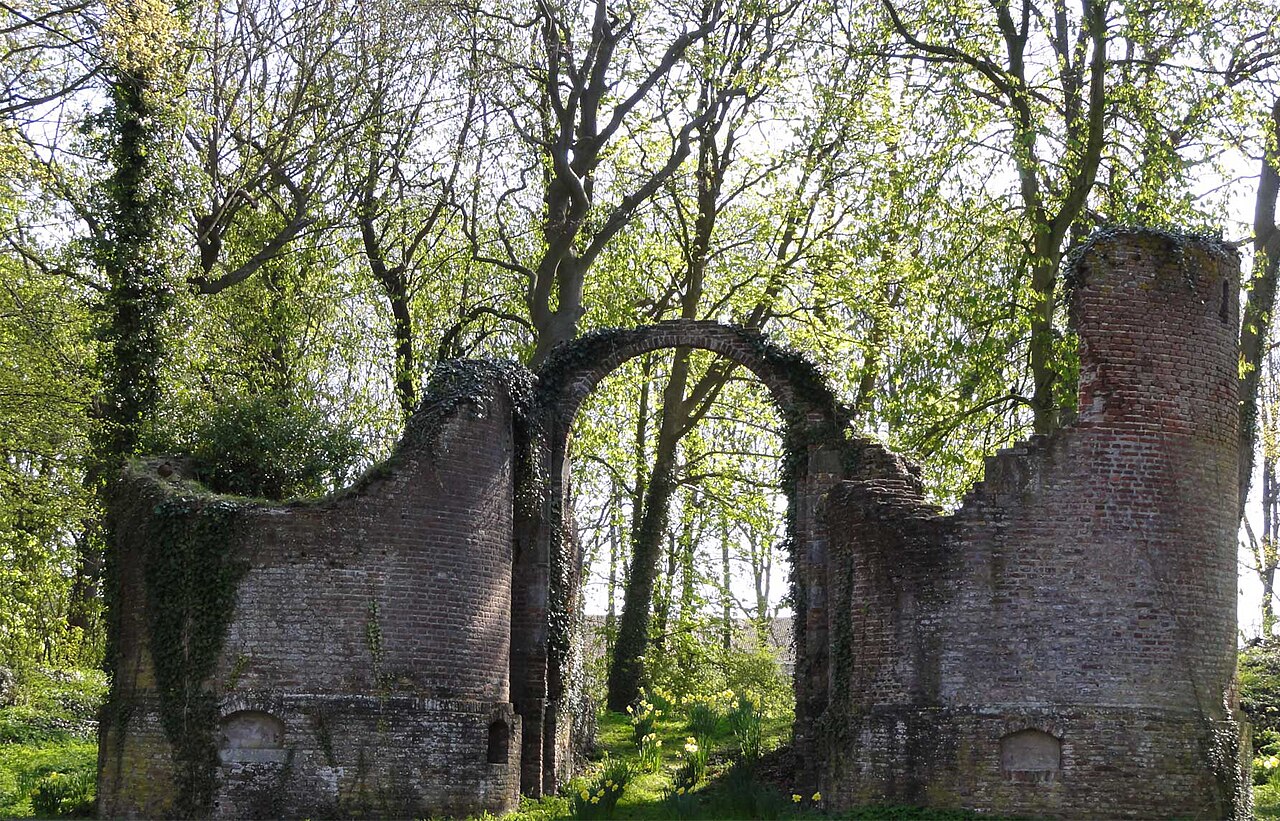
Kuinre Castle
Kuinre Castle, also known locally as the Kuinderburcht, is a medieval fortress located in the Kuinder Forest near the village of Kuinre in the province of Flevoland, Netherlands. This site holds significant historical importance as a frontier castle built to assert the authority of the Bishop of Utrecht in a contested border region during the late medieval period.
Early origins and medieval context
The origins of Kuinre Castle trace back to the early 13th century, with construction attributed around 1204 by Heinricus Grus, a vassal of the bishopric. This castle was preceded by an earlier fortification from the mid-12th century, which was destroyed in 1197 during conflicts involving Willem of Holland. Although it remains uncertain whether this earlier fortification occupied the exact same site, Kuinre Castle was strategically positioned as a frontier castle to protect the bishop's territorial interests against encroaching powers such as the Count of Holland.
Feudal significance and local power
The Lords of Kuinre, who held the castle, rose in prominence locally and were granted the rare privilege of minting coins, underscoring their regional authority. The castle's role as a symbol of feudal power and control over the surrounding lands was critical during a period marked by shifting allegiances and territorial disputes in the Low Countries.
Architectural features and layout
Archaeological investigations have revealed that Kuinre Castle was likely a circular castle built upon a small artificial hill or motte. This design was typical of frontier fortifications intended to provide a strong defensive position. The castle was surrounded by multiple moats, enhancing its defensive capabilities by creating water barriers against attackers.
The excavations uncovered the foundations of arches that supported a circular curtain wall, indicating a sophisticated stone construction. Within the curtain wall, evidence was found of a stone building, possibly serving as the keep or main residential structure. The castle’s design combined both military and residential functions, characteristic of medieval fortresses in contested border zones.
Moats and water defenses
The presence of several moats around the castle highlights the strategic use of water as a defensive element. These moats would have been fed by the surrounding wetlands and rivers, creating a natural obstacle for any invading force. The castle’s location near the expanding Zuiderzee also influenced its defensive design, integrating the natural landscape into its fortifications.
Decline and abandonment
Kuinre Castle was abandoned in the third quarter of the 14th century, likely due to environmental changes. A catastrophic flood in 1375 caused widespread inundations that expanded the Zuiderzee, making the site unsuitable for continued habitation and defense. This environmental disaster forced the relocation of the castle.
In 1378, a new fortress, known as Kuinre Castle II, was constructed approximately one kilometer east of the original site. Unfortunately, no visible remains of this later castle survive today, and its exact layout remains largely unknown.
Archaeological rediscovery and modern reconstruction
For centuries, the remains of the original Kuinre Castle lay submerged under the waters of the Zuiderzee, eroded by natural forces. The reclamation of this part of the Zuiderzee in 1941 led to the rediscovery of the castle's foundations. Subsequent archaeological excavations took place in 1943, 1948-1949, and 1999, uncovering significant structural remains such as the arches supporting the curtain wall and the moat beds.
Based on these findings, archaeologists concluded that the castle was a circular stone fortress with a motte and multiple moats. The excavations provided valuable insights into the construction techniques and defensive strategies of late medieval castles in the region.
Modern reconstruction efforts
In 1989, a reconstruction project was undertaken to preserve and interpret the site for visitors. The current site features a reconstructed circular moated island, including rebuilt foundations of the curtain wall, a small arch, and a stone well. While this reconstruction is artificial and does not represent the original castle in full detail, it serves as a tangible reminder of the site's historical significance and medieval heritage.
Visitor information and cultural significance
Today, Kuinre Castle's remains are freely accessible to the public. The site offers a unique opportunity to explore a rare example of a circular medieval castle in the Netherlands, illustrating the interplay of military architecture and environmental challenges in medieval frontier zones.
The castle's history reflects broader themes of feudal power, territorial conflict, and the impact of natural disasters on medieval settlements. Its archaeological preservation and reconstruction contribute to the understanding of medieval fortifications in the Low Countries and provide educational value for visitors and scholars alike.
Frequently asked questions (FAQ)
- How do I get to Kuinre Castle?
- Kuinre Castle is located in the small village of Kuinre in the Netherlands, easily accessible by car or public transport. The nearest train station is in Steenwijk, from where you can take a bus or taxi to reach the castle. Ample parking is available nearby for those traveling by car.
- What is the historical significance of Kuinre Castle?
- Kuinre Castle, built in the 13th century, played a crucial role in the defense against invasions and served as a noble residence. It is one of the few remaining examples of medieval architecture in the region, showcasing the strategic importance of Kuinre during its time. The castle's ruins provide a glimpse into the past and highlight the area's rich history.
- When was Kuinre Castle constructed?
- Kuinre Castle was constructed in the early 13th century, around the year 1200. It was built as a fortified residence for the local nobility and has since witnessed various historical events. The castle's long-standing presence makes it a significant landmark in the region.
- Can I visit Kuinre Castle year-round?
- Visitors can explore the grounds of Kuinre Castle throughout the year, but access to the interior may be limited depending on the season. It's advisable to check the official website for specific opening hours and any seasonal events that may enhance your visit. Guided tours are often available during the warmer months.
- Why is Kuinre Castle a popular tourist attraction?
- Kuinre Castle attracts visitors due to its historical significance and picturesque setting. The scenic views of the surrounding landscape and waterways, combined with the castle's intriguing past, make it a perfect spot for history enthusiasts and photographers alike. Additionally, the castle often hosts events and exhibitions that draw in crowds.
- Is it possible to take guided tours of Kuinre Castle?
- Yes, guided tours are available at Kuinre Castle, offering visitors a deeper understanding of its history and architecture. These tours are typically conducted during peak tourist seasons and can provide unique insights that self-guided visits may not offer. It's recommended to book in advance to secure your spot.
- What are the ticket prices for visiting Kuinre Castle?
- Ticket prices for Kuinre Castle are generally affordable, with discounts available for students and seniors. Children under a certain age may enter for free, making it a family-friendly destination. For the most accurate pricing, it is best to check the official website before your visit.
- What are the opening hours for Kuinre Castle?
- Kuinre Castle typically opens its gates to visitors from 10 AM to 5 PM, with extended hours during the summer months. However, these hours may vary based on special events or seasonal changes, so it's advisable to verify the schedule ahead of your visit. Planning ahead will ensure you have ample time to explore the site.
- Are there any nearby attractions to visit while in Kuinre?
- Yes, the area surrounding Kuinre offers several attractions, including the scenic Weerribben-Wieden National Park and charming local villages. Visitors can enjoy outdoor activities such as hiking, cycling, and boat tours in the nearby waterways. Exploring the local cuisine and culture adds to the overall experience of your trip.
Information
Loading map...
Visitor reviews
No reviews yet. Been here? Write the first review and help other travelers!
Write the first reviewVisited this castle? Share your experience
Your review helps other travelers and adds first-hand knowledge to our encyclopedia.