
Tottori Castle
Tottori Castle, located in Tottori, Japan, is a remarkable example of a hirayamajiro or hill-and-plain castle, renowned for its impressive stone fortifications and rich history dating back to the 16th century. Built initially in 1532 by Yamana Nobumichi, the castle played a significant role during Japan's turbulent Sengoku period and is especially famous for the prolonged siege it endured in 1581.
Historical background and significance
The castle's origins trace back to the early 16th century, when Yamana Nobumichi established the fortress as a strategic stronghold in the Tottori region. Its location on a hill provided natural defensive advantages, allowing control over the surrounding plains and trade routes. The most notable event in its history was the 1581 siege led by Toyotomi Hideyoshi, a pivotal figure in Japan's unification. The siege lasted approximately 200 days, marking one of the longest and most grueling sieges of the period.
During the siege, the castle's lord, Kikkawa Tsuneie, held out valiantly but ultimately surrendered after supplies were exhausted. The terms of surrender ensured the safety of his soldiers, reflecting the chivalrous conduct sometimes observed in Sengoku warfare. Following the siege, the castle came under the control of Miyabe Keijun, who was later replaced by Ikeda Nagayoshi after the Battle of Sekigahara in 1600, a decisive conflict that shaped Japan's political landscape.
Architectural features and design
Stone ramparts (ishigaki)
Tottori Castle is celebrated for its magnificent ishigaki, or stone ramparts, which are among the most impressive in Japan. These massive stone walls are found both at the base of the castle and on the summit, visible from miles away. The ramparts were expertly constructed to withstand sieges and natural disasters, showcasing advanced masonry techniques of the period.
One of the castle's most distinctive features is the Tenkyū ishigaki, a spherical-shaped stone rampart unique in Japanese castle architecture. This rare design element not only served a defensive purpose but also demonstrated the ingenuity and craftsmanship of the builders. The stone walls around the honmaru (main bailey) and the tenshudai (donjon platform) further emphasize the castle's formidable defensive capabilities.
Layout and defensive elements
The castle's layout takes advantage of the natural terrain, combining hilltop fortifications with plains defenses, typical of a hirayamajiro. The moat surrounding the castle added an additional layer of protection, making direct assaults challenging. The main gate has been reconstructed in modern times, reflecting the castle's historical appearance and providing visitors with an authentic experience.
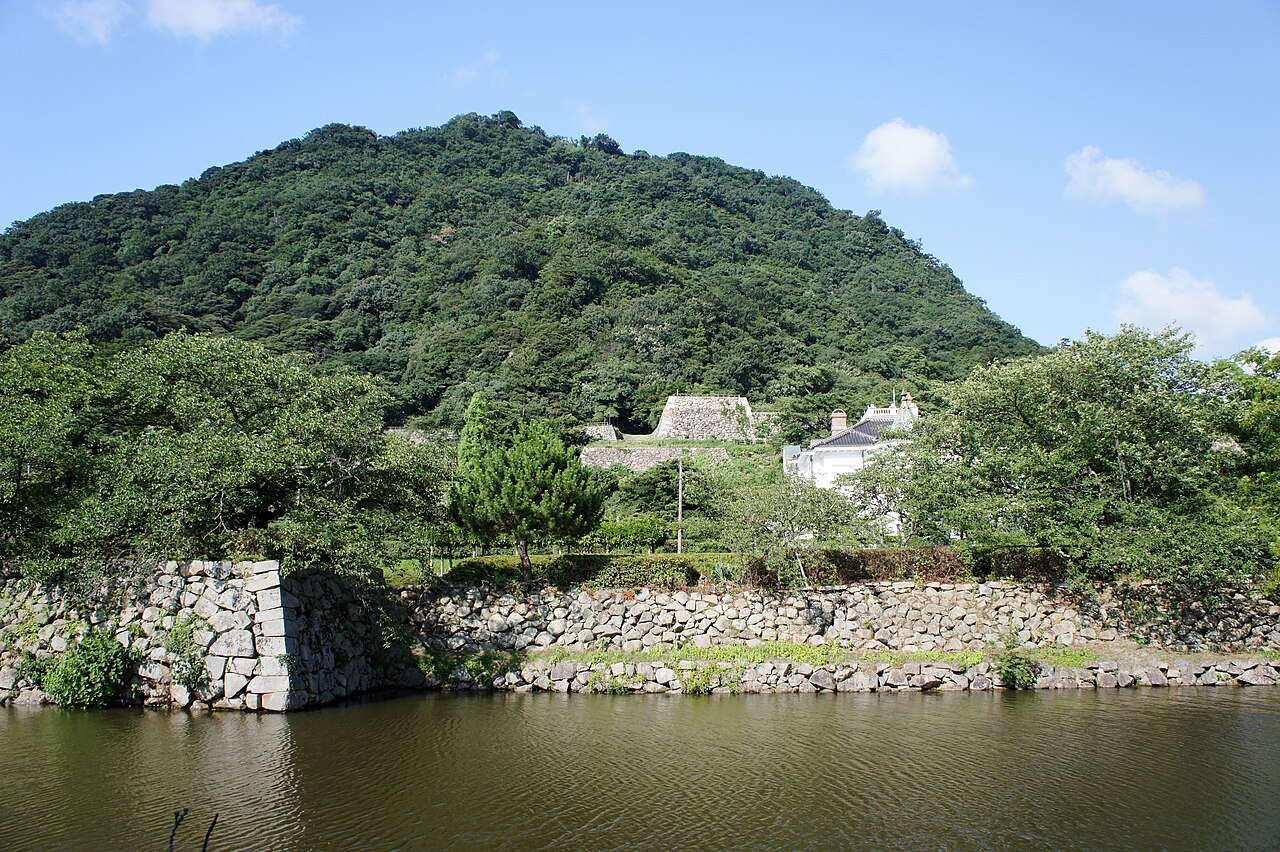
Photo by 663highland • CC BY 2.5
Later developments and preservation
After the Battle of Sekigahara, Ikeda Nagayoshi undertook significant expansions and rebuilding efforts, enhancing the castle's structures and fortifications. The castle remained an important regional seat through the Edo period, although its military significance declined with the advent of modern warfare.
In the Meiji period, a conspicuous western-style house was built at the foot of the castle by aristocrats, notable for being the first building in Tottori to have electric lighting. This building now serves as a museum, adding cultural value to the site.
Today, Tottori Castle stands as a partially preserved ruin, attracting visitors who appreciate its historic stone walls and panoramic views. The trek to the summit, while challenging, rewards visitors with stunning vistas and a close look at the castle's unique architectural features.
Visiting Tottori Castle
Visitors to Tottori Castle can explore the extensive stone ramparts and enjoy the spectacular views from the summit. The castle grounds offer a glimpse into Japan's feudal past and the architectural ingenuity of its builders. The museum housed in the western-style building provides additional historical context and exhibits related to the castle and the region.
The castle's main gate reconstruction and well-maintained paths make it accessible, though the climb to the top requires a moderate level of fitness. The site is ideal for history enthusiasts, architecture lovers, and those interested in Japan's samurai heritage.
Legacy and cultural importance
Tottori Castle remains a symbol of resilience and strategic military design in Japan's history. Its unique Tenkyū ishigaki and extensive stone fortifications are celebrated examples of castle architecture from the Sengoku period. The castle's story, including the famed siege by Hideyoshi, continues to captivate historians and visitors alike, making it a vital cultural landmark in the Tottori region.
Frequently asked questions (FAQ)
- How do I get to Tottori Castle?
- Tottori Castle is located in Tottori city and can be reached by local bus or taxi from Tottori Station. The castle grounds are accessible by foot from the city center.
- What is the best time to visit Tottori Castle?
- The best time to visit is during spring and autumn when the weather is mild and the surrounding landscape is particularly beautiful with cherry blossoms or autumn foliage.
- Is Tottori Castle accessible for people with limited mobility?
- Due to the castle's hilltop location and uneven stone paths, access may be challenging for visitors with limited mobility. Some areas require climbing steep slopes.
- Are there guided tours available at Tottori Castle?
- Guided tours are occasionally available, especially during peak tourist seasons. Visitors can also explore the castle grounds independently with informational signage provided.
- Can I visit the museum at the castle?
- Yes, the western-style house at the foot of the castle now operates as a museum showcasing the castle's history and local heritage. It is open during regular visiting hours.
Photo gallery

Information
Website
Visit websiteSources & official resources
Verify the information above using these authoritative references.
Loading map...
Visitor reviews
No reviews yet. Been here? Write the first review and help other travelers!
Write the first reviewVisited this castle? Share your experience
Your review helps other travelers and adds first-hand knowledge to our encyclopedia.