Torsburgen Fortress
Torsburgen fortress stands as the largest ancient hillfort in Northern Europe, located on the Swedish island of Gotland in the Baltic Sea. This vast hillfort was originally constructed between the 1st and 4th centuries AD and remained in use until approximately the 12th century. It occupies a plateau of about 1.2 square kilometers (0.46 square miles), making it one of the most significant prehistoric fortifications in Scandinavia.
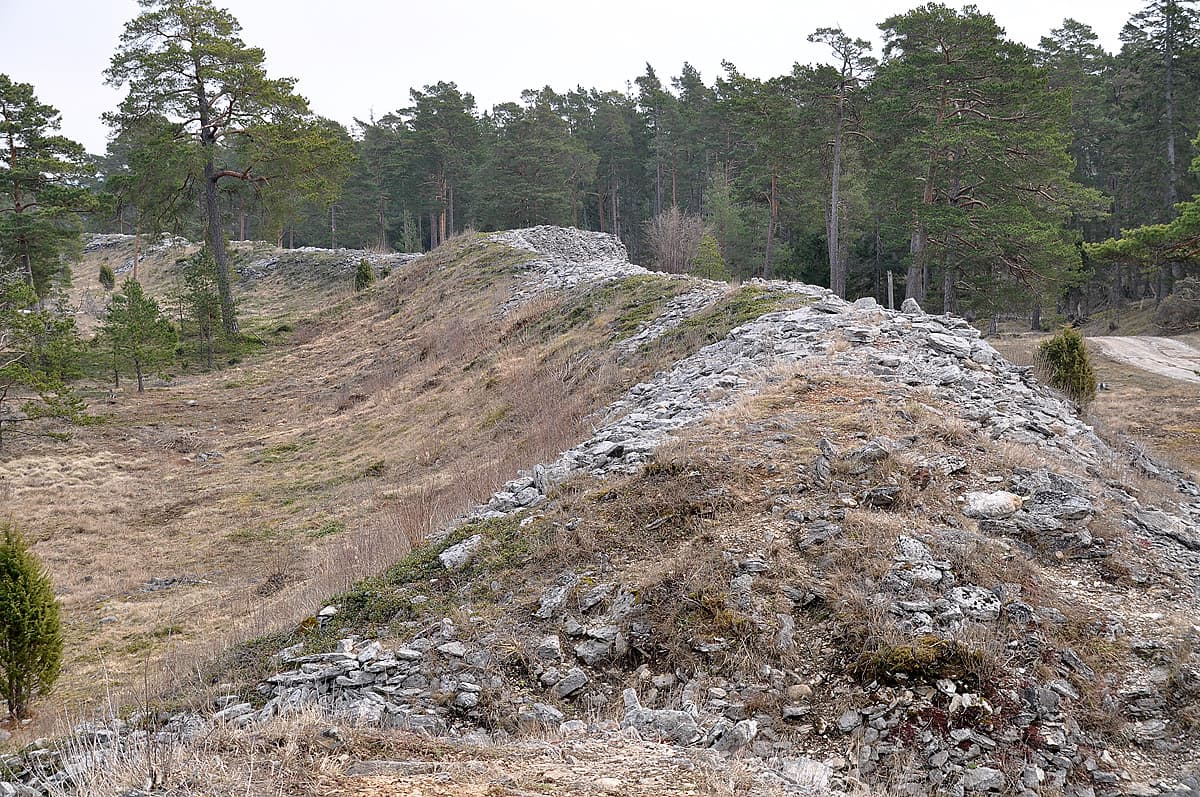
The fort's strategic location on a plateau with naturally steep cliffs provided formidable natural defenses. These cliffs, combined with an extensive timber-laced stone rampart encircling roughly 12 hectares, created a nearly impregnable stronghold. The ramparts stretch for almost 2 kilometers (1.2 miles), enclosing an area large enough to shelter the entire population of Gotland during the early medieval period, estimated between 6,000 and 10,000 inhabitants.
Historical context and significance
The construction of Torsburgen dates back to the early centuries AD, with initial fortifications likely established around the 1st century. Archaeological evidence suggests that the site was reinforced during the 4th century, reflecting its ongoing military and communal importance. The fortress was actively used until around 1100 AD, coinciding with the end of the Viking Age and the early medieval period in Scandinavia.
Its mention in the Gutasaga, a medieval saga describing the history of Gotland and its people, highlights the cultural and historical importance of Torsburgen. The saga references the fort as a place of refuge and defense, emphasizing its role in the island's early medieval society.
Architectural features and defensive structures
Ramparts and walls
The defining feature of Torsburgen fortress is its extensive stone ramparts, which are reinforced with timber to increase their strength and resilience. These ramparts form a continuous defensive barrier around the plateau, taking advantage of the natural topography. The walls reach impressive heights and thicknesses, designed to withstand sieges and attacks.
Natural defenses
The fortress is situated on a plateau surrounded by steep cliffs on most sides, providing natural protection that reduced the need for extensive man-made fortifications in some areas. This topography made direct assaults difficult and allowed defenders to control access points effectively.
Internal layout and capacity
Within the ramparts, the large enclosed area could accommodate a substantial population during times of conflict. Estimates suggest that the fort could shelter the entire island's population at the time, requiring a garrison of nearly 1,000 soldiers to defend it effectively. The internal space likely included living quarters, storage facilities, and communal areas, although much of the internal archaeology remains to be fully explored.
Archaeological research and preservation
Today, Torsburgen is classified as an archaeological ruin and is protected as a nature reserve. Excavations and studies have revealed insights into its construction techniques and historical usage. The site offers valuable information about early medieval fortifications in Scandinavia and the social organization of Gotland's inhabitants.
Preservation efforts focus on maintaining the integrity of the ramparts and the natural environment surrounding the fortress. Visitors can explore the ruins and appreciate the scale and strategic ingenuity of this ancient stronghold.
Visitor information and cultural importance
Torsburgen is accessible to the public and serves as both a historical site and a natural reserve. Its vast area and dramatic cliffs provide opportunities for hiking and sightseeing. The fortress remains a symbol of Gotland's rich history and heritage, attracting scholars, tourists, and locals interested in medieval and prehistoric Scandinavian culture.
The site's inclusion in the Gutasaga and its impressive scale make it a unique example of early fortification architecture, reflecting the defensive needs and community organization of its time.
Frequently asked questions (FAQ)
- When was Torsburgen fortress built and how long was it in use?
- Torsburgen fortress was initially constructed between the 1st and 4th centuries AD and was used until around the 12th century, serving as a defensive stronghold for over a millennium.
- What are the main defensive features of Torsburgen fortress?
- The fortress features extensive timber-laced stone ramparts nearly 2 kilometers long, combined with natural steep cliffs surrounding the plateau, making it a formidable defensive site.
- Can visitors explore Torsburgen today?
- Yes, Torsburgen is accessible to the public as an archaeological ruin and nature reserve, offering hiking and sightseeing opportunities around the historic fortifications.
- What is the historical significance of Torsburgen in Gotland's history?
- Torsburgen is mentioned in the Gutasaga, highlighting its role as a refuge and defensive fortress for the population of Gotland during the early medieval period.
- How large is the area enclosed by Torsburgen's ramparts?
- The ramparts enclose an area of approximately 12 hectares on a plateau of about 1.2 square kilometers, large enough to shelter thousands of inhabitants during times of conflict.
Photo gallery

Information
Loading map...
Visitor reviews
No reviews yet. Been here? Write the first review and help other travelers!
Write the first reviewVisited this castle? Share your experience
Your review helps other travelers and adds first-hand knowledge to our encyclopedia.