Bulverket — Sweden castle

Bulverket

Bulverket wooden fortification on Gotland, Sweden
High Medieval (11th–13th c.)
Ruins

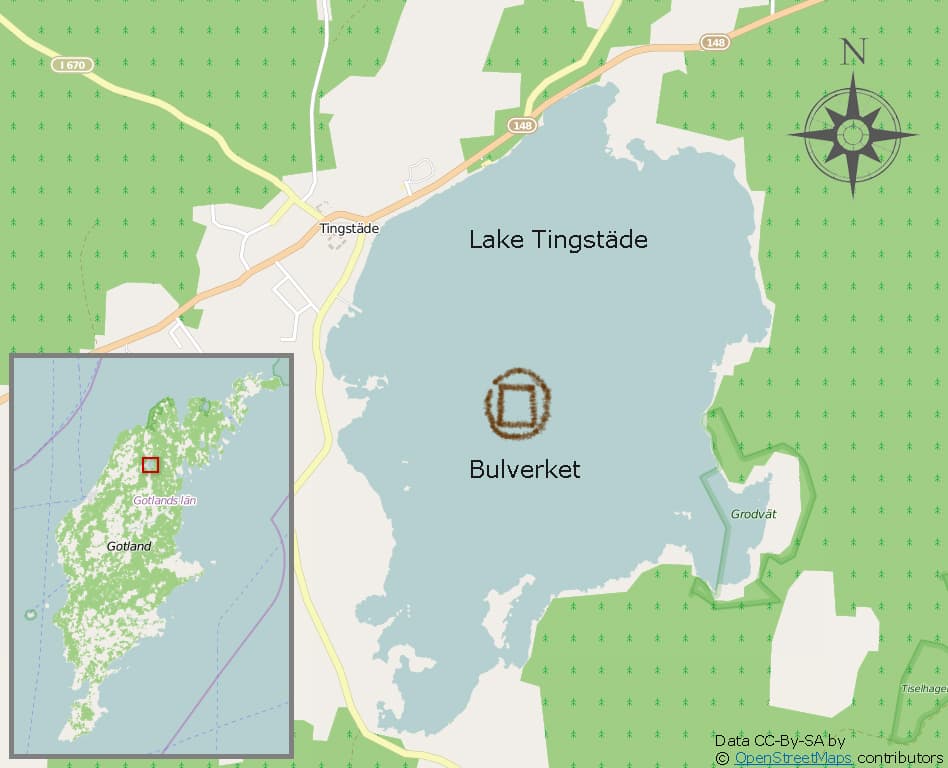
The Bulverket is a remarkable example of a large wooden fortification located in Lake Tingstäde on the island of Gotland, Sweden. Constructed in the 12th century, this unique structure was an extensive bulwark with a diameter of approximately 250 meters (820 feet). It consisted of a vast platform supporting several houses, all enclosed within a double palisade, a defensive wooden fence made from sharpened stakes.

Construction and architectural features

The Bulverket's design is unusual among medieval fortifications due to its entirely wooden composition and its placement on water. The platform was built on wooden piles driven into the lake bed, creating an artificial island. This method of construction provided a stable base for the residential and defensive structures atop the platform. The double palisade surrounding the fortification served as a formidable barrier against attackers, enhancing the defensive capabilities of the site.

The fortification's diameter of around 250 meters made it an impressive feat of medieval engineering. The layout likely included multiple buildings arranged within the enclosure, possibly serving both domestic and military functions. The presence of houses suggests that the Bulverket was more than just a temporary refuge; it may have been a semi-permanent settlement or a stronghold.

Historical context and purpose

Archaeological investigations, including a significant survey conducted in 1989, date the construction of the Bulverket to the 1130s. The structure appears to have been in use for less than a century, indicating a specific and possibly urgent purpose during a turbulent era in Gotland's history. The high medieval period in this region was marked by political instability and conflicts, which may have necessitated such a defensive installation.

The exact purpose of the Bulverket remains uncertain, but several theories exist. One proposes that it served as a shelter or refuge during the unsettled times at the end of the Viking Age and the beginning of the medieval era. Alternatively, it may have been the site of a last stand or a military stronghold during local conflicts. Its robust construction and strategic location on water would have made it difficult to besiege.

Archaeological discoveries and cultural significance

Excavations at the Bulverket have uncovered a variety of artifacts, most notably the remains of three boats. These finds provide valuable insight into the maritime culture of the period and the technological capabilities of the builders. One of the boats served as the model for the reconstruction of a Viking ship named Krampmacken in 1980. This reconstructed vessel has since undertaken several voyages retracing ancient Viking waterways through Eastern Europe, highlighting the enduring legacy of Viking maritime craftsmanship.

The Bulverket stands as a rare example of medieval wooden fortifications, contrasting with the more common stone castles of the period. Its preservation as remnants offers a unique window into the defensive strategies and settlement patterns on Gotland during the high medieval period. The site contributes to the understanding of Viking Age transitions and the adaptations communities made in response to changing political and social landscapes.

Location and accessibility

Situated in the shallow waters of Lake Tingstäde, the Bulverket's location was strategic for defense and access to waterways. Today, the site is primarily an archaeological landmark, with visible remains that attract researchers and visitors interested in medieval Scandinavian history. While no extensive visitor facilities exist, the area around Lake Tingstäde offers a scenic setting for exploring Gotland's rich cultural heritage.

Frequently asked questions (FAQ)

What is the historical significance of Bulverket Castle?
Bulverket Castle, built in the late 16th century, served as a strategic fortification during conflicts in Scandinavia. Its design reflects the military architecture of the period, showcasing the importance of defense in Swedish history. Today, it stands as a testament to Sweden's rich cultural heritage and attracts many history enthusiasts.
When was Bulverket Castle constructed?
Bulverket Castle was constructed in 1580 under the orders of King Charles IX of Sweden. It was originally built to protect the coastal waters and trade routes from enemy ships. Over the years, it has undergone various renovations, preserving its historical character while adapting to modern needs.
Can I visit Bulverket Castle?
Yes, Bulverket Castle is open to visitors throughout the year. Guided tours are available, providing insights into its fascinating history and architecture. It's advisable to check the official website for specific visiting hours and any seasonal events.
What are the opening hours for Bulverket Castle?
The opening hours for Bulverket Castle vary by season. Typically, it is open daily from April to October, with extended hours during the summer months. During the winter, it operates on a limited schedule, so it’s best to verify current hours before your visit.
Is it possible to access Bulverket Castle by public transportation?
Yes, Bulverket Castle is accessible by public transportation, with several bus lines servicing the area. If you're traveling from nearby cities, check local transit schedules for the best routes. Additionally, there are parking facilities available for those who choose to drive.
What is the best time to visit Bulverket Castle?
The best time to visit Bulverket Castle is during the late spring and summer months, from May to August, when the weather is pleasant and the castle grounds are in full bloom. This period also features various cultural events and activities. However, if you prefer fewer crowds, consider visiting in early spring or early autumn.
Are there any nearby attractions to visit alongside Bulverket Castle?
Yes, there are several nearby attractions worth exploring, including historical museums and scenic parks. The surrounding area offers beautiful nature trails and waterfront views, perfect for a day of exploration. Don't miss the chance to enjoy local restaurants and cafes that showcase Swedish cuisine.
What are the ticket prices for Bulverket Castle?
Ticket prices for Bulverket Castle vary depending on the season and the type of tour. Generally, adult tickets are priced around 100 SEK, while discounts are available for children and seniors. Check the official website for the most up-to-date pricing and any special offers.

Photo gallery

Bulverket
Click to view

Photo by © OpenStreetMaps contributors, W.carter, Vascer, Arvid Zetterling•CC BY-SA 4.0

1 photo • Click any image to view in full screen

Information

Hill Castle

Loading map...

Visitor reviews

No reviews yet. Been here? Write the first review and help other travelers!

Write the first review

Visited this castle? Share your experience

Your review helps other travelers and adds first-hand knowledge to our encyclopedia.
Write a review

(5/5)

0/2000 characters

Your review will be visible after admin approval

Nearby castles

22.1 km
City wall of Visby — Sweden castle

City wall of Visby

Visby, Sweden

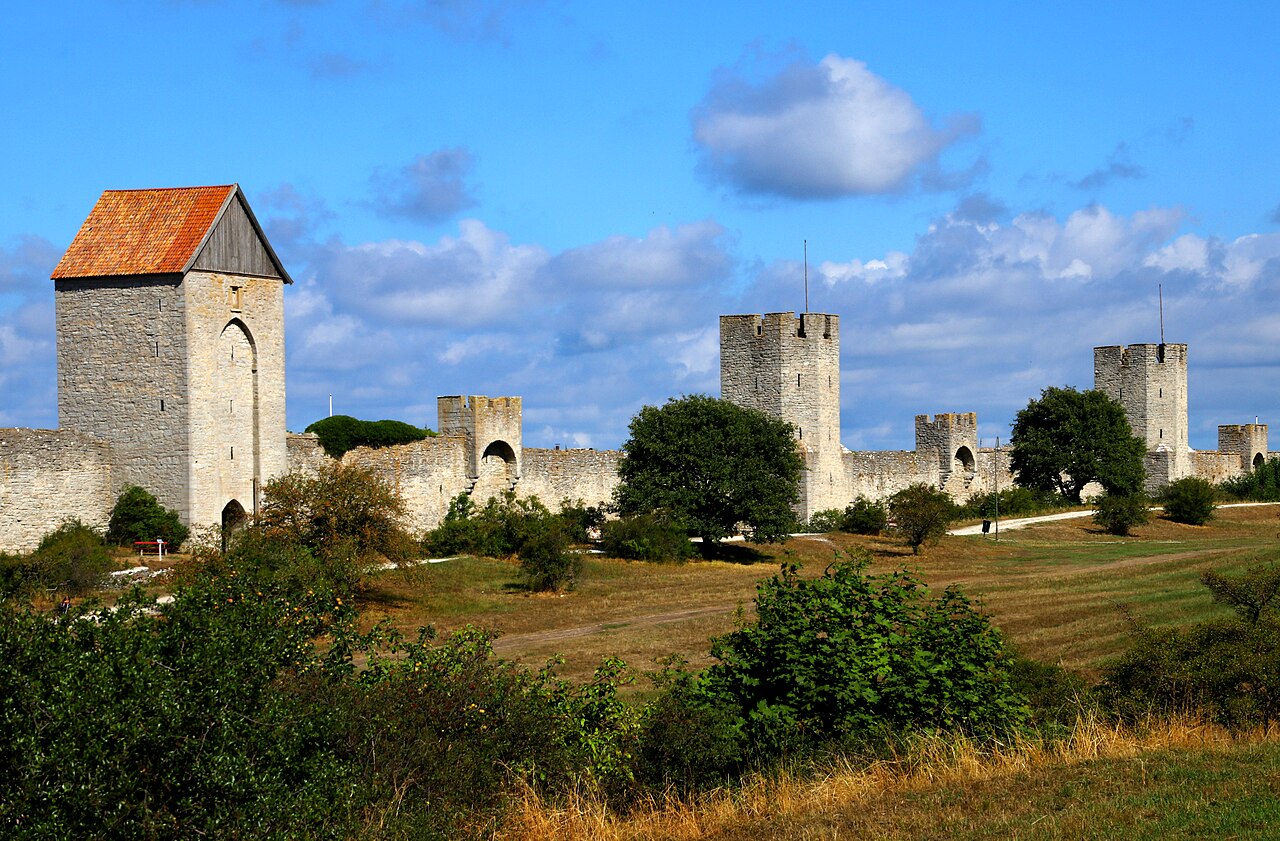
Visby city wall (Swedish: Visby ringmur, "Visby Ring Wall") is a prominent medieval defensive structure encircling the historic town of Visby on the island of Gotland, Sweden. Recognized as the strongest, most extensive, and best-preserved medieval city wall in Scandinavia, it is a vital component of the Visby World Heritage Site. This fortification exemplifies medieval urban defense and reflects the town's historical significance as a major Baltic trading hub during the High Medieval period. Construction and architectural features The Visby city wall was constructed in two main phases during the 13th and 14th centuries. Originally, the wall stretched approximately 3.6 kilometers (2.2 miles), of which about 3.44 kilometers (2.14 miles) still stand today, showcasing remarkable preservation. The wall incorporates a total of 29 large towers and 22 smaller towers, with 27 large and 9 smaller towers surviving. These towers were strategically placed to provide overlapping fields of fire and to strengthen the wall’s defensive capabilities. One of the unique aspects of the wall’s construction is the integration of several pre-existing houses within its structure during one of the building phases. This incorporation illustrates a pragmatic adaptation to the urban landscape and the need to fortify the town efficiently. The wall is built primarily of local limestone, typical of the region, and features battlements and crenellations that allowed defenders to observe and repel attackers. The fortification also includes several gates that controlled access to the town, each historically equipped with portcullises and drawbridges. Historical significance and modifications Visby was a vital trading center in the Baltic Sea during the High Medieval period, part of the Hanseatic League’s network. The city wall played a crucial role in protecting the town from rival powers and pirates, contributing to Visby’s prosperity and security. During the 18th century, the fortifications underwent modifications to adapt to changes in military technology. Several towers were rebuilt or reinforced to accommodate cannons, reflecting the evolution from medieval to early modern warfare. Additional bastioned fortifications were added in some sections to improve the defensive perimeter against artillery attacks. Key historical events The wall witnessed several sieges and conflicts, notably during the 1361 Danish invasion led by King Valdemar IV, when the town was attacked and partially damaged. Despite this, the fortifications remained largely intact and were repaired and strengthened in subsequent years. Preservation and cultural importance Today, the Visby city wall is considered one of the best-preserved medieval city walls in Europe. Its extensive survival offers valuable insight into medieval urban defense architecture and the historical development of fortified towns in Scandinavia. The wall is a central feature of the Visby World Heritage Site, attracting numerous visitors interested in medieval history, architecture, and Scandinavian cultural heritage. Conservation efforts have ensured the wall’s structural integrity and accessibility for educational and tourism purposes. Visitor experience Visitors to Visby can walk along sections of the city wall, explore the towers, and learn about the medieval fortification system through informative displays and guided tours. The wall’s impressive scale and preservation make it a striking visual reminder of Visby’s medieval past.

High Medieval (11th–13th c.)
Details
22.8 km
Visborg — Sweden castle

Visborg

Visby, Sweden

Visborg castle, also known as Wisborg, was a significant late medieval bastioned fortress located in the historic town of Visby on the Swedish island of Gotland. Constructed in the 15th century, the fortress was commissioned by King Erik of Pomerania, the ruler of the Kalmar Union, as a strategic stronghold and royal residence following his deposition. The castle played a crucial role in the military and political landscape of the Baltic region during this period.Historical context and constructionThe construction of Visborg castle began around the early 1400s, during a time when the Kalmar Union united the kingdoms of Denmark, Sweden, and Norway under a single monarch. King Erik of Pomerania sought to consolidate his power and secure his rule by building a formidable fortress on Gotland, an island that was strategically located in the Baltic Sea and vital for controlling trade routes. The fortress was erected on a promontory overlooking Visby’s harbor, providing commanding views and defensive advantages.Visborg was designed as a bastioned fortress, a style that incorporated angled bastions projecting from the walls to allow defensive artillery to cover all approaches. This architectural approach was innovative for its time, reflecting the evolving military technology and the increasing use of gunpowder weapons in siege warfare. The fortress featured thick stone walls, multiple bastions, and a complex system of defensive structures including moats and ramparts.Architectural features and layoutThe castle’s layout was characterized by its massive curtain walls punctuated by bastions that provided overlapping fields of fire. The walls were constructed from locally quarried limestone, a common building material on Gotland, known for its durability. The fortress included a central keep or donjon, residential quarters for the king and his retinue, storage facilities, and garrison barracks.Visborg’s design prioritized defense but also accommodated royal residence needs. The living quarters featured large halls and chambers, some decorated in the style of the period, though much of the interior detail has been lost due to the castle’s eventual destruction. The fortress also had a gatehouse that controlled access to the castle grounds, reinforced with heavy wooden doors and iron portcullises.Role in regional conflicts and political significanceAfter King Erik’s deposition, Visborg castle remained a key Danish stronghold on Gotland. The island was a contested territory between Denmark and Sweden, and Visborg served as the main military base for Danish forces in the Baltic Sea. The fortress was involved in several conflicts during the 16th and 17th centuries, including skirmishes and sieges related to the shifting control of Gotland.Visborg’s strategic importance was underscored during the Thirty Years’ War and other regional conflicts, as control of the fortress meant dominance over Baltic maritime trade routes. The castle’s bastioned defenses were adapted over time to meet the challenges of evolving artillery technology, maintaining its role as a formidable military installation.Destruction and current stateVisborg castle was ultimately destroyed in 1679 following the Treaty of Copenhagen and the shifting political landscape in Scandinavia. The fortress was deliberately dismantled to prevent its future military use. Today, only fragments of the original walls and bastions remain, overlooking the harbor of Visby. These ruins provide valuable insights into late medieval military architecture and the history of Gotland.The site is accessible to visitors who can explore the remnants and enjoy panoramic views of the Baltic Sea. Interpretive signage and local museums in Visby offer additional context about the castle’s history and significance.Visborg castle in cultural heritageVisborg castle is an important cultural landmark in Gotland, reflecting the island’s turbulent history and its role in Baltic power struggles. The fortress stands as a reminder of the Kalmar Union’s influence and the military innovations of the late medieval period. Preservation efforts focus on maintaining the ruins and promoting public awareness of this historic site.

Late Medieval (14th–15th c.)
Details
29.8 km
Fårösund Fortress — Sweden castle

Fårösund Fortress

Fårösund, Sweden

Fårösund Fortress is a bastioned fortress located in Fårösund on the island of Gotland, Sweden. Constructed between 1885 and 1886, it represents Sweden's strategic response to geopolitical tensions following the Crimean War (1854–1856). The war exposed vulnerabilities in Sweden's coastal defenses, prompting the British and French to encourage Sweden to fortify key naval inlets, including the one at Fårösund, to maintain Swedish neutrality and protect the Baltic Sea approaches. Strategic importance and historical context The location of Fårösund Fortress was chosen for its control over the narrow strait between Gotland and the smaller island of Fårö, a critical maritime passage. The fortress was part of a broader effort to modernize Sweden's coastal defenses in the late 19th century, reflecting advances in military technology and shifting naval tactics. Its construction was a direct result of international pressure and the recognition that Sweden needed to secure its maritime borders against potential incursions. Architectural design and fortifications Fårösund Fortress was designed as a bastioned fortress, a style characterized by angular bastions projecting from the main walls to provide overlapping fields of fire and minimize blind spots. The fortress comprised three fixed artillery batteries equipped with naval guns and was supplemented by naval mines in the surrounding waters to deter enemy ships. The design emphasized both static defense and the ability to control naval traffic through the strait. Armament and upgrades Initially, the fortress housed traditional artillery suitable for the period, but by the turn of the 20th century, it underwent significant modernization. Batteries I and II were upgraded with quick-firing 57 mm guns, four per battery, enhancing the fortress's ability to respond rapidly to fast-moving naval threats. These upgrades reflected the evolution of artillery technology and the increased importance of rapid-fire capabilities in coastal defense. Decommissioning and subsequent uses In 1919, following changes in military strategy and the reduced threat level after World War I, the fortress was officially decommissioned. All military equipment was removed, marking the end of its role as an active defense installation. Subsequently, the site was repurposed by the Swedish Prison and Probation Service, which established a penitential center within the fortress. This use was part of a plan to house socially dangerous offenders, contingent on legislative developments. Current status and cultural significance Today, Fårösund Fortress has been transformed into a hotel and restaurant, preserving much of its historic structure while adapting it for tourism and hospitality. The fortress stands as a tangible reminder of Sweden's military history and coastal defense strategies during the modern period. Its well-preserved bastions and batteries offer visitors insight into late 19th-century fortification design and the geopolitical concerns of the era. Visitor experience Guests at the fortress can explore the robust bastioned walls and the remains of the artillery batteries, gaining an understanding of the strategic importance of the site. The conversion into a hotel allows for immersive experiences within the historic setting, combining cultural heritage with modern amenities. The fortress's location on Gotland also makes it a gateway for exploring the broader maritime history of the Baltic Sea region.

Modern (19th–20th c.)
Details