Torres de Quart
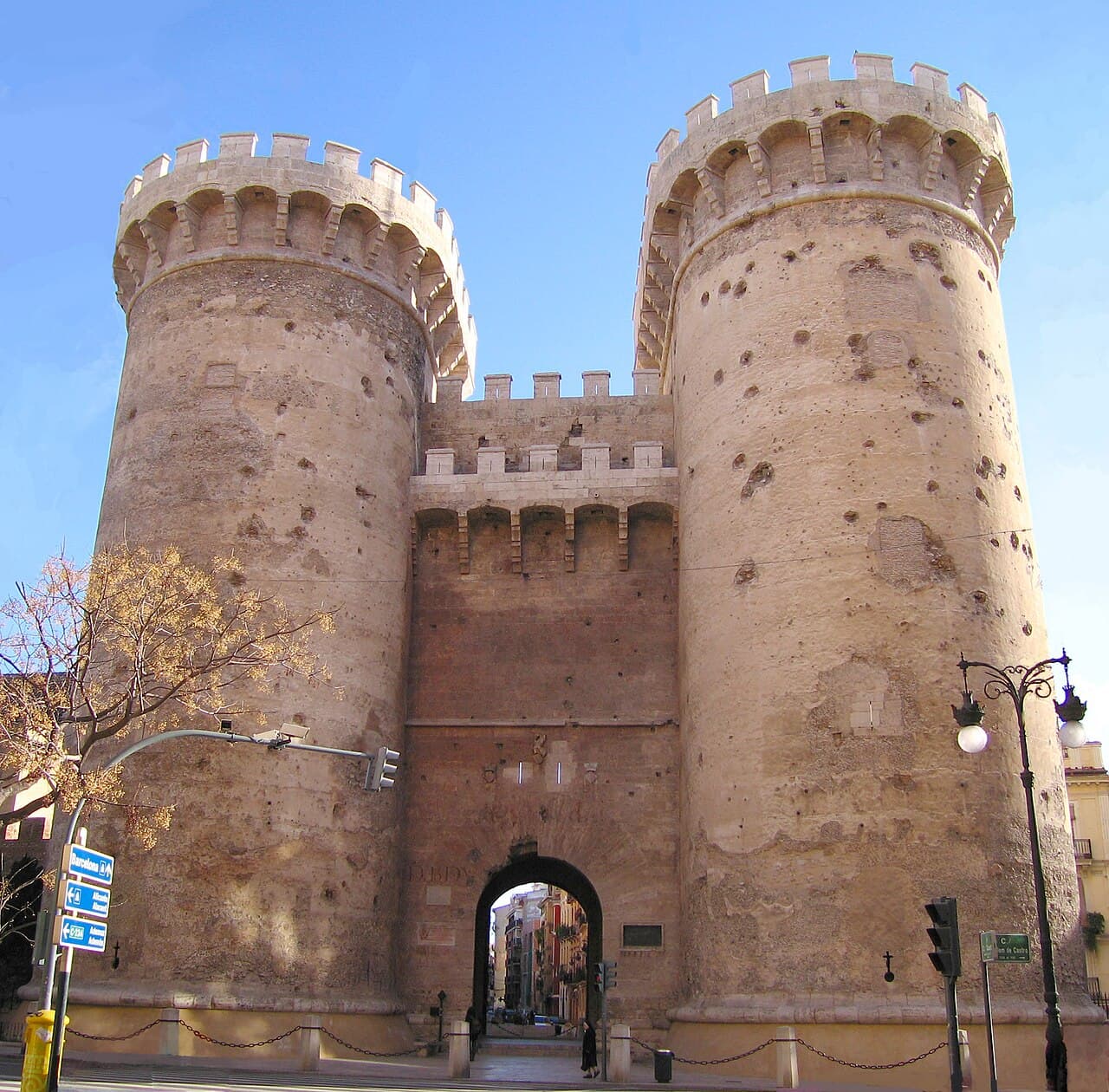
Torres de Quart, also known as Puerta de Quart or de Cuarte, is one of the two surviving gates of the ancient Valencia city wall in Spain. Constructed between 1441 and 1493, this imposing bastioned fortress gate served as a critical defensive structure during the late medieval period. It stands as a remarkable example of military architecture from the 15th century, reflecting the strategic importance of city fortifications in protecting Valencia from external threats.
Architectural features and defensive design
The Torres de Quart is characterized by its robust bastioned fortress design, which was innovative for its time. The gate features thick stone walls, crenellated battlements, and multiple defensive towers that provided vantage points for guards and artillery. The structure incorporates arrow slits and gun ports, evidencing adaptations to the evolving use of firearms in siege warfare during the 15th century. Its large arched entrance was originally protected by heavy wooden doors and a portcullis, allowing controlled access to the city.
The bastioned design allowed defenders to cover all approaches with overlapping fields of fire, an advancement over earlier medieval gatehouses. The gate's walls were angled and reinforced to better resist cannon fire, a testament to the increasing use of gunpowder artillery in the late medieval military engineering. Surrounding the gate, remnants of the old city walls and moats further enhanced its defensive capabilities.
Historical significance and wartime role
Throughout its history, the Torres de Quart played a vital role in the defense of Valencia. It was an integral part of the city’s fortifications during numerous conflicts, including the Peninsular War (1807–1814). During this war, the gate sustained visible damage from cannonballs and musket shots, marks that remain on its walls today and serve as tangible reminders of the city's turbulent past.
The gate also functioned as a checkpoint controlling trade and movement into Valencia, contributing to the city's economic and military security. Its strategic position on the western side of the old city made it a critical barrier against invasions from inland forces.
Preservation and cultural importance
Today, the Torres de Quart is well preserved and protected as a cultural heritage monument. It attracts numerous visitors interested in medieval architecture and Spanish history. The gate stands not only as a symbol of Valencia’s medieval past but also as a monument to the evolution of military fortifications in Europe.
Visitors can observe the battle scars on its walls, including the cannonball impacts from the Peninsular War, which provide a direct connection to the historical events that shaped the region. The site is often included in guided tours of Valencia’s historic center, highlighting its architectural and historical significance.
Architectural style and construction details
The gate's construction reflects the transition from traditional medieval fortifications to early modern bastioned designs influenced by Renaissance military engineering principles. While primarily late medieval in origin, the Torres de Quart integrates features that anticipate the Renaissance emphasis on angled bastions and artillery defense.
Built mainly from local stone, the gate’s masonry demonstrates skilled craftsmanship with carefully cut blocks and robust mortar. The defensive towers flanking the gate rise several stories high, providing both a commanding view of the surrounding area and strong points for defense.
Notable architectural elements
- Bastioned towers: These projecting structures allowed defenders to cover the base of the walls, reducing blind spots.
- Crenellated battlements: Provided cover for defenders while allowing them to fire upon attackers.
- Arrow slits and gun ports: Adapted for both traditional archery and early firearms.
- Portcullis and heavy wooden doors: Controlled access and enhanced security.
Location and visitor information
The Torres de Quart is located in the city of Valencia, within the Valencian Community region of Spain. It remains a prominent landmark near the historic city center, easily accessible to tourists and locals alike.
Visitors can explore the exterior and parts of the interior, gaining insight into medieval defensive architecture. The site is often open to the public with guided tours available, providing detailed historical context and architectural explanations.
Frequently asked questions
- When was Torres de Quart built? It was constructed between 1441 and 1493 during the late medieval period.
- What is the architectural style of Torres de Quart? It primarily reflects late medieval military architecture with early bastioned fortress elements.
- Can visitors see the battle damage on the gate? Yes, cannonball and musket shot marks from the Peninsular War are still visible on the walls.
- Is Torres de Quart accessible to the public? Yes, it is open for visits, often with guided tours explaining its history and architecture.
- Where is Torres de Quart located? It is situated in Valencia, Spain, near the historic city center.
Frequently asked questions (FAQ)
- How do I get to Torres de Quart?
- Torres de Quart is located in the heart of Valencia, making it easily accessible by public transportation. You can reach the castle by taking the metro to Xàtiva station or various bus lines that stop nearby.
- What is the historical significance of Torres de Quart?
- Torres de Quart is a prominent medieval structure built in the 15th century as part of the city's defensive walls. It showcases Valencia's rich history and architectural evolution, representing a blend of Gothic and Renaissance styles.
- When was Torres de Quart built?
- Construction of Torres de Quart began in 1441 and was completed in 1460. It served as a vital part of Valencia's fortifications, protecting the city from various invasions throughout history.
- Can I climb to the top of Torres de Quart?
- Yes, visitors can climb to the top of Torres de Quart for a stunning panoramic view of Valencia. The climb involves navigating a series of stone steps, providing a unique perspective of the city’s skyline and historical landmarks.
- Why is Torres de Quart considered an architectural gem?
- Torres de Quart is considered an architectural gem due to its impressive design and intricate details, including Gothic arches and defensive features. Its well-preserved state allows visitors to appreciate the craftsmanship of the period.
- Is it possible to visit Torres de Quart during the off-season?
- Yes, Torres de Quart is open to visitors year-round, including during the off-season. However, it's advisable to check the official website for any changes in opening hours or special events that may affect access.
- What are the ticket prices for visiting Torres de Quart?
- The ticket prices for Torres de Quart are quite affordable, typically ranging around €2 for adults and €1 for students and seniors. Children under a certain age may enter for free, so it’s a budget-friendly attraction for families.
- What are the opening hours for Torres de Quart?
- Torres de Quart generally opens daily, with hours varying by season. It is recommended to visit the official website or contact the site directly for the most up-to-date information on opening times.
- What nearby attractions can I visit after Torres de Quart?
- After visiting Torres de Quart, you can explore other nearby attractions such as the Valencia Cathedral and the Central Market. These sites are within walking distance and provide further insight into the rich cultural heritage of Valencia.
Photo gallery

Photo by Felivet•Public domain
Information
Loading map...
Visitor reviews
No reviews yet. Been here? Write the first review and help other travelers!
Write the first reviewVisited this castle? Share your experience
Your review helps other travelers and adds first-hand knowledge to our encyclopedia.