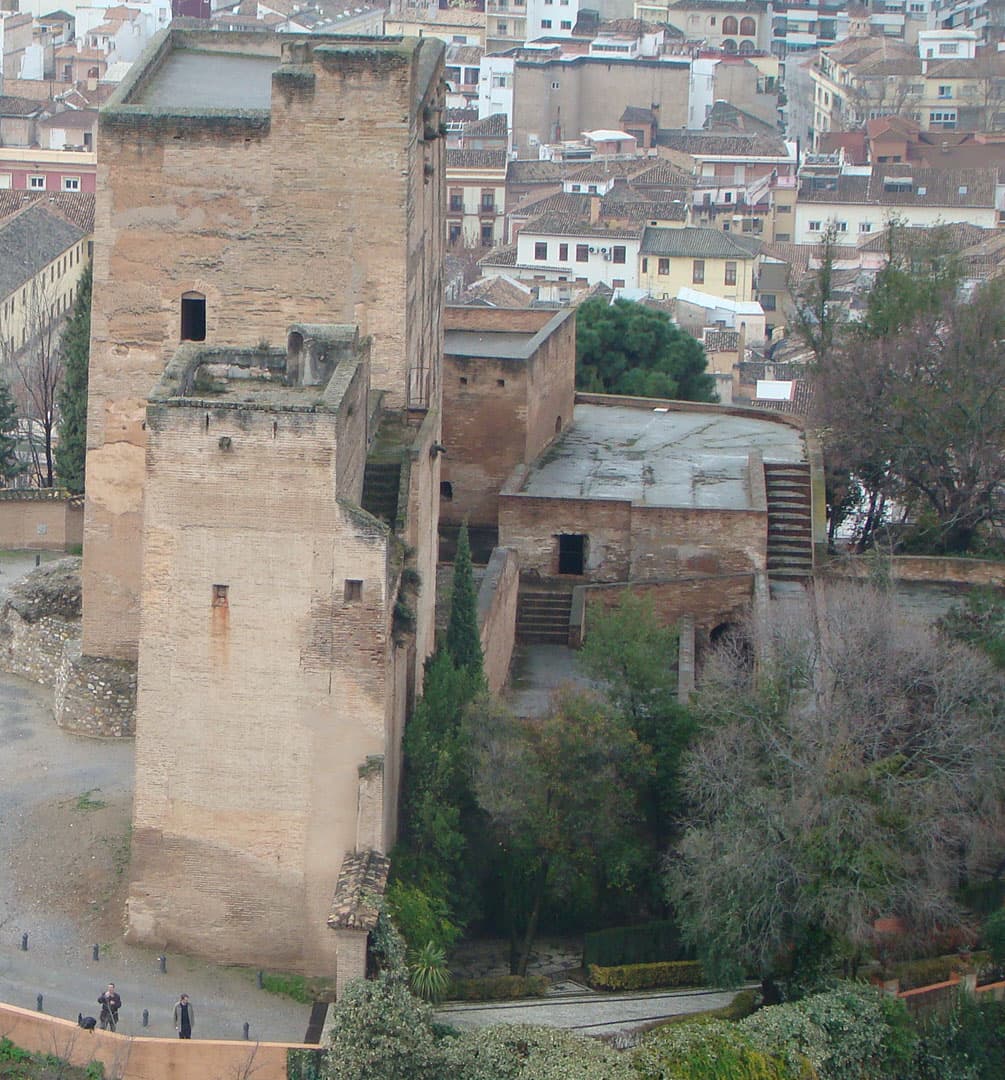
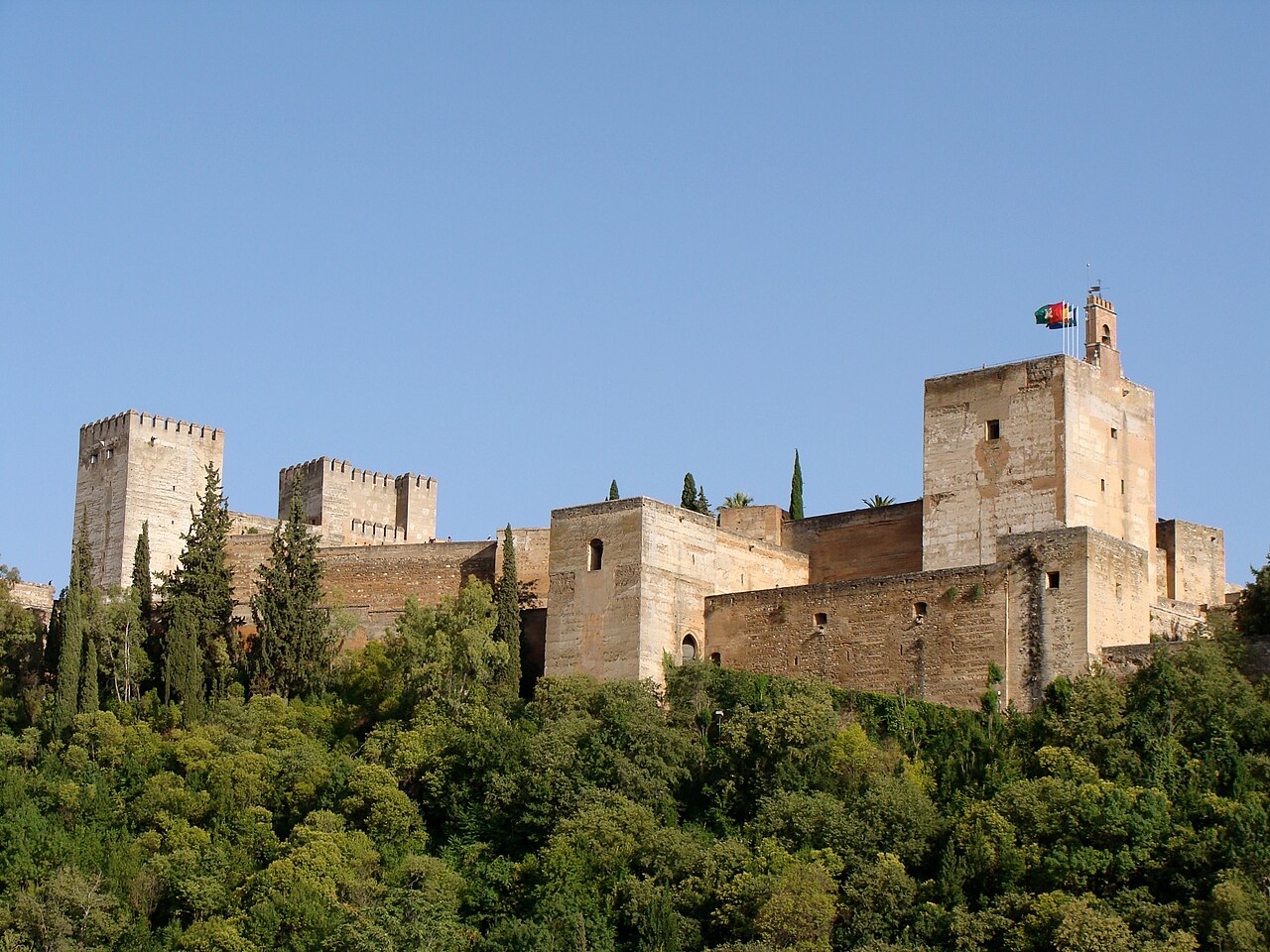
Torres Bermejas Castle — Spain castle

Torres Bermejas Castle

Torres Bermejas Castle in Spain
Early Medieval (5th–10th c.)
Ruins

Torres Bermejas Castle is a notable example of a hill castle constructed during the early medieval period, specifically in the 9th century. Located in Spain, this castle occupies a strategic elevated position, typical of hill castles built to oversee and control surrounding territories.

Historical context and significance

The castle was erected during a time of frequent territorial conflicts on the Iberian Peninsula, a period marked by the Reconquista and the struggle between Christian and Muslim forces. Its construction in the 9th century places it among the early defensive structures aimed at securing borders and protecting local populations.

As a hill castle, Torres Bermejas was designed to maximize natural topographical advantages. The elevated location provided extensive visibility and made direct assaults difficult for enemies. This strategic placement was crucial for early medieval fortifications in Spain, where control of high ground often dictated military success.

Architectural features

The castle's architecture reflects the functional priorities of early medieval military design. While specific details about its original layout are limited, typical features of such castles include thick defensive walls, battlements, and a central keep or tower that served as the last line of defense.

Given its early medieval origin, the castle likely incorporated Romanesque architectural elements, characterized by robust construction, semicircular arches, and simple geometric forms. Defensive features such as narrow arrow slits and fortified gates would have been essential components.

Defensive structures

The castle's walls were probably constructed from locally sourced stone, forming a solid barrier against invaders. The use of natural rock formations as part of the defensive system is common in hill castles, enhancing their resilience.

Though the current condition of the castle is not extensively documented, many similar early medieval hill castles in Spain exist today as ruins or partially preserved sites, providing valuable archaeological insights into medieval fortification techniques.

Strategic importance and role

Torres Bermejas Castle served as a military stronghold, controlling key routes and local settlements. Its presence would have been a deterrent to enemy forces and a refuge for local inhabitants during raids or conflicts.

Throughout its history, the castle may have witnessed various phases of occupation and modification, reflecting the changing political and military landscape of medieval Spain.

Present status and cultural heritage

Today, Torres Bermejas Castle is recognized for its historical and architectural value as an early medieval fortress. Although detailed records of its current condition are scarce, its classification as a hill castle from the 9th century highlights its importance in Spanish medieval history.

Preservation efforts, if any, would focus on maintaining the structural remains and promoting the site as part of Spain's rich cultural heritage. Visitors interested in medieval architecture and history may find the castle's location and ruins a compelling destination for exploration.

Frequently asked questions (FAQ)

What is the historical significance of Torres Bermejas Castle?
Torres Bermejas Castle, located in Spain, is an important historical landmark that dates back to the 11th century. It served as a strategic military fortress during the Reconquista, showcasing the architectural styles of its time and the cultural influences present in the region.
When was Torres Bermejas Castle built?
The construction of Torres Bermejas Castle began in the 11th century, likely around the year 1060. It was built during a period of territorial conflict and played a vital role in the defense against invaders.
What are the opening hours for Torres Bermejas Castle?
Torres Bermejas Castle is typically open to visitors from 10 AM to 6 PM during the weekdays and from 10 AM to 8 PM on weekends. However, it is advisable to check the official website or local resources for any seasonal changes or special holiday hours.
Can I access Torres Bermejas Castle with a wheelchair?
Accessibility at Torres Bermejas Castle may be limited due to its historical structure and terrain. While some areas may be accessible, it is recommended to contact the site in advance to inquire about specific accommodations for visitors with mobility challenges.
Is it possible to take guided tours of Torres Bermejas Castle?
Yes, guided tours of Torres Bermejas Castle are available and are highly recommended for a more enriching experience. These tours provide insights into the castle's history, architecture, and the surrounding landscape, led by knowledgeable guides.
What is the best time to visit Torres Bermejas Castle?
The best time to visit Torres Bermejas Castle is during the spring and fall when the weather is mild and the crowds are smaller. Visiting during these seasons allows for a more pleasant experience while exploring the castle and its surroundings.
Are there any nearby attractions to visit along with Torres Bermejas Castle?
Yes, there are several nearby attractions that complement a visit to Torres Bermejas Castle. The charming town of Ronda and the beautiful natural parks in the region are just a short drive away, offering stunning views and outdoor activities.
What are the ticket prices for entering Torres Bermejas Castle?
Ticket prices for Torres Bermejas Castle are generally affordable, with discounts available for children, students, and seniors. It is advisable to check the official website for the latest pricing information and any special deals or family packages.

Photo gallery

Torres Bermejas Castle
Click to view

Photo by Pepepitos•Public domain

1 photo • Click any image to view in full screen

Information

Hill Castle

Loading map...

Visitor reviews

No reviews yet. Been here? Write the first review and help other travelers!

Write the first review

Visited this castle? Share your experience

Your review helps other travelers and adds first-hand knowledge to our encyclopedia.
Write a review

(5/5)

0/2000 characters

Your review will be visible after admin approval

Nearby castles

0.2 km
Muralla de la Alcazaba — Spain castle

Muralla de la Alcazaba

Granada, Spain

The Muralla de la Alcazaba is a prominent bastioned fortress located at the western tip of the Alhambra complex in Granada, Spain. As the oldest surviving section of the Alhambra, it holds great historical and architectural significance. The name "Alcazaba" derives from the Arabic term al-qaṣabah, meaning "the citadel" or "kasbah," reflecting its original function as a fortified stronghold. This fortress was constructed shortly after 1238 under the orders of Muhammad I Ibn al-Ahmar, the founder of the Nasrid dynasty, marking a crucial phase in the establishment of Nasrid rule in the region. Historical background and origins The site of the Muralla de la Alcazaba was originally occupied by an earlier fortress built by the Zirid kingdom of Granada in the 11th century. This earlier structure laid the groundwork for the later Nasrid construction, which expanded and reinforced the defenses to suit the needs of the new ruling dynasty. Muhammad I's decision to build the Alcazaba was part of a broader strategy to consolidate power and protect the nascent Nasrid emirate from external threats. Architectural features and fortifications The Alcazaba's design reflects typical High Medieval military architecture with strong bastioned walls and defensive towers that provide commanding views over the surrounding landscape. The fortress includes a series of ramparts, watchtowers, and battlements designed to repel attackers and withstand sieges. Its elevated position on a rocky outcrop allowed defenders to monitor and control access routes to the city below. towers and defensive structures Among the key architectural elements are the fortress's massive towers, which were strategically placed to cover all angles of approach. These towers served as lookout points and strongholds during combat. The walls connecting these towers are thick and reinforced with bastions to absorb and deflect enemy assaults. Role within the alhambra complex The Alcazaba served as the military heart of the Alhambra, providing the primary defensive barrier for the entire palace complex. It was not only a fortress but also a symbol of the Nasrid dynasty's authority and control over Granada. The Alcazaba's proximity to the Palace of the Nasrid Emirs and other key buildings highlights its importance in the overall layout of the Alhambra. Cultural and heritage significance Today, the Muralla de la Alcazaba stands as a well-preserved monument to the Islamic architectural heritage of medieval Spain. It attracts numerous visitors who come to explore its ancient walls and enjoy panoramic views of Granada and the surrounding Sierra Nevada mountains. The fortress is an essential part of the Alhambra's designation as a UNESCO World Heritage Site, recognized for its outstanding cultural and historical value. Visitor information and accessibility Visitors to the Alhambra can access the Alcazaba as part of their ticket to the complex. The fortress's rugged terrain and steep paths require a moderate level of physical fitness to explore fully. Guided tours often include detailed explanations of the Alcazaba's history and architecture, enhancing the visitor experience.

High Medieval (11th–13th c.)
Details
0.6 km

Alhambra

Granada, Spain

Alhambra stands as one of Spain's most iconic landmarks, a UNESCO World Heritage Site, and a pinnacle of Moorish architecture. Located in Granada, southern Spain, this vast complex combines a palace, fortress, and gardens, showcasing centuries of cultural, political, and artistic history. Its unique blend of military and royal residential architecture makes it a singular example of Islamic art and architecture in Europe. The origins of the Alhambra trace back to a modest fortress established in the 9th century atop the Sabika hill, built on earlier Roman fortifications. This initial structure was primarily military, intended to defend the territory. However, the complex we recognize today largely emerged under the Nasrid dynasty, the last Muslim rulers of the Iberian Peninsula, who reigned from the 13th to the 15th centuries. Their extensive building campaigns transformed the site into a magnificent royal palace and fortified city. Historical development and significance Early beginnings and Nasrid expansion The site’s earliest fortifications date from the early medieval period, but it was under Muhammad I Ibn al-Ahmar, founder of the Nasrid dynasty in 1238, that the Alhambra began its transformation into a royal residence. The Nasrids expanded the fortress walls and constructed palaces, administrative buildings, and religious structures, turning the Alhambra into a self-contained royal city. Throughout the 14th century, rulers such as Yusuf I and Muhammad V further enhanced the complex. They added intricate palaces like the Palace of the Lions, renowned for its exquisite muqarnas vaulting, marble fountains, and decorative stucco. The Comares Palace, with its famous Hall of the Ambassadors crowned by a wooden dome symbolizing the seven heavens, served as the sultan’s official residence and government seat. Christian conquest and Renaissance additions In 1492, the Reconquista culminated with the surrender of Granada to the Catholic Monarchs, Ferdinand and Isabella. The Alhambra then became their royal court. It was here that Christopher Columbus received royal endorsement for his voyage to the Americas. The Christian rulers adapted the complex by adding Renaissance elements, most notably the Palace of Charles V, commissioned in 1527 and designed by Pedro Machuca. This imposing Renaissance palace contrasts sharply with the surrounding Moorish architecture, featuring a massive stone square exterior enclosing a circular courtyard. Though construction was halted in the early 17th century, it remains a significant symbol of the cultural transition in Spain. Architectural features and layout The Alcazaba fortress The Alcazaba is the oldest part of the Alhambra, located on the westernmost and highest section of the hill. It served as the military stronghold with thirteen defensive towers, including the prominent Torre del Homenaje and Torre de la Vela. Though partially ruined, the fortress walls, battlements, and cisterns remain visible, illustrating its defensive role. The Nasrid palaces The royal residential complex comprises three main palaces: the Mexuar, Comares Palace, and the Palace of the Lions. The Mexuar served administrative and ceremonial functions, featuring courtyards and a throne room. The Comares Palace includes the Patio de los Arrayanes with its reflective pool and the Hall of the Ambassadors, noted for its soaring dome and elaborate decoration. The Palace of the Lions epitomizes Nasrid architectural sophistication with its central courtyard surrounded by a colonnade of slender columns and the iconic Fountain of the Lions, a marble basin supported by twelve lion sculptures. Each surrounding hall displays intricate muqarnas vaulting and detailed stucco work, illustrating the height of Islamic art in Spain. Other significant structures The Partal Palace, the oldest surviving Nasrid palace, features a pavilion overlooking a large reflective pool and a richly decorated oratory. Several towers along the northern walls, such as the Torre de los Picos and Torre de la Cautiva, were converted into palatial residences blending defense with comfort. The Generalife, the Nasrid summer palace and country estate, is famed for its terraced gardens, fountains, and lush orchard known as the Garden of Paradise. It was connected to the Alhambra by a walled corridor and served as a retreat from the palace’s administrative center. Water management and gardens The Alhambra’s sophisticated water supply system, the Acequia del Sultan, channels water from the Darro River to the complex. This system includes aqueducts, reservoirs, and conduits that supply water to the palaces and gardens, creating the characteristic interplay of water features, sound, and light that define the site’s ambiance. The extensive gardens, including those at the Generalife, are adorned with exotic plants, fountains, and reflective pools, embodying the Islamic ideal of paradise on earth. The gardens’ design enhances the sensory experience and complements the architectural elegance of the palaces. Later history, decline, and restoration After the Christian conquest, the Alhambra gradually declined in political importance. It suffered damage during the Napoleonic Wars, particularly between 1810 and 1812, when several towers were destroyed. The site fell into disrepair until rediscovered by European Romantic travelers in the 19th century. The American writer Washington Irving played a pivotal role in popularizing the Alhambra through his 1832 book, Tales of the Alhambra. Restoration efforts began in the early 19th century under architect José Contreras and continued through the 20th century, with significant conservation work led by Leopoldo Torres Balbás in the 1920s and 1930s. Today, the Alhambra is a well-preserved monument attracting millions of visitors annually. It embodies a rich cultural heritage that reflects the complex history of medieval Spain, the legacy of Islamic art, and the Renaissance influences introduced after the Reconquista. Artistic and cultural legacy The Alhambra’s interiors were once richly furnished with carpets, tapestries, cushions, and large Hispano-Moresque vases decorated with Arabic inscriptions and cobalt blue, white, and gold motifs. Although original furnishings have not survived, these artifacts highlight the luxurious lifestyle of the Nasrid court. Notable surviving objects include a bronze lamp from 1305 that hung in the Alhambra mosque, decorated with Arabic calligraphy and vegetal motifs. The original is displayed in Madrid’s National Archaeological Museum, while a replica is housed in the Alhambra Museum. Overall, the Alhambra remains a masterpiece of Islamic architecture and a symbol of the cultural synthesis that shaped Spain’s history. Its intricate decorations, harmonious proportions, and integration with the natural landscape continue to inspire architects, artists, and visitors worldwide.

Early Medieval (5th–10th c.)
Details
0.9 km

Silla del Moro

Granada, Spain

The Silla del Moro castle, located in the municipality of Granada, Spain, is a remarkable example of Nasrid dynasty military architecture from the late medieval period. Constructed in the 13th century, this hill castle was strategically positioned on the northern slope of Cerro de Santa Elena (also known as Cerro del Sol), approximately 853 meters above sea level. Overlooking the Darro river valley and the city of Granada, it played a crucial role in the defensive network surrounding the Alhambra and its adjacent summer palace, the Generalife. Originally built by the Nasrids, the fortress was primarily designed to manage and protect the vital water supply system feeding the palatial complexes and the fertile agricultural lands below. The castle controlled the flow from an acequia, an irrigation canal that linked directly to the Dar al-Arusa palace within the Alhambra. This hydraulic function was essential for sustaining the lush gardens and water features that characterize the Generalife, reflecting the sophisticated water engineering of the Nasrid period. Throughout its history, the Silla del Moro has been known by various names. While officially called Castillo de Santa Elena since the 17th century, it became popularly known as the Silla del Moro or "Moor's chair" in the early 19th century, a name inspired by its commanding position and silhouette. Historical significance and evolution During the Nasrid era, the fortress was integral to the defensive and hydraulic systems of the Alhambra complex. It served not only as a military outpost but also as a control point for the water infrastructure that was vital to the region's agriculture and palace gardens. The castle's strategic location allowed it to oversee and regulate the water supply, ensuring the sustainability of the surrounding environment and the comfort of the Nasrid rulers. After the Christian conquest of Granada in 1492, the fortress retained much of its original structure. Historical records from the early 17th century, including those by historian Daniel Meisner in 1623, indicate that the castle remained mostly intact at that time. However, its military importance waned over the centuries, and by the 18th century, the main tower had partially collapsed, signaling a decline in its strategic relevance. Throughout the 17th century, the castle gradually fell into disrepair and was never restored to its former glory. In the 20th century, the site underwent several transformations that altered its historic fabric. A viewpoint was constructed in 1942 to capitalize on the panoramic views of Granada and the surrounding landscape. Later, between 1966 and 1970, a restaurant was built on the site, although it never opened and partially collapsed during the 1980s. Recognizing the importance of preserving this historic monument, the Patronato de la Alhambra y Generalife undertook conservation efforts that culminated in a comprehensive restoration project completed by 2010. This project removed the intrusive modern constructions and focused on recovering and protecting the medieval fortress remains, emphasizing its original function and architectural integrity. Architectural features and archaeological findings The surviving structure of Silla del Moro exemplifies typical Nasrid military architecture, constructed with materials and techniques consistent with 13th-century Islamic fortifications. The castle's layout and construction reflect its dual role as a defensive stronghold and a hydraulic control point. Excavations conducted in 1929 revealed significant archaeological evidence, including a water conduit and a staircase, which confirm the fortress's role in regulating the water system linked to the Dar al-Arusa palace. These features highlight the sophisticated engineering employed by the Nasrids to manage water resources effectively. Additionally, remains of a tower with fragments of vaults were uncovered, demonstrating the castle's architectural complexity and its defensive capabilities. The main tower, which was complete in the early 1600s, had lost its upper sections by the 18th century but still provided a commanding vantage point over the Darro valley. Beneath the visible ruins lies a network of galleries and tunnels, the origins and purposes of which remain subjects of ongoing research. These subterranean features suggest a multifaceted use of space, possibly related to water management, storage, or defense, adding an intriguing layer to the site's historical narrative. Conservation and visitor experience Today, the Silla del Moro stands as a well-preserved hill castle that offers visitors insight into the Nasrid period and the sophisticated integration of military architecture with hydraulic engineering. The restoration efforts have successfully removed modern intrusions, allowing the medieval fortress's original features to be appreciated in their historical context. The castle's location provides spectacular views of the Alhambra, the city of Granada, and the surrounding landscape, making it a popular destination for tourists interested in history, architecture, and panoramic vistas. The site also invites exploration of its underground tunnels, although their full significance remains to be uncovered. As part of the broader cultural heritage of Granada, the Silla del Moro exemplifies the ingenuity and strategic foresight of the Nasrid dynasty. It stands as a testament to the fusion of military necessity and environmental management that characterized Islamic rule in the Iberian Peninsula during the late medieval era.

Late Medieval (14th–15th c.)
Details

