Torre Ladrones
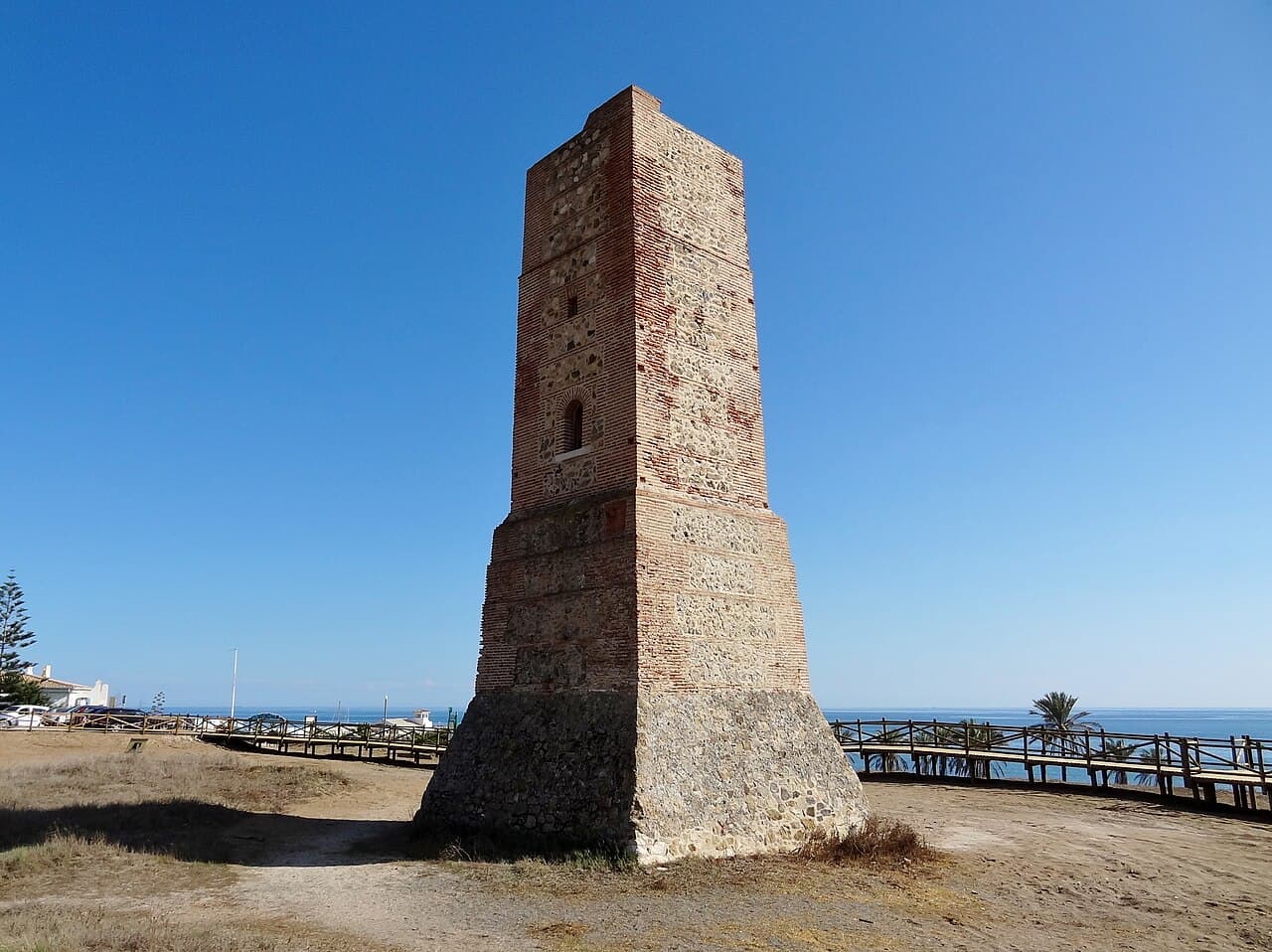
Torre Ladrones, also known as the Thieves Tower, stands prominently on the Puerto de Cabopino beach in Marbella, Spain. This historic watchtower is a significant part of the coastal fortification system that once protected the Andalusian Mediterranean coast during the period of Arab domination on the Iberian Peninsula. Its strategic location and imposing height made it a vital element in the region's early warning and defense network against maritime threats.
The tower rises to a height of approximately 15 meters, which makes it the tallest watchtower along the Malaga coastline. Its construction reflects the military architectural techniques characteristic of the Islamic period in Spain, utilizing robust materials and a design focused on durability and surveillance. The tower's walls are built from stone and mortar, materials chosen for their strength and resistance to coastal weather conditions.
Architectural features and layout
Torre Ladrones exhibits a simple yet functional design typical of medieval coastal watchtowers. The interior space is divided into three rooms arranged vertically, culminating in a housetop platform that served as the observation deck. This layout allowed sentries to maintain a clear line of sight over the sea and the surrounding coastline, enabling early detection of approaching ships or potential invaders.
The tower's height and vantage point provided a commanding view, essential for signaling other nearby towers and coordinating coastal defenses. Its robust construction included narrow windows or embrasures designed for surveillance and, if necessary, defensive actions. The tower's design reflects a focus on both observation and communication within the broader network of coastal fortifications.
Historical context and significance
The construction of Torre Ladrones dates back to the Arab period in Spain, specifically during the time when the Caliphate of Córdoba and later Muslim dynasties controlled large parts of the Iberian Peninsula. These watchtowers were critical for protecting coastal settlements from pirate raids and military incursions by Christian forces or other maritime threats.
Serving as an early warning system, the tower allowed defenders to prepare for attacks and organize a coordinated defense. Its role was not only military but also symbolic, representing the control and influence of Muslim rulers over the Andalusian coast. The tower's presence contributed to the security and stability of the region during a turbulent historical period marked by frequent conflicts and shifting power dynamics.
The network of coastal fortifications
Torre Ladrones was part of a larger system of coastal towers and fortresses built along the Mediterranean to monitor and protect the shoreline. These towers communicated through visual signals such as smoke or fire, enabling rapid transmission of alerts across long distances. This network was crucial for the defense strategy of the Nasrid Kingdom of Granada and earlier Muslim administrations.
Modern recognition and preservation
In recognition of its historical and cultural value, Torre Ladrones was declared a Bien de Interés Cultural (Good of Cultural Interest) in 1985. This designation highlights its importance as a heritage monument and ensures its protection and conservation under Spanish law.
Today, the tower is one of the most visited monuments in Marbella, attracting tourists interested in its medieval military architecture and its role in the coastal defense history of Andalusia. The tower's well-preserved condition allows visitors to appreciate its architectural features and imagine the strategic significance it held centuries ago.
Visitor experience
While the interior access may be limited for preservation reasons, the tower's exterior and surrounding beach area offer excellent opportunities for sightseeing and photography. Interpretive signage and guided tours provide context about the tower's history, architecture, and its place within the broader defensive network along the Spanish Mediterranean coast.
Architectural style and construction period
The tower exemplifies the military Islamic architecture of the High to Late Medieval period, with construction techniques and materials typical of the Arab domination era in the Iberian Peninsula, roughly spanning from the 10th to the 15th centuries. Its robust, functional design prioritizes defense and surveillance over ornamental features, consistent with the practical needs of coastal fortifications of the time.
Frequently asked questions (FAQ)
- What is the historical significance of Torre Ladrones?
- Torre Ladrones served as a key coastal watchtower during the Arab domination of the Iberian Peninsula, providing early warnings against pirate raids and military attacks along the Malaga coast.
- Can visitors enter Torre Ladrones?
- Access to the interior of Torre Ladrones is limited to preserve its structure, but visitors can explore the exterior and learn about its history through informational displays and guided tours.
- When was Torre Ladrones declared a cultural heritage site?
- It was declared Bien de Interés Cultural in 1985, recognizing its importance as a protected historical monument in Spain.
- What architectural features define Torre Ladrones?
- The tower features three vertically arranged rooms and a housetop observation platform, constructed from stone and mortar typical of medieval Islamic military architecture.
- Is there an admission fee to visit Torre Ladrones?
- Visiting Torre Ladrones is free of charge, making it accessible to all visitors interested in Andalusian coastal history.
Photo gallery

Information
Opening hours
Open daily, daylight hours
Ticket prices
Free
Current owner
Municipality of Marbella
Address
Puerto de Cabopino beach, Marbella, Spain
Loading map...
Visitor reviews
No reviews yet. Been here? Write the first review and help other travelers!
Write the first reviewVisited this castle? Share your experience
Your review helps other travelers and adds first-hand knowledge to our encyclopedia.