Castillo de La Villeta
The Castillo de La Villeta is a significant hill castle located in the town of Monda, Spain. Its origins date back to the early Middle Ages, specifically between the 9th and 10th centuries, during a turbulent period marked by Islamic rule and local resistance in the Iberian Peninsula. This fortress stands as a testament to the complex history of Muslim governance, Christian conquest, and the evolving military architecture of southern Spain.
The early history and Muslim origins
The castle was initially constructed under the auspices of Muslim rulers during the early medieval period. It played a crucial role during the rebellion led by Omar ben Hafsún, a prominent figure who resisted the Umayyad Emirate of Córdoba. The fortress served as a refuge for his followers, leveraging its strategic position atop a limestone promontory more than 300 meters above sea level. This location provided natural defense advantages and control over the surrounding territory.
Following the defeat of Omar ben Hafsún by Abderramán III, the castle was temporarily abandoned, reflecting the shifting power dynamics of the era. Centuries later, the site was reoccupied and fortified by the Almohads, a Berber Muslim dynasty that ruled large parts of Spain and North Africa during the 12th century. The Almohads undertook extensive construction, establishing the main fortress structures and defensive enclosures that enhanced the castle's military capabilities.
Nasrid modifications and architectural evolution
During the Nasrid dynasty, the last Muslim rulers of Granada, the castle underwent significant architectural transformations. The Nasrids responded to the emerging threats posed by gunpowder artillery by rebuilding much of the fortress using more durable masonry techniques. They constructed a long defensive wall exceeding 300 meters along the northern slope of the hill. This wall incorporated multiple towers and gates, designed to protect a nearby settlement known as an alquería, which housed around one hundred residents.
The Nasrid period also saw the reinforcement of the castle's polygonal tower located at the western corner. Originally built with roughly hewn stone blocks (sillarejo) and rammed earth (tapial), this tower was encased within a square masonry shell and buttressed with a semicircular support called a zapato. These enhancements reflected both the military innovations of the time and the social organization within the fortress complex.
Christian conquest and subsequent decline
The Christian conquest of the Nasrid Kingdom of Granada in the late 15th century marked the end of Muslim control over Castillo de La Villeta. After its capture, the castle was briefly used by Christian military forces. However, to prevent any future rebellions by the local Mudéjar population—Muslims who remained under Christian rule—the authorities deliberately dismantled key fortifications.
Documentation about the castle is sparse, with the earliest written record appearing in the 1572 Libro de Apeo y Repartimiento, a land and property inventory. Later mentions by scholars and travelers in the 18th century highlight its historical significance, though the fortress had already fallen into disuse.
Architectural features and remains
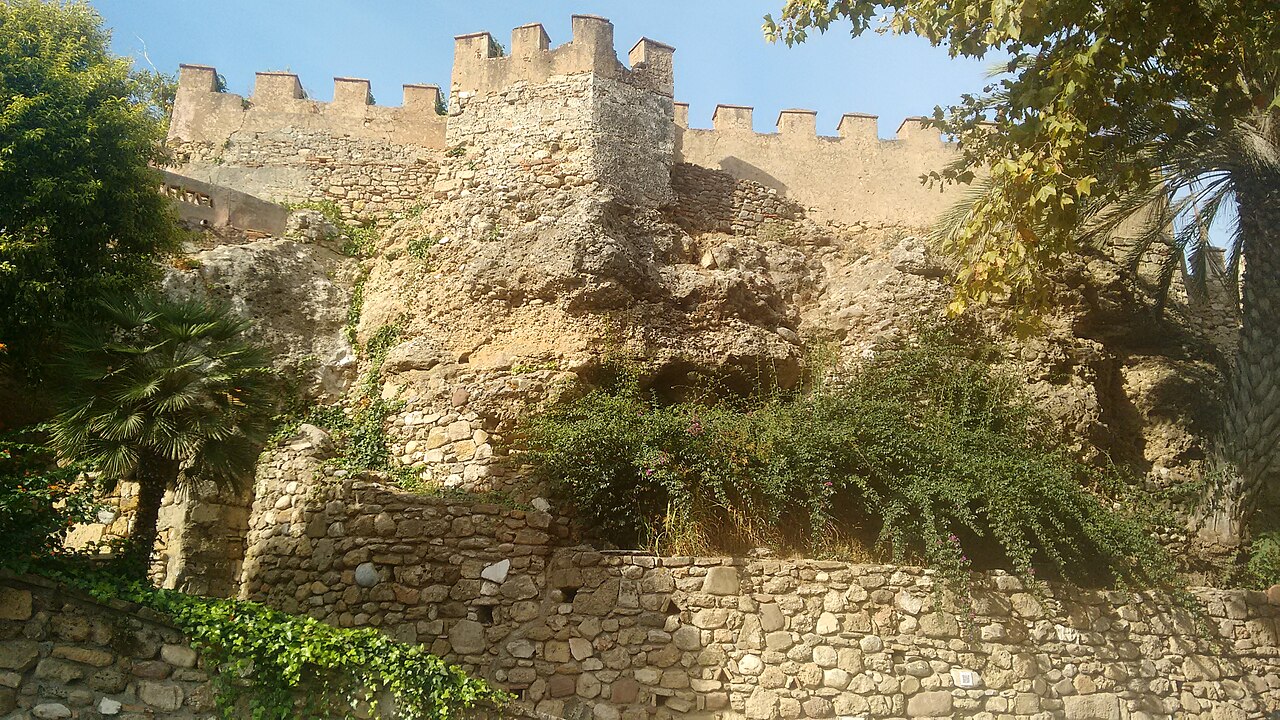
The castle's layout is heavily influenced by the natural terrain of the limestone hill it crowns. The polygonal tower at the western corner is a distinctive feature, rare in the Málaga region, shared only with Bentomiz Castle. The tower's lower section consists of roughly hewn stone blocks, while the upper part is constructed from rammed earth with surviving plaster and decorative motifs, showcasing the blend of construction techniques.
The Almohad enclosures include the albacar or outer enclosure to the west and the celoquia or inner enclosure to the east. These were extensively remodeled during the Nasrid period, replacing earlier building styles with masonry to better resist contemporary military threats.
The northern defensive wall, running over 300 meters, encloses the settlement and features several towers and at least one gate. Despite its strategic design, the wall now exists in poor condition, bearing the effects of time and neglect.
Additional surviving elements include towers, walls, and a cistern (aljibe) used for water collection, though mostly fragmentary. The footprint of the complex remains clear, providing valuable insights into the castle's original defensive and residential functions.
Modern developments and archaeological significance
In the late 20th century, a boutique hotel was constructed on the site following an emergency archaeological excavation that confirmed the castle's historical value. Unfortunately, the modern development did not fully preserve or highlight many of the castle's original structures, leaving much of the historical fabric exposed and vulnerable.
Despite this, the Castillo de La Villeta remains an important cultural and historical landmark. Its layered history from the early medieval Muslim period through the Nasrid dynasty and into the Christian Reconquista exemplifies the complex military and social transformations in southern Spain. The castle's architectural features provide a rare glimpse into the defensive strategies and settlement patterns of the time.
Today, the site offers visitors a unique opportunity to explore a fortress that encapsulates centuries of Iberian history, from its strategic hilltop location to its evolving fortifications. While the remains are fragmentary, the castle's significance as a symbol of cultural resilience and historical continuity endures.
Frequently asked questions (FAQ)
- When was Castillo de La Villeta originally built?
- Castillo de La Villeta was originally constructed between the 9th and 10th centuries during the early Middle Ages under Muslim rule.
- What architectural features distinguish Castillo de La Villeta?
- The castle features a unique polygonal tower with a combination of roughly hewn stone blocks and rammed earth construction, extensive defensive walls, and enclosures remodeled during the Nasrid period.
- Can visitors see the remains of Castillo de La Villeta today?
- Yes, visitors can explore the site where fragmentary remains of towers, walls, and a cistern are visible, although some parts are in poor condition due to time and modern development.
- What was the role of Castillo de La Villeta during the Nasrid dynasty?
- During the Nasrid dynasty, the castle was extensively rebuilt to withstand gunpowder artillery, including the construction of a long defensive wall protecting a settlement of about one hundred houses.
- Why was Castillo de La Villeta dismantled after the Christian conquest?
- After the Christian conquest, the castle's fortifications were deliberately dismantled to prevent rebellions by the local Mudéjar Muslim population under Christian rule.
Information
Website
Visit websiteSources & official resources
Verify the information above using these authoritative references.
Loading map...
Visitor reviews
No reviews yet. Been here? Write the first review and help other travelers!
Write the first reviewVisited this castle? Share your experience
Your review helps other travelers and adds first-hand knowledge to our encyclopedia.