Torre del Conde
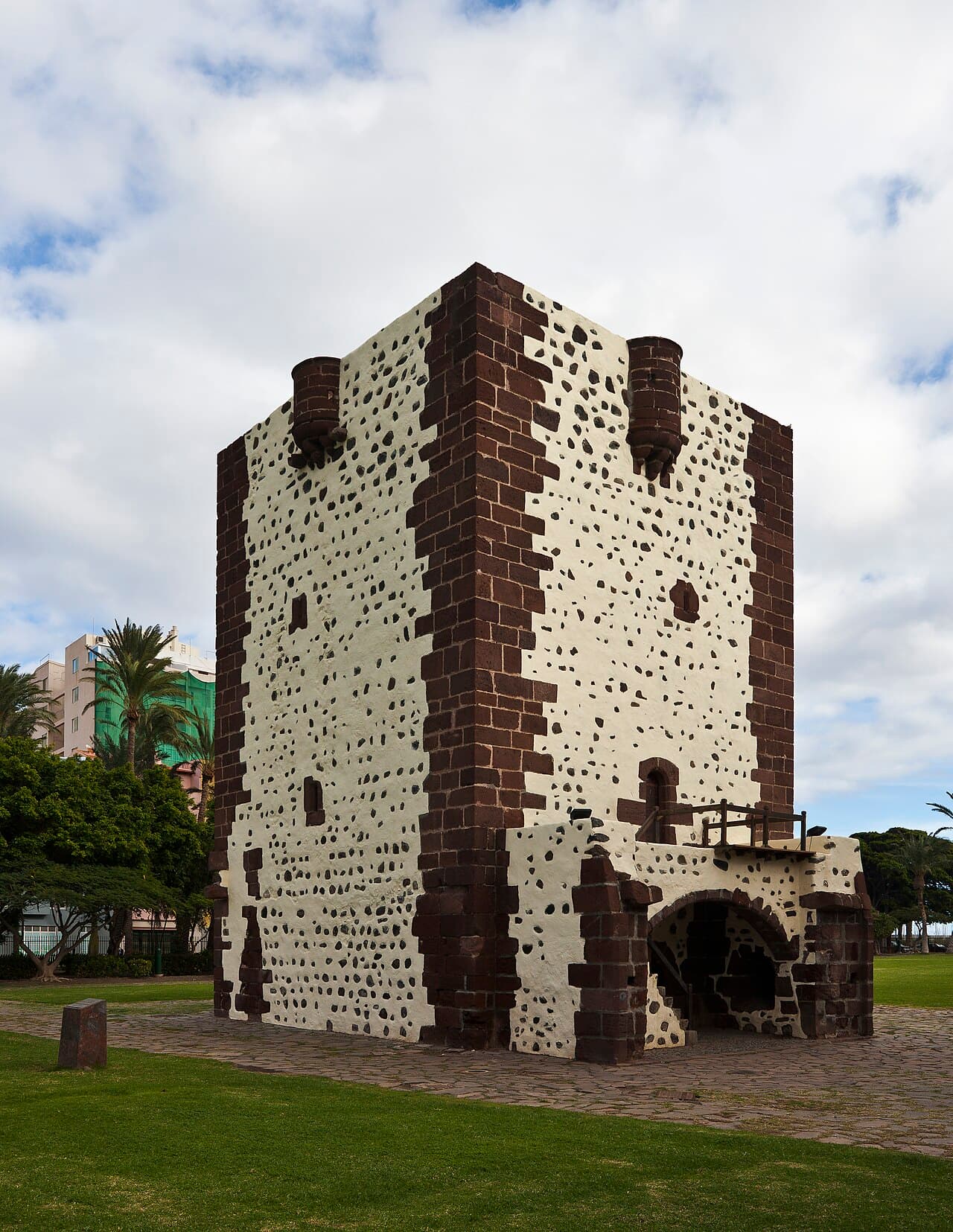
Torre del Conde is a 15th-century fortress located in the Villa de San Sebastián de La Gomera in the Canary Islands, Spain. This late medieval bastioned fortress served primarily as a symbol of manorial power during the early period of European colonization of the Canary Islands. Its construction between 1447 and 1450 was commissioned by Hernán Peraza the Elder, the Count of La Gomera, to assert control over the island and protect the ruling elite from indigenous uprisings.
The fortress is situated strategically near the port but at a distance that limited direct access, and notably, it is located at the bottom of a valley. This positioning, combined with the absence of provisions for firearms, indicates its original defensive function was limited against modern weapons and was more about exerting dominance over the native population. The fortress's role was less about military defense and more about representing the power of the colonial rulers during a period when the indigenous peoples lacked access to contemporary firearms.
Architectural features and style
Torre del Conde is an excellent example of late Gothic military architecture adapted to the specific conditions of the Canary Islands. It has a prismatic shape, standing approximately 15 meters high with a perimeter of about 40 meters. The fortress features walls two meters thick, constructed primarily of stone, with the corners reinforced using distinctive red stone blocks contrasting with the whitewashed walls. This color scheme enhances its imposing visual presence.
The fortress’s design reflects the late Gothic architectural style prevalent in the 15th century, characterized by robust defensive features combined with aesthetic elements typical of the period. It is notable for being the southernmost medieval Gothic construction known, marking an important architectural and historical landmark in the region.
Historical significance and notable events
The fortress played a key role during the Rebellion of the Gomeros, when the local indigenous population resisted European colonization efforts. During this conflict, the stately elites of La Gomera sought refuge within Torre del Conde, highlighting its importance as a stronghold for the colonial ruling class.
Throughout its history, the fortress has hosted several illustrious guests, including Christopher Columbus, Amerigo Vespucci, and Hernán Cortés, linking it to significant figures of the Age of Discovery. This connection underscores the fortress's role not only as a military and administrative center but also as a waypoint in the broader narrative of European exploration and expansion.
Modifications and restorations
The original design of Torre del Conde underwent several modifications over the centuries. Notably, the architects Jacome Pelearo Fratin and Leonardo Torriani contributed to reforms that enhanced its structure and adapted it to evolving military needs. These renovations reflect the ongoing strategic importance of the fortress throughout the late medieval and early modern periods.
Preservation and cultural heritage status
Torre del Conde is the only surviving tower from the group of fortifications built during the Conquest of the Canary Islands, including others such as Añazo and Gando, which have not been preserved. Its survival makes it a unique architectural and historical monument in the archipelago.
The fortress was officially declared a Historic-Artistic Monument on 13 December 1990 and later designated as a Bien de Interés Cultural (Asset of Cultural Interest) by the Spanish government on 2 July 1993. These recognitions ensure its protection and highlight its significance as a cultural landmark.
Current condition and visitor information
Today, Torre del Conde is well preserved and maintained as a historic site open to visitors. Its robust structure and distinctive architectural features remain largely intact, allowing visitors to appreciate its historical context and design. The fortress stands as a testament to the early colonial history of the Canary Islands and offers insight into the military and social dynamics of the 15th century.
Visitors can explore the fortress and its surroundings to gain a deeper understanding of the region's history, including its role in the European conquest and settlement of the islands. The site is a key attraction in La Gomera, contributing to the cultural tourism of the Canary Islands.
Frequently asked questions (FAQ)
- How do I get to Torre del Conde?
- Torre del Conde is located in the heart of La Gomera, Spain. You can reach it by taking a flight to La Gomera's airport and then using local transportation, such as buses or taxis, to get to the castle. The site is easily accessible and well-signposted from major points in the town.
- What is the historical significance of Torre del Conde?
- Torre del Conde is one of the most important historical sites in La Gomera, dating back to the 15th century. It was originally built as a defensive structure and served as the residence of the first governor of the island. The castle is a symbol of the island's rich history and its role in the Spanish conquest of the Canary Islands.
- When was Torre del Conde built?
- Torre del Conde was constructed in the year 1450, making it one of the oldest structures on La Gomera. The castle has endured various renovations over the centuries, but it still retains much of its original architecture and historical charm. Its long history makes it a fascinating site for visitors interested in the past.
- Can I visit Torre del Conde year-round?
- Yes, Torre del Conde is open to visitors throughout the year. However, it is advisable to check the specific opening hours before your visit, as they can vary seasonally. The site is particularly pleasant during the spring and autumn months when the weather is mild.
- Why is Torre del Conde considered an architectural gem?
- Torre del Conde is renowned for its unique architectural style, which blends military and residential features. The castle showcases traditional Canarian building techniques, including the use of local volcanic stone. Its impressive tower and surrounding gardens make it a picturesque location that attracts many photographers and history enthusiasts.
- Is it possible to access Torre del Conde with mobility challenges?
- Yes, Torre del Conde has made efforts to accommodate visitors with mobility challenges. There are accessible pathways and facilities available on-site, although some areas may have limited access due to the castle's historical nature. It is recommended to inquire about specific accessibility options when planning your visit.
- What are the ticket prices for visiting Torre del Conde?
- Ticket prices for Torre del Conde are generally affordable, with discounts available for children, seniors, and groups. As of the latest updates, standard admission is around €3, while reduced tickets can be purchased for €1. Always check the official website for the most current pricing and any special offers.
- What are the opening hours for Torre del Conde?
- Torre del Conde typically opens from 10 AM to 6 PM, with extended hours during the peak tourist season. On certain holidays, the hours may vary, so it's a good idea to confirm the schedule before your visit. The castle is closed on Mondays, allowing for maintenance and preservation efforts.
- What nearby attractions should I visit after Torre del Conde?
- After visiting Torre del Conde, consider exploring the beautiful Garajonay National Park, which offers stunning hiking trails and diverse flora and fauna. Additionally, the charming town of San Sebastián de La Gomera, with its local shops and restaurants, is just a short distance away. These attractions enhance your experience of the island's natural beauty and cultural heritage.
Photo gallery

Information
Loading map...
Visitor reviews
No reviews yet. Been here? Write the first review and help other travelers!
Write the first reviewVisited this castle? Share your experience
Your review helps other travelers and adds first-hand knowledge to our encyclopedia.