Castillo de San Miguel (Garachico) — Spain castle

Castillo de San Miguel (Garachico)

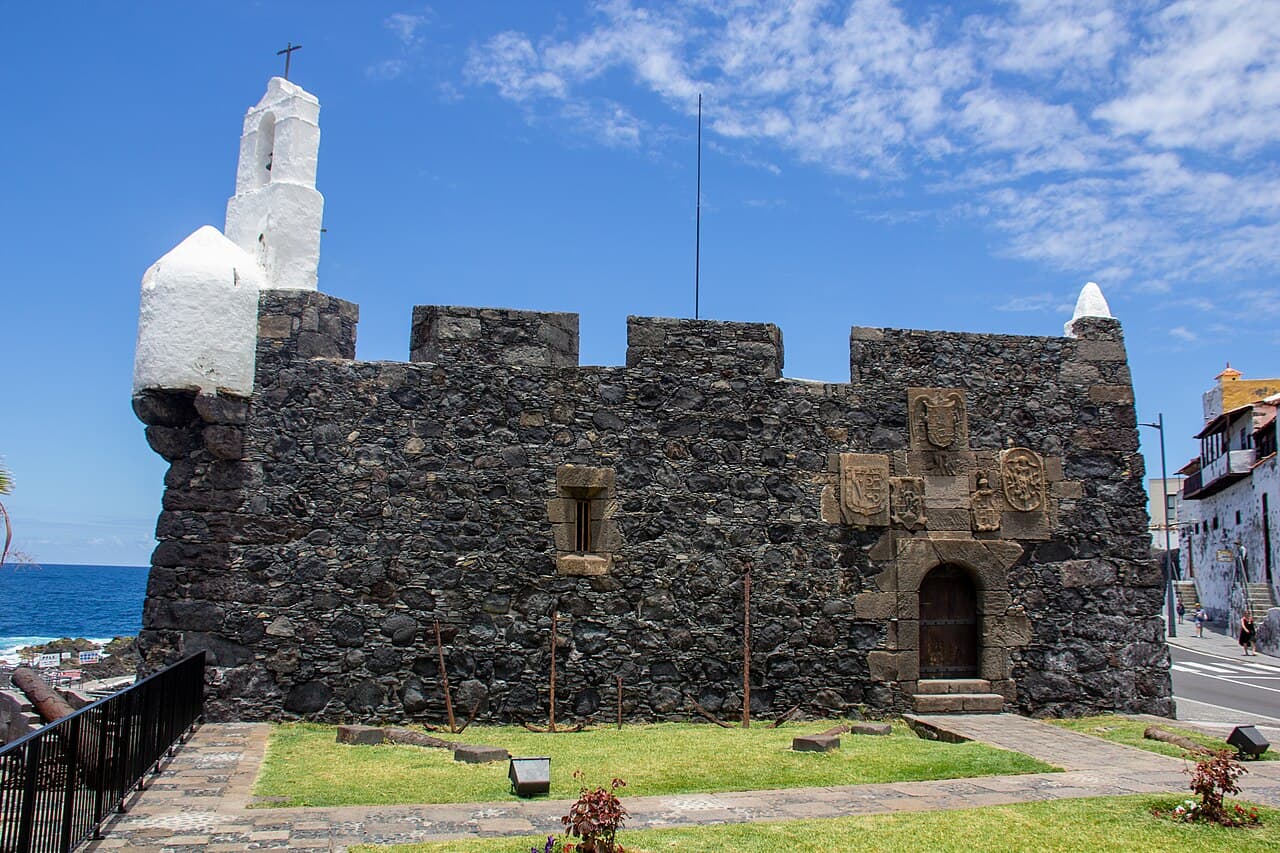
Castillo de San Miguel in Garachico, Spain
Garachico, Spain
Renaissance (15th–17th c.)
Partially Preserved

Castillo de San Miguel is a prominent hill castle located in the historic town of Garachico on the northern coast of Tenerife, one of the Canary Islands in Spain. This fortress stands as a significant example of 16th-century military architecture designed to defend the island's important port against pirate attacks and naval invasions.

The strategic importance and historical background

Constructed in the 16th century, Castillo de San Miguel was built during a period when the Canary Islands were crucial maritime hubs for Spanish trade and exploration. The castle's location on a rocky promontory overlooking the Atlantic Ocean provided an ideal vantage point for monitoring incoming ships and protecting the harbor of Garachico, which was one of the most important ports on Tenerife at the time.

Garachico flourished as a commercial center in the early modern period, exporting goods such as wine and sugar. The castle played a vital role in safeguarding these economic interests from frequent pirate raids, especially from English and Dutch privateers who targeted Spanish possessions in the Atlantic.

Architectural features and design

The castle exemplifies typical Renaissance military architecture adapted to the island's volcanic landscape. It is characterized by robust stone walls and bastions designed to withstand cannon fire. The fortress originally featured a rectangular layout with several circular towers positioned at the corners to provide overlapping fields of fire.

Castillo de San Miguel includes a main gate fortified with defensive elements such as machicolations and arrow slits. The interior contained barracks, storage rooms for munitions, and a courtyard that facilitated troop movements and logistics during sieges.

Its construction utilized locally sourced volcanic rock, giving the castle a distinctive dark appearance that blends with the surrounding cliffs. The castle's walls are thick and angled to deflect cannonballs, reflecting advancements in military engineering during the Renaissance.

Impact of natural disasters and preservation efforts

The castle suffered significant damage during the volcanic eruption of 1706, which devastated much of Garachico's port and surrounding areas. Despite this, parts of the fortress remained standing and continued to serve defensive functions until the 18th century.

In recent decades, Castillo de San Miguel has undergone restoration efforts aimed at preserving its structural integrity and historical value. These initiatives have focused on stabilizing the remaining walls, conserving the original stonework, and adapting the site for public access and cultural events.

Visiting Castillo de San Miguel

Today, the castle is a popular tourist attraction and cultural venue in Garachico. Visitors can explore the well-preserved sections of the fortress, including the battlements and towers, which offer panoramic views of the Atlantic Ocean and the town. The site also hosts exhibitions and events that highlight the castle's historical significance and the maritime heritage of Tenerife.

The castle's location on a hill makes it accessible by foot from the town center, with pathways leading through scenic coastal landscapes. Interpretive signage provides historical context, enhancing the visitor experience.

Architectural and cultural significance

Castillo de San Miguel represents an important example of coastal defense systems developed by Spain during the Renaissance to protect its overseas territories. Its design reflects the adaptation of European military architecture to the unique geographical and strategic conditions of the Canary Islands.

The castle is also a symbol of Garachico's historical prosperity and resilience, surviving both human conflict and natural disasters. It remains a key heritage site that connects contemporary visitors with the island's maritime past and architectural traditions.

Frequently asked questions (FAQ)

How do I get to Castillo de San Miguel?
Castillo de San Miguel is located in Garachico, Spain. You can reach it by car or public transportation from major cities like Tenerife. There is parking available nearby, and the castle is also accessible on foot from the town center.
What is the historical significance of Castillo de San Miguel?
Castillo de San Miguel was built in the late 16th century to protect the town of Garachico from pirate attacks. It played a crucial role in the defense of the region and is a symbol of the town's rich maritime history. Today, it stands as a testament to the military architecture of its time.
When was Castillo de San Miguel constructed?
The construction of Castillo de San Miguel began in 1575 and was completed in 1585. The castle was strategically built to guard the harbor and the wealth of the local commerce during the Spanish colonization period. It has undergone various restorations to preserve its historical integrity.
Can I take guided tours of Castillo de San Miguel?
Yes, guided tours of Castillo de San Miguel are available for visitors. These tours provide in-depth information about the castle's history, architecture, and significance. It's a great way to enhance your visit and learn more about this historic site.
Why is Castillo de San Miguel a popular attraction?
Castillo de San Miguel is popular for its stunning views of the Atlantic Ocean and its historical architecture. Visitors are drawn to its well-preserved structure and the stories it tells about the past. The castle also offers a peaceful atmosphere, making it a perfect spot for photography and exploration.
Is it possible to visit Castillo de San Miguel year-round?
Yes, Castillo de San Miguel is open to visitors throughout the year. However, it's recommended to check for any specific closures or events that may affect visiting hours. The castle is particularly enjoyable to visit during the cooler months when the weather is more comfortable.
What are the opening hours for Castillo de San Miguel?
The opening hours for Castillo de San Miguel vary depending on the season. Generally, it opens from 10 AM to 6 PM, but it's best to confirm the exact hours before your visit. Special hours may apply on holidays or during local festivals.
What are the ticket prices for visiting Castillo de San Miguel?
Ticket prices for Castillo de San Miguel are quite reasonable, with discounts available for children and seniors. As of the latest information, general admission is around €5, while children under a certain age may enter for free. Always check for any current promotions or changes in pricing before your visit.
What are some nearby attractions to Castillo de San Miguel?
Nearby attractions include the charming town of Garachico, known for its beautiful architecture and natural pools. Visitors can also explore the historic churches and local markets in the area. Additionally, the scenic views and hiking trails along the coast provide excellent opportunities for outdoor activities.

Photo gallery

Castillo de San Miguel (Garachico)
Click to view

Photo by Photograph by Mike Peel (www.mikepeel.net).•CC BY-SA 4.0

1 photo • Click any image to view in full screen

Information

Hill Castle

Loading map...

Visitor reviews

No reviews yet. Been here? Write the first review and help other travelers!

Write the first review

Visited this castle? Share your experience

Your review helps other travelers and adds first-hand knowledge to our encyclopedia.
Write a review

(5/5)

0/2000 characters

Your review will be visible after admin approval

Nearby castles

20.8 km
Castillo de San Felipe — Spain castle

Castillo de San Felipe

Puerto de la Cruz, Spain

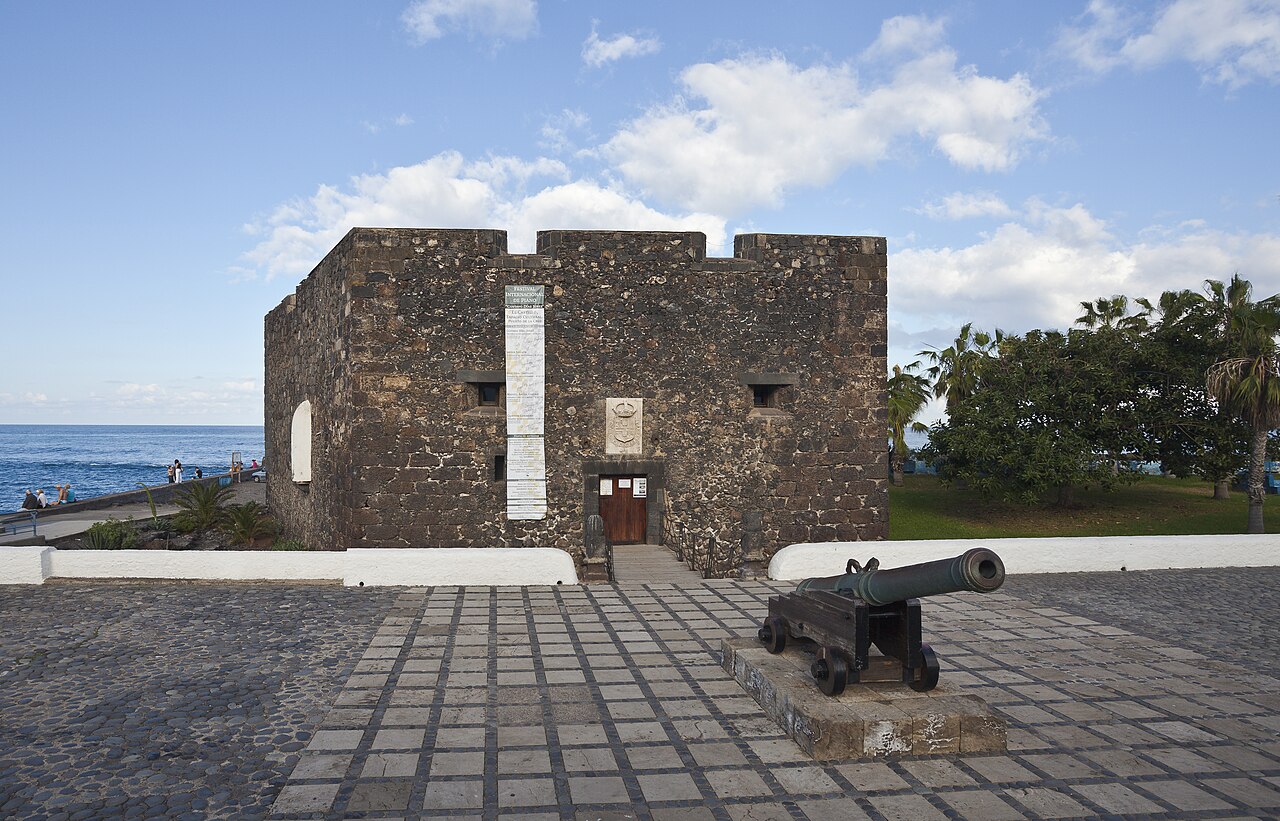
The Castillo de San Felipe is a significant 16th-century hill castle located in Puerto de la Cruz on the northern coast of Tenerife, Spain. Originally constructed between 1599 and 1604, this fortress was strategically built to defend the vital port and surrounding area from the persistent threats of pirates and corsairs that plagued the Atlantic maritime routes during the late Renaissance period. Its establishment marked an important phase in the fortification efforts undertaken by the Spanish Crown to secure its overseas territories and maritime trade routes. The castle's inception followed a successful defense involving two earlier cannon platforms that repelled an assault by five pirate ships. Recognizing the need for a more permanent and robust defense, the Spanish authorities commissioned the construction of the Castillo de San Felipe on this site. The fortress was one of four key fortifications designed to protect Puerto de la Cruz, each positioned to provide overlapping fields of fire and comprehensive protection of the harbor's landing zones. Architectural design and defensive features The Castillo de San Felipe is notable for its distinctive pentagonal layout, a design choice that enhanced its defensive capabilities by minimizing blind spots and allowing for effective artillery coverage in all directions. Constructed primarily from masonry, the castle exhibits characteristics of refined colonial military architecture typical of the period, blending functional defense with aesthetic considerations. The fortress was originally surrounded by a and accessed via a drawbridge, features that were essential for controlling entry and providing an additional layer of defense against attackers. Over time, as the threat landscape evolved and the castle's military role diminished, the drawbridge was replaced by a fixed walkway, reflecting changes in both defensive strategy and practical use. Rising to two stories, the castle was designed to accommodate approximately 35 soldiers at full capacity on the upper level. Its original armament included three iron cannons: two weighing 24 pounds each and a smaller 16-pound piece. These artillery pieces were strategically placed to cover the maritime approaches and deter enemy ships from entering the port. Adjacent to the main fortification, about 50 meters away, stands the Polvorín, the old gunpowder magazine. This structure was critical for the safe storage of explosive materials, underscoring the logistical complexity involved in maintaining the fortress's artillery readiness. Historical significance and military role Throughout its operational history, the Castillo de San Felipe played a crucial role in the defense of Puerto de la Cruz. It was commanded by a succession of military officers, including Captain Juan Antonio de Franchy in 1644 and José Agustín Machado Espínola in 1725, among others. The record of approximately fifty commanders highlights the fortress's sustained strategic importance over several centuries. During the 17th and 18th centuries, the castle was actively maintained and garrisoned to counter the persistent threat of piracy and foreign incursions. Its presence contributed significantly to the security of the northern Tenerife coastline, safeguarding not only the port but also the local population and economic interests. By the 19th century, the castle's military relevance began to wane as advances in artillery and changes in military tactics rendered such fortifications less effective. Restoration efforts were undertaken to address structural deterioration, but in 1878 the fort's artillery was removed, marking the end of its active military use. Adaptations and later uses Following its decommissioning as a military fortress, the Castillo de San Felipe was repurposed to serve public health and community functions. It became a lazaretto, a quarantine station for maritime travelers, and also functioned as an infirmary. These adaptations illustrate the building's versatility and the community's resourcefulness in utilizing existing structures for evolving needs. The castle continued in these roles until 1924, when it was closed due to its obsolescence in meeting modern health and military standards. In the later 20th century, extensive renovations transformed the castle into a cultural center, hosting concerts, art exhibitions, and community events. This adaptive reuse has preserved the castle's historical fabric while giving it renewed purpose. Preservation and cultural heritage status The Castillo de San Felipe was declared a Protected Cultural Heritage Site (Bien de Interés Cultural) in 1949, a designation reaffirmed by the Spanish Historical Heritage Law in 1985. These protections have ensured the preservation of the castle's architectural integrity and its historical significance for future generations. Today, the castle stands as a well-preserved example of Renaissance military architecture on the Canary Islands, offering valuable insights into the region's defensive strategies and colonial history. The nearby Polvorín remains intact, providing visitors with a fuller understanding of the logistical aspects of fortress operation. Visitor experience and significance The Castillo de San Felipe is not only a monument of military history but also a vibrant cultural landmark in Puerto de la Cruz. Its transformation into a cultural venue allows visitors to appreciate both its historical context and contemporary community role. The castle's strategic location offers scenic views of the Atlantic Ocean and the surrounding town, enhancing its appeal as a tourist destination. Visitors can explore the castle's robust masonry walls, the layout of its defensive battlements, and the preserved gunpowder magazine. The site serves as a tangible connection to the maritime history of Tenerife and the broader geopolitical struggles of the Spanish Empire during the Renaissance and early modern periods.

Late Medieval (14th–15th c.)
Details
46.2 km
Torre del Conde — Spain castle

Torre del Conde

, Spain

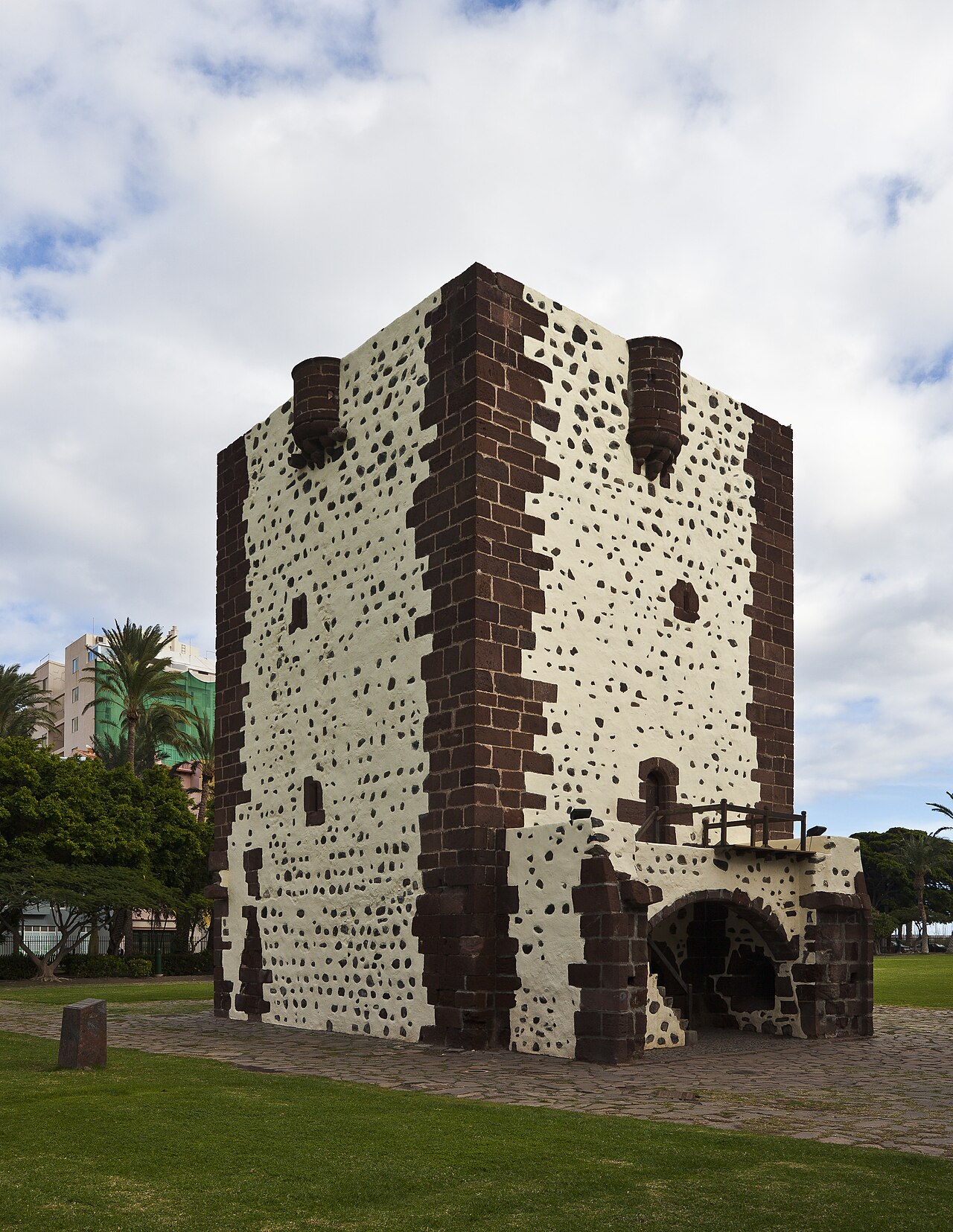
Torre del Conde is a 15th-century fortress located in the Villa de San Sebastián de La Gomera in the Canary Islands, Spain. This late medieval bastioned fortress served primarily as a symbol of manorial power during the early period of European colonization of the Canary Islands. Its construction between 1447 and 1450 was commissioned by Hernán Peraza the Elder, the Count of La Gomera, to assert control over the island and protect the ruling elite from indigenous uprisings.The fortress is situated strategically near the port but at a distance that limited direct access, and notably, it is located at the bottom of a valley. This positioning, combined with the absence of provisions for firearms, indicates its original defensive function was limited against modern weapons and was more about exerting dominance over the native population. The fortress's role was less about military defense and more about representing the power of the colonial rulers during a period when the indigenous peoples lacked access to contemporary firearms.Architectural features and styleTorre del Conde is an excellent example of late Gothic military architecture adapted to the specific conditions of the Canary Islands. It has a prismatic shape, standing approximately 15 meters high with a perimeter of about 40 meters. The fortress features walls two meters thick, constructed primarily of stone, with the corners reinforced using distinctive red stone blocks contrasting with the whitewashed walls. This color scheme enhances its imposing visual presence.The fortress’s design reflects the late Gothic architectural style prevalent in the 15th century, characterized by robust defensive features combined with aesthetic elements typical of the period. It is notable for being the southernmost medieval Gothic construction known, marking an important architectural and historical landmark in the region.Historical significance and notable eventsThe fortress played a key role during the Rebellion of the Gomeros, when the local indigenous population resisted European colonization efforts. During this conflict, the stately elites of La Gomera sought refuge within Torre del Conde, highlighting its importance as a stronghold for the colonial ruling class.Throughout its history, the fortress has hosted several illustrious guests, including Christopher Columbus, Amerigo Vespucci, and Hernán Cortés, linking it to significant figures of the Age of Discovery. This connection underscores the fortress's role not only as a military and administrative center but also as a waypoint in the broader narrative of European exploration and expansion.Modifications and restorationsThe original design of Torre del Conde underwent several modifications over the centuries. Notably, the architects Jacome Pelearo Fratin and Leonardo Torriani contributed to reforms that enhanced its structure and adapted it to evolving military needs. These renovations reflect the ongoing strategic importance of the fortress throughout the late medieval and early modern periods.Preservation and cultural heritage statusTorre del Conde is the only surviving tower from the group of fortifications built during the Conquest of the Canary Islands, including others such as Añazo and Gando, which have not been preserved. Its survival makes it a unique architectural and historical monument in the archipelago.The fortress was officially declared a Historic-Artistic Monument on 13 December 1990 and later designated as a Bien de Interés Cultural (Asset of Cultural Interest) by the Spanish government on 2 July 1993. These recognitions ensure its protection and highlight its significance as a cultural landmark.Current condition and visitor informationToday, Torre del Conde is well preserved and maintained as a historic site open to visitors. Its robust structure and distinctive architectural features remain largely intact, allowing visitors to appreciate its historical context and design. The fortress stands as a testament to the early colonial history of the Canary Islands and offers insight into the military and social dynamics of the 15th century.Visitors can explore the fortress and its surroundings to gain a deeper understanding of the region's history, including its role in the European conquest and settlement of the islands. The site is a key attraction in La Gomera, contributing to the cultural tourism of the Canary Islands.

Late Medieval (14th–15th c.)
Details
48.5 km
San Joaquin Castle — Spain castle

San Joaquin Castle

, Spain

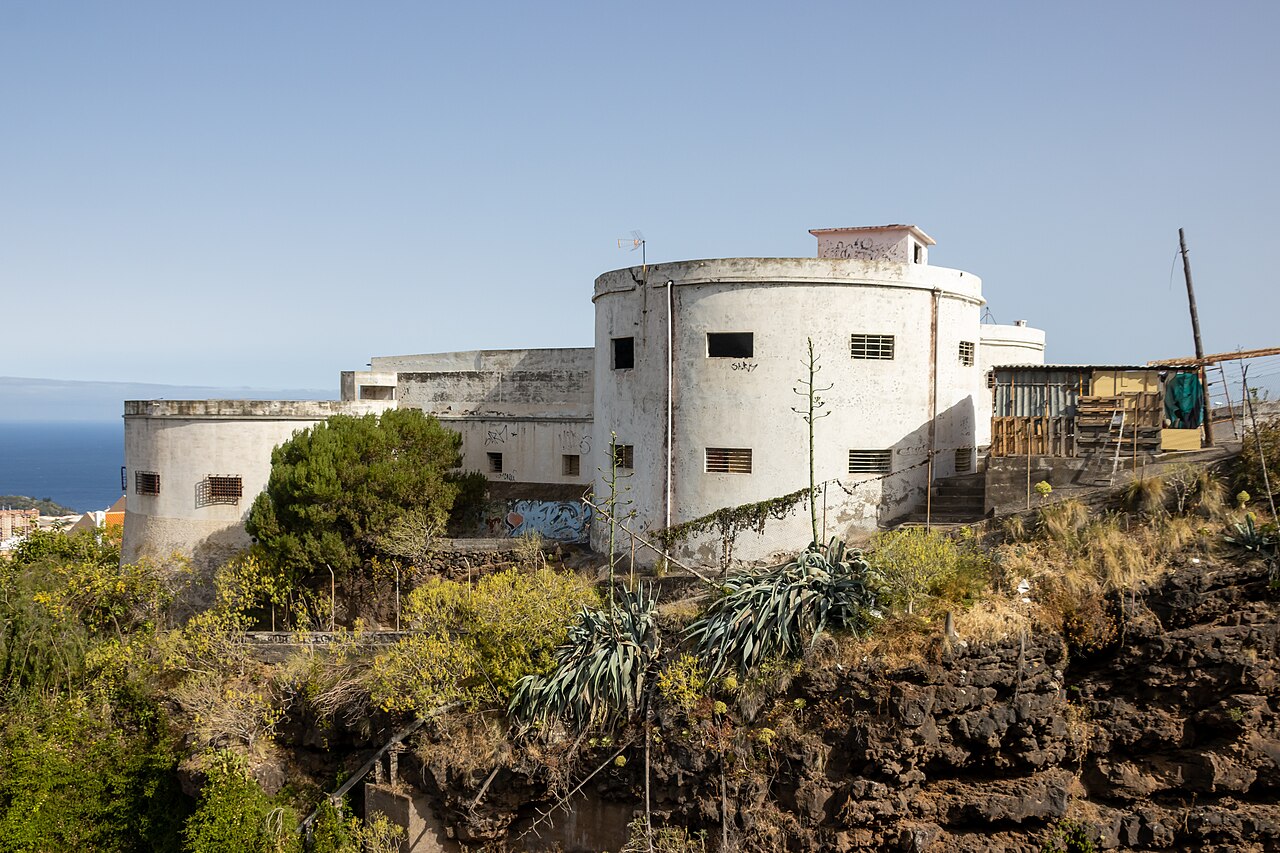
San Joaquin Castle (Spanish: Castillo de San Joaquín) is a significant hill castle located in La Cuesta, along the historic road connecting Santa Cruz de Tenerife and San Cristóbal de La Laguna in the Canary Islands, Spain. This fortress was strategically built to protect the interior of Tenerife, particularly as a fallback defense should the island's coastal fortifications be breached. Historical context and construction The origins of San Joaquin Castle trace back to the late 16th century when, in 1586, Governor Juan Núñez de la Fuente commissioned the construction of defensive platforms at the site. These initial works were designed by the Italian military engineer Leonardo Torriani, known for his expertise in fortifications. However, these early platforms were eventually abandoned and did not develop into a full fortress. The current structure of the castle was constructed much later, beginning in 1780, during the late Renaissance period transitioning into the early modern era. The castle was built to strengthen the island's interior defenses amidst ongoing concerns about invasions and pirate attacks in the Atlantic. Its location on a hill provided a commanding view of the surrounding landscape, making it a critical point of surveillance and defense. Architectural features San Joaquin Castle is characterized by its square plan with circular towers at each of the four corners, a typical design element for fortifications intended to provide overlapping fields of fire and eliminate blind spots. The castle encloses a central courtyard with bays on two sides, which likely served both functional and defensive purposes. Two of the towers were specifically designed as gunpowder storage facilities, emphasizing the castle's role as a military stronghold. The robust walls and towers were constructed to withstand artillery attacks and provide a secure refuge for troops and munitions. Adaptations and uses over time While the exterior of the castle has remained largely unchanged since its construction, the interior has undergone numerous modifications to accommodate various uses throughout its history. It has served as a military prison, an ammunition depot, and even a dovecote for the Cuerpo de Colombofilia Militar Español, a military pigeon corps that utilized the site for communication purposes. These adaptations reflect the castle's evolving role in response to changing military needs and technologies over the centuries. Current status and cultural significance In 1996, San Joaquin Castle was sold to a private owner and has since been abandoned, leading to concerns about its preservation. Despite this, the castle remains an important cultural landmark in Tenerife. The Spanish Ministry of National Education officially recorded the castle on 22 April 1949, and it was declared a site of cultural interest on 15 February 2000. This designation recognizes the castle's historical, architectural, and cultural value to the Canary Islands and Spain as a whole. Visiting and accessibility Although currently abandoned and not regularly open to the public, the castle's location near major towns like Santa Cruz de Tenerife and San Cristóbal de La Laguna makes it accessible for visitors interested in military architecture and Spanish history. The site offers a unique glimpse into the island's defensive strategies during the Renaissance and early modern periods. Visitors should note that the castle's interior may be unsafe due to its abandoned condition, and access might be restricted.

Renaissance (15th–17th c.)
Details