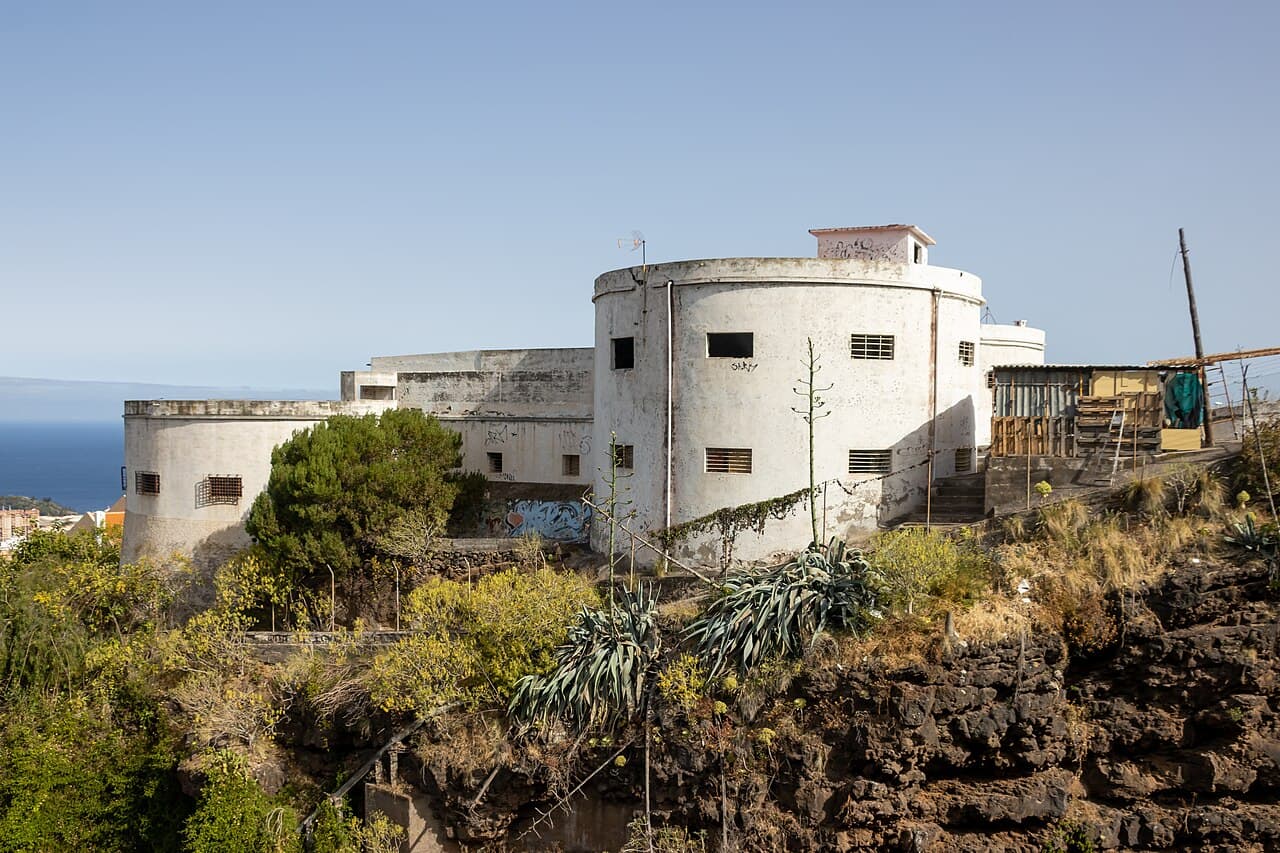
San Joaquin Castle (Spanish: Castillo de San Joaquín) is a significant hill castle located in La Cuesta, along the historic road connecting Santa Cruz de Tenerife and San Cristóbal de La Laguna in the Canary Islands, Spain. This fortress was strategically built to protect the interior of Tenerife, particularly as a fallback defense should the island's coastal fortifications be breached.
Historical context and construction
The origins of San Joaquin Castle trace back to the late 16th century when, in 1586, Governor Juan Núñez de la Fuente commissioned the construction of defensive platforms at the site. These initial works were designed by the Italian military engineer Leonardo Torriani, known for his expertise in fortifications. However, these early platforms were eventually abandoned and did not develop into a full fortress.
The current structure of the castle was constructed much later, beginning in 1780, during the late Renaissance period transitioning into the early modern era. The castle was built to strengthen the island's interior defenses amidst ongoing concerns about invasions and pirate attacks in the Atlantic. Its location on a hill provided a commanding view of the surrounding landscape, making it a critical point of surveillance and defense.
Architectural features
San Joaquin Castle is characterized by its square plan with circular towers at each of the four corners, a typical design element for fortifications intended to provide overlapping fields of fire and eliminate blind spots. The castle encloses a central courtyard with bays on two sides, which likely served both functional and defensive purposes.
Two of the towers were specifically designed as gunpowder storage facilities, emphasizing the castle's role as a military stronghold. The robust walls and towers were constructed to withstand artillery attacks and provide a secure refuge for troops and munitions.
Adaptations and uses over time
While the exterior of the castle has remained largely unchanged since its construction, the interior has undergone numerous modifications to accommodate various uses throughout its history. It has served as a military prison, an ammunition depot, and even a dovecote for the Cuerpo de Colombofilia Militar Español, a military pigeon corps that utilized the site for communication purposes.
These adaptations reflect the castle's evolving role in response to changing military needs and technologies over the centuries.
Current status and cultural significance
In 1996, San Joaquin Castle was sold to a private owner and has since been abandoned, leading to concerns about its preservation. Despite this, the castle remains an important cultural landmark in Tenerife.
The Spanish Ministry of National Education officially recorded the castle on 22 April 1949, and it was declared a site of cultural interest on 15 February 2000. This designation recognizes the castle's historical, architectural, and cultural value to the Canary Islands and Spain as a whole.
Visiting and accessibility
Although currently abandoned and not regularly open to the public, the castle's location near major towns like Santa Cruz de Tenerife and San Cristóbal de La Laguna makes it accessible for visitors interested in military architecture and Spanish history. The site offers a unique glimpse into the island's defensive strategies during the Renaissance and early modern periods.
Visitors should note that the castle's interior may be unsafe due to its abandoned condition, and access might be restricted.
Frequently asked questions (FAQ)
- What is the historical significance of San Joaquin Castle?
- San Joaquin Castle was built to defend the interior of Tenerife, serving as a fallback defense if coastal fortifications were breached. It reflects the island's military strategy during the Renaissance and early modern periods.
- Can I visit San Joaquin Castle today?
- The castle is currently abandoned and not regularly open to the public. Visitors should exercise caution as the interior may be unsafe and access may be restricted.
- Who designed the original fortifications at San Joaquin Castle?
- The initial platforms at the site were designed by Italian military engineer Leonardo Torriani in 1586, although the current castle structure was built later, starting in 1780.
- What architectural features characterize San Joaquin Castle?
- San Joaquin Castle features a square layout with circular towers at each corner, a central courtyard, and designated gunpowder storage towers, typical of defensive Renaissance fortifications.
- Why was San Joaquin Castle built inland rather than on the coast?
- It was constructed inland to provide a secondary line of defense for Tenerife's interior, protecting the island if coastal defenses failed against invasions or pirate attacks.
Photo gallery

Information
Architect
Leonardo Torriani
Current owner
Private owner
Loading map...
Visitor reviews
No reviews yet. Been here? Write the first review and help other travelers!
Write the first reviewVisited this castle? Share your experience
Your review helps other travelers and adds first-hand knowledge to our encyclopedia.