Torre de Peracamps
The Torre de Peracamps is a significant medieval hill castle located in the municipality of Llobera, within present-day Spain. Established during the early medieval period, this fortress served as both a residence and a stronghold for local lords and played a notable role in the region's feudal and ecclesiastical history. Its strategic position atop a hill provided defensive advantages and a commanding view of the surrounding landscape, typical of medieval fortifications designed to control territory and assert noble power.
Historical background and ownership lineage
The earliest documented mention of the Torre de Peracamps dates back to 1042, when Bonfill, lord of Peracamps, transferred ownership of the castle to his wife Amaltruda. This act of inheritance highlights the castle's role as a familial seat of power. The property remained within the family, passing to their son Arnau in 1067. Throughout the 11th century, the castle was closely associated with this noble lineage, reflecting the hereditary nature of medieval lordship.
By 1084, Arnau had ceded half of the castle along with the adjacent church of Peracamps to the Canons of Santa Maria of the Seu d’Urgell. This transfer marked a significant involvement of ecclesiastical authorities in the castle's affairs, a common practice in medieval Spain where secular and religious powers often shared control over strategic assets. The church's presence not only influenced the management of the estate but also reinforced the spiritual and social authority intertwined with feudal governance.
In the early 12th century, specifically in 1122, the castle came under the lordship of brothers Umbert and Ramon Currià. Despite this change in secular control, the fortress maintained its ecclesiastical connections, as the canons of Urgell continued to exert influence over the property. This dual control underscores the complex power dynamics of medieval Catalonia, where noble families and religious institutions negotiated authority.
Centuries later, in 1447, the Lay Brotherhood of the Virgin of Colls from nearby Sant Llorenç de Morunys acquired the castle and its barony from Ramon Altarriba, lord of Oliana. This transition from noble to institutional ownership reflects broader shifts in property control during the late medieval period, often tied to religious confraternities and local governance bodies.
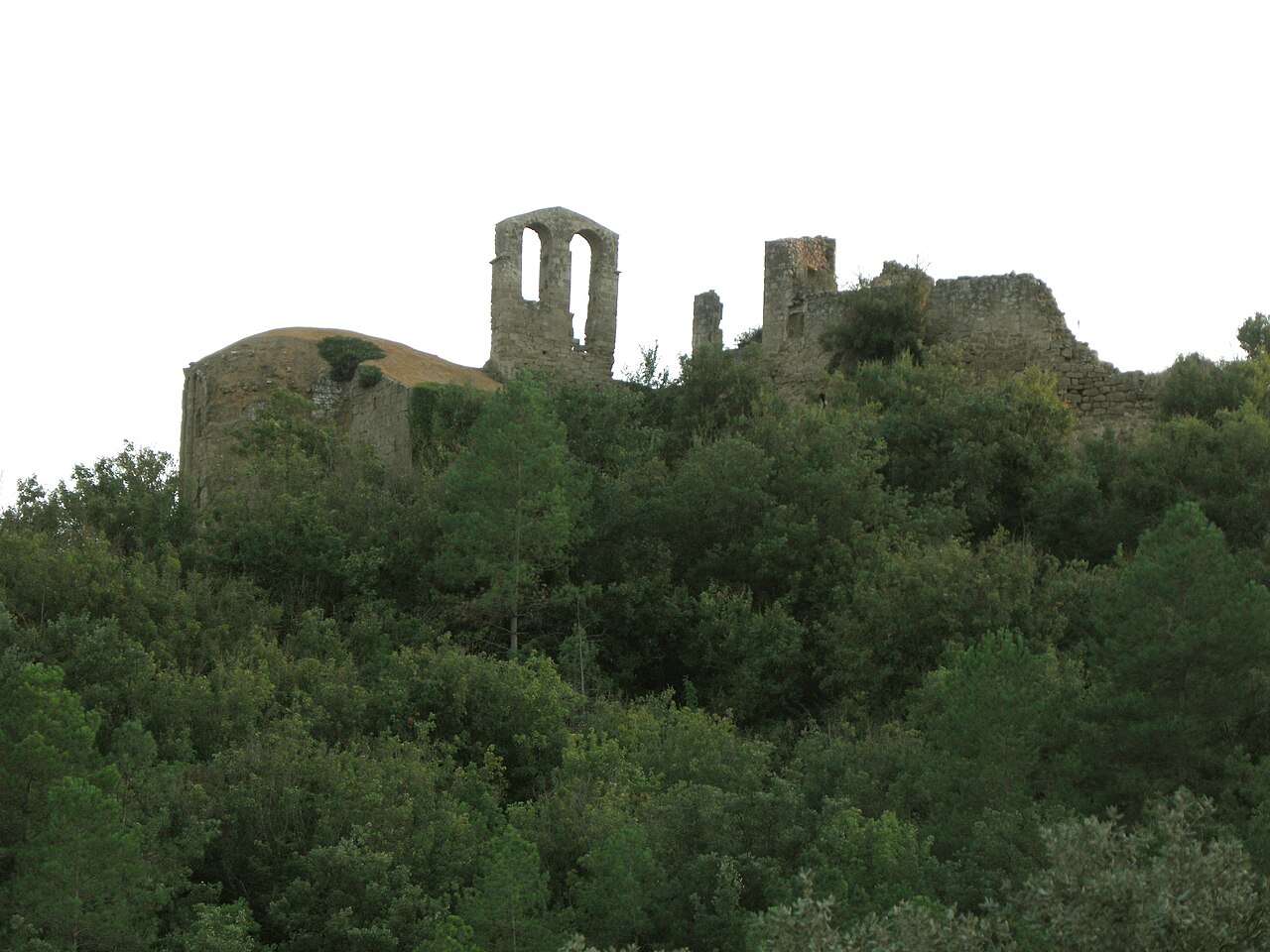
The feudal lordship associated with Torre de Peracamps concluded around 1837. Prior to this, the castle suffered damage following the War of the Spanish Succession; a 1716 royal decree ordered its partial destruction to prevent its use in future conflicts. Over time, the fortress fell into decline, with sections collapsing and materials repurposed locally, a fate common to many medieval castles rendered obsolete by changing military technologies and political structures.
Architectural features and construction details
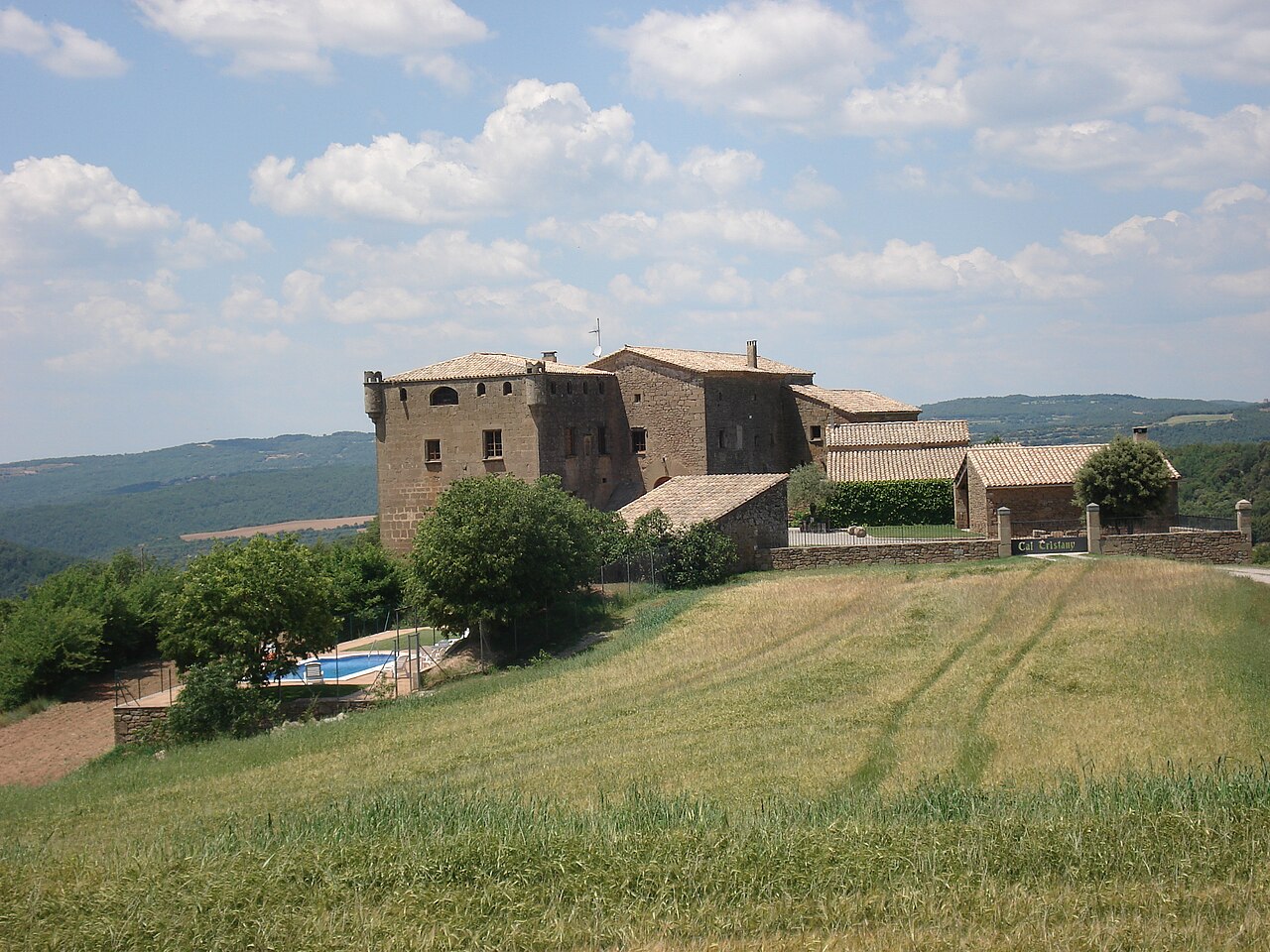
The Torre de Peracamps is characterized by a rectangular tower with adjacent buildings enclosed within a fortified perimeter wall. Today, only the western portion of the tower remains well preserved, standing as a testament to the castle's robust medieval construction. The tower rises to an estimated height exceeding thirteen meters, with walls at the base measuring over two meters thick. These thick stone walls taper as they ascend, a deliberate design to provide maximum defensive strength at the base while reducing weight higher up.
The tower's entrance was originally located on the southern side at the first-floor level, a common defensive feature that limited direct access and enhanced security. The interior ground floor space is just over two meters wide, indicating the tower's primary function as a fortified residence rather than a large habitation space.
The surviving western wall is largely intact, constructed with large, carefully shaped cornerstones approximately 30 by 40 centimeters or larger. The wall faces consist of smaller, roughly chipped stones arranged in opus spicatum masonry, a technique where stones are laid in a herringbone or fishbone pattern. This method not only provided structural stability but also reflected skilled craftsmanship. The stones are bound by a lime-based mortar, and traces of plaster on the exterior suggest the walls were once coated for protection and aesthetic purposes.
Scattered holes in the walls likely served as supports for scaffolding during construction or repairs, indicating ongoing maintenance efforts throughout the castle's active use. The use of such architectural details reveals the practical considerations medieval builders employed to ensure durability and functionality.
Fortified enclosure and water management
The tower is surrounded by remnants of other constructions within a walled enclosure, hinting at a small fortified complex rather than a solitary tower. Notably, a rock-cut cistern is located in the northwest corner of the enclosure, measuring approximately 2.3 meters by 1.3 meters with a depth of one meter. This cistern was an essential feature for water storage, providing a reliable supply during sieges or dry periods, a critical aspect of medieval castle sustainability.
Over the centuries, parts of the castle have been dismantled, with stones repurposed for local buildings such as sheds. Despite this, the remaining structures offer valuable insights into the castle's original layout and defensive capabilities, illustrating how medieval fortifications adapted to the rugged terrain of the Catalan region.
Historical significance and cultural heritage
The Torre de Peracamps holds considerable historical significance as a representation of medieval feudal lordship and the interplay between secular and ecclesiastical powers in Catalonia. Its documented history from the 11th century onward provides a rare glimpse into the inheritance practices, property transfers, and governance structures of the time.
The castle's association with the Canons of Santa Maria of the Seu d’Urgell and later the Lay Brotherhood of the Virgin of Colls reflects the deep entanglement of religious institutions in regional politics and landholding. This dual secular-religious control was typical in medieval Spain and influenced the social and economic landscape surrounding such fortifications.
The partial destruction ordered after the War of the Spanish Succession illustrates the strategic importance of the castle even in the early modern period, as authorities sought to neutralize potential military threats. Today, the ruins of Torre de Peracamps stand as a cultural heritage site, offering educational opportunities and a tangible connection to Spain's medieval past.
Visiting torre de peracamps today
While the Torre de Peracamps is in a state of partial preservation, it remains an intriguing destination for visitors interested in medieval architecture and history. The site’s rugged location and surviving structures provide a vivid sense of the castle’s original defensive purpose and residential function.
Visitors can observe the thick stone walls, the distinctive opus spicatum masonry, and the remains of the fortified enclosure, including the rock-cut cistern. These features highlight the castle’s adaptation to its environment and the practical needs of its medieval inhabitants.
Access to the site may be limited due to its condition and terrain, so prospective visitors should prepare accordingly. Exploring Torre de Peracamps offers a unique opportunity to engage with Catalonia’s rich medieval heritage and the architectural ingenuity of early hill castles.
Frequently asked questions (FAQ)
- When was Torre de Peracamps originally built?
- Torre de Peracamps was established during the early medieval period, with the earliest records dating back to the 11th century.
- What architectural features are notable at Torre de Peracamps?
- The castle features a rectangular tower with thick stone walls, opus spicatum masonry, a first-floor entrance, and a rock-cut cistern within the fortified enclosure.
- Can visitors access the interior of Torre de Peracamps?
- Due to its partial preservation and rugged location, access to the interior may be limited. Visitors should check local sources for current access conditions.
- What historical events affected Torre de Peracamps?
- The castle was partially destroyed following the War of the Spanish Succession by a royal decree in 1716, leading to its decline.
- Why was the castle partially destroyed in 1716?
- The partial destruction was ordered to prevent the castle from being used in future military conflicts after the War of the Spanish Succession.
Information
Website
Visit websiteSources & official resources
Verify the information above using these authoritative references.
Loading map...
Visitor reviews
No reviews yet. Been here? Write the first review and help other travelers!
Write the first reviewVisited this castle? Share your experience
Your review helps other travelers and adds first-hand knowledge to our encyclopedia.