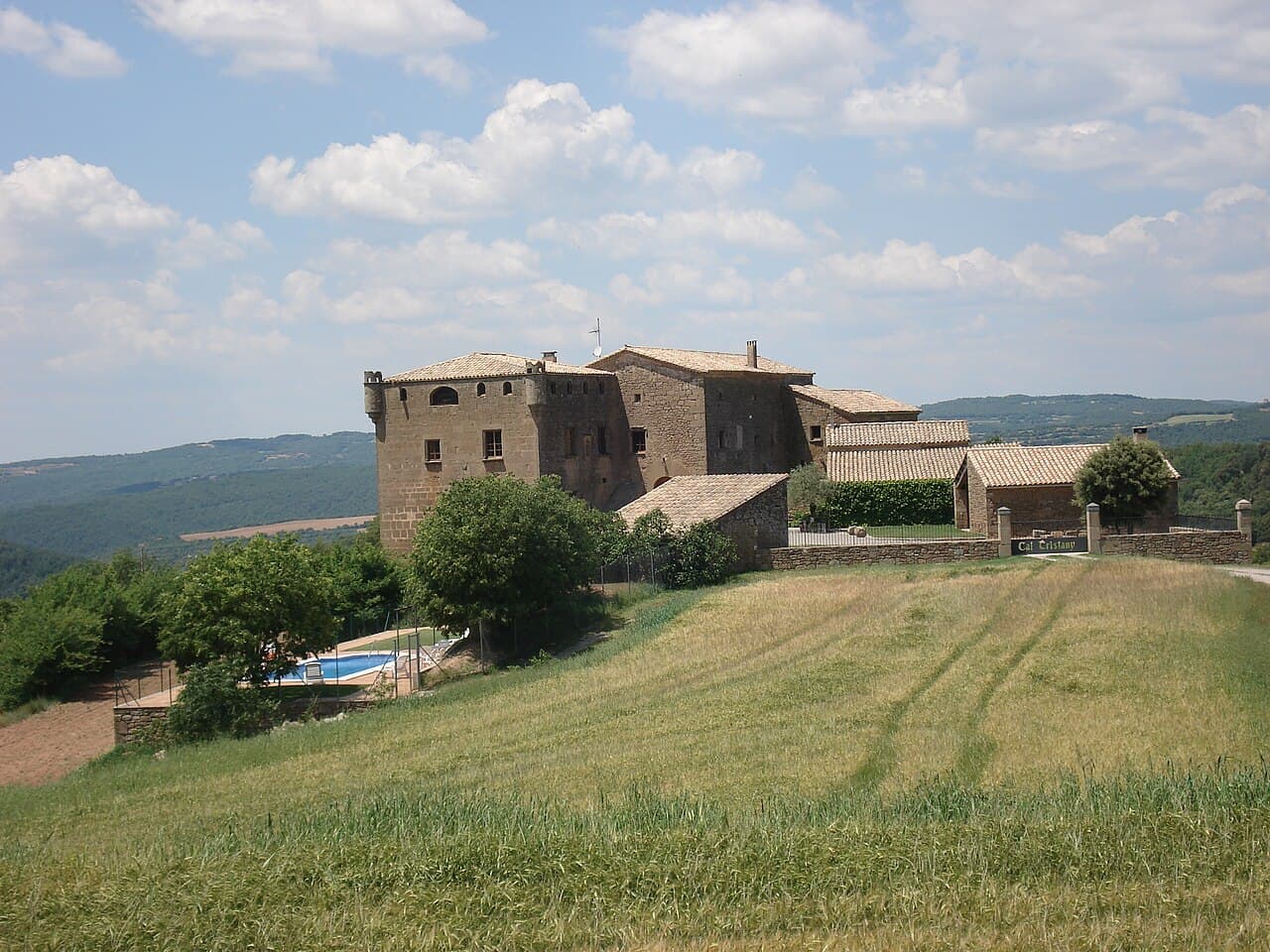
Casa Tristany is a high medieval hill castle located in Spain, dating back to the 11th century. As a typical example of early medieval fortifications, it was strategically built on elevated terrain to maximize defense and surveillance capabilities over the surrounding landscape. The castle's location on a hill provided natural protection and a commanding view, essential for monitoring movements and potential threats during the turbulent medieval period.
Architectural features and defensive design
The castle exemplifies the hill castle type, characterized by its placement on high ground rather than in lowlands or near water bodies. This positioning allowed it to serve both as a military stronghold and as a symbol of territorial control. The 11th-century construction reflects the typical high medieval architectural style, focusing on robust stone walls, battlements, and limited but strategically placed openings for archers and lookouts.
Casa Tristany likely featured a central keep or donjon, a fortified tower that served as the last line of defense and the lord's residence. Surrounding the keep, thick curtain walls would have enclosed a courtyard, providing space for auxiliary buildings such as storerooms, stables, and barracks. The walls were probably reinforced with towers at intervals to allow defenders to cover all approaches effectively.
Access to the castle was probably controlled through a single fortified gate, possibly with a drawbridge or portcullis, common defensive elements of the time. The use of natural rock formations as part of the foundation and defensive structure would have enhanced the castle's resilience against siege engines and undermining attempts.
Historical context and significance
Constructed during the high medieval period, Casa Tristany was part of the broader network of fortifications that dotted the Iberian Peninsula amid the Reconquista, the centuries-long series of conflicts between Christian and Muslim forces. Hill castles like Casa Tristany played a crucial role in establishing and maintaining control over contested territories, serving as military bases, administrative centers, and symbols of feudal power.
While specific historical records about Casa Tristany are limited, its architectural characteristics and location suggest it was an important local stronghold. It would have housed a garrison responsible for patrolling the surrounding lands, protecting trade routes, and serving as a refuge for the local population during attacks.
Preservation and current condition
Today, Casa Tristany remains a significant archaeological site, with portions of its stone walls and foundations still visible. Its condition is classified as ruins, reflecting centuries of exposure to natural elements and historical events that led to its decline. Despite this, the remnants provide valuable insights into high medieval military architecture and the strategic importance of hill castles in medieval Spain.
Efforts to preserve the site focus on stabilizing the existing structures and preventing further deterioration. The castle's ruins continue to attract historians, archaeologists, and visitors interested in medieval fortifications and Spanish history.
Visiting Casa Tristany
Access to the site may be limited due to its ruinous state and remote location on a hill. Visitors are advised to prepare for a hike or climb to reach the castle remains. The site offers panoramic views of the surrounding landscape, providing a tangible connection to the medieval past and the strategic considerations of castle builders.
While facilities at the site are minimal, the experience of exploring an authentic 11th-century hill castle in Spain offers a unique opportunity to engage with the region's medieval heritage and architectural history.
Architectural legacy and cultural importance
Casa Tristany exemplifies the typical features of high medieval hill castles in Spain, reflecting the military, political, and social dynamics of the time. Its ruins contribute to our understanding of feudal fortifications, defensive strategies, and the role of castles in shaping medieval landscapes.
The castle's enduring presence on the hilltop continues to inspire interest in medieval architecture and history, highlighting the importance of preserving such sites for future generations.
Frequently asked questions (FAQ)
- How do I get to Casa Tristany?
- Casa Tristany is located in the scenic region of Spain, easily accessible by car or public transportation. If you are traveling by train, the nearest station is just a short bus ride away, making it convenient for visitors.
- What is the historical significance of Casa Tristany?
- Casa Tristany dates back to the 15th century and is renowned for its rich history and architectural beauty. It served as a strategic fortification during various historical conflicts and reflects the cultural heritage of the region.
- When was Casa Tristany built?
- Construction of Casa Tristany began in the late 1400s and was completed in the early 1500s. This historical timeline places it in the midst of significant events in Spanish history, contributing to its allure as a historical site.
- Can I take guided tours of Casa Tristany?
- Yes, guided tours of Casa Tristany are available and highly recommended for a deeper understanding of its history and architecture. These tours typically run throughout the day and can be booked in advance or on-site, depending on availability.
- Why is the architecture of Casa Tristany unique?
- Casa Tristany showcases a blend of Gothic and Renaissance architectural styles, making it a fascinating study for enthusiasts. Its intricate stone carvings and expansive courtyards highlight the craftsmanship of the era and the cultural influences that shaped its design.
- Is it possible to visit Casa Tristany year-round?
- Yes, Casa Tristany is open to visitors year-round, although certain areas may be restricted during special events or maintenance. It's advisable to check the official website for any seasonal changes to opening hours.
- What are the opening hours for Casa Tristany?
- Casa Tristany typically opens at 10 AM and closes at 6 PM, with extended hours during the summer months. Visitors should verify these hours on the official website or by contacting the castle directly before planning their visit.
- What are the ticket prices for Casa Tristany?
- Admission prices for Casa Tristany vary depending on age and whether you choose a guided tour. Generally, tickets range from €5 for adults to €3 for children and seniors, with discounts available for group visits.
- What nearby attractions can I visit when I am at Casa Tristany?
- Visitors to Casa Tristany can explore several nearby attractions, including the historic town center and local museums that showcase regional history. The beautiful surrounding countryside also offers hiking trails and picturesque views, perfect for a day of exploration.
Photo gallery

Information
Loading map...
Visitor reviews
No reviews yet. Been here? Write the first review and help other travelers!
Write the first reviewVisited this castle? Share your experience
Your review helps other travelers and adds first-hand knowledge to our encyclopedia.


