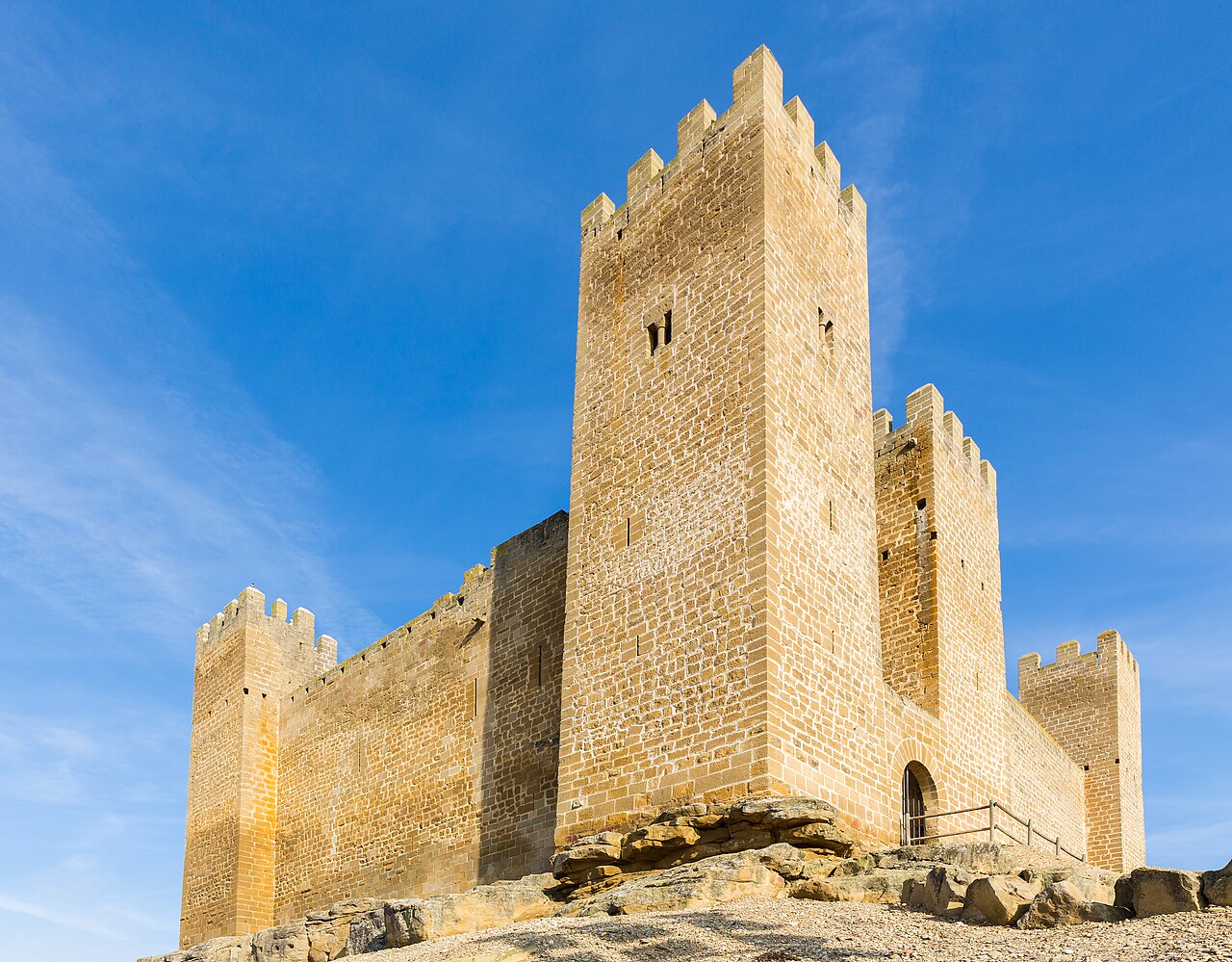
Torre de Layana
The Torre de Layana stands as a remarkable example of medieval Gothic military architecture nestled in the municipality of Layana, within the historic region of Aragón, Spain. Dating back to the 13th century, this hill castle tower embodies the defensive strategies and feudal dynamics prevalent during the High to Late Medieval period in the Kingdom of Aragón. Its enduring stone structure offers valuable insight into the architectural and territorial history of medieval Spain.
Historical context and ownership
The origins of the Torre de Layana are closely tied to the early medieval settlement of Layana, first documented in 1186 when King Alfonso II of Aragón granted the area to Sancho de Biota. This initial royal grant reflects the strategic importance of the location during a time of territorial consolidation within Aragón. Over the subsequent centuries, the tower and its lands changed hands among notable noble families, illustrating the shifting political allegiances and feudal relationships that shaped the region.
In 1348, the tower was under the possession of Juan Jiménez de Urrea, a figure connected to Aragón's nobility. Later, in 1412, ownership transferred to Juan de Sessé, who played a role in the contentious Compromise of Caspe, a pivotal succession agreement that determined the Crown of Aragón's ruler. This association underscores the tower's connection to significant historical events and regional power struggles.
By the early 17th century, specifically in 1610, administrative control of Layana and the Torre de Layana was integrated into the jurisdiction of the nearby town of Uncastillo. This transition reflects broader changes in local governance and territorial organization during the post-medieval period, marking a shift from feudal lordship to more centralized municipal control.
Architectural features and design
The Torre de Layana is characterized by its rectangular footprint, measuring approximately eight by five meters, and rising to a height of around twenty meters. The tower comprises four main floors capped by a terrace, embodying the compact, vertical design typical of Gothic defensive towers of its era.
The surviving stone masonry is most intact on the west and north walls, with substantial remnants of the south wall as well. The use of robust stone materials and medieval construction techniques has allowed these walls to endure through centuries, providing a tangible connection to the past.
Defensive features include numerous openings such as arrow slits (saeteras), which are narrow vertical apertures designed to enable archers to defend the tower while minimizing their exposure to enemy fire. These apertures are framed by pointed arches, a hallmark of Gothic architectural style.
Above the arrow slits, the tower features machicolations—projecting parapets with openings through which defenders could drop stones or boiling liquids on attackers below. These machicolations are supported by groups of three modillions, decorative corbels that combine functionality with aesthetic detail. The tower is crowned with battlements (almenas), consisting of alternating raised merlons and gaps, providing cover and firing positions for defenders.
Construction techniques and materials
The tower's construction reflects the skilled masonry work of medieval builders in Aragón, utilizing locally sourced stone laid in regular courses. The stonework demonstrates both strength and durability, essential for withstanding sieges and the test of time. The pointed arches and machicolations not only served defensive purposes but also contributed to the tower's imposing Gothic silhouette.
The tower's role in medieval Aragón
As a hill castle, the Torre de Layana occupied a strategic vantage point, overseeing the surrounding countryside. Its vertical design and defensive features made it an effective stronghold for controlling local territory and protecting inhabitants from raids or military incursions.
The tower's association with prominent noble families and involvement in key historical events such as the Compromise of Caspe highlight its importance beyond mere military function. It served as a symbol of feudal authority and territorial control within the Kingdom of Aragón during a period marked by political complexity and regional conflicts.
Preservation and modern significance
Today, the Torre de Layana stands as a well-preserved monument to medieval Gothic architecture in rural Aragón. Rehabilitation efforts have meticulously preserved its stonework, pointed arches, machicolations, and battlements, ensuring that these defining features remain intact for future generations.
The tower also connects to the broader historical narrative of the area, linking medieval heritage with earlier Roman archaeological remains found nearby. This continuity enriches the cultural significance of the site, making it a valuable destination for historians, architects, and visitors interested in Spain's medieval past.
Visitors to the Torre de Layana can appreciate its imposing vertical structure, the defensive ingenuity of its design, and its role as a witness to centuries of Aragón's history. The tower remains a testament to the enduring legacy of medieval fortifications and the complex feudal society that shaped the region.
Visitor experience and accessibility
While the tower is primarily a historical monument, its accessible location in Layana allows visitors to explore the exterior and appreciate its architectural details up close. Interpretation panels and guided tours in the region often include the Torre de Layana as part of a broader exploration of medieval fortifications in Aragón.
The surrounding landscape offers scenic views that complement the tower's strategic positioning, enhancing the visitor experience by providing context to its defensive purpose.
Frequently asked questions (FAQ)
- When was the Torre de Layana built?
- The Torre de Layana was constructed in the 13th century during the High Medieval period, reflecting Gothic defensive architecture.
- What architectural features define the Torre de Layana?
- The tower features a rectangular footprint, four floors, pointed arch arrow slits, machicolations supported by modillions, and battlements typical of Gothic military design.
- Is the Torre de Layana open to visitors?
- Yes, visitors can explore the exterior of the Torre de Layana and enjoy guided tours that highlight its historical and architectural significance.
- What historical events is the Torre de Layana associated with?
- The tower is linked to the Compromise of Caspe in 1412 and ownership by notable figures such as Juan Jiménez de Urrea and Juan de Sessé.
- Where is the Torre de Layana located?
- The Torre de Layana is located in the municipality of Layana, in the region of Aragón, Spain.
Information
Current owner
Municipality
Loading map...
Visitor reviews
No reviews yet. Been here? Write the first review and help other travelers!
Write the first reviewVisited this castle? Share your experience
Your review helps other travelers and adds first-hand knowledge to our encyclopedia.