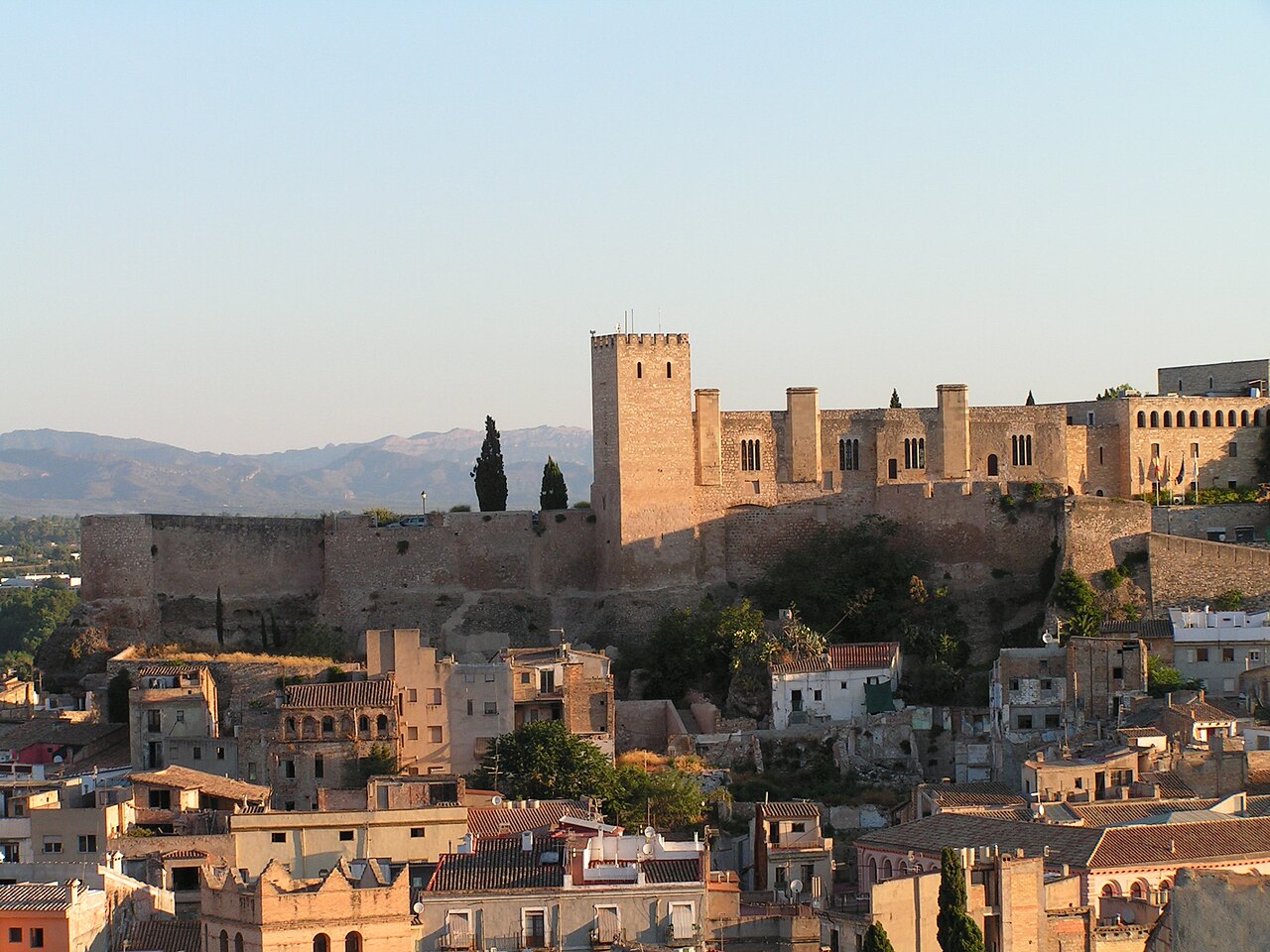
Torre de Camarles
The Torre de Camarles stands as a remarkable example of medieval military architecture in the Catalonia region of Spain. This hill castle occupies a site with deep historical roots, originally hosting a fortified Islamic alqueria, reflecting the early Islamic influence in the region before the Christian reconquest reshaped the political and cultural landscape. The castle's strategic location and robust construction highlight its importance in controlling the surrounding territory throughout the Middle Ages.
Historical background and ownership transitions
The origins of the Torre de Camarles trace back to the period when the Iberian Peninsula was a patchwork of Islamic and Christian territories. The site was initially an Islamic fortified settlement, known as an alqueria, which served as a rural stronghold and agricultural estate. This early fortification underscores the cultural and military presence of Islamic civilization in Catalonia prior to the Christian reconquest.
In the mid-12th century, the castle's control shifted as part of the Christian expansion. In 1150, Ramon Berenguer IV, Count of Barcelona, granted the tower to Guillem de Sunyer, marking the site's integration into the emerging Christian feudal system. This transfer was significant in consolidating Christian authority in the region.
Later, in 1322, the castle was awarded by King Jaime II of Aragon to Pedro Ramón of Mataró. This royal grant illustrates the continued strategic and administrative value of the Torre de Camarles under the Aragonese crown during the late medieval period. The castle thus witnessed important political shifts from Islamic to Christian rule and played a role in the feudal governance of Catalonia.
Architectural features and defensive design
The Torre de Camarles is primarily characterized by its circular stone tower, a design choice that enhanced its defensive capabilities. The tower's walls are nearly two meters thick, rising to approximately nine meters in height. This substantial thickness provided formidable protection against siege weaponry and attacks common in medieval warfare.
A distinctive architectural element is the talud, a sloped base about two and a half meters tall, encircling the tower. This feature served dual purposes: strengthening the tower's foundation and deflecting projectiles or battering rams, thereby increasing the structure's resilience.
Access to the tower was intentionally restricted for defense; the entrance is located roughly three meters above ground level, reachable originally only by ladder or removable stair. Today, a modern metal staircase provides visitor access. The doorway is framed by a semicircular arch carved from a single stone block, showcasing the craftsmanship of medieval masons.
Inside, the tower contains a chamber capped with a false dome, a vault that mimics the appearance of a true dome but is constructed through corbelling techniques. This chamber includes a central opening leading to an upper terrace, which functioned as a viewing platform and lookout point.
Two rectangular windows pierce the chamber walls, allowing light into the interior and providing vantage points for observation and defense. These apertures reflect the tower's dual role as both a fortress and a watchtower.
Associated structures and site layout
Surrounding the main tower are the remains of ancillary stone walls, arches, and a well. These features suggest the presence of additional buildings or fortifications that complemented the tower, forming a small fortified complex. The well indicates the importance of a reliable water source for sustained defense and habitation.
The layout implies a multifunctional site combining residential, defensive, and administrative functions, typical of medieval hill castles in the region. These auxiliary structures would have supported the garrison and possibly served as quarters for the lord or local officials.
Historical significance and preservation
The Torre de Camarles offers valuable insights into the military architecture and feudal history of Catalonia during the high and late medieval periods. Its evolution from an Islamic alqueria to a Christian stronghold reflects the broader historical shifts in the Iberian Peninsula during the Reconquista.
Despite the passage of centuries, the tower remains well preserved, thanks in part to recent restoration efforts. These have stabilized the structure and made it accessible for study and tourism, allowing visitors to appreciate its architectural features and historical context firsthand.
While there are no known legends or symbolic associations tied to the Torre de Camarles, its enduring physical presence and strategic design make it a significant cultural heritage site. It stands as a testament to the region's complex history and the interplay of Islamic and Christian influences in medieval Spain.
Visiting the torre de camarles
Today, the Torre de Camarles is accessible to visitors interested in medieval architecture and history. The metal staircase allows safe entry to the elevated doorway, and the interior viewing platform offers panoramic views of the surrounding Catalonian landscape. The site provides a tangible connection to the region's past, illustrating the defensive strategies and architectural ingenuity of its builders.
Visitors can explore the tower's interior and examine the remains of the surrounding structures, gaining an understanding of the castle's role within the medieval feudal system. Its location in the village of Camarles makes it a convenient destination for those exploring the cultural heritage of Catalonia.
Frequently asked questions (FAQ)
- When was the Torre de Camarles originally built?
- The Torre de Camarles was originally established as a fortified Islamic alqueria before the Christian reconquest, with the current medieval tower dating back to the 12th century.
- What architectural features make the Torre de Camarles notable?
- The tower is notable for its circular stone construction with nearly two-meter-thick walls, a distinctive talud base, a semicircular arched entrance elevated three meters above ground, and a false dome interior chamber.
- Can visitors access the interior of the Torre de Camarles?
- Yes, visitors can access the interior via a modern metal staircase leading to the elevated entrance. Inside, they can view the false dome chamber and the upper terrace used as a viewing platform.
- What historical transitions does the Torre de Camarles reflect?
- The Torre de Camarles reflects the transition from Islamic to Christian rule in Catalonia, having been originally an Islamic fortified settlement before becoming a Christian feudal stronghold granted by Ramon Berenguer IV and later King Jaime II of Aragon.
- Are there any legends or symbolic stories associated with the Torre de Camarles?
- No documented legends or symbolic associations are known for the Torre de Camarles; its significance lies primarily in its historical and architectural value.
Information
Loading map...
Visitor reviews
No reviews yet. Been here? Write the first review and help other travelers!
Write the first reviewVisited this castle? Share your experience
Your review helps other travelers and adds first-hand knowledge to our encyclopedia.