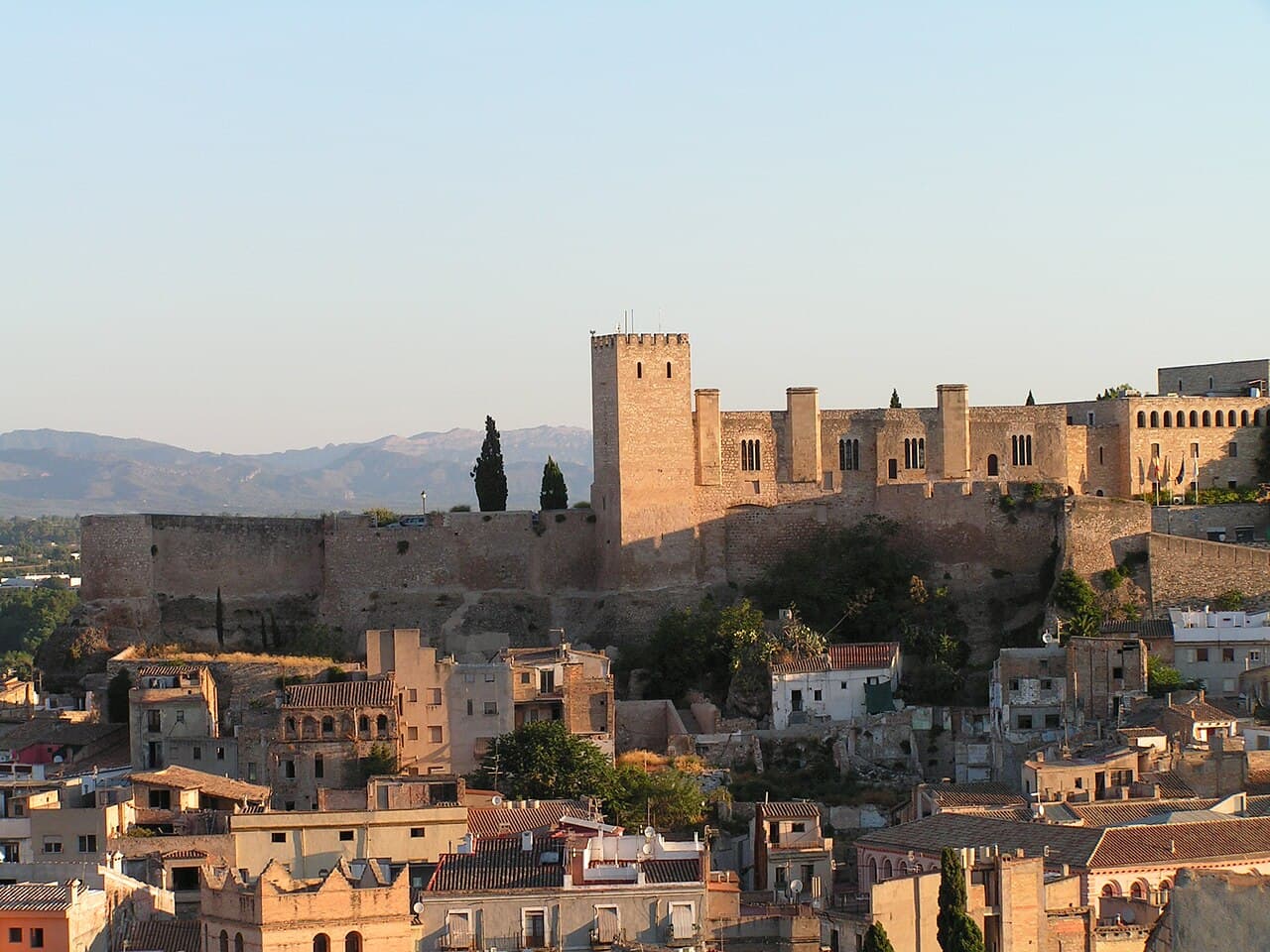
Suda de Tortosa stands as a remarkable medieval fortress perched strategically atop two adjacent hills in the city of Tortosa, Spain. Its history spans multiple significant eras, beginning with its Roman foundations and evolving through Islamic rule to become a prominent Christian stronghold during the Reconquista. This castle exemplifies the layered architectural and cultural transformations characteristic of Spanish fortifications.
The fortress's name, "Suda," derives from the Arabic word for castle or fortress, reflecting the period when the region was under Muslim control. Archaeological evidence, including inscriptions and funerary objects, attests to the castle's importance during the 10th century under the caliph Abd ar-Rahman III. Excavations have unearthed a Muslim cemetery near the entrance, featuring a 10th-century epitaph and a funerary chest lid inscribed with Kufic script, highlighting the site's Islamic heritage.
Roman origins and early fortifications
The earliest fortifications on the site date back to the Roman era, with original Roman walls forming the foundation of the fortress. These walls provided a sturdy base upon which subsequent medieval structures were built. The castle's position on two hills allowed for a commanding view of the surrounding landscape, vital for defense and control of the region.
Medieval development and Christian reconquest
During the 10th century, the fortress underwent significant expansion under Muslim rule, becoming a key defensive and administrative center. The Christian Reconquista brought profound changes in December 1148, when Ramon Berenguer IV captured the castle. Following the conquest, the fortress was divided into three parts, with two sections granted to knights Guillem Ramon I de Montcada and Pere de Sentmenat, while Ramon Berenguer IV retained the remaining portion.
King James I of Aragon later used the castle as a favored residence and military base for campaigns to reclaim nearby territories such as Morella, Peníscola, and Burriana. By 1294, the castle transitioned into a royal palace when Tortosa came under direct royal authority. This period saw the construction of new chambers and enhancements to the fortress's defensive capabilities.
Governance and expansions in the 14th century
Throughout the 14th century, the castle was governed by Infante Ferran, Marquis of Tortosa, until 1363. Subsequently, King Peter IV, known as "the Ceremonious," reclaimed the castle and city jurisdiction, undertaking further expansions to strengthen the fortress. The castle also served as a seat for a court of justice, underscoring its administrative significance during the Middle Ages.
Architectural features and later modifications
The castle's layout historically consisted of three separate sections, a reflection of its division after the Reconquista. In the 17th and 18th centuries, new constructions linked the two hills, creating a unified defensive complex. While these additions partially obscured earlier medieval and Roman elements, they maintained the fortress's military relevance.
Within the fortress, several notable architectural features remain preserved. These include three ancient fireplaces and four large windows exemplifying the Catalan Gothic style, now housed in a building serving as the modern tourist office. The castle also contains a well-preserved arsenal or armory, indicative of its defensive role.
A distinctive feature is a large, deep well surrounded by underground galleries. These subterranean passages contain the remains of an ancient mill and two ovens, suggesting the castle's capacity for self-sufficiency during sieges or prolonged occupation.
Archaeological significance and preservation
The Muslim cemetery near the fortress entrance is a crucial archaeological site, providing insights into the Islamic period of the castle's history. Artifacts such as the 10th-century epitaph and Quranic inscriptions in Kufic script are preserved in the Tortosa City Museum, emphasizing the site's cultural and historical importance.
Today, the Suda de Tortosa is recognized as a Spanish historical-cultural monument, reflecting its significance and the preservation of its diverse architectural and archaeological heritage. Its strategic hilltop location, multi-period construction, and rich history make it a compelling destination for visitors interested in medieval fortifications and Spanish history.
Visiting the castle and exploring its heritage
Visitors to the Suda de Tortosa can explore the extensive remains of the fortress, including the Roman walls, medieval chambers, and the underground galleries. The site's layered history is visible in the architectural details and archaeological finds, offering a tangible connection to the various cultures that shaped the castle.
The castle's location atop two hills provides panoramic views of Tortosa and the surrounding landscape, enhancing the visitor experience. Educational displays and the preservation of key features such as the Catalan Gothic windows and the armory enrich understanding of the castle's military and residential functions.
As a protected monument, the Suda de Tortosa is maintained to preserve its structural integrity and historical authenticity, allowing future generations to appreciate its role in Spanish history.
Frequently asked questions (FAQ)
- How do I get to Suda de Tortosa?
- Suda de Tortosa is located in the historic town of Tortosa, Spain. You can reach it by car or public transport, with various bus services connecting Tortosa to major cities in the region. The castle is situated on a hill, so expect a short walk to the entrance from the nearest parking area.
- What is the historical significance of Suda de Tortosa?
- Suda de Tortosa, also known as the Castle of Tortosa, dates back to the 10th century and played a crucial role in the defense against the Moors during the Reconquista. It showcases the rich history of the region and has witnessed various historical events, including battles and sieges. Today, it stands as a testament to medieval architecture and the cultural heritage of Tortosa.
- When was Suda de Tortosa built?
- Construction of Suda de Tortosa began in the 10th century, during the period of Moorish rule in Spain. Throughout the centuries, it underwent several modifications and expansions, reflecting the architectural styles of different eras. The castle's design incorporates elements from both Islamic and Christian traditions, making it a unique historical site.
- Can I visit Suda de Tortosa year-round?
- Yes, Suda de Tortosa is open to visitors throughout the year. However, it's advisable to check for any seasonal hours or maintenance closures before planning your visit. The castle offers guided tours that provide insights into its rich history and architecture.
- Why is Suda de Tortosa a popular tourist attraction?
- Suda de Tortosa attracts visitors due to its stunning views over the Ebro River and the picturesque town of Tortosa. The castle's impressive architecture and historical significance make it a fascinating destination for history enthusiasts and tourists alike. Additionally, its location makes it a perfect spot for photography and exploration.
- Is it possible to access all areas of Suda de Tortosa?
- While many parts of Suda de Tortosa are accessible to visitors, some areas may have restricted access due to preservation efforts. The main sections of the castle, including the lookout points, are open to the public and provide an informative experience about its history. Make sure to follow any guidelines provided by staff during your visit.
- What are the opening hours for Suda de Tortosa?
- Suda de Tortosa typically opens at 10 AM and closes at 6 PM, though hours may vary based on the season. It is recommended to check the official website or contact the site directly for the most current information on opening times, especially during holidays. Guided tours may have specific schedules, so plan accordingly.
- Are there any nearby attractions to visit along with Suda de Tortosa?
- Yes, the area surrounding Suda de Tortosa is rich in attractions, including the beautiful Cathedral of Tortosa and the historic Jewish Quarter. The Ebro River offers opportunities for outdoor activities like kayaking and hiking. Visitors can also explore local restaurants and shops that reflect the culture of the region.
- What are the ticket prices for visiting Suda de Tortosa?
- Ticket prices for Suda de Tortosa are generally affordable, with discounts available for students and seniors. Children under a certain age may enter for free, making it a great family destination. It's best to check the official website for the latest pricing and any special promotions or group rates.
Photo gallery

Information
Website
Visit websiteSources & official resources
Verify the information above using these authoritative references.
Loading map...
Visitor reviews
No reviews yet. Been here? Write the first review and help other travelers!
Write the first reviewVisited this castle? Share your experience
Your review helps other travelers and adds first-hand knowledge to our encyclopedia.


