Torosay Castle
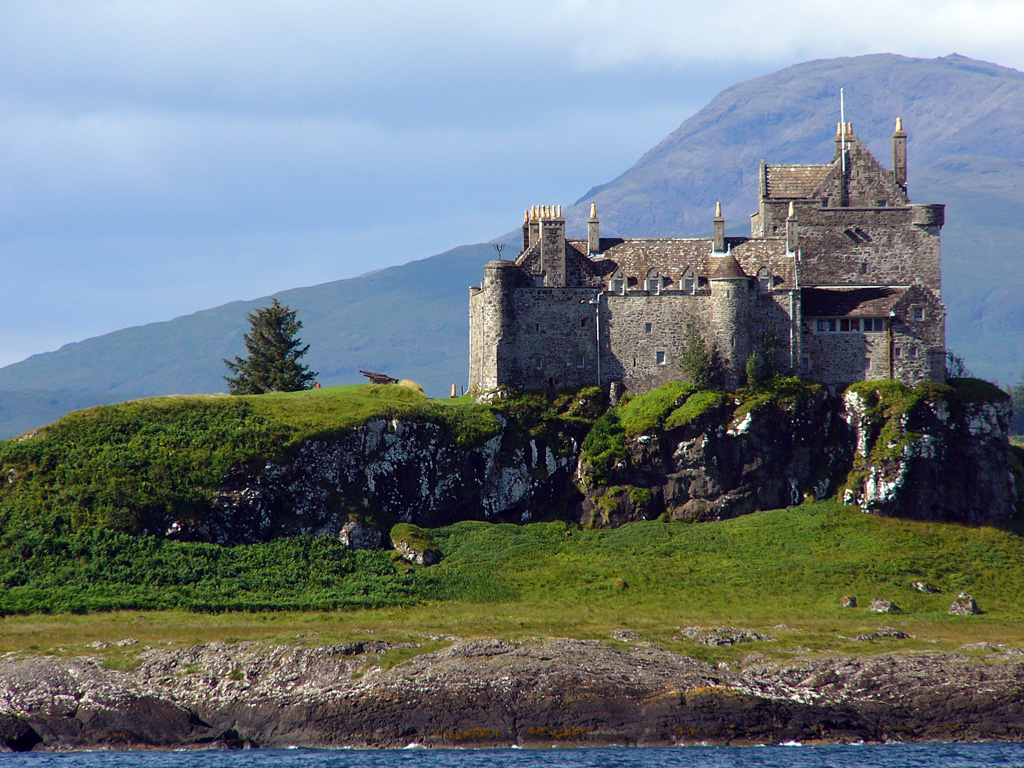
Torosay Castle, situated on the scenic Isle of Mull in Scotland, is a distinguished example of the Scottish Baronial architectural style. Designed by the renowned architect David Bryce and completed in 1858, this imposing mansion reflects the 19th-century revival of medieval Scottish castle motifs combined with Victorian-era grandeur.
Architectural design and style
The castle exhibits characteristic features of the Scottish Baronial style, which includes elements such as turrets, battlemented parapets, crow-stepped gables, and ornate stonework. David Bryce, a prominent architect of the period, was instrumental in popularizing this style, blending romantic historicism with the needs of a modern residence. Torosay Castle's design is both grand and picturesque, with asymmetrical facades and a variety of towers and chimneys that contribute to its distinctive silhouette.
Historical context and ownership
The castle was commissioned by John Campbell of Possil, a wealthy landowner of the Victorian era. The construction of Torosay Castle during the mid-19th century fits within a broader trend of aristocratic and affluent families building or renovating country houses in historic styles to demonstrate status and heritage. Over the years, the castle has changed hands several times, with notable owners including Walter Murray Guthrie, who enriched the estate's gardens with unique sculptures.
Gardens and landscape features
Surrounding the castle are approximately 4.9 hectares of carefully designed gardens. These include formal terraces laid out around the turn of the 20th century, attributed to the distinguished Scottish architect and landscape designer Sir Robert Lorimer. The gardens are notable for their blend of formal and naturalistic landscaping, creating a serene setting that complements the castle's architecture.
Statue Walk
One of the most remarkable features of the gardens is the Statue Walk, consisting of 19 statues crafted in the style of the Italian sculptor Antonio Bonazza. These statues were acquired by Walter Murray Guthrie from a neglected garden near Milan. Remarkably, they were transported to Scotland as ballast on a cargo ship, effectively preserving these fine examples of Italianate sculpture and adding a unique cultural dimension to the estate.
Access and public visitation
Historically, Torosay Castle and its gardens were open to the public, offering visitors a chance to explore its architectural beauty and horticultural treasures. The castle was conveniently connected to the Craignure ferry terminal by the now-defunct Isle of Mull Railway, facilitating access for tourists. However, as of recent years, the castle is currently closed to the public, limiting visitor opportunities to experience this historic site firsthand.
Preservation and current status
Torosay Castle remains a significant example of 19th-century Scottish Baronial architecture and retains much of its original character and garden layout. While it is not currently accessible for tours, the estate's architectural and horticultural heritage continues to be recognized by historians and enthusiasts of Scottish country houses. The preservation of its gardens, terraces, and distinctive statues ensures that Torosay Castle holds an important place in Scotland's cultural landscape.
Frequently asked questions (FAQ)
- How do I get to Torosay Castle?
- To reach Torosay Castle, you can take a ferry from Oban to the Isle of Mull. Once on the island, there are local bus services and taxis available to take you to the castle, which is located a short distance from the main village of Craignish.
- What is the historical significance of Torosay Castle?
- Torosay Castle, built in the mid-19th century, is a remarkable example of Scottish baronial architecture. It was constructed for the Maclean family and has served as a notable residence, reflecting the rich history of the Isle of Mull and its noble families.
- When was Torosay Castle built?
- Construction of Torosay Castle began in 1858 and was completed in 1860. Designed by architect John MacLeod, the castle showcases a blend of Scottish architectural styles and has been preserved to highlight its historical features.
- Can I visit Torosay Castle year-round?
- Torosay Castle is typically open to visitors from April to October, with varying hours depending on the season. It is advisable to check the official website for current opening hours and any special events before planning your visit.
- Why is Torosay Castle an architectural highlight?
- The castle is celebrated for its picturesque tower and intricate stonework, showcasing the grandeur of the Victorian era. Its design integrates traditional Scottish elements with modern comforts, making it a fascinating site for architecture enthusiasts.
- Is it possible to host events at Torosay Castle?
- Yes, Torosay Castle offers options for hosting private events, including weddings and corporate gatherings. The stunning surroundings and elegant interiors provide a unique backdrop for special occasions.
- What are the ticket prices for visiting Torosay Castle?
- Ticket prices for Torosay Castle vary, with discounts available for children, seniors, and families. It’s advisable to check the official website for the most current pricing and any available special offers.
- What is nearby Torosay Castle that I can explore?
- Visitors to Torosay Castle can also explore the beautiful gardens and grounds surrounding the castle, as well as nearby attractions like the picturesque village of Tobermory and the stunning landscapes of Mull. The island offers numerous hiking trails and opportunities for wildlife watching.
- What are the accessibility options at Torosay Castle?
- Torosay Castle provides some accessibility features, but due to its historic nature, certain areas may be challenging to navigate for those with mobility impairments. It is recommended to contact the castle staff in advance to discuss specific accessibility needs and available accommodations.
Information
Loading map...
Visitor reviews
No reviews yet. Been here? Write the first review and help other travelers!
Write the first reviewVisited this castle? Share your experience
Your review helps other travelers and adds first-hand knowledge to our encyclopedia.