Gylen Castle
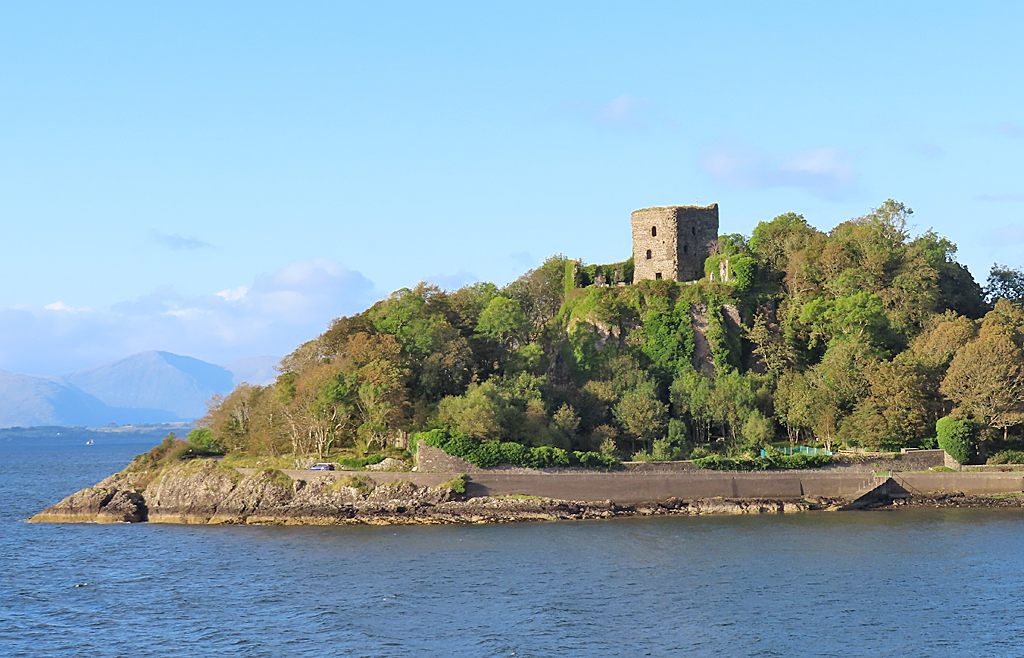
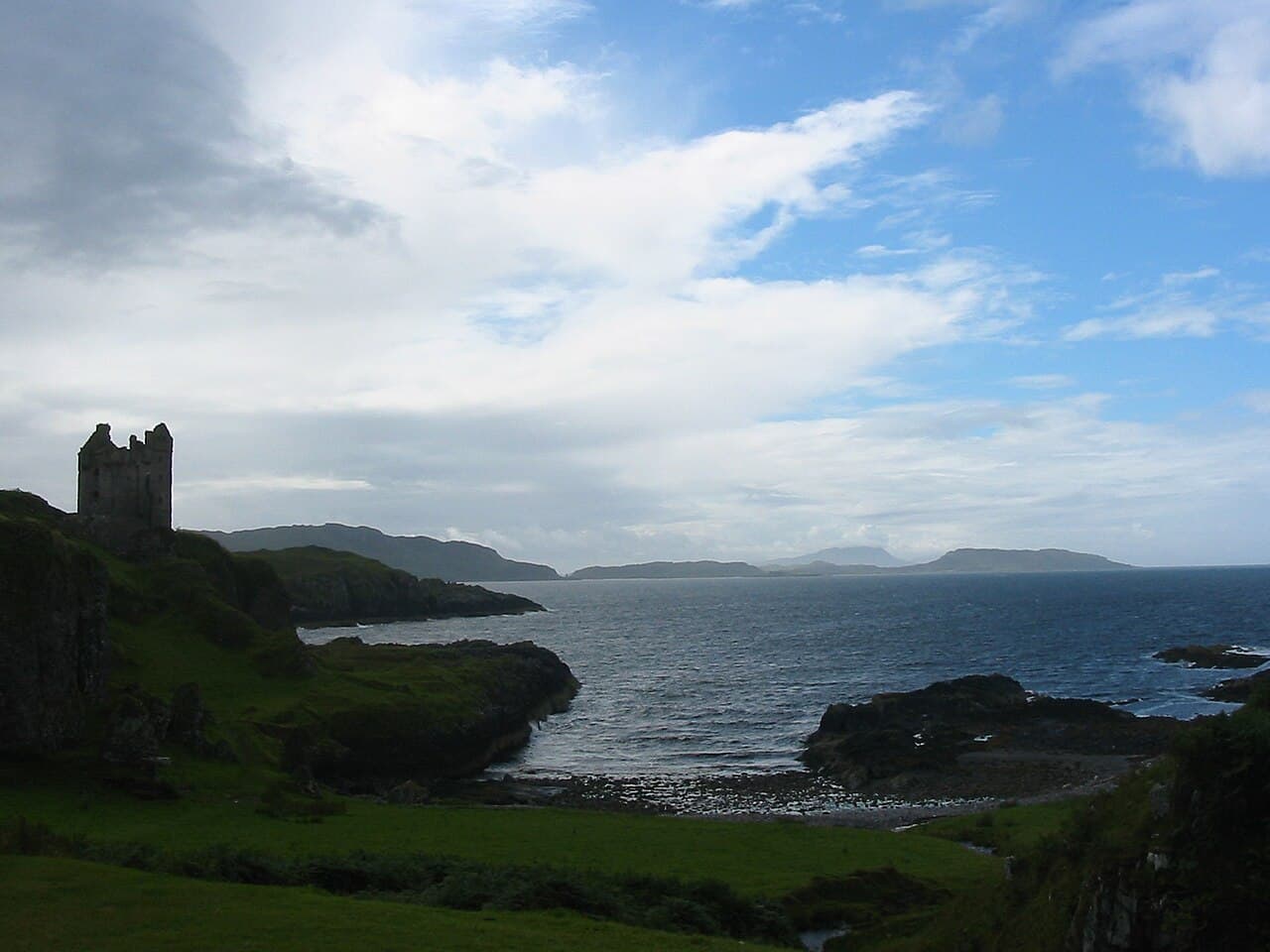
Gylen Castle stands as a remarkable example of a Scottish Renaissance tower house built in 1582 by the Clan MacDougall. Perched on a rocky headland on the southwest shore of Kerrera Island, overlooking the Firth of Lorne, the castle's strategic location provided natural defenses and commanding sea views. Its construction reflects the turbulent 16th-century Scottish clan era, when fortified residences were essential for both defense and asserting regional power.
Historical background and clan significance
The castle was commissioned by Duncan MacDougall, head of the clan, as a fortified family seat during a period marked by inter-clan rivalries and political unrest. The MacDougalls were a prominent clan in the region, and Gylen Castle served as a symbol of their influence and territorial control. Its establishment in either 1582 or 1587 aligns with the late Renaissance period in Scotland, a time when many tower houses were constructed or upgraded to combine defensive features with domestic comfort.
The castle's relatively brief period of occupation ended violently during the Wars of the Three Kingdoms. In 1647, Covenanter forces under General David Leslie besieged and set fire to Gylen Castle. The assault resulted in the death of its occupants and left the structure in ruins. This event marked a significant moment in the castle's history, illustrating the wider religious and political conflicts that engulfed Scotland in the mid-17th century.
Architectural features and layout
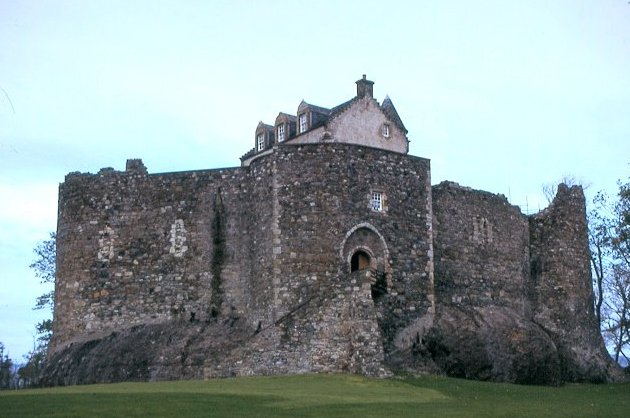
Gylen Castle is designed as an L-shaped tower house, a common architectural form in Scotland during the Renaissance. The main tower rises to four floors, while an attached stair tower extends to five stories, providing vertical emphasis and defensive advantage. The stair tower contains a spiral staircase that connects all levels, facilitating internal movement between the vaulted cellar, kitchen, hall, and private chambers.
The castle's vaulted passageway running through the main tower leads to an enclosed courtyard, which originally contained ancillary buildings supporting daily life. The presence of a vaulted cellar indicates storage for provisions and goods, essential for sustaining the household during sieges or harsh weather.
A distinctive feature is the oriel window on the third-floor level, projecting from the façade. This architectural detail not only enhanced natural lighting but also added aesthetic interest to the otherwise defensive structure. The castle's thick stone walls and narrow windows reflect its dual purpose as a residence and fortress.
Location and strategic importance
Situated on Kerrera Island, the castle overlooks the Firth of Lorne, a key maritime route. Its elevated position on a rocky promontory provided excellent visibility and natural protection against attackers. The surrounding waters and rugged terrain made direct assaults difficult, enhancing the castle's defensive capabilities.
This location also allowed the MacDougalls to monitor sea traffic and maintain control over their coastal territory. The castle's placement is typical of hill castles that leverage natural topography for defense, a common strategy in Scottish fortifications of the period.
Decline, preservation, and restoration efforts
After its destruction in 1647, Gylen Castle was abandoned and gradually fell into ruin. By the early 20th century, the structure was at risk of collapse, prompting minor stabilization work in 1913. Its historical and architectural significance was formally recognized with its designation as a scheduled monument in 1931.
In the late 20th and early 21st centuries, renewed interest in preserving Scottish heritage led to extensive restoration efforts. Archaeological investigations in 2002 provided valuable insights into the castle's original layout and construction techniques. These studies informed the restoration project completed in 2006, funded by a combination of grants from Historic Scotland and donations from the worldwide Clan MacDougall community.
The restoration aimed to stabilize the ruins while respecting the castle's historical integrity. Today, visitors can explore the well-preserved remains, including the tower house's structural elements and courtyard. The site serves as both a cultural landmark and a testament to Scotland's rich clan history and architectural heritage.
Visitor experience and cultural significance
Gylen Castle offers a unique glimpse into the life of Scottish clans during the Renaissance. Its remote island location and evocative ruins attract history enthusiasts and tourists interested in Scotland's medieval past. The castle's dramatic history, from its construction by the MacDougalls to its fiery destruction, enriches its appeal.
Visitors can appreciate the castle's architectural features, such as the spiral staircase and oriel window, while enjoying panoramic views of the surrounding sea and landscape. The site is accessible by ferry from Oban, making it a popular day trip destination.
As a preserved monument, Gylen Castle contributes to the understanding of Scottish defensive architecture and clan dynamics during a pivotal historical period. Its restoration underscores the importance of heritage conservation and the enduring legacy of Scotland's noble families.
Frequently asked questions (FAQ)
- How do I get to Gylen Castle?
- Gylen Castle is located on Kerrera Island near Oban, Scotland. Visitors typically reach the castle by taking a ferry from Oban to Kerrera, followed by a walk to the castle site.
- What is the historical significance of Gylen Castle?
- Gylen Castle was built in the late 16th century by Clan MacDougall and played a role in the Wars of the Three Kingdoms. It was besieged and burned in 1647, marking an important event in Scottish history.
- Can I explore the interior of Gylen Castle?
- The castle has been restored and stabilized, allowing visitors to explore its ruins, including the tower house, vaulted cellar, and courtyard. However, some areas may be restricted for safety reasons.
- When is the best time to visit Gylen Castle?
- The best time to visit Gylen Castle is during the warmer months from late spring to early autumn when ferry services are more frequent and weather conditions are favorable for exploring the island.
- Are there other attractions near Gylen Castle?
- Near Gylen Castle, visitors can explore the town of Oban, known for its historic sites, seafood, and scenic coastal views. Kerrera Island itself offers walking trails and natural beauty.
Photo gallery

Information
Loading map...
Visitor reviews
No reviews yet. Been here? Write the first review and help other travelers!
Write the first reviewVisited this castle? Share your experience
Your review helps other travelers and adds first-hand knowledge to our encyclopedia.