Toron Castle
Toron Castle stands as a monumental testament to the Crusader presence in the Levant during the early 12th century. Located near the modern village of Tibnine in southern Lebanon, this hill castle was strategically built to oversee the surrounding landscape and control key routes in the region. Its origins trace back to the years 1105-1106 when it was constructed by the Crusader lord Hugh of Falkenberg, also known as Hugo de Saint-Omer, as part of the military campaigns aimed at capturing the vital coastal city of Tyre. Toron's commanding position atop a steep Bronze Age tell at approximately 725 meters elevation allowed it to serve both defensive and administrative functions.
Historical significance and crusader lordship
The castle quickly became the center of the Lordship of Toron, a feudal domain within the Principality of Galilee, itself a vassal state of the Kingdom of Jerusalem. Following Hugh's death in 1106, the region endured a violent assault by the forces of Izz al-Mulk, which resulted in the massacre of local inhabitants and widespread plunder. By 1107-1109, the lordship was granted to Humphrey I of Toron, initiating a hereditary line of rulers who played significant roles in the Crusader states.
Successive lords, including Humphrey II and Humphrey IV, expanded the lordship's influence. Notably, in 1148, Humphrey II united the lordship of Banias with Toron through marriage, thereby extending its territorial reach. Humphrey II also sold parts of Banias and the fortress of Chastel Neuf to the Hospitallers in 1157, reflecting the complex military and political alliances of the period. However, the union with Banias was disrupted when Nur ad-Din Zangi captured Banias in 1164, although it was later reclaimed by Joscelin III of Edessa.
Humphrey IV was a prominent figure who held the title Prince of Transjordan, linking Toron to eastern territories and briefly bringing it under royal domain through his marriage to Queen Isabella of Jerusalem. The lords of Toron were influential military leaders, with Humphrey II serving as constable of the Kingdom of Jerusalem, a high-ranking office responsible for the kingdom's military forces.
Military conflicts and changing control
Toron Castle remained under Crusader control until the pivotal Battle of Hattin in 1187, when Saladin's forces decisively defeated the Crusaders and captured the fortress. Attempts to retake Toron followed, including a failed siege by German Crusaders in 1197, thwarted by local Muslim clans and reinforcements from Egypt. The castle's strategic value was underscored during the Fifth Crusade, when Sultan al-Mu’azzam ordered the dismantling of fortifications at Toron and other key sites in 1219 to prevent their use by Crusader forces.
The 1229 treaty between Frederick II, Holy Roman Emperor, and Sultan al-Kamil temporarily returned Toron to Crusader hands. Shortly thereafter, the lordship was sold to the Teutonic Knights, a military religious order, though a legal dispute involving Alice of Armenia, a descendant of Humphrey IV, resulted in her reclaiming the lordship by imperial decree. Throughout the 13th century, Toron exchanged hands multiple times between Crusader and Muslim forces, reflecting the turbulent political landscape.
The final Crusader possession ended in 1266 when the Mamluk Sultan Baibars captured the fortress. Notably, Baibars allowed the Crusaders to depart peacefully, marking the end of an era for Toron as a Crusader stronghold.
Architectural features and medieval remains
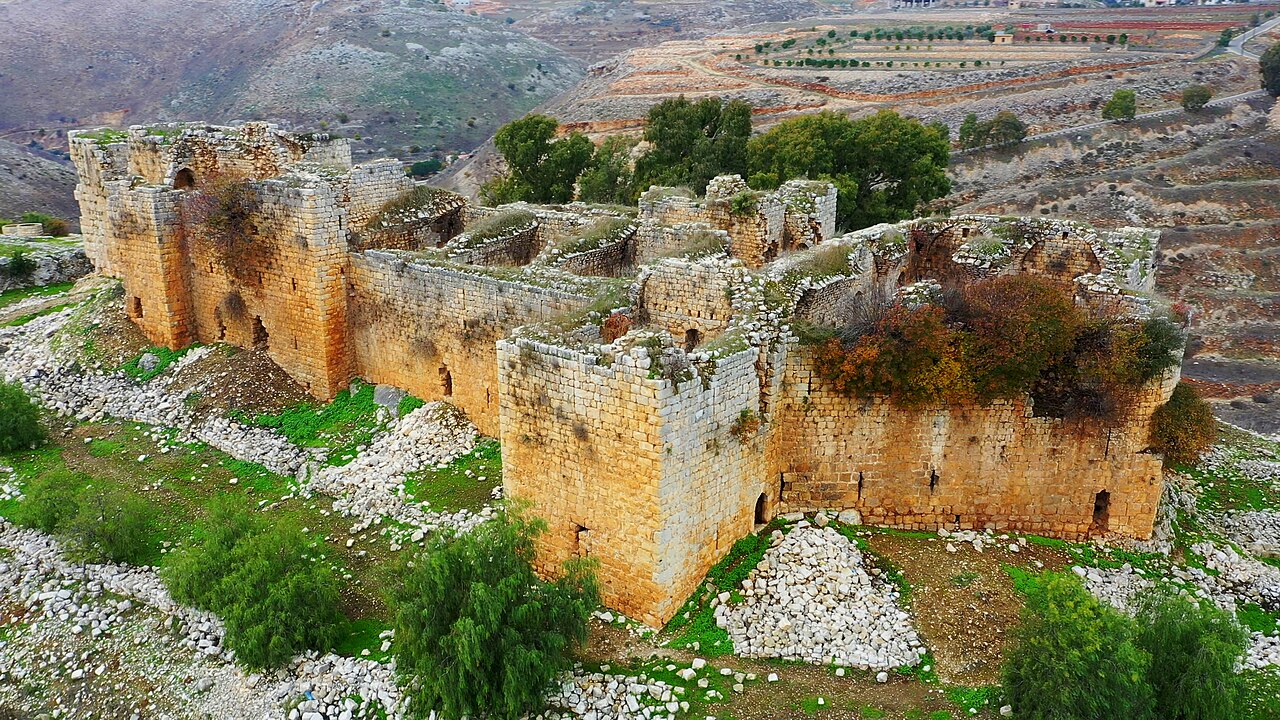
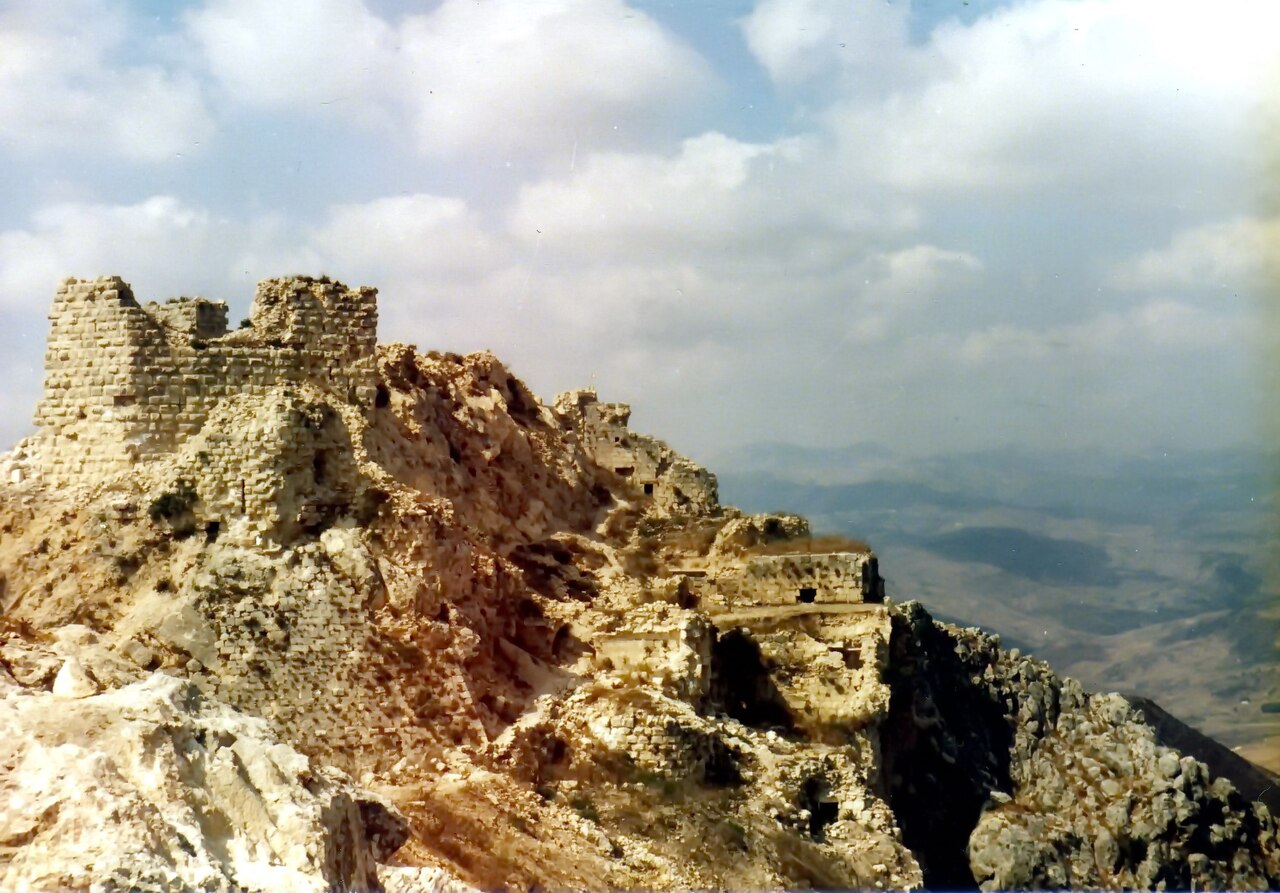
Toron Castle's design adapted to the natural oval shape of the hill it occupies. Originally, it featured twelve rectangular towers, including a prominent southern keep (donjon) that served as the main defensive and residential structure. The castle's fortifications were tailored to the steep terrain of the Bronze Age tell, maximizing defensive advantage.
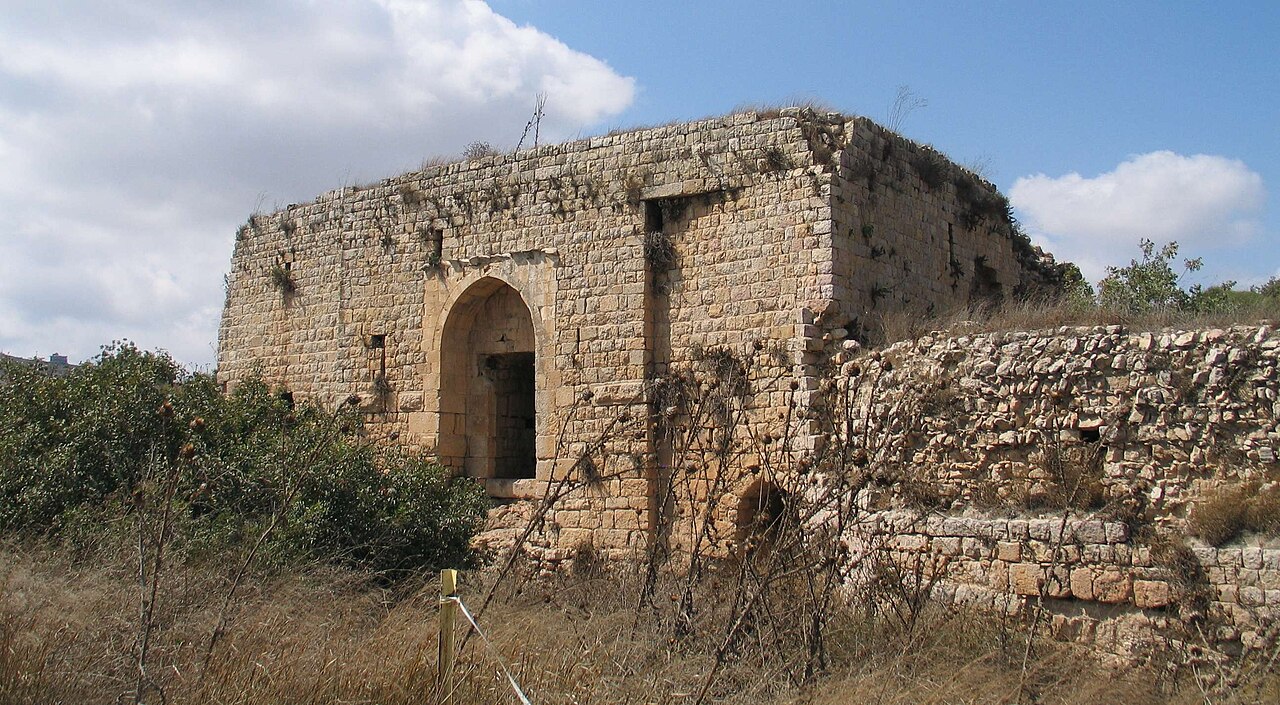
Medieval architectural elements have largely not survived due to significant destruction during the Mamluk conquest in 1266. Today, only foundational stone structures and some large blocks remain visible. An innovative feature of the castle was its external water supply system known as a berquil, designed to provide water during sieges, highlighting the strategic foresight of its builders.
Within the castle walls stood a chapel dedicated to the Virgin Mary, reflecting the Christian faith of the Crusader occupants. This religious space was integral to the castle's function as both a military fortress and a noble residence.
Ottoman reconstruction and later history
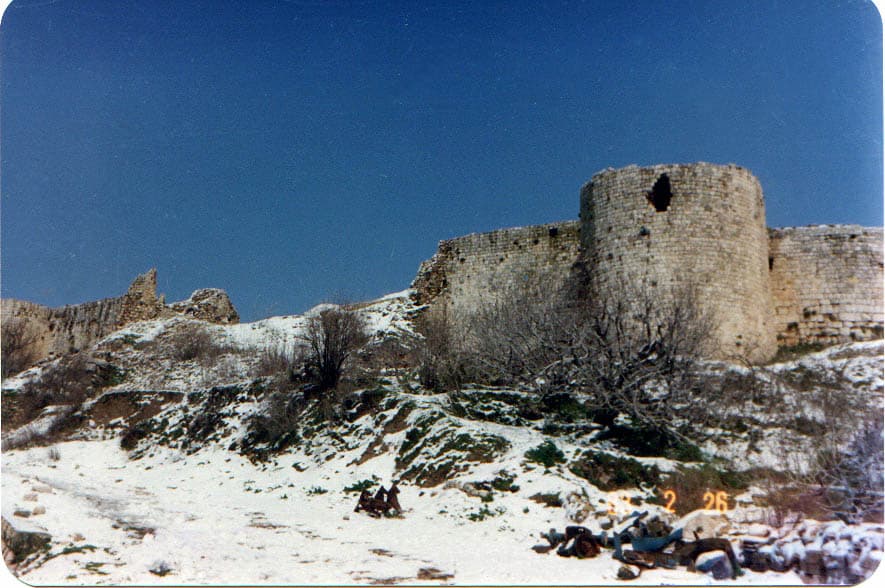
In the mid-18th century, the castle ruins were repurposed and rebuilt by the Shiite Sheikh Nasif al-Nassar, who opposed Ottoman authority in the region. He utilized the fallen medieval walls and foundations as the base for new fortifications. Consequently, much of the current visible structure dates from this Ottoman-era reconstruction rather than the original Crusader period.
During the Ottoman period, Toron Castle served as the residence of the local governor and was associated with the El-Assaad clan. Records from 1881 indicate that about twenty Muslim inhabitants lived within the castle enclosure, illustrating its continued habitation and administrative importance.
A notable feature until the early 20th century was a pair of chained marble lions that guarded the main entrance. Their origin and symbolism remain uncertain, and they disappeared after 1921, likely removed and sold by local residents.
Strategic importance and cultural legacy
Despite the limited medieval remains, Toron Castle's commanding position overlooking southern Lebanon has ensured its lasting strategic importance. Its involvement in numerous military confrontations over centuries underscores its role as a key fortress in the Crusader states and later Ottoman governance.
The castle's layered history—from a Crusader bastion to an Ottoman stronghold—reflects the complex cultural and political dynamics of the region. Today, Toron Castle stands as a significant archaeological site and symbol of Lebanon's rich medieval heritage, attracting scholars and visitors interested in Crusader architecture and Levantine history.
Frequently asked questions (FAQ)
- When was Toron Castle originally built and by whom?
- Toron Castle was built between 1105 and 1106 by the Crusader lord Hugh of Falkenberg, also known as Hugo de Saint-Omer, during the Crusader campaigns in the Levant.
- What is the architectural style of Toron Castle?
- Toron Castle features Gothic architectural elements typical of Crusader fortifications, including rectangular towers and a prominent keep adapted to the natural hilltop terrain.
- What happened to Toron Castle after the Crusader period?
- After the Crusader period, Toron Castle was captured by the Mamluks in 1266, suffered significant damage, and was later rebuilt in the 18th century by Sheikh Nasif al-Nassar during the Ottoman era.
- Can visitors see medieval remains at Toron Castle today?
- Visitors can see foundational stone structures and some large blocks from the medieval period, but most original architectural elements were destroyed during the Mamluk conquest.
- Why was Toron Castle strategically important historically?
- Toron's location atop a steep hill overlooking southern Lebanon allowed it to control key routes and serve as a military stronghold during the Crusader and Ottoman periods.
Photo gallery

Photo by No machine-readable author provided. Tdakroub~commonswiki assumed (based on copyright claims).•CC BY-SA 3.0
Information
Loading map...
Visitor reviews
No reviews yet. Been here? Write the first review and help other travelers!
Write the first reviewVisited this castle? Share your experience
Your review helps other travelers and adds first-hand knowledge to our encyclopedia.