Hunin Castle
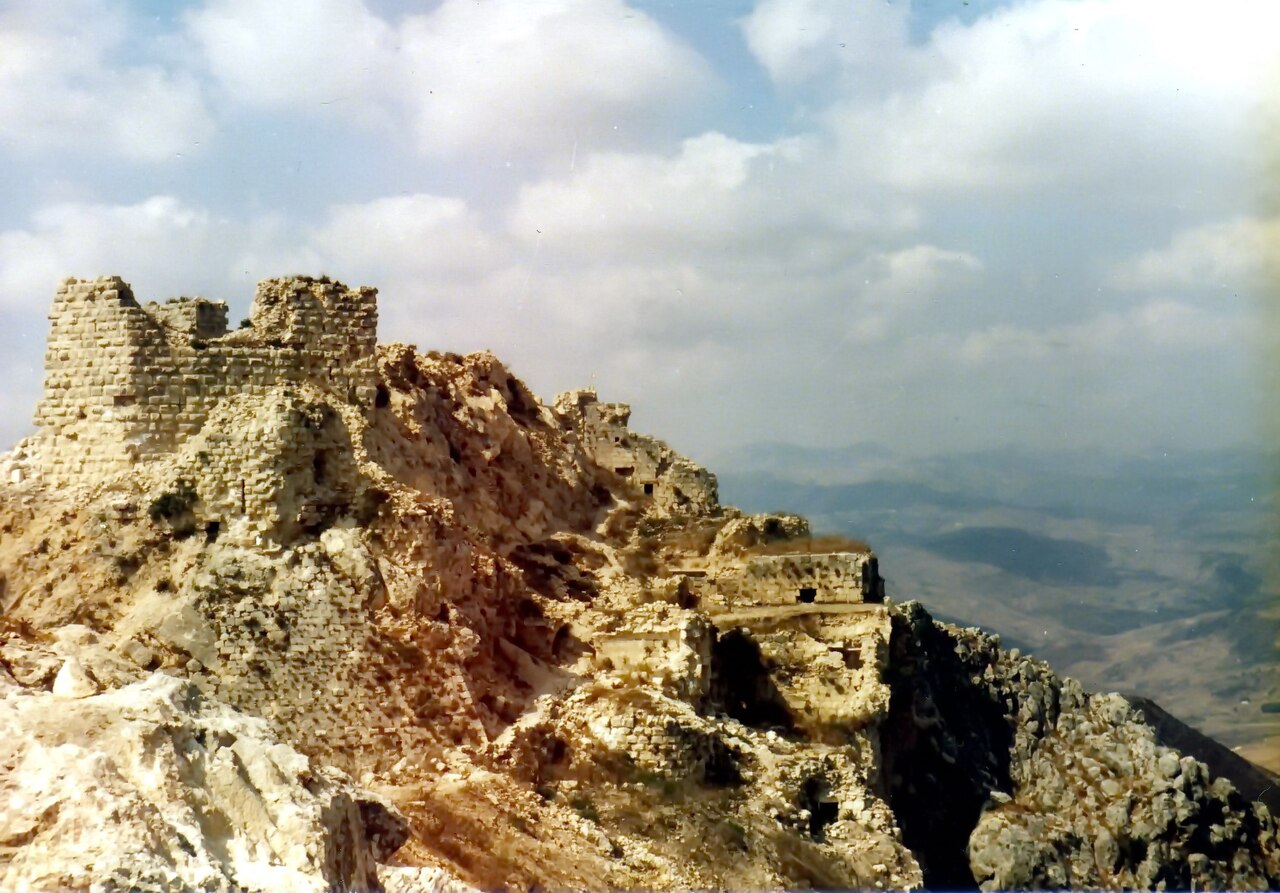
Hunin Castle, also known historically as Château Neuf or Castellum Novum, stands just outside the modern moshav of Margaliot in Israel, less than a kilometer from the Israel-Lebanon border. This hill castle is a remarkable example of Crusader military architecture that evolved through centuries of conflict, reconstruction, and adaptation, reflecting the turbulent history of the region. Its strategic location along an important trade route connecting Damascus to Tyre made it a vital defensive stronghold during the High Medieval period.
The origins of Hunin Fortress date back to the early 12th century, around 1107, when the Crusaders established it as part of the northern defenses of the Kingdom of Jerusalem. It was initially constructed without a moat and served as a key outpost guarding the northern part of the Hula Valley. The fortress belonged to the seigneurie of Toron (modern Tebnine), a significant Crusader lordship in the region. The fortress's early architecture featured robust ashlar stone walls and two large towers that anchored its defenses.
Historical significance and crusader period
The fortress played a crucial role in the Crusader Kingdom's border defenses until 1167, when it was captured by the Muslim commander Nur ad-Din. Prior to surrendering, the Crusader garrison deliberately set fire to the fortress, causing significant damage—a fact corroborated by archaeological evidence of burning layers. This destruction marked a turning point in the fortress's history.
In 1179, Onfroy of Toron undertook reconstruction efforts, though he died the same year. Despite the setbacks, Hunin continued to be a contested site during the subsequent Ayyubid period. After the decisive Muslim victory at the Battle of Hattin in 1187, the fortress remained under Muslim control. However, in 1220, the Damascene ruler al-Malik al-Mu‘aṣṣam ‘Īṣā ordered the fortress's deliberate destruction, along with other Crusader strongholds in Galilee, to prevent their reuse by Crusader forces. Following this, Hunin was abandoned for several centuries.
Ottoman restoration and later use
Centuries later, during the late 17th or early 18th century under Ottoman rule, the fortress was restored by Taqif Mutawali, a Shiite leader aiming to support the nearby Shiite village also named Hunin. The restoration reused the existing Crusader and Ayyubid foundations and adapted the fortress to the military needs of the Ottoman era, including the addition of narrow musket firing slits for firearm defense and vaulted chambers in the southern sections.
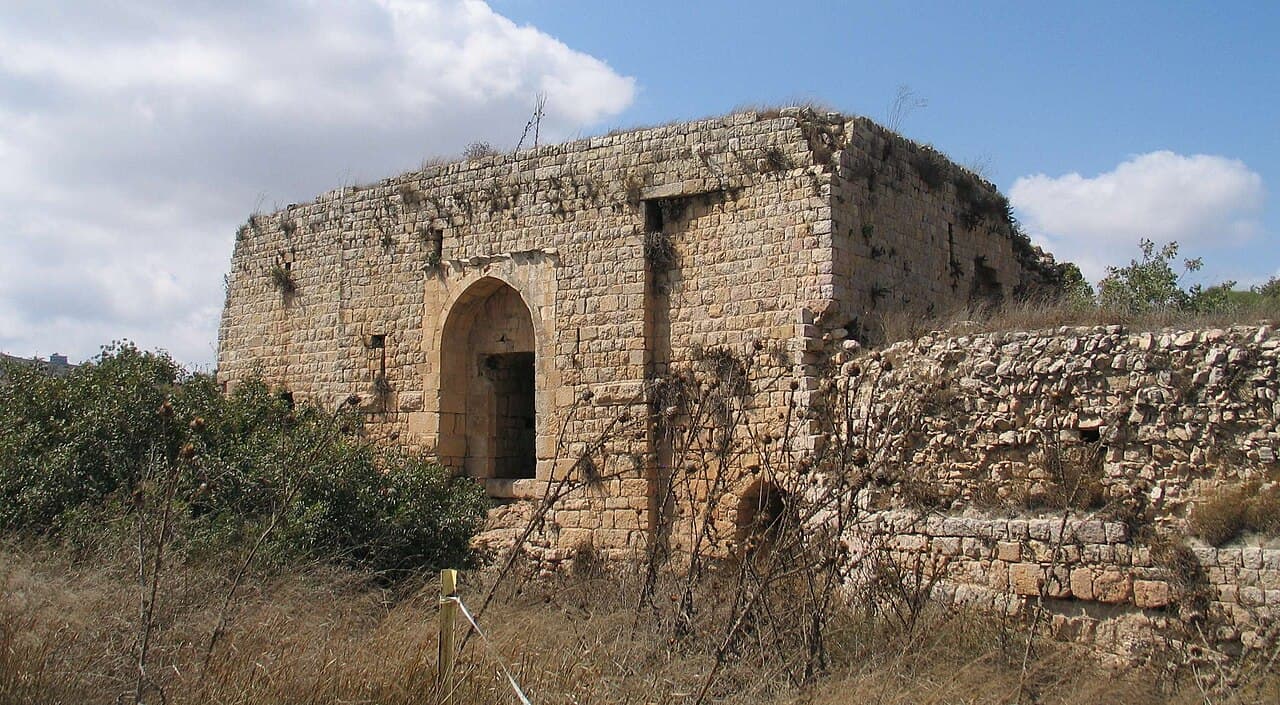
The Ottomans constructed a new gatehouse with a barrel vault, which has been restored in recent archaeological conservation efforts. The fortress remained in use until it was likely abandoned after a destructive earthquake in 1837. The site also includes an Ottoman-era cemetery north of the moat, marking the area's continued habitation during this period.
Architectural features and archaeological remains
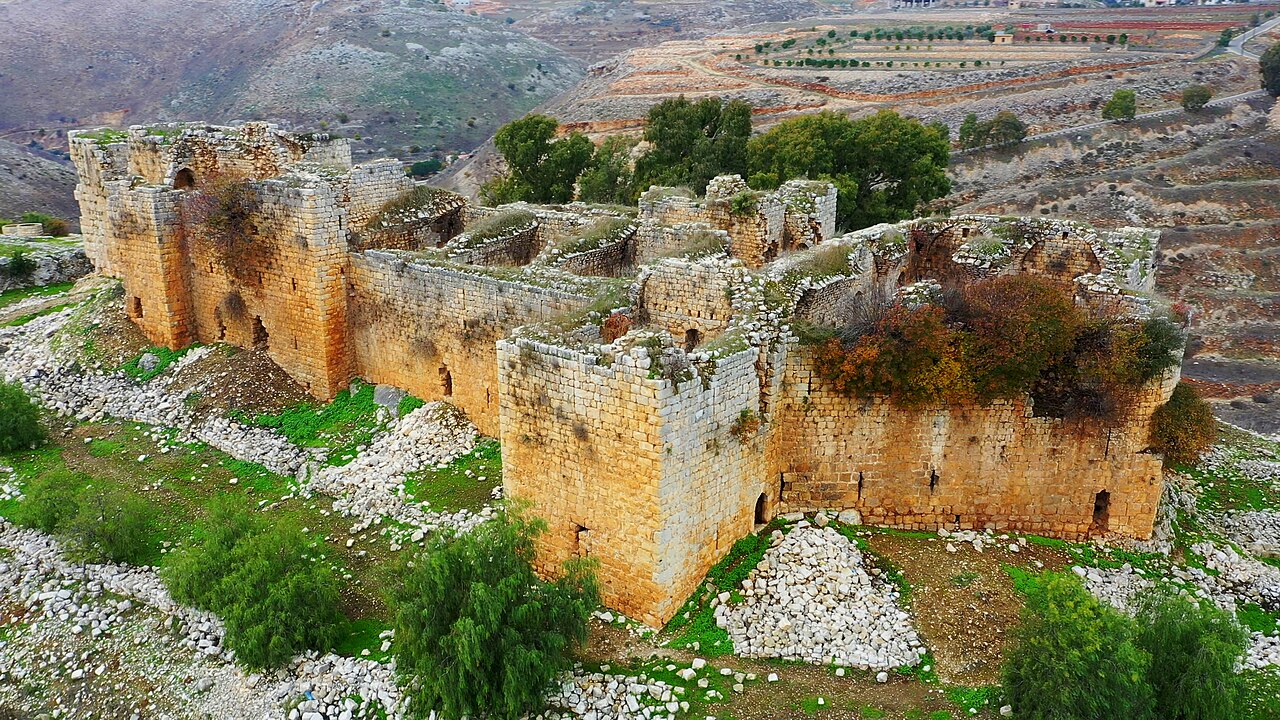
Hunin Fortress covers approximately 5.5 dunams (about 90 by 70 meters) and is naturally defended on its eastern side by a steep slope descending some 400 meters into the Hula Valley. The fortress is enclosed on three sides by a rock-cut moat averaging 12 meters wide, a significant defensive feature added after the initial Crusader construction.
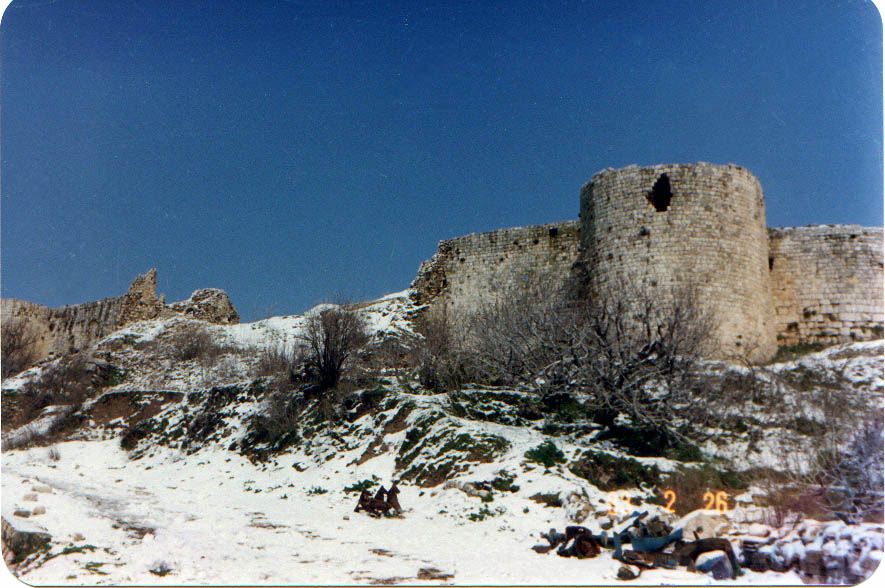
The fortress's walls and towers are primarily built from well-cut ashlar stone blocks with neatly dressed edges. Two large Crusader towers survive: the western tower, nearly fully exposed, measures approximately 13 by 13 meters with walls around 3 meters thick, and the eastern tower, partially uncovered. These towers are connected by a stone wall of similar construction. The damage from the 1167 fire is evident in the remains of these early structures.
A southern wall, constructed during the Crusader-Ayyubid period with reused finely dressed stones, runs alongside the moat but lacks towers and appears unfinished. Excavations revealed latrines at both ends of this wall, along with abundant Ayyubid-era pottery and coins dating to around 1218, confirming the historical accounts of the fortress's destruction and occupation phases.
Within the fortress are several ancient water cisterns carved directly into the bedrock to collect and store rainwater. One notable cistern beneath the Ottoman gatehouse’s northern vaulted chamber is cross-shaped and still collects water today. Some stones used in the fortress's façade were repurposed from much earlier Byzantine olive presses, indicating the site's long history of human settlement dating back to the Iron Age.
Defensive adaptations for firearm warfare
The Ottoman restoration introduced architectural features suited to the evolving military technology of the time. Narrow musket firing slits were incorporated into the fortress walls, allowing defenders to use firearms effectively while maintaining protection. Vaulted chambers were added in the southern section, enhancing the fortress's structural integrity and usability.
Archaeological excavations and preservation efforts
Archaeological investigations in the late 20th century have been instrumental in uncovering the layered history of Hunin Castle. Excavations revealed the sequence of construction, destruction, and rebuilding phases from the Crusader period through the Ottoman restoration. These studies have provided valuable insights into the fortress's role in regional defense and its architectural evolution.
Today, visitors to the site can observe the remains of the stone towers, moat, water cisterns, southern wall, and the Ottoman gatehouse. The site is largely in ruins, with a dry moat and scattered stone remains marking the castle's footprint. A rope ladder descent leads into an underground cavern, but caution is advised as the area is unmarked and potentially hazardous.
Visitor considerations and safety
Hunin Castle is accessible near Margaliot but remains a site requiring caution due to its unmarked paths and dangerous areas such as the underground cavern accessed by a rope ladder. Visitors should be prepared for rough terrain and take appropriate safety measures when exploring the ruins.
Frequently asked questions (FAQ)
- How do I get to Hunin Castle near Margaliot?
- Hunin Castle is located just outside Margaliot, Israel, near the Israel-Lebanon border. Visitors can reach the site by car or local transport, but should be prepared for unmarked paths and rough terrain.
- What is the historical significance of Hunin Castle?
- Hunin Castle was a key Crusader fortress established in the early 12th century to guard the northern Hula Valley and control trade routes. It later saw Ottoman restoration and reflects layered regional history.
- Can I explore the underground cavern at Hunin Castle?
- There is a rope ladder descent into an underground cavern at Hunin Castle, but visitors should exercise extreme caution due to unmarked and potentially dangerous conditions.
- When was Hunin Castle originally built?
- Hunin Castle was likely constructed around 1107 during the Crusader period as part of the Kingdom of Jerusalem's northern defenses.
- What remains can be seen at Hunin Castle today?
- Visitors can see the ruins of two Crusader towers, a southern wall, a dry moat, water cisterns, and the Ottoman gatehouse. The site is largely in ruins and requires careful exploration.
Photo gallery

Information
Loading map...
Visitor reviews
No reviews yet. Been here? Write the first review and help other travelers!
Write the first reviewVisited this castle? Share your experience
Your review helps other travelers and adds first-hand knowledge to our encyclopedia.