Beaufort Castle
Beaufort Castle, also known as Qala’at ash-Shqif or Shaqif Arnoun, is a prominent hill castle located near the village of Arnoun in southern Lebanon. Perched atop a steep rocky cliff overlooking the Litani River, this fortress commands an extensive view of the surrounding landscape, a feature that has made it a critical military stronghold throughout its history. Originally constructed by the Crusaders during the High medieval period, Beaufort Castle exemplifies the strategic use of natural topography combined with medieval military architecture to create a formidable defense point.
The site of Beaufort Castle was fortified before the Crusaders arrived, initially held by Arab forces. Its formal acquisition by the Crusaders occurred in 1139 when Shihab al-Din Sohrawardi, the atabeg of Damascus, ceded the fortress. Shortly thereafter, King Fulk of Jerusalem granted the castle to the lords of Sidon, establishing it as a key defensive and administrative center within the Crusader states. The castle's name "Beaufort," meaning "beautiful fortress," reflects its commanding and picturesque position on the cliff.
Historical significance and military role
Throughout the 12th and 13th centuries, Beaufort Castle played a vital role in the turbulent conflicts between Crusader states and Muslim forces. After the 1179 Battle of Marj Ayoun, the castle served as a refuge for Crusader forces. It endured a prolonged siege following Saladin's decisive victory at the Battle of Hattin in 1187, holding out until 1190. The defenders surrendered under terms that secured the release of Reynald of Sidon, a prominent Crusader nobleman.
In 1240, the castle was returned to Crusader control through a treaty with Al-Salih Isma’il, the malik of Damascus, underscoring its ongoing strategic importance. By 1260, the castle was sold to the Knights Templar, a military order tasked with defending Crusader territories. However, this period of Crusader control was short-lived; in 1268, the Mamluk Sultan Baibars captured Beaufort after a ten-day siege, employing twenty-six siege engines to overcome its defenses. This marked a significant shift in regional power, as the Mamluks consolidated control over former Crusader holdings.
Following its capture, Beaufort Castle experienced centuries of relative stability. In the 17th century, it was integrated into the defensive network of Fakhr-al-Din II, a powerful Druze leader who reinforced several key fortifications across Lebanon. After his defeat, the Ottoman Empire partially dismantled the castle's fortifications, yet the site remained under feudal control until 1769.
The castle suffered further damage during a siege by the governor of Acre in 1782 and from a significant earthquake in 1837. Stones from the castle were repurposed locally, and the interior was used as shelter for livestock for some time. Interest in Beaufort's historical and archaeological value grew in the late 19th century, with surveys conducted by French scholars such as Victor Guérin in 1880 and the Survey of Western Palestine in 1881.
Modern history and restoration efforts
In the 20th century, Beaufort Castle became a focal point during regional conflicts. The French Mandate authorities initiated restoration efforts beginning in 1920, which continued after Lebanon's independence. During the late 20th century, the castle was used as a military base by the Palestine Liberation Organization (PLO) from 1976 to 1982, serving as a launching point for attacks into northern Israel.
During the 1982 Lebanon War, Israeli forces bombarded and captured the fortress, fortifying it with modern military structures such as bunkers, tunnels, and observation posts. Israeli control lasted until 2000, after which military installations were removed to prevent use by armed groups. Since then, the Lebanese government has led rehabilitation projects to conserve Beaufort Castle as a national heritage site.
In 2024, UNESCO granted Beaufort Castle enhanced protection, recognizing its cultural and historical significance amid ongoing regional tensions. Today, the castle stands as a powerful symbol with layered meanings for Lebanese, Palestinians, and Israelis alike.
Architectural features and layout
Site and defensive structures
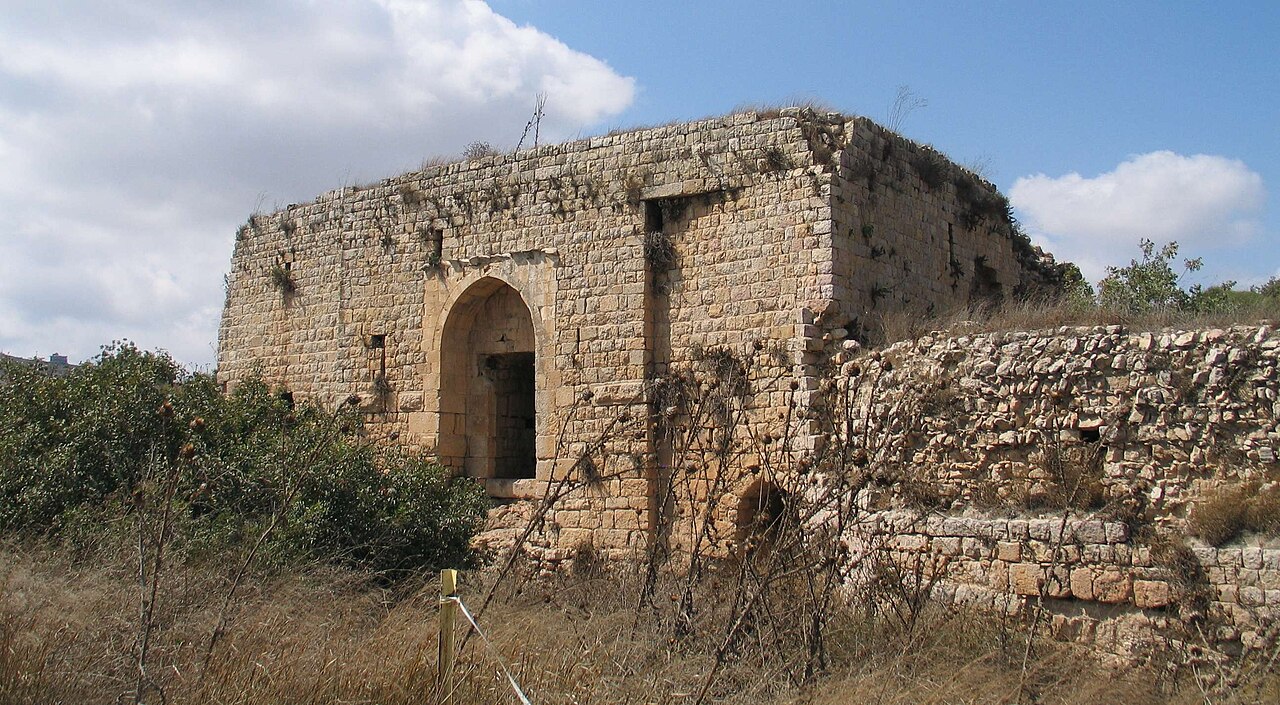
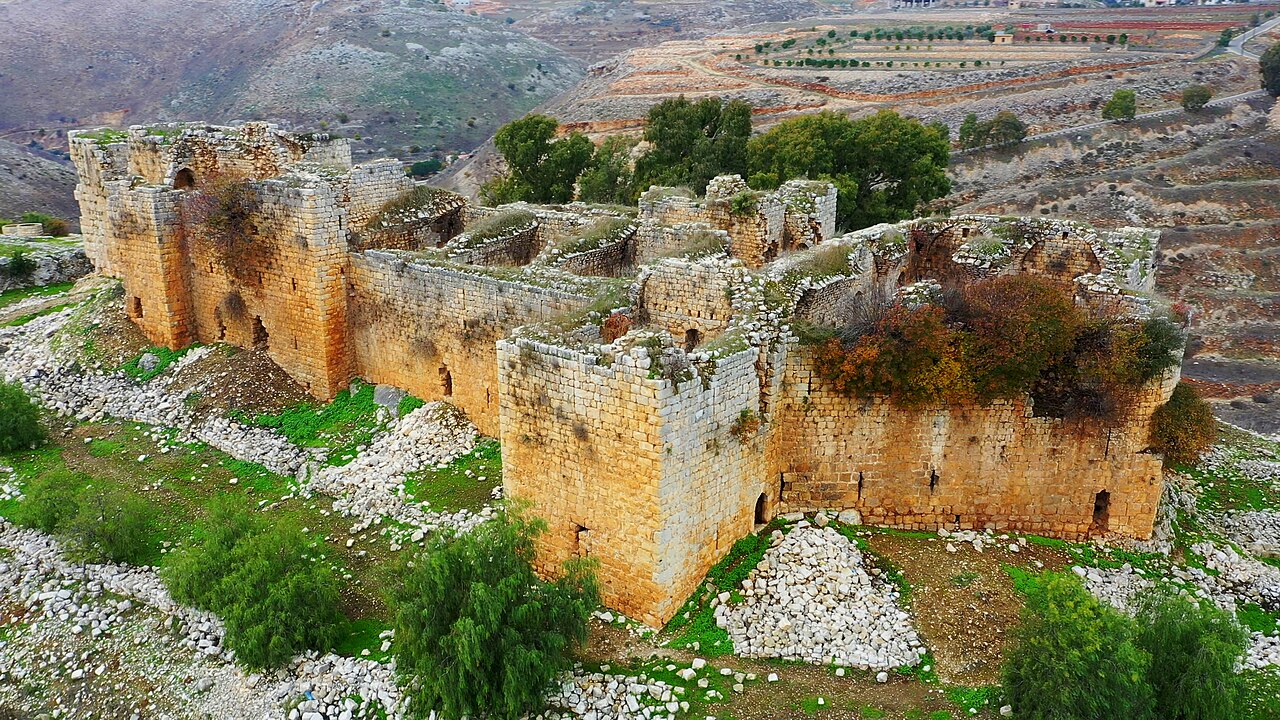
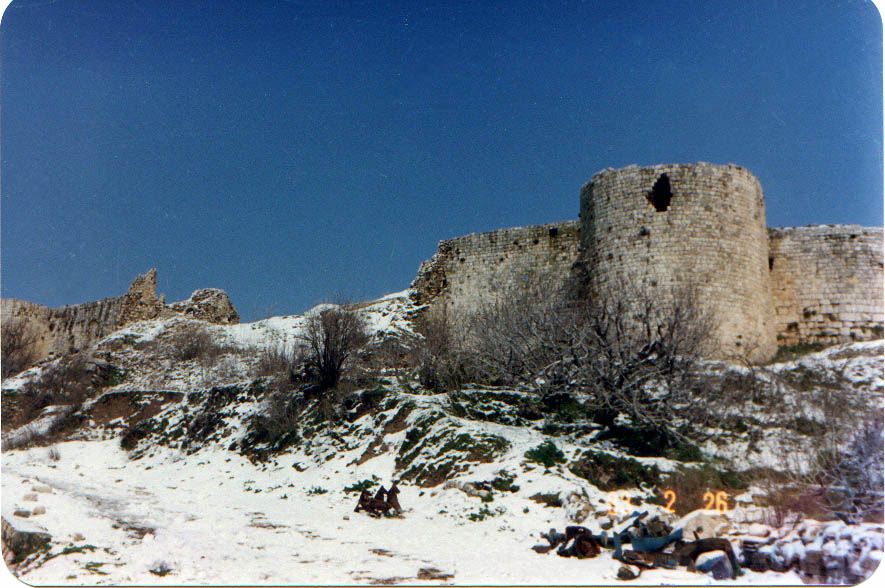
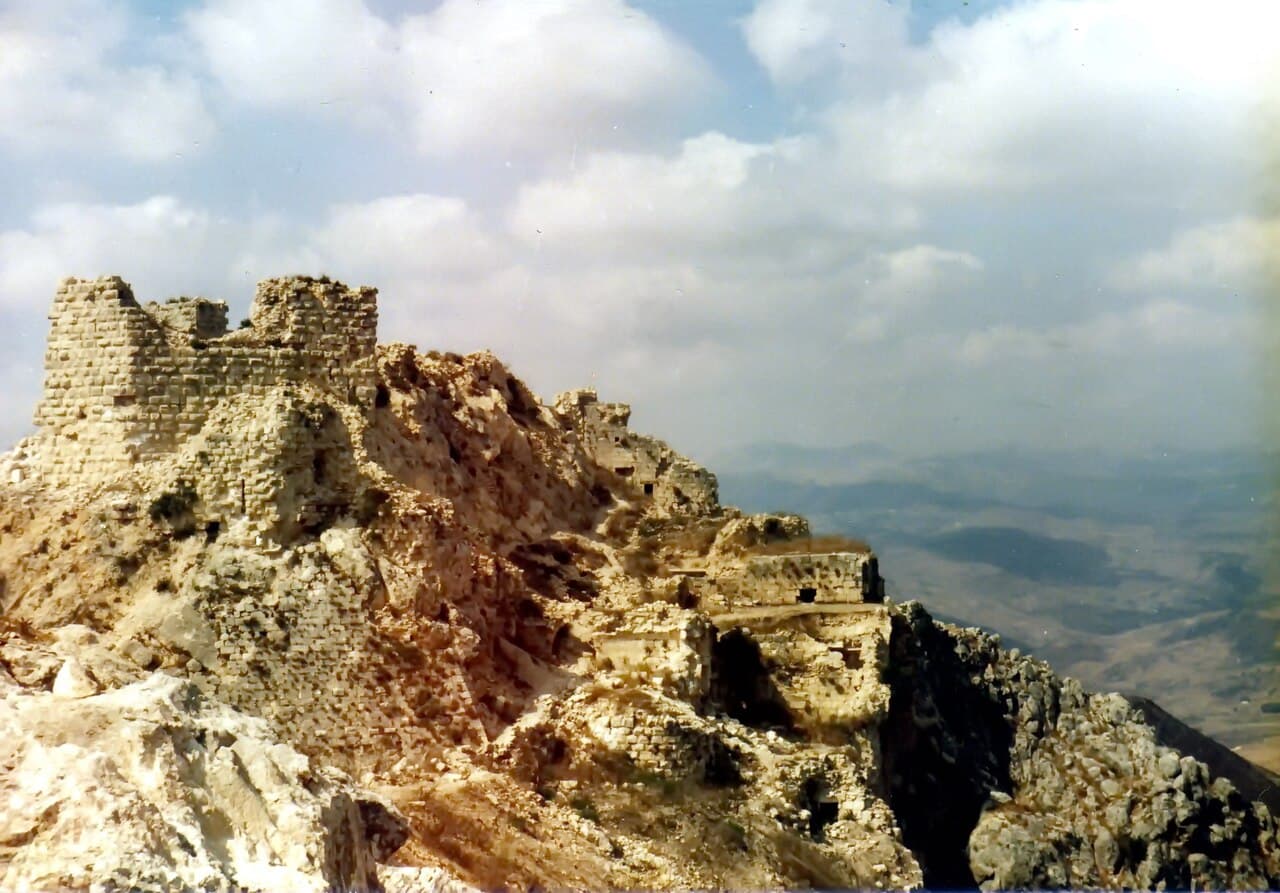
Beaufort Castle is situated on a cliff rising approximately 300 meters above the surrounding terrain, overlooking the Litani River. The fortress occupies a roughly triangular site measuring about 150 meters in length and 100 meters in width. Its design takes full advantage of the natural rock formation, incorporating steep slopes as integral elements of its defense.
The castle consists of two main sections arranged along a north-south axis: the upper castle at the western end, which commands the entire site, and the lower castle to the east, situated beneath the upper fortifications. The base of the triangular site spans approximately 90 meters, with the rock spur elevating the fortress roughly 170 meters above the adjacent landscape.
Entrance and fortifications
Access to the complex is through the main entrance on the southern side, located between the upper and lower castles. This gateway, known as "Gate A" in restoration records, lies near towers numbered 5 on the upper castle and 1 on the lower castle. The southern portion of the upper castle is protected by an inner shield wall guarded by two towers (towers 5 and 6).
A central keep, accessible via a gently sloping ramp, forms the heart of the upper castle. Adjacent to the keep is a chapel, highlighting the importance of religious practice within the fortress. At the southern extremity of this section stands a distinctive hexagonal tower that provided additional defense.
Lower castle and internal structures
The lower castle features a large vaulted hall in its southern area, likely used for gatherings or storage. This hall is protected by towers 1 and 2 to the south. Moving northward along the perimeter, towers 3 and 4 provide further defense, with tower 4 preceded by a salient—a projecting wall segment designed to enhance defensive capabilities.
Additional internal features include casemates (vaulted chambers) and a building known as Building H at the southern end, indicating a complex functional layout. Water management was carefully planned, with cisterns for rainwater storage and drainage systems to channel wastewater outside the fortress, essential for sustaining a garrison during sieges.
Archaeological evidence also suggests the presence of a basin to the north of the site, possibly related to water storage or other activities. The castle's elevated position allowed clear views of other regional fortresses such as Subeibeh on the Golan Heights, Toron, Maron, Sidon, Tyre, and Chamaa, underscoring its role within a network of Crusader defensive sites.
Impact of modern military use and preservation
During the Israeli occupation in the late 20th century, modern military structures were constructed adjacent to the medieval castle. These included bunkers, concrete blocks, tunnels, and observation posts, designed to meet contemporary defense needs. These additions were separate from the original masonry, and security concerns limited access to the lower castle areas.
Restoration efforts initiated in the 20th century and continuing into the 21st have focused on stabilizing the castle's structure, clearing debris, protecting masonry from weather damage, and reconstructing critical features such as the main tower and gatehouse. Modern lighting systems have been installed to secure the site for visitors and researchers.
Despite damage and alterations over centuries, Beaufort Castle remains a well-preserved example of Crusader military architecture adapted to a challenging natural landscape. The integration of military and religious elements within its design reflects the dual role of such fortresses in medieval society.
Frequently asked questions (FAQ)
- How do I visit Beaufort Castle and what are the opening hours?
- Beaufort Castle is accessible to visitors, typically open during daylight hours. It is advisable to check local tourist information for current opening times due to occasional security restrictions.
- What is the historical significance of Beaufort Castle?
- Beaufort Castle was a key Crusader fortress controlling the Litani River valley, witnessing sieges by Saladin and later Mamluk forces, reflecting its strategic importance in medieval Levant.
- Can I explore the entire castle including the upper and lower sections?
- Visitors can explore much of the castle, including the upper and lower sections, though some areas may be restricted due to preservation efforts or safety concerns.
- Why is Beaufort Castle important for understanding Crusader military architecture?
- Beaufort Castle showcases typical Crusader defensive features such as shield walls, keeps, towers, and water management systems, illustrating adaptation to natural terrain for defense.
- Is there any modern military presence at Beaufort Castle?
- Modern military installations were removed after 2000; the site is now preserved as a heritage monument with no active military presence.
Photo gallery

Information
Loading map...
Visitor reviews
No reviews yet. Been here? Write the first review and help other travelers!
Write the first reviewVisited this castle? Share your experience
Your review helps other travelers and adds first-hand knowledge to our encyclopedia.