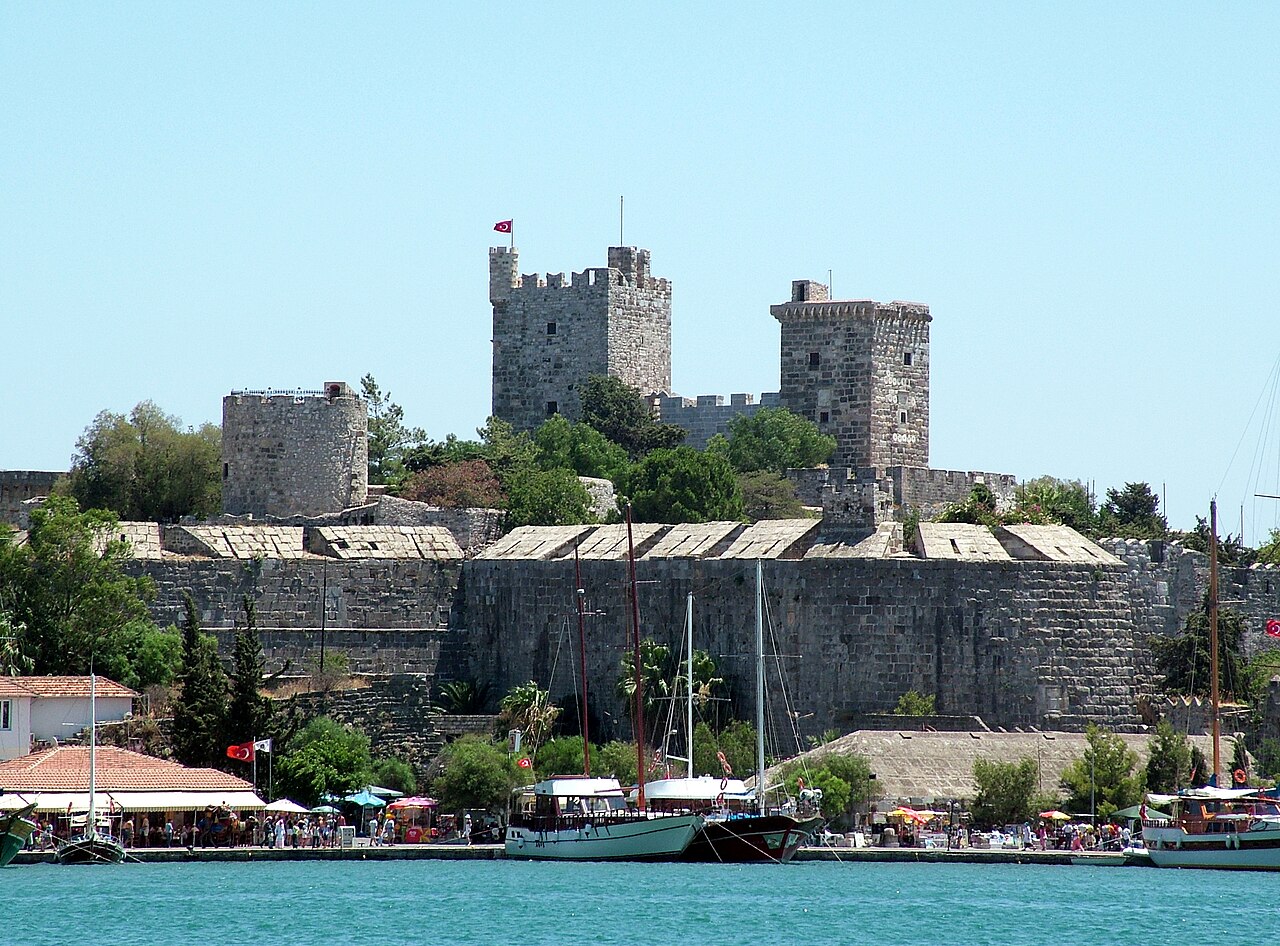
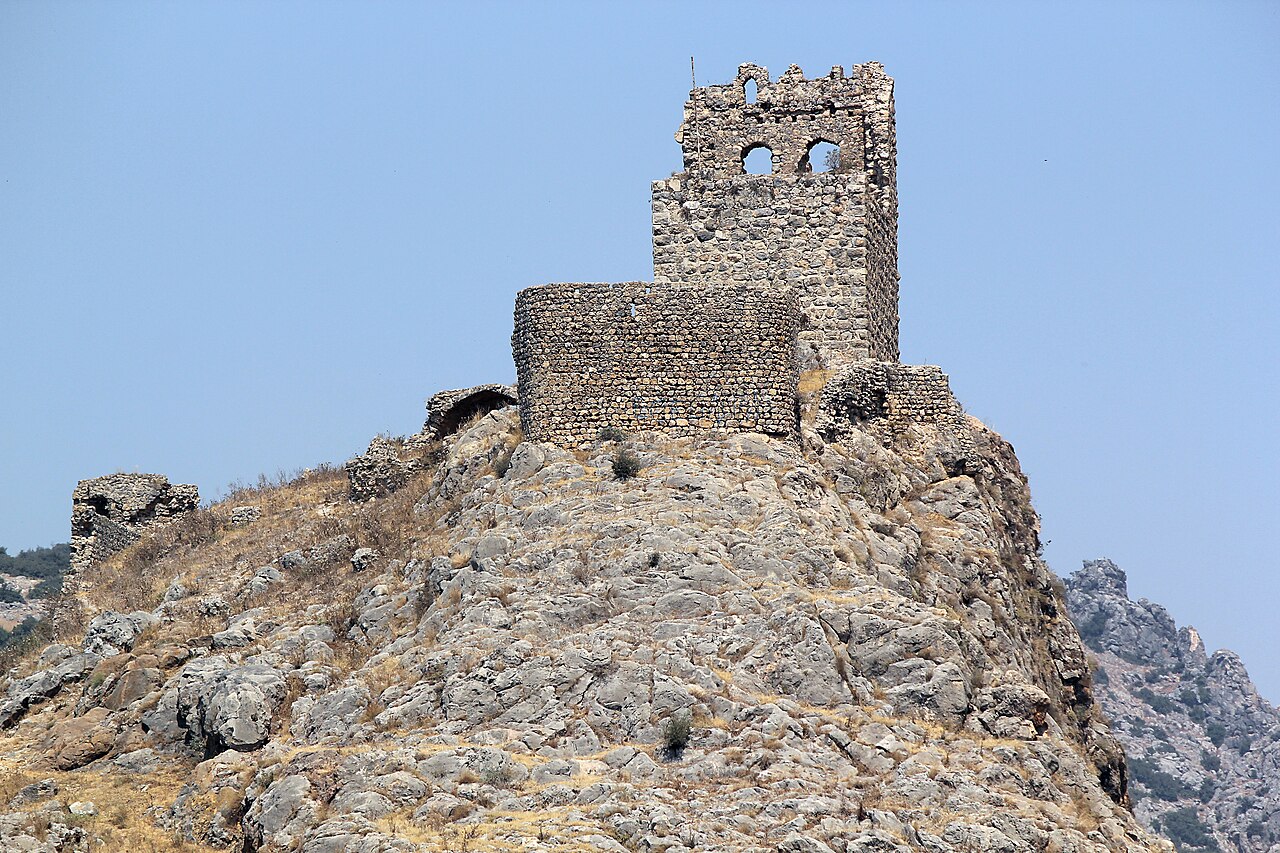
Toprakkale Castle
Toprakkale Castle, also known locally as Toprakkale Kalesi, is a significant medieval fortress located near a village sharing its name in the Osmaniye province of Turkey. Positioned atop a large, 65-meter-high mound composed of dark basalt and layers of historical debris, the castle stands as a commanding sentinel overlooking the junction of five major roads connecting Osmaniye, İskenderun, Kadirli, and two routes to Adana. This strategic location provided clear intervisibility with other important fortifications such as the castles of Tumlu, Anavarza, Amuda, Bodrum, and Çardak, underscoring its military and logistical importance through the centuries.
Historical background and strategic importance
The origins of Toprakkale Castle are shrouded in some uncertainty, but archaeological evidence suggests that the mound it occupies may have been inhabited since the 2nd millennium B.C.. The castle’s current rectangular form likely rests on the remains of an earlier fortification. Its first recorded mention dates back to the 11th century, during the First Crusade, when it was referred to as "T'il." Throughout the High Medieval period, the castle changed hands multiple times, reflecting the turbulent political landscape of Cilicia.
In 1137, the fortress was captured by the Byzantine Emperor John II Komnenos during his campaign in the region. Subsequently, it was taken by the Armenian Baron Thoros II in 1151, who fortified the castle further. The strategic importance of Toprakkale was highlighted in 1154 when the Byzantine Emperor Manuel I Komnenos enlisted the Sultan of Konya, Masud I, to attack the castle, although the assault was unsuccessful due to the combined defense by Armenian forces and Frankish knights.
Control of the castle shifted again in the latter half of the 12th century. Before 1170, it returned to Armenian hands, and in 1185 it was ceded to the Principality of Antioch as part of a ransom deal involving Baron Ruben. The castle was under the rule of Bohemond III, Prince of Antioch, but within nine years, it reverted to Armenian control. By the early 13th century, Toprakkale was known as "Thila" and was recognized as a formidable fortified complex, sometimes called the Royal Black Castle.
Architectural features and construction phases
The castle’s architecture reflects its complex history of construction and reconstruction. The first major building phase, likely dating to the High Medieval period, established the castle’s distinctive rectangular shape. This phase may have been initiated by the Arabs, Byzantines, or Franks, though exact attribution remains uncertain.
The second significant construction period occurred under the Mamluks after their successful siege in 1266, which ended Armenian control. The Mamluks enhanced the fortress substantially, shaping much of its present-day appearance. Their work included strengthening the defensive walls, adding battlements, and improving the castle’s internal structures to serve as a robust military stronghold. These modifications reflect typical Mamluk military architecture, emphasizing solid stone construction and strategic defense mechanisms.
Following the Mamluk period, the castle came under the control of the Egyptians until 1491, when the Ottoman Empire incorporated Cilicia into its territory. Under Ottoman rule, Toprakkale was repurposed primarily as a barracks before eventually being abandoned.
Layout and defensive elements
Toprakkale Castle is situated on a natural basalt outcrop, which provided a strong defensive foundation. The mound’s elevation offered extensive views of the surrounding landscape, crucial for early warning and defense. The castle’s rectangular plan is typical of the period and region, designed to maximize defensive capabilities while accommodating garrison needs.
The fortress includes thick defensive walls featuring battlements and towers positioned to cover all approaches. Its location near the Kara Suyu stream added a natural defensive barrier on one side. Inside, the castle contains multiple halls, chambers, and alleys that facilitated both military operations and daily life for the garrisoned troops.
Toprakkale castle in the context of regional history
Throughout its history, Toprakkale Castle was a focal point in the power struggles among the Byzantines, Armenians, Crusaders, Mamluks, and Ottomans. Its control was pivotal for dominance over Cilicia and the surrounding trade routes. The castle’s repeated change of hands illustrates the shifting alliances and conflicts that characterized the medieval period in this region.
The castle’s association with notable historical figures such as John II Komnenos, Thoros II, Manuel I Komnenos, and Bohemond III highlights its importance in the broader narrative of medieval Near Eastern history. The involvement of the Mamluks and later the Ottomans reflects the transition of regional power from Christian to Muslim rule in the late medieval and early modern periods.
Visiting Toprakkale Castle today
Today, Toprakkale Castle is freely accessible to visitors who can explore its extensive halls, alleys, and defensive structures. The site offers a tangible connection to the complex history of Cilicia and the medieval Near East. Visitors can appreciate the castle’s imposing silhouette against the landscape and imagine the strategic significance it held over centuries.
The castle’s location near major roads makes it easily reachable for those interested in medieval architecture and history. While the site is not extensively restored, its partially preserved condition allows visitors to experience the authentic character of a medieval fortress shaped by diverse cultural influences.
Exploring Toprakkale provides insight into the military, political, and architectural developments of the region, making it a recommended destination for history enthusiasts and travelers interested in Turkey’s rich heritage.
Frequently asked questions (FAQ)
- How do I get to Toprakkale Castle?
- Toprakkale Castle is located near the D400 highway in Osmaniye province, Turkey. It is accessible by car and local roads connecting to nearby towns such as Osmaniye and Kadirli.
- What is the historical significance of Toprakkale Castle?
- Toprakkale Castle played a strategic role in controlling key trade routes in Cilicia during the High Medieval period. It witnessed numerous sieges and changes of control among Byzantines, Armenians, Crusaders, Mamluks, and Ottomans.
- Can I explore the interior of Toprakkale Castle?
- Yes, visitors can freely explore the castle’s halls, alleys, and defensive walls. The castle is partially preserved, offering an authentic medieval fortress experience.
- When was Toprakkale Castle built?
- The castle’s main construction dates back to the 11th century, although the site has earlier origins possibly as far back as the 2nd millennium B.C.
- Is there an entrance fee to visit Toprakkale Castle?
- There is no entrance fee; Toprakkale Castle is freely accessible to the public.
Information
Address
Near D400, Turkey
Loading map...
Visitor reviews
No reviews yet. Been here? Write the first review and help other travelers!
Write the first reviewVisited this castle? Share your experience
Your review helps other travelers and adds first-hand knowledge to our encyclopedia.