Bodrum Castle
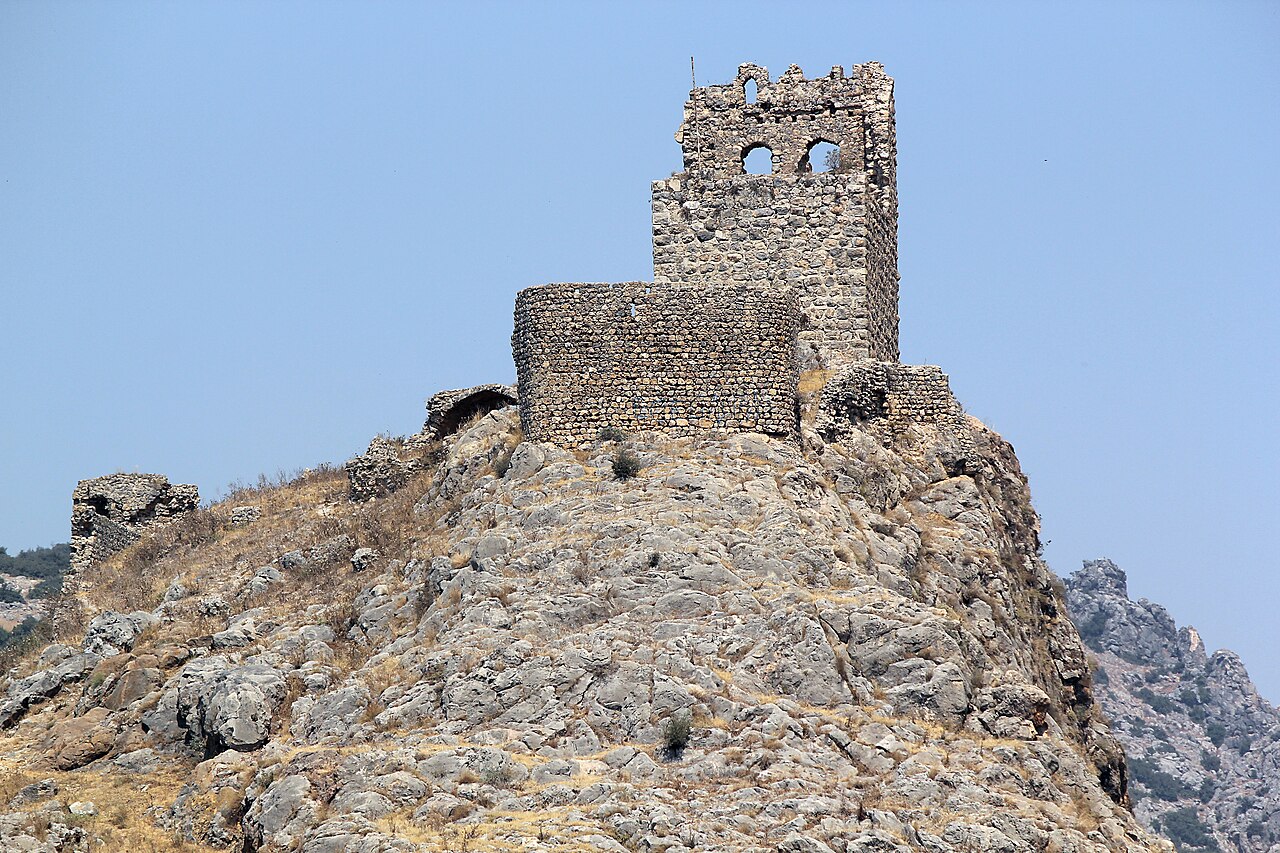
Bodrum Castle, located near the village of Kesmeburun in the Osmaniye province of Turkey, is a significant medieval fortress perched on a hill overlooking the vast plain of the west bank of the Ceyhan river (historically known as the Pyramos). It should not be confused with the more famous Castle of St. Peter in the coastal town of Bodrum on the Aegean Sea. This castle is an important example of Armenian frontier military architecture from the late medieval period, illustrating the complex history of the region and the strategic importance of controlling river plains and trade routes.
Historical background and site significance
The site of Bodrum Castle has a history that extends far beyond the medieval fortress visible today. Archaeological and historical evidence suggests that the first fortification here was likely an acropolis belonging to the ancient city of Castabala. This city was first recorded in 333 B.C. when Alexander the Great passed through the area. Under the reign of Antiochus IV Epiphanes of the Seleucid Empire, the city was rebuilt and renamed Hierapolis. This Hellenistic influence is indicative of the region's importance in the classical world.
During the Roman era, Castabala/Hierapolis flourished and was considered a loyal ally of Rome, enjoying a period of prosperity in the first centuries A.D. However, the city eventually declined and disappeared from prominence. The medieval castle was constructed on or near the remains of this ancient city, demonstrating the continuity of strategic use of the location.
Architectural features and construction
The current Bodrum Castle was built in the 14th century by the Armenians, likely on the foundations of a Byzantine predecessor. Its architectural details—such as the style of masonry, defensive walls, and towers—support this attribution. The castle was designed as a hill castle, taking advantage of the elevated terrain for defense and surveillance.
The fortress features double walls on the north and west sides, enhancing its defensive capabilities. There are seven gates leading to the inner castle, with the main entrance located at the northwest corner. The walls are robust, and the western side includes a small fortification equipped for cannon defense, characterized by a pitched roof structure. These features reflect adaptations to evolving military technologies during the late medieval period.
Despite its Armenian origins, the castle was likely abandoned after the Mamluks conquered the region in the 14th century, marking a shift in political control. Today, the castle remains well preserved and is freely accessible to visitors, offering a glimpse into the military architecture of the Armenian Kingdom of Cilicia.
Relationship with surrounding fortifications
Bodrum Castle was part of a network of fortifications guarding the region. It has intervisibility with Toprakkale Castle to the south, suggesting coordinated defense and communication between these strongholds. This strategic positioning allowed control over the fertile plains and important routes along the Ceyhan river valley.
Visitor information and cultural significance
Today, Bodrum Castle near Kesmeburun serves not only as a historical monument but also as a cultural site. Visitors can explore the castle's walls, towers, and gates, as well as the archaeological remains of the ancient city at the foot of the castle hill. The site offers a peaceful setting for those interested in medieval military architecture and ancient history.
While smaller and less famous than the Castle of St. Peter in the coastal Bodrum, this Bodrum Castle holds unique historical value as an Armenian-built fortress in southeastern Turkey. Its preservation allows for educational opportunities and contributes to the understanding of the region's complex medieval past.
Frequently asked questions (FAQ)
- How do I get to Bodrum Castle near Kesmeburun?
- Bodrum Castle near Kesmeburun is located in Osmaniye province, Turkey. Visitors can reach the site by road from the nearest towns, and local signage guides visitors to the hilltop fortress.
- What is the historical significance of Bodrum Castle near Kesmeburun?
- Bodrum Castle is an important example of late medieval Armenian military architecture, built on the site of the ancient city of Castabala, reflecting the region's strategic importance through various historical periods.
- Can I visit the archaeological remains near Bodrum Castle?
- Yes, visitors to Bodrum Castle can also explore the archaeological remains of the ancient city of Castabala located in the fields at the foot of the castle hill, offering insight into the area's long history.
- Is Bodrum Castle near Kesmeburun open to the public?
- Yes, the castle is freely accessible to the public, providing an opportunity to explore its well-preserved walls and towers without an entrance fee.
- What architectural features are notable at Bodrum Castle?
- The castle features double defensive walls, multiple gates, a small cannon fortification, and is positioned strategically on a hill for surveillance and defense, characteristic of Armenian frontier castles.
Photo gallery

Photo by Horvat•Public domain
Information
Loading map...
Visitor reviews
No reviews yet. Been here? Write the first review and help other travelers!
Write the first reviewVisited this castle? Share your experience
Your review helps other travelers and adds first-hand knowledge to our encyclopedia.