Çardak Castle
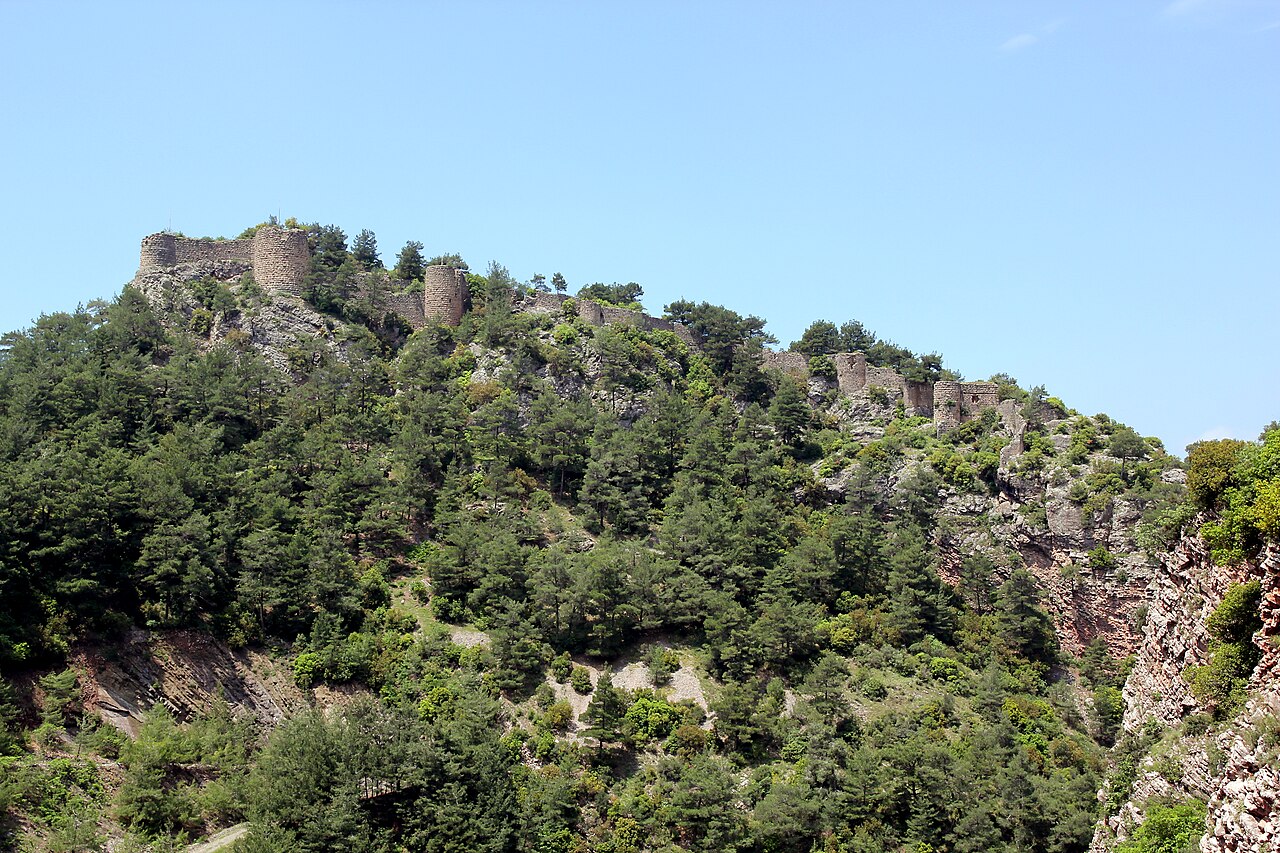
Çardak Castle, also known locally as Çardak Kalesi or Gavur Kalesi, is a historic fortress perched on a 740-meter-high summit amidst pine-covered hills east of the village of Çardak in the Osmaniye province of Turkey. This castle commands a strategic position overlooking the road to the Amanus Pass, a crucial mountain pass historically guarded by the nearby Savranda Castle. Its location allowed it to control the junction of four important trails crossing the Anti-Taurus Mountains, serving as a vital military and communication point in the region. The castle also maintains clear lines of sight to Haruniye Castle to the northeast and Toprakkale Castle to the west, highlighting its role within a network of defensive structures.
Historical background and significance
The exact date of construction and the original medieval name of Çardak Castle remain uncertain. It is widely speculated that the castle corresponds to the fortress known as Hamus in medieval chronicles. Hamus Castle was originally built by the Byzantines and later came under the control of the Armenian Kingdom of Cilicia. Historical accounts mention that Stephen, brother of Thoros II, a notable Armenian prince, was murdered at Hamus Castle, underscoring its significance in Armenian history.
In 1268, the castle suffered severe damage due to a powerful earthquake, which impacted its structural integrity. Subsequently, in 1298, it was besieged and captured by a Mamluk army led by commanders Bektash and al-Muzaffar. These events reflect the turbulent political and military struggles in the region during the late medieval period.
Architectural features and layout
Çardak Castle exhibits a rectangular ground plan typical of Byzantine military architecture. Its robust walls and strategic positioning on a high summit emphasize its defensive purpose. The castle's construction techniques and materials align closely with Byzantine fortification styles, including thick stone walls designed to withstand sieges and natural disasters.
One of the few remnants of the Armenian occupation within the castle is a ruined chapel, indicating the presence of religious structures adapted or added during their control. The castle's layout suggests it functioned primarily as a garrison fort, housing soldiers tasked with monitoring the mountain passes and maintaining regional security.
Later history and current condition
In the 20th century, local accounts reveal that Çardak Castle's ruins were used as a storage depot by smugglers operating from Syria, reflecting the castle's continued strategic importance even in modern times.
Today, Çardak Castle is freely accessible to visitors but remains relatively off the beaten path. It is not signposted, and the nearest access is via a dirt road, with no clear path leading directly to the castle. Visitors must navigate through dense pine forests and undergrowth, which adds an element of adventure and discovery to the visit.
The castle is currently in a state of ruins, with many original features partially preserved. Its remote location and natural surroundings contribute to its atmospheric presence and offer insights into the region's medieval defensive network.
Strategic importance in the Anti-Taurus region
The castle's placement allowed it to guard vital routes through the Anti-Taurus Mountains, controlling access to the Amanus Pass and overseeing traffic between different parts of Cilicia and beyond. Its intervisibility with other fortresses like Savranda, Haruniye, and Toprakkale illustrates a coordinated defensive system designed to monitor and protect the mountainous frontier.
Military role and garrison life
As a garrison fort, Çardak Castle would have housed a contingent of soldiers responsible for surveillance, defense, and communication with nearby castles. The rectangular layout facilitated efficient troop deployment and defense against attackers. The presence of a chapel indicates the integration of spiritual life within the military community.
Architectural adaptations and damage
The earthquake in 1268 likely necessitated repairs and rebuilding efforts, which may have altered some of the original Byzantine features. The subsequent Mamluk siege in 1298 could have caused further structural damage or modifications to accommodate new military technologies or occupants.
Visiting Çardak Castle today
Visitors to Çardak Castle should be prepared for a hike through natural terrain, as the site lacks formal tourist infrastructure. The absence of signage and the need to navigate through forested areas make the visit suitable for adventurous travelers interested in history and archaeology.
The castle's remote setting offers panoramic views of the surrounding mountains and valleys, providing a tangible connection to its historical role as a lookout and defensive stronghold.
Frequently asked questions (FAQ)
- How do I get to Çardak Castle?
- Çardak Castle is accessible via a dirt road near the village of Çardak in Osmaniye province. Visitors should be prepared for a hike through pine forests and undergrowth as there is no marked path leading directly to the castle.
- What is the historical significance of Çardak Castle?
- Çardak Castle, possibly the medieval Hamus Castle, was built by the Byzantines and later controlled by the Armenian Kingdom of Cilicia. It played a strategic role guarding mountain passes and was involved in significant historical events including an earthquake in 1268 and a Mamluk siege in 1298.
- Is Çardak Castle open to the public?
- Yes, Çardak Castle is freely accessible to visitors. However, it lacks tourist facilities and signage, so visitors should be prepared for an unmarked and somewhat challenging visit through natural terrain.
- What architectural style is Çardak Castle?
- Çardak Castle is primarily a Byzantine fortress with a rectangular ground plan and thick defensive walls. The only Armenian architectural remnant is a ruined chapel within the castle grounds.
- Can I see other castles from Çardak Castle?
- Yes, from Çardak Castle you can see Savranda Castle guarding the Amanus Pass, as well as Haruniye Castle to the northeast and Toprakkale Castle to the west, highlighting its strategic location within a network of fortresses.
Information
Loading map...
Visitor reviews
No reviews yet. Been here? Write the first review and help other travelers!
Write the first reviewVisited this castle? Share your experience
Your review helps other travelers and adds first-hand knowledge to our encyclopedia.