Amuda Castle
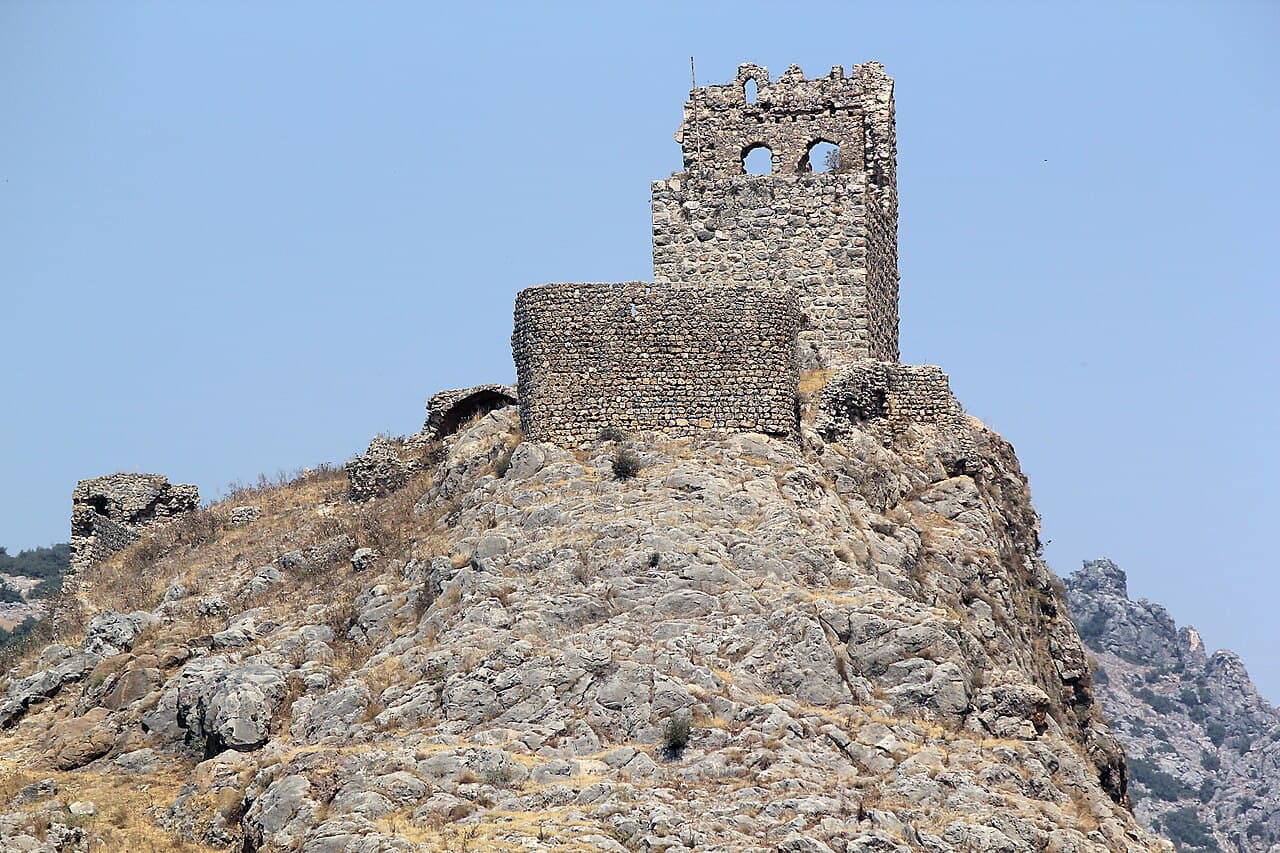
Amuda Castle, locally known as Hemite Kalesi, stands prominently on an 80-meter-high limestone hill overlooking the village of Gökçedam on the north bank of the Ceyhan River in Osmaniye Province, Turkey. This castle's strategic position allowed it to guard the vital north-south route connecting the Amanus Pass to Kadirli and Sis, controlling movement through the region and overseeing the river valley below.
The castle's location also provided intervisibility with several other important fortresses in the area, including Anavarza Castle, Tumlu Castle, and Toprakkale Castle. This network of fortifications formed a defensive system that was crucial for controlling Cilicia's rugged terrain during the medieval period.
Historical significance and ownership
Amuda Castle first appears in historical records in the mid-12th century, when it was captured by Thoros II, Prince of the Armenian Kingdom of Cilicia, following his escape from captivity in Constantinople. This event marked the castle's integration into the Armenian defensive network during a period of regional conflict and shifting alliances.
In 1212, the castle was granted by King Leo I of Armenian Cilicia to the Teutonic Knights as a reward for their military services. This transfer marked a significant phase in the castle's history, as the Teutonic Order undertook rebuilding efforts and used the castle both as a military stronghold and as a source of revenue from the surrounding lands.
The castle also played a role in the complex political intrigues of the region. In 1226, Bohemond IV of Antioch was lured to Amuda Castle by Baron Constantine of Barbaron under the false pretense that his son Philip was imprisoned there. Unaware that Philip had already died from poisoning in Sis, Bohemond's march into Cilicia illustrates the castle's involvement in the turbulent power struggles of the time.
The siege of 1266 and aftermath
One of the most dramatic episodes in the castle's history occurred in 1266 when an army led by Emir Al Mansur Qalawun under the Mamluk Sultan Baibars of Egypt laid siege to Amuda Castle. Contemporary accounts state that approximately 2,200 refugees had taken shelter within the fortress walls during this siege.
After a determined defense, the castle's defenders surrendered. The aftermath was brutal: all the men inside were killed, and the women and children were taken captive and enslaved in Egypt. Following this event, it is unclear whether the castle ever returned to Christian control. By the late 13th century, it was quietly retaken by the Mamluks, and the date when the Teutonic Knights abandoned the castle remains unknown.
Architectural features and construction phases
Amuda Castle's architecture reflects its varied history, with at least three major phases of construction and repair discernible through masonry analysis. The most prominent contributions date from the Crusader period under the Teutonic Knights in the 13th century.
The castle features a simple rectangular plan, a departure from the more complex designs typical of Armenian fortifications. Dominating the southwest corner is a four-story keep, notable for its robust construction and strategic vantage point. The keep's lowest level contains cisterns, essential for water storage during sieges.
The castle's position on a limestone outcrop enhances its defensive capabilities, providing natural protection and commanding views over the surrounding landscape. The ruins visible today include remnants of curtain walls, towers, and gate structures that once formed a formidable defensive complex.
Archaeological investigations and current status
In 1987, a comprehensive archaeological and historical assessment of Amuda Castle was conducted, including a detailed surveyed plan of the site. These studies have contributed significantly to understanding the castle's construction phases and its role in the region's medieval history.
Today, Amuda Castle remains in a state of ruins but is freely accessible to visitors. A short climb uphill from the nearby road leads to the site, where travelers can explore the remains of this small yet historically significant fortress. Its location and surviving structures offer insights into the military architecture of the High Medieval period in Cilicia and the complex interactions between Armenian, Crusader, and Mamluk powers.
Visiting Amuda Castle
The castle's proximity to the village of Gökçedam and its location within Osmaniye Province make it a worthwhile destination for those interested in medieval history and archaeology. Visitors can appreciate the natural setting and the castle's strategic placement while imagining the historical events that unfolded here.
While the ruins are modest in scale, the site provides a tangible connection to the past and a glimpse into the military and political dynamics of the eastern Mediterranean during the 12th and 13th centuries.
Frequently asked questions (FAQ)
- How do I get to Amuda Castle near Gökçedam?
- Amuda Castle is located near the village of Gökçedam in Osmaniye Province, Turkey. Visitors can reach the castle by traveling to Gökçedam and then taking a short uphill walk from the nearby road to the castle ruins.
- What is the historical significance of Amuda Castle?
- Amuda Castle was an important strategic fortress in the Armenian Kingdom of Cilicia and later controlled by the Teutonic Knights. It guarded key routes and was involved in significant medieval conflicts, including a siege by the Mamluks in 1266.
- Is Amuda Castle open to visitors?
- Yes, Amuda Castle is freely accessible to the public. Visitors can explore the ruins at their own pace, enjoying the castle's hillside location and views of the surrounding landscape.
- When was Amuda Castle built and by whom?
- Amuda Castle dates back to the 12th century and was initially under Armenian control before being granted to the Teutonic Knights in the early 13th century, who rebuilt and fortified it.
- What architectural features does Amuda Castle have?
- The castle features a simple rectangular plan with a prominent four-story keep at the southwest corner. It includes cisterns in the lowest level and remnants of curtain walls and towers typical of Crusader military architecture.
Photo gallery

Information
Address
Near Gökçedam Köyü Yolu, Osmaniye, Turkey
Loading map...
Visitor reviews
No reviews yet. Been here? Write the first review and help other travelers!
Write the first reviewVisited this castle? Share your experience
Your review helps other travelers and adds first-hand knowledge to our encyclopedia.