Tongelaar Castle
Tongelaar Castle, also known locally as Kasteel Tongelaar, is a historic fortified complex located north of the village of Mill in the province of North-Brabant, Netherlands. The castle's origins trace back to the late medieval period, with the first documented mention in 1282 when it was dedicated to Count Floris V by Jan van Cuyk. This early mention confirms the site's longstanding strategic and noble significance in the region.
The castle was likely under the ownership of the Van Cuyk family until the 15th century, after which it passed to the Van Merwick family. Over the subsequent centuries, ownership changed hands among several noble families from both the Netherlands and Belgium, reflecting the castle's continued importance in local aristocratic circles until the 20th century.
The medieval architecture of Tongelaar Castle
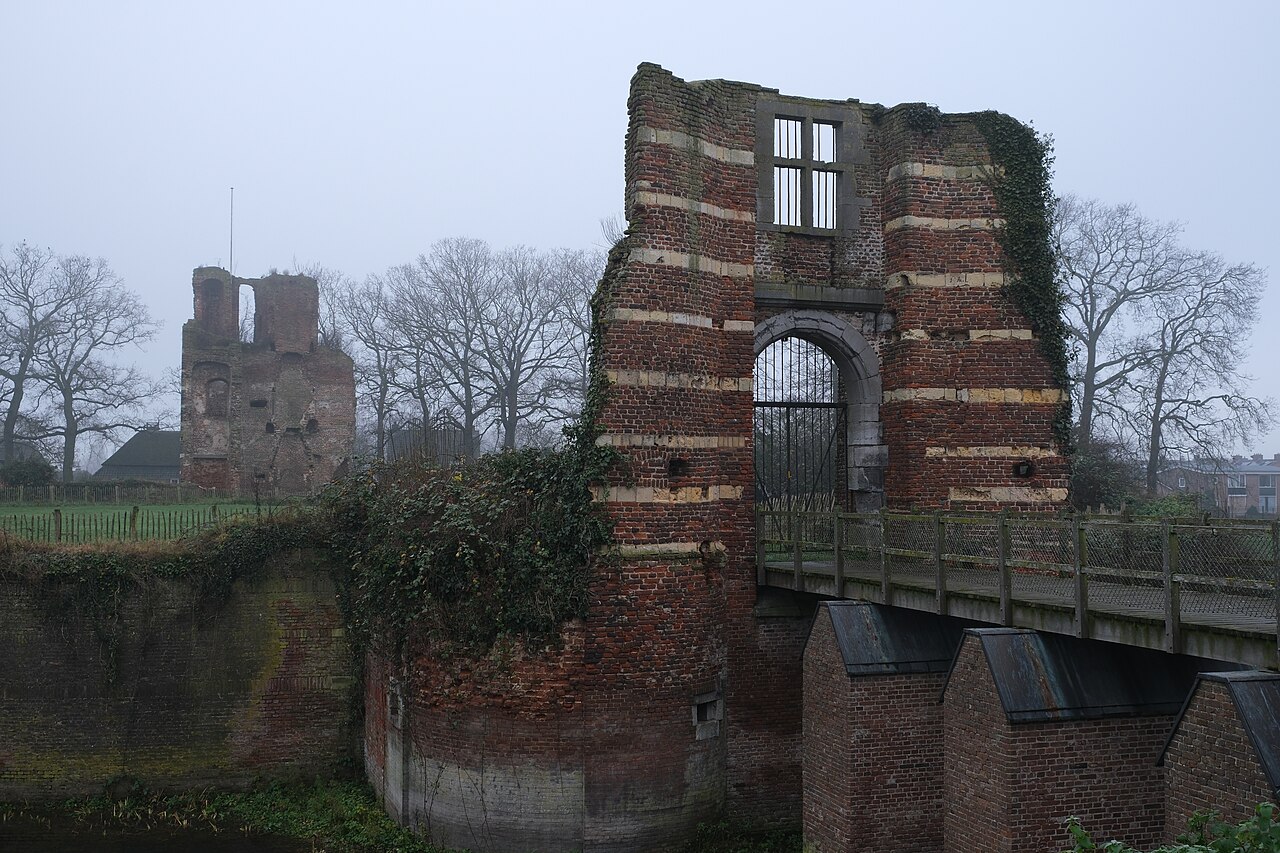
The most prominent surviving element of the original medieval castle is the square brick gate tower, which dates back to the early 15th century. This tower originally functioned as the main entrance to the castle and would have been equipped with a drawbridge spanning a defensive moat or ditch. The large window on the tower's facade served as the entrance, a distinctive feature for gate towers of this period.
Archaeological investigations have revealed that a fortified medieval building once stood opposite the gate tower, although these two structures were never connected by enclosing walls. This suggests a complex defensive layout, possibly with separate fortified buildings within the castle's precincts. The gate tower itself contained several living quarters arranged vertically, as well as a prison located below ground level, highlighting its multifunctional role in defense, residence, and detention.
Architectural details of the gate tower
The tower's robust brick construction is typical of late medieval fortifications in the region, designed to withstand siege weaponry and provide a vantage point for surveillance. Its square plan allowed for efficient use of interior space and facilitated the installation of defensive features such as arrow slits and machicolations, although specific details of these features at Tongelaar are limited.
Later architectural additions and modifications
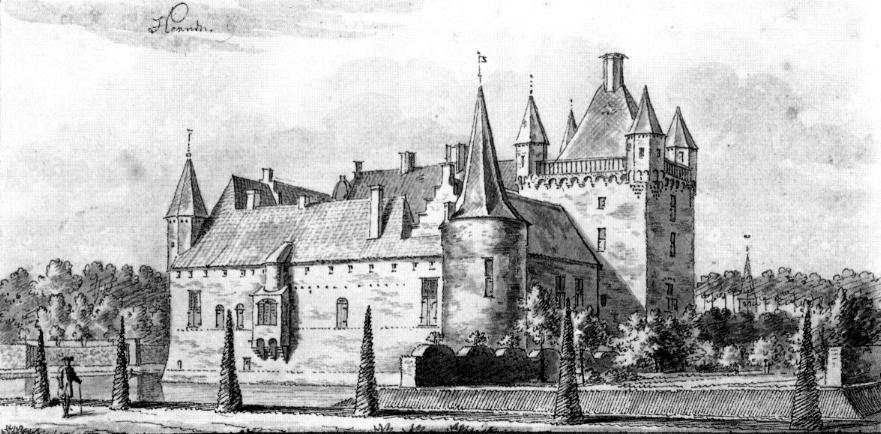
While the gate tower remains the sole medieval structure, the rest of the castle complex reflects significant building activity during the 18th and 19th centuries. The western wing of the castle was constructed during this period, either on the foundations of an earlier building or by reusing old building materials, which was a common practice to preserve continuity and reduce costs.
This wing, along with other additions, transformed the castle into a closed square farmstead centered around a simple courtyard. The gate tower now serves as a corner tower within this agricultural complex, illustrating the adaptive reuse of medieval fortifications in post-medieval rural settings.
Historical context and ownership lineage
The castle's history is intertwined with the noble families of the region. The initial dedication to Count Floris V situates Tongelaar within the feudal landscape of medieval Brabant. The transition from the Van Cuyk to the Van Merwick family in the 15th century marks a significant shift, possibly reflecting broader political or familial alliances.
Throughout the early modern period, Tongelaar Castle remained a private residence and estate, passing through various noble hands from the Netherlands and Belgium. This continuity of aristocratic ownership preserved the castle's status, even as its military function diminished.
Current status and cultural significance
Today, Tongelaar Castle is not open to the public as a historic monument but is used for cultural activities. The preservation of the medieval gate tower alongside the 18th and 19th-century farm buildings offers a unique glimpse into the architectural evolution from fortified medieval stronghold to rural estate.
The castle exemplifies the adaptive reuse of medieval fortifications in the Netherlands, where many castles were converted into agricultural complexes or country houses. Its late medieval gate tower remains a rare and valuable example of medieval military architecture in North-Brabant.
Archaeological insights
Excavations and research have contributed to understanding the castle's original layout and function, revealing the presence of additional fortified structures and the complex defensive arrangements. These findings enrich the historical narrative and underscore the castle's significance in regional medieval history.
Architectural features summary
- Square brick gate tower dating from early 15th century, originally with drawbridge and prison below ground
- Remnants of a fortified building opposite the tower, not connected by walls
- 18th and 19th-century additions forming a closed square farmstead
- Simple courtyard surrounded by agricultural buildings
- Adaptive reuse from medieval fortress to rural estate
Visiting information
Although Tongelaar Castle is currently not open to public visits, its historical and architectural significance makes it an important cultural site in North-Brabant. The castle's exterior and surroundings can be appreciated from public roads and paths in the area.
Its use for cultural events ensures that the castle remains a living part of the community, maintaining its heritage while adapting to contemporary needs.
Frequently asked questions (FAQ)
- How do I get to Tongelaar Castle?
- Tongelaar Castle is located at Tongelaar 12 in the Netherlands, easily accessible by car and public transport. If you are traveling by train, the nearest station is a short bus ride away. Detailed directions can be found on our website or through popular navigation apps.
- What are the opening hours of Tongelaar Castle?
- Tongelaar Castle is open to visitors from Tuesday to Sunday, from 10 AM to 5 PM. Please note that the castle is closed on Mondays and during certain public holidays. It's a good idea to check our website for any special events or changes to the schedule before your visit.
- When was Tongelaar Castle built?
- Tongelaar Castle dates back to the 14th century, making it a significant historical landmark in the region. Its architectural style reflects the medieval designs prevalent during that era, and the castle has undergone several renovations throughout its history. Visiting the castle allows you to step back in time and appreciate its historical significance.
- Can I take guided tours of Tongelaar Castle?
- Yes, guided tours are available for visitors interested in learning more about the castle's history and architecture. These tours are led by knowledgeable guides who provide fascinating insights into the castle's past. Be sure to check the schedule for tour times and availability when planning your visit.
- Is Tongelaar Castle accessible for visitors with disabilities?
- Tongelaar Castle is committed to providing an inclusive experience for all visitors. The castle has made efforts to improve accessibility, including ramps and designated pathways. However, some areas may still present challenges due to the historic nature of the site, so we recommend contacting us in advance for specific accessibility inquiries.
- Why is Tongelaar Castle considered a historical landmark?
- Tongelaar Castle is considered a historical landmark due to its rich history, architectural beauty, and role in regional events throughout the centuries. It stands as a testament to the medieval heritage of the Netherlands and offers a glimpse into the life of nobility during that time. The castle is also a popular venue for cultural events and exhibitions.
- What is the ticket price for visiting Tongelaar Castle?
- The ticket prices for Tongelaar Castle are €10 for adults and €5 for children aged 6 to 12. Children under 6 can enter for free. Discounts may be available for groups or special events, so be sure to check our website for the latest offers.
- What is the best time to visit Tongelaar Castle?
- The best time to visit Tongelaar Castle is during the spring and early autumn when the weather is pleasant and many outdoor events take place. Additionally, visiting during weekdays may help you avoid larger crowds. Keep an eye on our events calendar for special activities that may enhance your experience.
- Are there any nearby attractions to visit after Tongelaar Castle?
- Yes, there are several nearby attractions worth visiting, including beautiful parks, historical villages, and museums. The surrounding area offers scenic walking and biking trails, perfect for exploring after your visit to the castle. We recommend checking local guides for a list of attractions and activities that suit your interests.
Loading map...
Visitor reviews
No reviews yet. Been here? Write the first review and help other travelers!
Write the first reviewVisited this castle? Share your experience
Your review helps other travelers and adds first-hand knowledge to our encyclopedia.