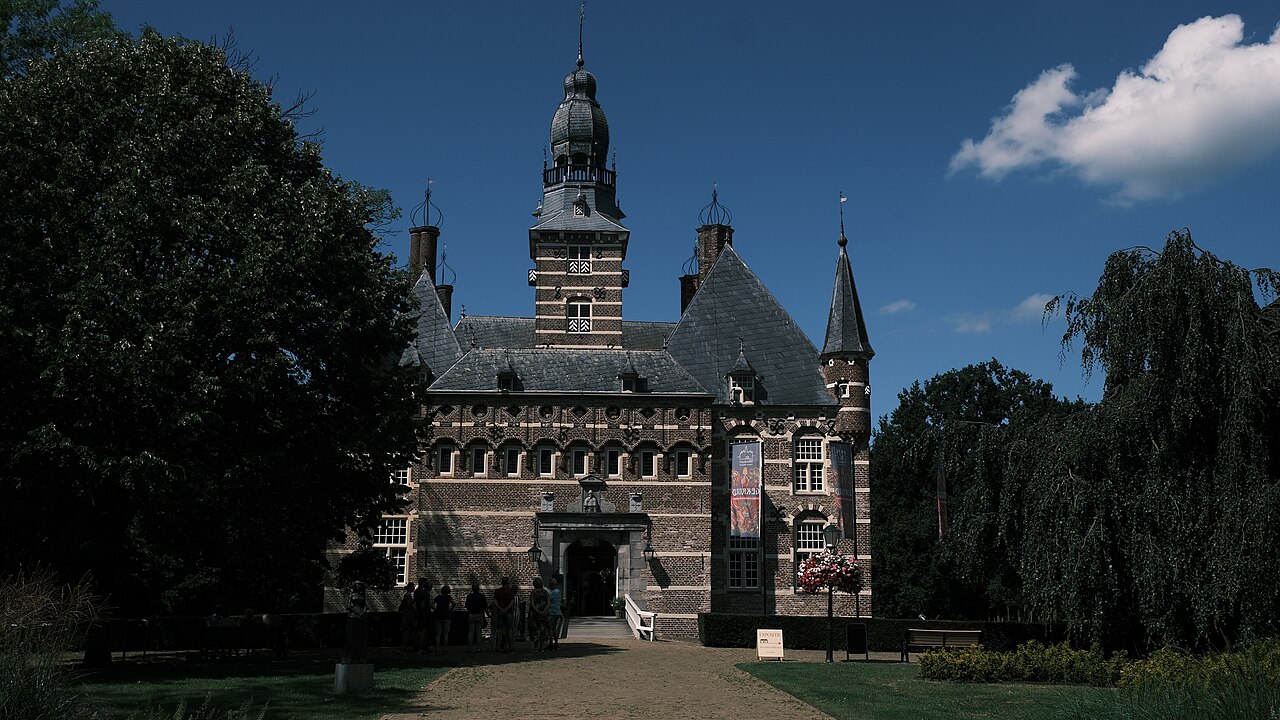
Hernen Castle — Netherlands castle

Hernen Castle

Hernen Castle: a well-preserved late medieval fortress in the Netherlands
Hernen, Gelderland, Netherlands
Late Medieval (14th–15th c.)
Well Preserved

Hernen Castle, locally known as Kasteel Hernen, is a remarkable example of a late medieval fortress located in the village of Hernen, in the Gelderland province of the Netherlands. This castle stands out for its well-preserved medieval character and its unique architectural features, particularly its covered wall walk, which is rare in Dutch castles. The castle's origins trace back to the 14th century, built on the foundations of a much earlier motte castle that existed until the 12th or 13th century.

Origins and early history

The first known Lords of Hernen were mentioned in a document from 1247. Their original stronghold was a motte castle situated west of the current castle site, near the river Elst. This earlier fortress served as the family's seat until the 12th or 13th century. The income from taxes and special privileges, such as milling rights, allowed the lords to expand their holdings and build a more substantial residence.

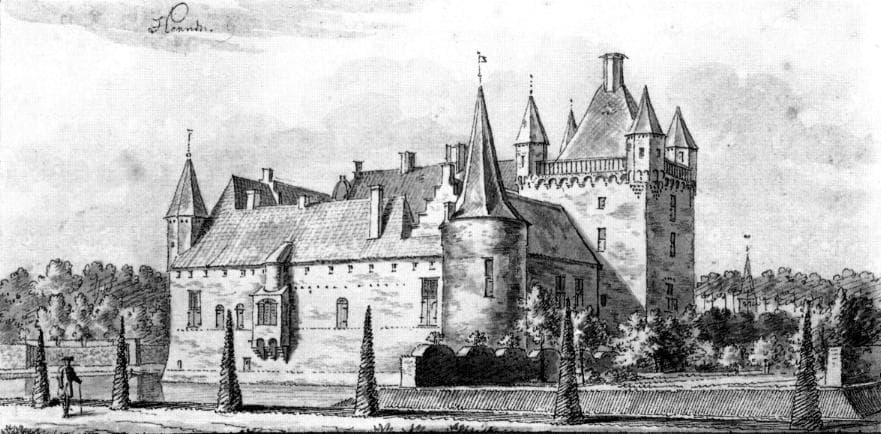
During the 14th century, the present castle construction began on the Gelderland side of the estate, as the territory was divided between the Duchy of Cleves and Gelderland at the time. Eventually, the entire estate was unified under one ownership. The castle was originally designed as a tower house located at the southeast corner of a rectangular bailey. This tower house formed the core of the fortress, surrounded by a formidable defensive wall approximately 2.5 meters thick, fortified with crenelations, arrow loops, and a wall walk on arches. The entire complex was encircled by a moat, enhancing its defensive capabilities.

Architectural evolution and features

As the needs of the inhabitants grew, additional buildings were constructed along the inside of the defensive wall, reducing the size of the bailey but providing more space for servants, soldiers, and family members. Some of the original arches supporting the wall walk remain visible within these rooms, offering a glimpse into the castle's medieval defensive design.

One of the castle's most distinctive features is its covered wall walk, which is quite rare in the Netherlands. This covered patrol path allowed defenders to move around the castle walls under shelter, an advanced feature for its time. The east wing and the monumental entry gate, dating from 1555, reflect later additions that blend with the castle’s austere medieval style.

The great tower house

The original great tower house that formed the heart of Hernen Castle stood until the early 19th century. However, by the time the first photographs were taken around 1890, it had disappeared. The exact cause of its loss is unknown, but it is speculated that structural weakening occurred when late medieval occupants cut into the walls to create more interior space, possibly leading to collapse during a winter storm.

Later history and preservation

In 1682, Hernen Castle was auctioned and became the property of Philip Hendrik van Steenhuys. Later, ownership passed to the De Béthune and D'Ennetieres families from the Southern Netherlands (present-day Belgium). These owners rarely visited the castle and did not modernize it, which inadvertently preserved its medieval character. Although the moat on the eastern side was filled in, the castle escaped war damage and natural disasters, maintaining its original defensive integrity.

In 1940, the Friends of the Castles of Gelderland foundation acquired the castle and undertook restoration efforts to preserve its historical and architectural significance. Today, part of the castle, specifically the residential east wing, is used by the Bredius Foundation, a religious research organization, while the remainder operates as a museum open to the public.

Hernen Castle in popular culture and tourism

Hernen Castle gained cultural prominence as a filming location for the 1960s Dutch youth television series "Floris," starring Rutger Hauer. This exposure helped raise awareness of the castle’s historical value and unique architecture.

Visitors to Hernen Castle can explore its medieval courtyards, defensive walls, and preserved interiors that showcase the austere lifestyle of its former inhabitants. The castle offers a rare opportunity to experience a Dutch fortress with a covered wall walk, a feature that distinguishes it from many other castles in the country.

Historical context and significance

The development of Hernen Castle reflects the broader medieval trends in castle construction in the Netherlands and the Low Countries. Its transition from a motte castle to a fortified tower house with a bailey exemplifies the evolution of defensive architecture in response to changing military and social needs during the late medieval period. The castle’s preservation provides valuable insight into feudal lordship, medieval fortification techniques, and regional history.

Despite its relatively modest size compared to some European castles, Hernen Castle’s intact defensive features and lack of modernization make it an important cultural heritage site. It stands as a testament to the medieval nobility’s lifestyle and the architectural ingenuity of the time.

Visiting information

Hernen Castle is accessible to the public for a fee, with guided tours available to enrich the visitor experience. The castle is located at Dorpsstraat 40, Hernen, Netherlands, in the Gelderland region. Its well-preserved state and unique features make it a must-visit destination for enthusiasts of medieval architecture and Dutch history.

Frequently asked questions (FAQ)

How do I get to Hernen Castle?
Hernen Castle is located in the village of Hernen in the Netherlands, easily accessible by car and public transport. If you are driving, there is parking available nearby. For those using public transport, check the local bus schedules for the best routes to reach the castle.
What is the historical significance of Hernen Castle?
Hernen Castle dates back to the 14th century and holds a rich history as a medieval fortified residence. It played a crucial role in the defense of the region during various conflicts and has been well-preserved, allowing visitors to explore its historical architecture and learn about its past. The castle is an important cultural landmark in the Netherlands.
When was Hernen Castle built?
Hernen Castle was originally constructed in the 14th century, with significant renovations occurring in later centuries. Its architecture reflects the medieval styles of the time, showcasing the evolution of castle design. The castle's history is a testament to the changing needs of defense and residence throughout the centuries.
Can I take guided tours of Hernen Castle?
Yes, guided tours are available at Hernen Castle, allowing visitors to gain deeper insights into its history and architecture. These tours are typically led by knowledgeable guides who share fascinating stories and information about the castle's significance. Be sure to check the schedule and availability in advance.
Why is Hernen Castle a popular attraction?
Hernen Castle is popular because of its stunning architecture, rich history, and beautiful surroundings. Visitors find the castle's well-preserved structure and garden appealing for both sightseeing and leisurely walks. Additionally, the castle often hosts events and exhibitions, making it a vibrant part of the community.
Is it possible to visit Hernen Castle outside of regular hours?
Hernen Castle generally operates within set opening hours, but special arrangements for private tours may be possible. It is advisable to contact the castle administration directly to inquire about after-hours visits or special events. This can enhance your experience if you're looking for a unique visit.
What are the opening hours for Hernen Castle?
Hernen Castle typically opens to visitors from Wednesday to Sunday, with specific hours varying by season. During peak tourist season, the castle may extend its hours to accommodate more visitors. Always check the castle's official website for the most current information on opening times before planning your visit.
Are there any nearby attractions to visit while in Hernen?
Yes, there are several attractions near Hernen Castle, including beautiful parks, walking trails, and other historical sites. The surrounding area offers a chance to explore local culture and nature, making it a great addition to your visit. Consider visiting nearby towns for additional dining and shopping options.
What are the ticket prices for Hernen Castle?
Ticket prices for Hernen Castle vary based on age and type of tour chosen. Generally, adults pay a standard admission fee, while discounts may be available for children, seniors, and groups. Check the castle's website for the most accurate and up-to-date pricing information.

Photo gallery

Hernen Castle
Click to view

Photo by Unknown authorUnknown author•Public domain

1 photo • Click any image to view in full screen

Information

Lowland Castle

Address

Dorpsstraat 40, Hernen, Netherlands

Loading map...

Visitor reviews

No reviews yet. Been here? Write the first review and help other travelers!

Write the first review

Visited this castle? Share your experience

Your review helps other travelers and adds first-hand knowledge to our encyclopedia.
Write a review

(5/5)

0/2000 characters

Your review will be visible after admin approval

Nearby castles

3.3 km
Batenburg Castle — Netherlands castle

Batenburg Castle

Stadswal, Netherlands

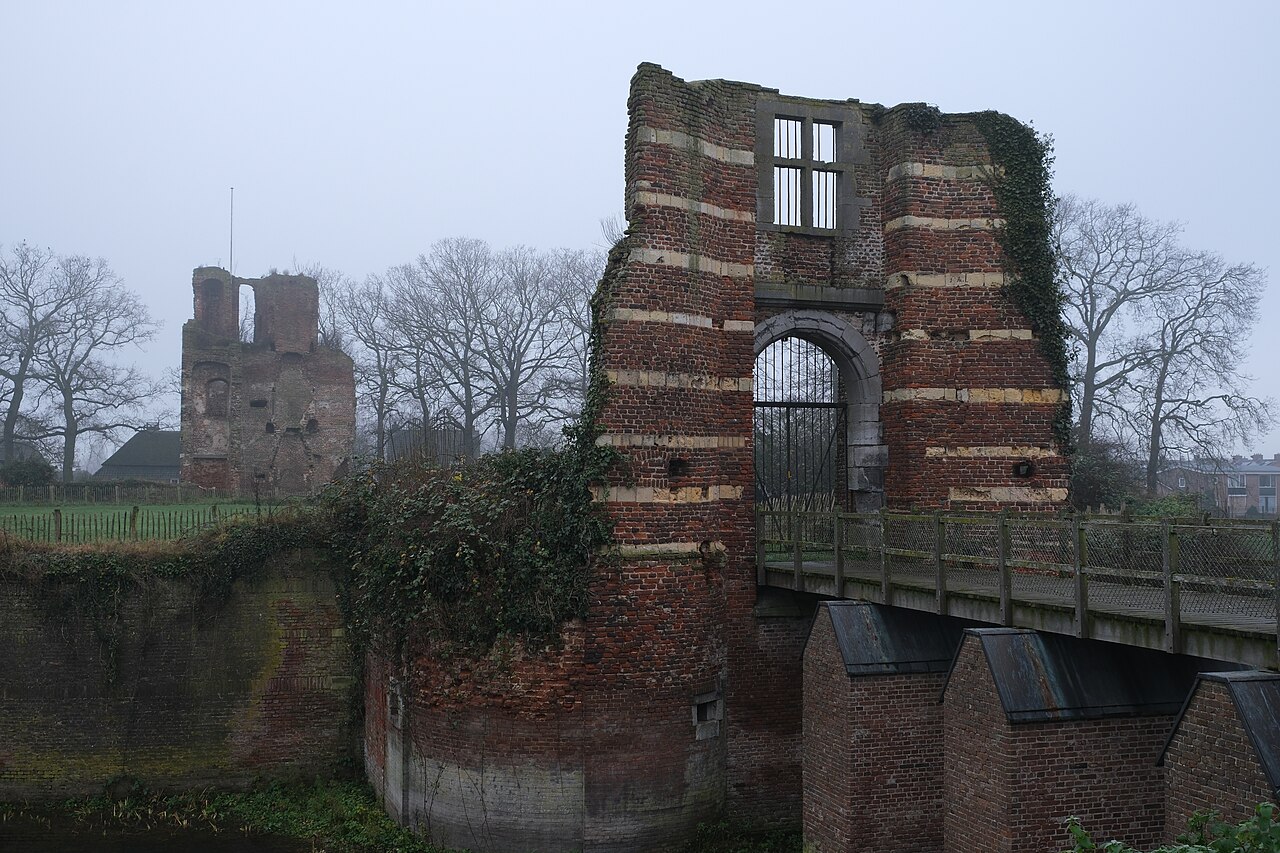
Batenburg Castle, located in the village of Batenburg in the Gelderland province of the Netherlands, is a remarkable example of a high medieval hill castle with a complex history spanning several centuries. The castle stands on an artificial motte, a defensive earthwork mound, surrounded by a moat, characteristic of medieval fortifications designed to provide strategic advantage and protection. While local traditions suggest origins dating back to a Batavian warrior prince named Bato or even a Roman temple dedicated to Mars Victor, these claims lack archaeological evidence. More reliably, the castle’s origins trace to the 12th century, when a stone keep on a motte likely existed, marking the site as a feudal stronghold. The earliest documented noble family associated with Batenburg dates to around 1080, with the castle evolving through various ownerships and reconstructions. Medieval origins and architectural evolution The initial significant construction phase is attributed to a member of the Van Bronckhorst-Batenburg family around 1300. This phase likely saw the erection of a stone shell keep and the development of a circular defensive rampart approximately 40 meters in diameter. The castle’s layout was compact, combining residential and defensive functions within the enclosure. In the late 15th and early 16th centuries, Batenburg Castle endured multiple sieges and partial destructions. In 1497, forces under Albert III, Duke of Saxony, partially destroyed the castle. It was subsequently restored with strengthened circular ramparts, an entrance gate flanked by two watchtowers, and three residential towers positioned to the cardinal points. The courtyard was enclosed by three residential wings opposite the gatehouse, emphasizing the castle’s role as both a fortress and noble residence. Sieges and destruction The castle faced further assaults in 1503 by Charles II, Duke of Guelders, and again in 1540 by troops from Nijmegen. In 1568, bombardment by Philip of Hohenlohe-Neuenstein’s forces caused the collapse of the oldest castle sections. Each attack led to rebuilding efforts, reflecting the castle’s strategic importance and the turbulent political landscape of the region. Rebirth and decline in the early modern period By around 1600, Maximilaan van Bronckhorst undertook a significant reconstruction, rebuilding the castle on the foundations of the earlier medieval structure. This restoration maintained the castle’s defensive features while enhancing residential comfort, aligning with the evolving needs of noble households in the early modern era. Later, under Count Johan van Horne, the castle was further restored and lavishly furnished, symbolizing its status as a noble seat. However, by 1700, after passing to the Counts of Bentheim-Steinfurt, the castle ceased to be permanently inhabited, marking the beginning of its decline. Final destruction and ruin The castle’s fate was sealed in 1795 during the French revolutionary wars. French troops deliberately filled the castle’s rooms with hay, destroyed the water pump, and set it ablaze, resulting in a devastating fire that left the castle in ruins. It was never rebuilt, and the ruins gradually became a quarry for building materials. By the early 19th century, the standing remains were more extensive than today. However, the owner, Count Van Bentheim-Steinfurt, began demolishing parts of the ruin. Further damage occurred in 1922 due to gunfire. Post-World War II, the Dutch state confiscated the property and in 1953 sold it to the "Friends of the Castles of Gelderland" foundation, which has since undertaken consolidation and preservation efforts. Architectural features and surviving elements Batenburg Castle’s ruins today include significant portions of its curtain walls and several round towers constructed of alternating bands of red brick and marlstone, a sedimentary rock native to the region. The gatehouse remains partially intact, flanked by semicircular towers that once guarded the entrance. The castle’s circular rampart and bastions reflect medieval defensive strategies adapted over centuries. The three residential wings that once enclosed a courtyard opposite the gatehouse highlight the castle’s dual role as a fortress and noble residence. Within the ruins, a large round tower contains remnants of chimneys and cross frames, indicating domestic use and architectural sophistication. Historically, a well near the entrance was famed for its spring water, believed to have healing properties. Gatekeepers sold this water to visitors, linking the site’s earlier sacred associations to its medieval function. Cultural significance and preservation Today, Batenburg Castle stands as a romantic ruin embodying centuries of Dutch feudal history, military conflict, and architectural evolution. Though not accessible to the public, the site remains a poignant reminder of the region’s medieval heritage and the complex interplay of power, religion, and warfare that shaped its development. The castle’s preservation by the "Friends of the Castles of Gelderland" foundation ensures that this historic monument endures as a valuable cultural landmark. Its ruins offer insights into medieval defensive architecture, early modern noble residences, and the impact of warfare on heritage sites.

High Medieval (11th–13th c.)
Details
4.6 km
Wijchen Castle — Netherlands castle

Wijchen Castle

Kasteellaan 9, Netherlands

Wijchen Castle, locally known as Kasteel Wijchen, is a notable example of a late medieval hill castle located in the town of Wijchen, in the province of Gelderland, Netherlands. This castle stands out for its rich history, architectural evolution, and current multifunctional use, combining heritage preservation with civic and cultural functions. The castle is distinguished by its moated, almost square layout enclosing a small courtyard. Surrounding the courtyard is a colonnade and a prominent square tower, typical features of fortified residences from the late medieval period. Beneath the castle lie extensive vaults with walls measuring between 1.40 and 1.60 meters thick, including a prison cell, indicating its defensive and administrative roles. The upper walls are approximately 80 centimeters thick, reflecting the structural requirements of the era. Architectural origins and medieval history The exact date of the original construction of Wijchen Castle remains uncertain, but architectural details suggest it was built in the 14th or early 15th century. Initially, the castle may have been known as 'Leler'. The earliest recorded owners were the Van Galen family, a noble lineage that held the estate during the medieval period. Ownership transitions and renaissance transformation In 1535, ownership passed to Herman van Bronckhorst, Lord of Batenburg, marking a new chapter in the castle's history. Later, in 1595, the castle was confiscated by Geertruid van Dalem due to financial disputes with the then owner, Herman Dirk van Bronckhorst. This event led to the sale of the castle in 1609 to Emilia of Nassau, daughter of William of Orange, and her husband Don Emanuel de Braganza of Portugal. Under their ownership, Wijchen Castle underwent significant renovations that gave it its current Renaissance architectural appearance. Notably, the wall anchors on the castle bear a double letter 'E', symbolizing Emilia and Emanuel's influence and commemorating their period of restoration and enhancement. Decline and restoration in the modern era The castle experienced several ownership changes during the 17th and 18th centuries, including possession by the Osy family. During this time, it gradually fell into disrepair, particularly when used as a summer residence by Belgian owners, which contributed to neglect of its maintenance. In 1903, Wijchen Castle was sold at a public auction to Lady AW. van Andringa de Kempenaer, who initiated restoration efforts. However, a devastating fire in December 1906 destroyed much of the structure, leaving only the walls intact. Despite initial plans to demolish the ruins and build a villa, Lady Andringa de Kempenaer commissioned architect FA. Ludewig to rebuild the castle, preserving its historical character. Current use and cultural significance In 1932, the castle was acquired by the town of Wijchen and repurposed as the town hall in 1933. Today, parts of Wijchen Castle continue to serve municipal functions, while other sections host cultural activities and a regional museum that showcases the local history and heritage. The museum offers visitors insight into the castle's past and the broader historical context of the region. Although modest in size, it provides a valuable cultural resource for residents and tourists alike. The castle grounds and architecture remain accessible for exploration, with a small entrance fee supporting its upkeep. Architectural features and defensive elements Wijchen Castle's design incorporates typical elements of a hill castle with a defensive moat, thick walls, and vaulted cellars. The presence of a prison cell within the vaults highlights its role in local governance and law enforcement during the medieval period. The square tower and colonnade enhance both its defensive capabilities and residential comfort. Visiting information and accessibility Visitors to Wijchen Castle can explore the museum and enjoy the castle's historical ambiance. The castle's location at Kasteellaan 9 makes it accessible within the town of Wijchen. Opening hours and ticket prices are modest, encouraging cultural tourism and educational visits.

Late Medieval (14th–15th c.)
Details
6.6 km

Doddendael Castle

Ewijk, Netherlands

Doddendael Castle is a notable example of a late medieval moated castle located in Ewijk, Netherlands. Constructed in the 1430s, this castle is surrounded by a moat and has witnessed a turbulent history marked by sieges, fires, and restorations. Its strategic position made it a valuable military and residential site throughout the centuries. Construction and architectural features The castle was originally built in the 15th century with the primary defensive feature of a surrounding water-filled moat, typical of late medieval fortifications in the region. The moat served both as a defensive barrier and a status symbol. The castle's structure included heavy base walls constructed from local stone, designed to withstand attacks and fires. Although much of the upper structure suffered damage over time, the base walls remain a testament to the robust medieval masonry techniques. Historical ownership and significance Initially, Doddendael Castle was owned by various families before being acquired by the Van Stepraedt family in 1489 for 4,000 gold guilders. This purchase marked a significant period in the castle's history, as the Van Stepraedt family were responsible for multiple restorations and adaptations of the castle over the following centuries. In 1526, Duke Charles of Gelre purchased the castle and used it as a military base. That same year, the castle was attacked during a revolt by the people of Nijmegen, who plundered and set it ablaze. The Van Stepraedt family repurchased the castle in 1528 despite its damaged condition and undertook restoration efforts. Sieges, fires, and restoration efforts The castle's strategic importance made it a target during regional conflicts. In 1585, it was occupied by Spanish forces during the turbulent period of the Eighty Years' War. Subsequently, during the Siege of Nijmegen, Prince Maurits recaptured the castle and set it on fire again, leaving only the heavy base walls intact. Despite these setbacks, the Van Stepraedt family tirelessly restored the castle, demonstrating resilience and commitment to preserving their ancestral home. The castle ceased to be their main residence by the mid-17th century but remained significant in local history. Religious significance and secret worship Following the prohibition of Roman Catholicism in the region, the Van Stepraedt family allowed the castle's vault to be used as a conventicle, a secret meeting place for Roman Catholics to attend mass. This aspect of the castle's history highlights its role not only as a military and residential structure but also as a site of religious refuge. Remnants of this conventicle are still visible today, offering insight into the clandestine religious practices during periods of persecution. Modern restoration and current use The last major restoration of Doddendael Castle took place in 1977, focusing on preserving the structural integrity and historical character of the building. Today, the castle is well-preserved and serves as a popular venue for parties, weddings, dinners, meetings, and conferences. Its picturesque setting and historical ambiance make it a favored backdrop for various cultural and social events. Architectural style and classification Doddendael Castle exemplifies the late medieval architectural style common in the Netherlands during the 15th century. Its classification as a water castle is due to the defining moat that encircles the structure, providing both defense and aesthetic appeal. The castle's robust stone base walls reflect the practical military architecture of the period, designed to resist sieges and fires. Location and accessibility Situated in the village of Ewijk, within the province of Gelderland, Doddendael Castle is accessible to visitors interested in medieval architecture and Dutch history. While it remains privately owned and used for events, the castle's grounds and historical significance attract tourists and scholars alike. Frequently asked questions When was Doddendael Castle built? The castle was constructed in the 1430s during the late medieval period. What is the architectural style of Doddendael Castle? It is a late medieval water castle featuring a moat and heavy stone base walls. Who owned the castle historically? Various families owned it, notably the Van Stepraedt family from 1489, and Duke Charles of Gelre briefly in 1526. What significant events affected the castle? The castle was plundered and burnt in 1526, occupied by Spanish forces in 1585, and burned again during the Siege of Nijmegen. Is the castle open to the public? While primarily used for private events, the castle grounds can be visited during special occasions. What is a conventicle? A conventicle is a secret meeting place for forbidden religious worship, which the castle vault served for Roman Catholics. When was the last restoration? The last extensive restoration occurred in 1977 to preserve the castle's structure.

Late Medieval (14th–15th c.)
Details