Dolwyddelan Castle
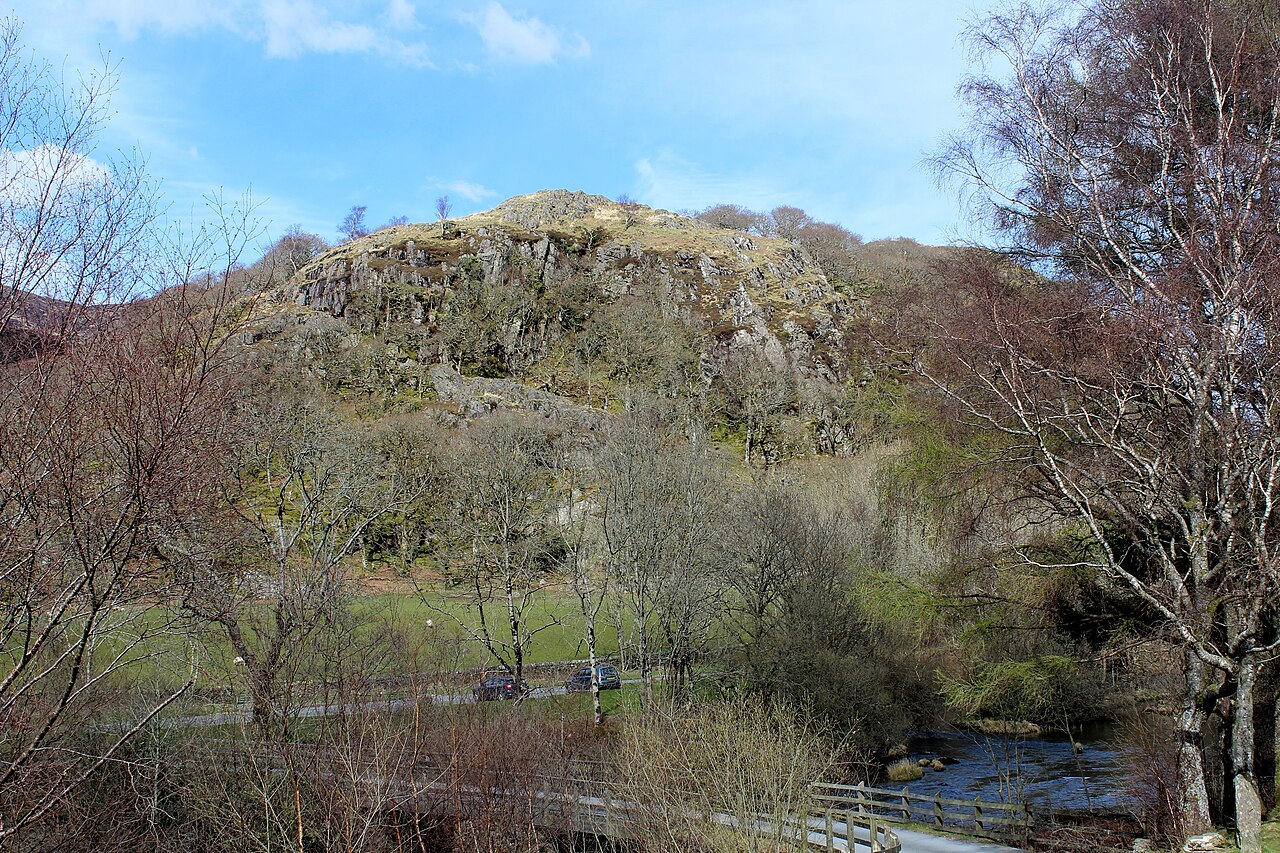
Dolwyddelan Castle is a remarkable example of a high medieval hill castle situated in the village of Dolwyddelan, within the historic region of Gwynedd, North Wales. Constructed primarily in the early 13th century, this fortress was originally commissioned by Llywelyn the Great (Llywelyn ab Iorwerth), one of the most powerful Welsh princes of the era. The castle occupies a strategic position on a rocky knoll, overseeing a vital east-west route across Gwynedd and controlling access between Nant Conwy and Meirionydd, which was crucial for maintaining territorial defense and communication.
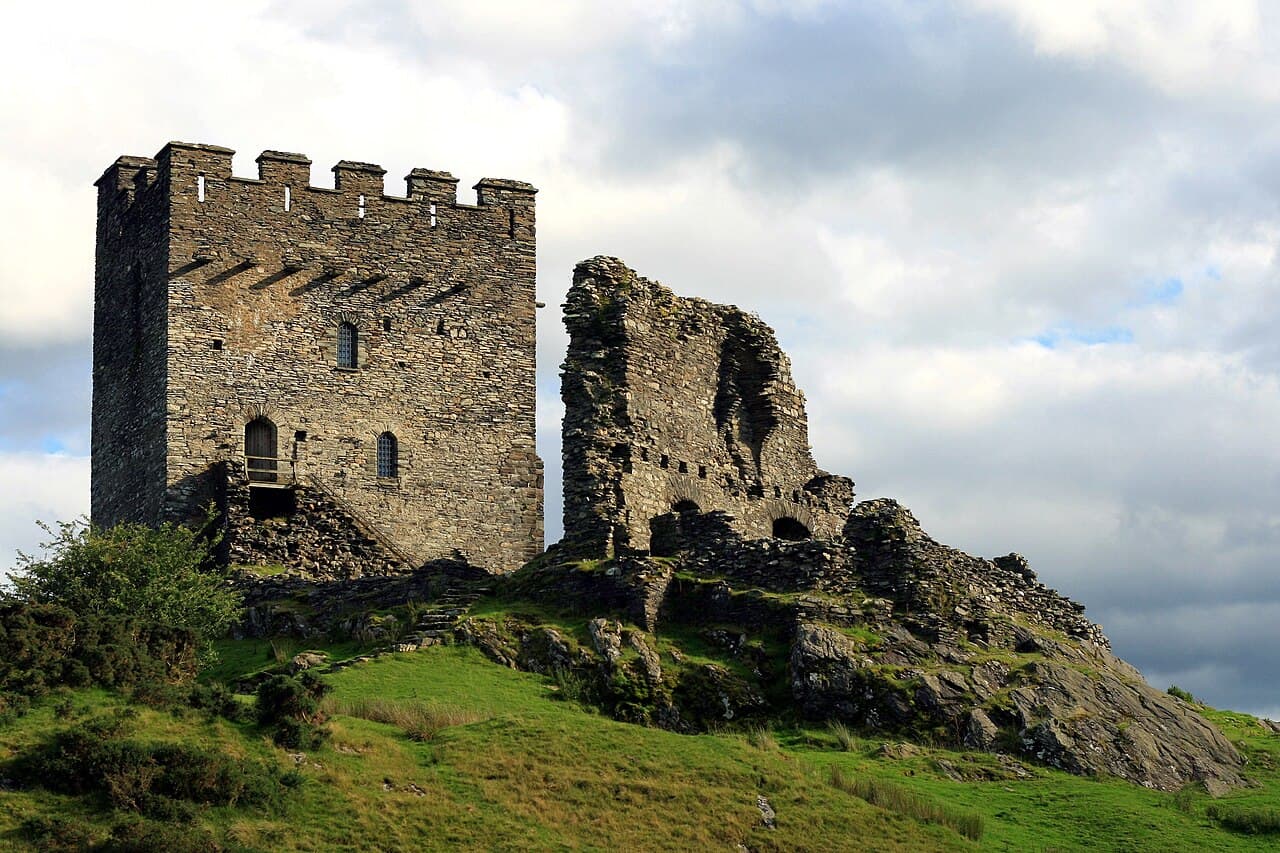
The initial construction phase of Dolwyddelan Castle consisted of a single two-story tower, later known as the keep, built between approximately 1210 and 1240. This keep was designed with formidable gritstone and slate rubble walls nearly two meters thick, reflecting the need for strong defensive architecture during the turbulent medieval period. Its entrance was located on the first floor, accessed by a now-vanished forebuilding, a common defensive feature to protect against direct assault. Inside, the keep housed a main chamber with a 13th-century fireplace and a winding staircase embedded within the wall leading to the roof. The original steep gabled roof's outline remains visible on the south wall, giving insight into the castle's medieval silhouette.
The castle's historical significance and development
The castle was built to replace an earlier fortification known as Tomen Castell, believed to have been erected by Llywelyn's father, Iorwerth Drwyndwn, in the late 12th century. Dolwyddelan Castle served both as a military stronghold and a princely residence. Its early history is closely tied to the ruling dynasty of Gwynedd, with Llywelyn ap Gruffudd, the last independent Prince of Wales and grandson of Llywelyn the Great, among its notable occupants.
In 1283, during the English conquest of Wales, the castle was captured by the forces of Edward I of England. Following its capture, the English undertook repairs and enhancements to strengthen the castle's defenses. A second tower, known as the western tower, was added in the late 13th century or early 14th century, likely during or shortly after the English occupation. This tower was constructed with distinctive sandstone door and window surrounds, imported rather than sourced locally, which stylistically resemble elements found at Edward I's nearby Conwy Castle. Originally, the western tower consisted of two storeys, each with a main chamber, equipped with latrine chutes and a fireplace with a hood. An external staircase was added in the 15th century to access the upper floor.
Architectural features and layout
The two main towers—the eastern keep and the western tower—are connected by curtain walls forming an approximately circular enclosure. These walls rise to about four meters in height and are roughly two meters thick, providing formidable defense. The castle lacks a formal gatehouse; instead, the main entrance was a simple gateway in the northeast section of the curtain wall, likely accessed by a wooden bridge spanning a rock-cut ditch below. Another ditch on the southwest side further enhanced the castle's defenses.
Within the enclosure, near the southern corner of the curtain wall adjacent to the keep, lie the remains of a medieval oven, indicating the location of the kitchen area. A small postern gate survives in the northeast corner, which would have allowed discreet access to and from the castle.
Construction materials and restoration
The castle's fabric is predominantly composed of locally sourced gritstone and slate rubble, materials typical of North Wales medieval construction. The western tower's sandstone dressings stand out as an imported feature, reflecting the influence of English royal architecture after the conquest.
By the late 15th century, the castle underwent significant repairs and modifications under Maredudd ab Ieuan, a nobleman from Eifionydd who leased the castle in 1488. He adapted the fortress for residential use, including raising the keep by an additional story and adding the external staircase to the western tower.
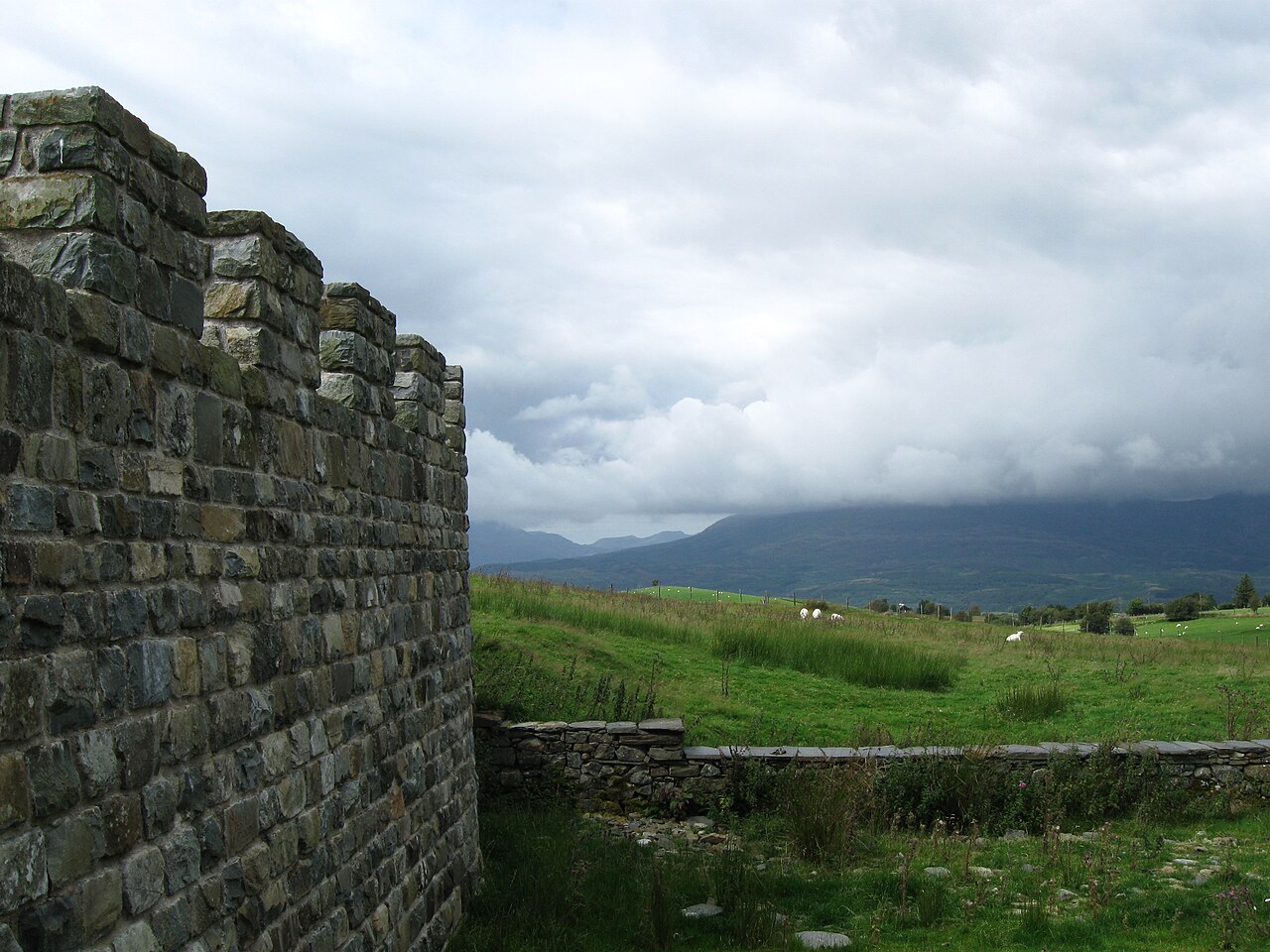
In the 19th century, between 1848 and 1850, extensive restoration was carried out by Peter Drummond-Burrell, 22nd Baron Willoughby de Eresby, a descendant of Maredudd ab Ieuan. This restoration raised the keep's height, added battlements, and rebuilt sections of the curtain walls. New doors and windows were inserted, some featuring decorative but non-functional drains, reflecting Victorian tastes for medieval revival architecture. These works significantly altered the castle's silhouette, blending authentic medieval elements with 19th-century romanticized interpretations.
Dolwyddelan Castle's role and legacy
Following its military use in the late 13th century, Dolwyddelan Castle's strategic importance declined, and it gradually fell into ruin over subsequent centuries. By the mid-1800s, the fortress was largely dilapidated before its Victorian restoration.
In the 20th century, the castle entered state care in 1930 and was designated a Grade I listed building in 1997, recognizing its exceptional architectural and historic significance. Its enduring presence in Welsh cultural heritage was further highlighted when it served as a filming location for the 1980 fantasy film Dragonslayer.
Today, Dolwyddelan Castle stands as a well-preserved high medieval hill castle with a complex history reflecting the turbulent medieval politics of Wales and England. Its architectural features, strategic location, and layered history make it a fascinating site for visitors and scholars alike.
Visitor experience and significance
Visitors to Dolwyddelan Castle can explore the remains of the two towers, the curtain walls, and the surrounding landscape that once formed a crucial defensive stronghold. The castle's setting atop a rocky knoll offers panoramic views of the surrounding Welsh countryside, enhancing its appeal as both a historical monument and a scenic destination.
The castle's fabric tells the story of Welsh resilience and adaptation through centuries of conflict, conquest, and restoration. Its combination of native Welsh and English architectural influences provides valuable insight into the medieval history of the region.
Frequently asked questions (FAQ)
- How do I get to Dolwyddelan Castle?
- Dolwyddelan Castle is located in the picturesque village of Dolwyddelan in Snowdonia National Park. The castle is easily accessible by car, with parking available nearby, and is also reachable by public transport with local buses serving the area.
- What is the historical significance of Dolwyddelan Castle?
- Dolwyddelan Castle dates back to the 13th century and is associated with the Welsh prince Llywelyn the Great. It played a crucial role in the defense of the area and is an important symbol of Welsh heritage and history.
- When was Dolwyddelan Castle built?
- Dolwyddelan Castle was constructed around 1210, during the reign of Llywelyn the Great. Its strategic location was chosen to oversee the surrounding valleys and to control access to important trade routes.
- Can I explore the interior of Dolwyddelan Castle?
- While the castle's interior is largely in ruins, visitors can explore the grounds and the remnants of the structure. The site offers a fascinating glimpse into medieval architecture and the lifestyle of its former inhabitants.
- Why is Dolwyddelan Castle a popular destination for visitors?
- Dolwyddelan Castle attracts visitors for its stunning views, rich history, and beautiful surroundings. It serves as an excellent vantage point for exploring the natural beauty of Snowdonia National Park.
- Is it possible to visit Dolwyddelan Castle year-round?
- Yes, Dolwyddelan Castle is open to visitors throughout the year, although access may vary during adverse weather conditions. It is advisable to check local weather updates before planning your visit.
- What are the opening hours for Dolwyddelan Castle?
- Dolwyddelan Castle is typically open from dawn till dusk, allowing visitors ample time to explore the site. However, it's always a good idea to check for any seasonal changes in opening hours before your visit.
- Are there any nearby attractions to Dolwyddelan Castle?
- Yes, there are several nearby attractions, including the stunning landscapes of Snowdonia National Park, the historic village of Betws-y-Coed, and the scenic Llyn Elsi. These locations offer a variety of outdoor activities and picturesque sights.
- What are the ticket prices for visiting Dolwyddelan Castle?
- Admission to Dolwyddelan Castle is free, making it an accessible destination for all visitors. However, donations to help maintain the site are always appreciated.
Photo gallery

Information
Website
Visit websiteSources & official resources
Verify the information above using these authoritative references.
Loading map...
Visitor reviews
No reviews yet. Been here? Write the first review and help other travelers!
Write the first reviewVisited this castle? Share your experience
Your review helps other travelers and adds first-hand knowledge to our encyclopedia.