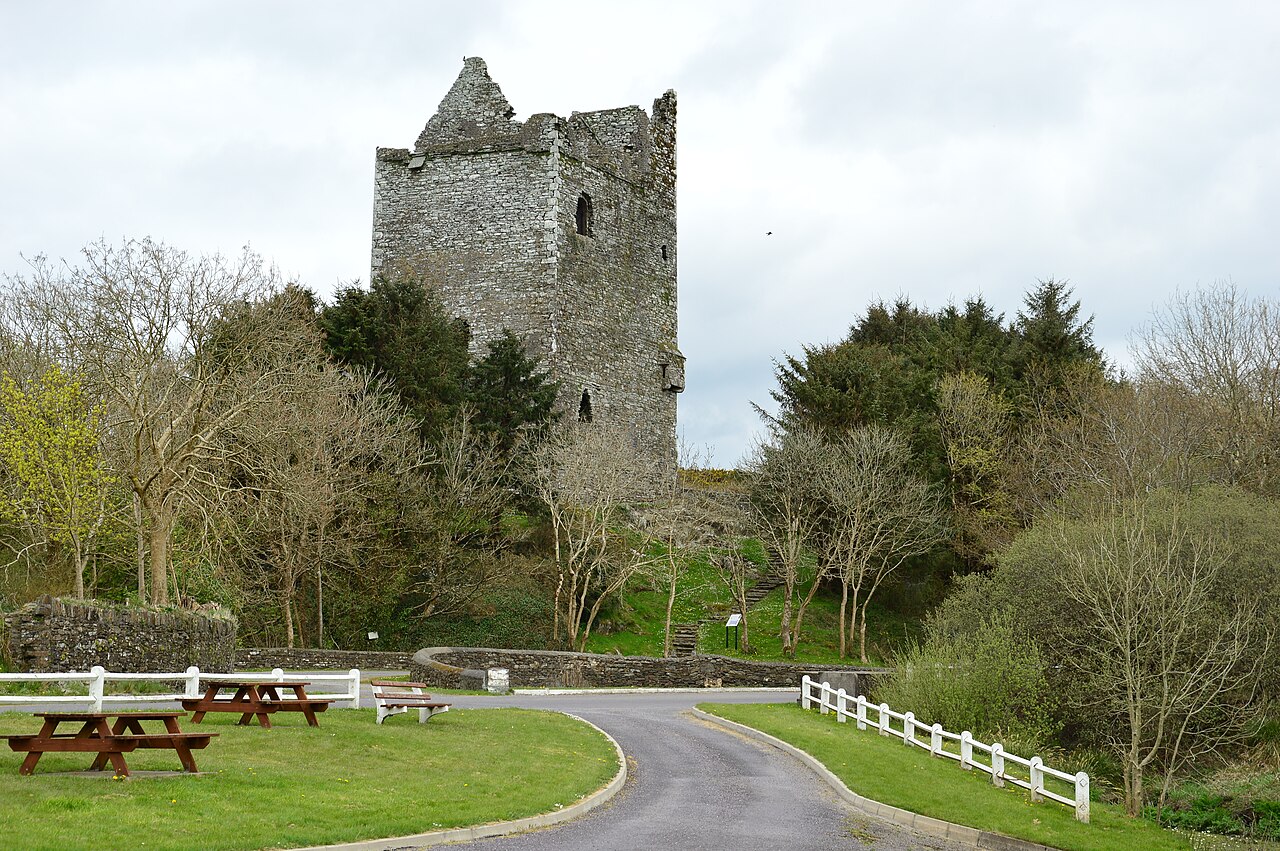
Togher Castle
Togher Castle is a historic tower house located in the valley of the River Bandon within the townland of Togher, County Cork, Ireland. This castle is an important example of a fortified residence built during the late 16th century by the MacCarthys of Glenacroim, a prominent Gaelic Irish clan. It reflects the turbulent history of Ireland during the transition from Gaelic to English rule and the conflicts that shaped the region.
Historical background and ownership
The castle is believed to have been constructed by Tadhg an Fhorsa MacCarthy shortly after 1590, following the grant of land by the English Crown. This grant was part of a strategy by the English monarchy to secure loyalty from Irish clans by formalizing land ownership under English law. The castle served as a stronghold to consolidate the MacCarthys' hold on their ancestral lands during a period marked by political unrest.
During the Nine Years' War (1594–1603), Tadhg an Fhorsa sided with the Irish rebels but played a relatively minor role in the conflict. After the war, despite his initial rebellion, he was pardoned in 1599. However, in 1602, following the defeat of the Spanish forces allied with the Irish, English troops occupied Togher Castle, asserting Crown control over the region.
In 1615, Tadhg returned to the castle with his family, and in 1618, King James I officially regranted the property to him, reaffirming his status under English rule. This period marked a brief restoration of Gaelic lordship under the new political framework.
During the Irish Rebellion of 1641, Tadhg's son, also named Tadhg (referred to as Tadhg an Dúna), joined the uprising against English rule. Following the rebellion's suppression, he was dispossessed of the castle, which was then granted to the Hoare family, supporters of Oliver Cromwell's forces. By 1666, the castle was deliberately unroofed, a common practice to render such strongholds unusable by rebels.
Architectural features and restoration efforts
Togher Castle is a classic example of an Irish tower house, a type of fortified residence common in Ireland from the late medieval period into the early modern era. The structure is typically rectangular with thick stone walls, narrow windows for defense, and multiple floors connected by a spiral staircase. The castle’s design emphasizes both defense and domestic living, featuring battlements, a bawn (enclosed courtyard), and living quarters.
In the 19th century, specifically shortly before 1895, the castle underwent significant restoration under the care of Father Lyons, a local schoolteacher. He reroofed the castle with a slate roof and made alterations to some windows and chimneys to improve habitability. This restoration was notable for reviving the castle’s residential function after centuries of neglect.
Despite these efforts, the castle was eventually abandoned again, and today it retains a combination of the 19th-century slate roof and a corrugated iron roof from the same period. The structure remains a well-preserved example of a tower house, although the interior is not accessible to visitors.
Location and access
Togher Castle is situated on private farmland in a rural setting, offering picturesque views of the surrounding valley and the River Bandon. Access to the castle is typically restricted, but visitors may gain permission to view the exterior by requesting access from the landowner. The castle itself cannot be entered, but its impressive silhouette and architectural features are visible from nearby vantage points.
Cultural significance and heritage
The castle stands as a testament to the complex history of County Cork and the broader Irish experience during the late 16th and 17th centuries. It reflects the shifting power dynamics between Gaelic clans and the English Crown, as well as the impact of major conflicts such as the Nine Years' War and the Irish Rebellion of 1641. Today, Togher Castle is recognized for its architectural integrity and historical importance as part of Ireland’s rich heritage of tower houses.
Its preservation, despite periods of abandonment and partial ruin, provides valuable insight into the defensive strategies and domestic arrangements of Irish nobility during a period of significant political change. The castle’s continued presence enriches the cultural landscape of County Cork and offers a tangible connection to Ireland’s medieval and early modern past.
Frequently asked questions (FAQ)
- How do I get permission to visit Togher Castle?
- Togher Castle is located on private farmland, so visitors should kindly request access from the landowner. Permission is often granted for viewing the exterior, but entry into the castle is not allowed.
- What is the historical significance of Togher Castle?
- Togher Castle was built in the late 16th century by the MacCarthys of Glenacroim and played a role during the Nine Years' War and the Irish Rebellion of 1641. It reflects the turbulent history of Gaelic Ireland under English rule.
- Can I enter Togher Castle?
- The interior of Togher Castle is not accessible to visitors. The castle remains on private land and is preserved primarily as an exterior historic site.
- When was Togher Castle built?
- Togher Castle was constructed in the 1590s by Tadhg an Fhorsa MacCarthy after receiving the land grant from the English Crown.
- What architectural style is Togher Castle?
- Togher Castle is a traditional Irish tower house featuring thick stone walls, narrow defensive windows, and a rectangular layout typical of late medieval fortified residences.
Information
Current owner
Private owner
Loading map...
Visitor reviews
No reviews yet. Been here? Write the first review and help other travelers!
Write the first reviewVisited this castle? Share your experience
Your review helps other travelers and adds first-hand knowledge to our encyclopedia.