Todolella Castle — Spain castle

Todolella Castle

Todolella Castle in Spain: a late medieval hill castle with Renaissance residence
Todolella, Spain
Late Medieval (14th–15th c.)
Well Preserved

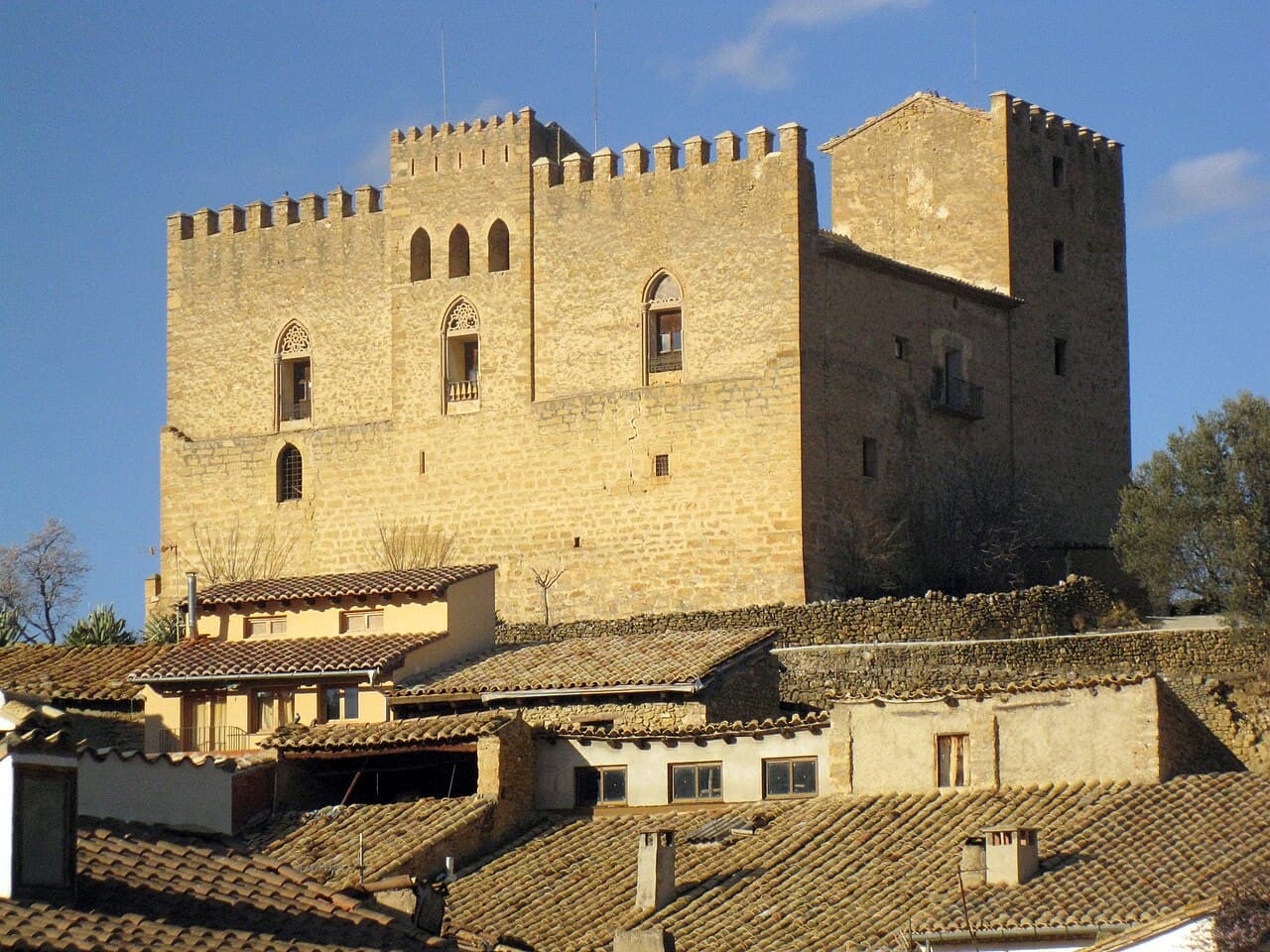
Todolella Castle stands as a significant example of a late medieval hill castle located in the village of Todolella, in the province of Castellón, Spain. Constructed originally in the 14th century, the castle was strategically positioned on a hilltop to oversee and control the surrounding territory, a common defensive practice of the period. Its elevated location provided natural protection and a commanding view over the landscape, which was critical during the turbulent times of the Middle Ages in the Iberian Peninsula.

Architectural design and layout

The castle's layout is characterized by four main structures arranged around a central patio, a typical feature in many Mediterranean castles that allowed for light and ventilation within the complex. This central courtyard served as a focal point for daily activities and gatherings. The surrounding buildings included various rooms designed for both residential and defensive purposes, reflecting the castle's dual role as a fortress and noble residence.

Defensive features

The castle's walls are constructed from robust masonry, built to withstand sieges and attacks. A notable feature is the presence of merlons atop the walls, which are the solid upright sections of a battlement, providing cover for defenders while allowing them to observe and shoot at attackers. These merlons were restored in recent conservation efforts, preserving the castle's medieval defensive character.

Residential transformation

In the 16th century, Todolella Castle underwent significant modifications to serve as a residence rather than solely a military fortress. This transformation reflects the broader Renaissance trend in Spain, where many castles were adapted to more comfortable living spaces while retaining their defensive elements. The residential buildings within the castle complex include rooms with more refined architectural details, indicating the status and lifestyle of its inhabitants during this period.

Historical context and significance

Todolella Castle was built during a period marked by frequent conflicts and territorial disputes in the Kingdom of Valencia, part of the Crown of Aragon. The castle played a role in regional defense and control, acting as a stronghold for local lords. Its construction and later adaptations illustrate the evolution of military architecture transitioning into Renaissance residential styles.

Preservation and current status

The castle is currently privately owned and inhabited, which has contributed to its good state of preservation. Recent restoration efforts have focused on maintaining the structural integrity of the walls and battlements, including the restoration of the merlons. Visitors can access Todolella Castle by booking in advance, allowing a rare glimpse into a privately held historic monument that combines medieval fortification with Renaissance domestic architecture.

Visiting Todolella Castle

While Todolella Castle is not open for casual walk-in visits, arranging a visit through prior booking offers an opportunity to explore its historic spaces and appreciate its architectural features. The castle's setting on a hill provides scenic views of the surrounding countryside, enhancing the visitor experience. The combination of medieval and Renaissance elements makes Todolella Castle a unique site for those interested in Spanish castle architecture and history.

Frequently asked questions about Todolella Castle

  • How do I arrange a visit to Todolella Castle? Visits are possible by booking in advance with the current private owners, as the castle is not open for casual tourism.
  • What period does Todolella Castle date from? The castle was originally built in the 14th century and remodeled in the 16th century during the Renaissance.
  • What are the main architectural features of Todolella Castle? Notable features include its four-structure layout around a central patio, robust masonry walls topped with merlons, and a blend of medieval and Renaissance elements.
  • Is Todolella Castle accessible for visitors with mobility issues? Due to its hilltop location and historic structure, accessibility may be limited; visitors should inquire in advance.
  • Why was Todolella Castle rebuilt in the 16th century? The rebuilding reflected a shift from purely defensive use to a more comfortable residential function, typical of Renaissance adaptations.
  • Are there guided tours available at Todolella Castle? Guided tours may be arranged through the owners upon booking, providing detailed insights into the castle's history and architecture.
  • What is the condition of Todolella Castle today? The castle is well preserved and has undergone recent restoration to maintain its defensive features and residential structures.

Frequently asked questions (FAQ)

How do I arrange a visit to Todolella Castle?
Visits are possible by booking in advance with the current private owners, as the castle is not open for casual tourism.
What period does Todolella Castle date from?
The castle was originally built in the 14th century and remodeled in the 16th century during the Renaissance.
What are the main architectural features of Todolella Castle?
Notable features include its four-structure layout around a central patio, robust masonry walls topped with merlons, and a blend of medieval and Renaissance elements.
Is Todolella Castle accessible for visitors with mobility issues?
Due to its hilltop location and historic structure, accessibility may be limited; visitors should inquire in advance.
Why was Todolella Castle rebuilt in the 16th century?
The rebuilding reflected a shift from purely defensive use to a more comfortable residential function, typical of Renaissance adaptations.
Are there guided tours available at Todolella Castle?
Guided tours may be arranged through the owners upon booking, providing detailed insights into the castle's history and architecture.
What is the condition of Todolella Castle today?
The castle is well preserved and has undergone recent restoration to maintain its defensive features and residential structures.

Photo gallery

Todolella Castle
Click to view

Photo by Enfo•CC BY-SA 3.0

1 photo • Click any image to view in full screen

Information

Hill Castle

Current owner

Private owner

Loading map...

Visitor reviews

No reviews yet. Been here? Write the first review and help other travelers!

Write the first review

Visited this castle? Share your experience

Your review helps other travelers and adds first-hand knowledge to our encyclopedia.
Write a review

(5/5)

0/2000 characters

Your review will be visible after admin approval

Nearby castles

8.3 km
Castell d'Olocau del Rei — Spain castle

Castell d'Olocau del Rei

, Spain

Castell d'Olocau del Rei is a notable example of a bastioned fortress located in Spain, representing the military architectural advancements of the early modern period. This type of fortress was designed primarily for defense against artillery, reflecting the evolution of fortification strategies from the medieval to the modern era. Historical context and significance The construction of bastioned fortresses like Castell d'Olocau del Rei became prominent during the 16th to 18th centuries, a time when the introduction of gunpowder and cannon warfare necessitated new defensive designs. These fortresses replaced the high medieval walls with angled bastions allowing for better coverage and overlapping fields of fire. Although specific historical records about Castell d'Olocau del Rei are limited, its architectural style places it firmly within this transformative period of military fortifications in Spain. Such fortresses were often part of broader defensive networks protecting important towns, trade routes, or strategic locations. Architectural features Bastions and walls The defining feature of Castell d'Olocau del Rei is its bastioned walls. These angular projections allowed defenders to cover adjacent walls with gunfire, eliminating blind spots common in earlier medieval castles. The walls are likely thick and sloped to better absorb and deflect cannonballs. Fortress layout Typical of bastioned fortresses, the layout would be geometrical, often star-shaped or polygonal, optimizing defensive capabilities. The fortress would include curtain walls connecting bastions, moats or ditches for additional protection, and controlled entry points such as fortified gates. Construction and materials The fortress was probably built using local stone and masonry techniques common in Spain during the early modern period. The use of robust materials was essential to withstand bombardment and sieges. The walls and bastions would be reinforced with earthworks to absorb artillery impact. Current condition and preservation While detailed information on the present state of Castell d'Olocau del Rei is scarce, bastioned fortresses in Spain often exist in varying conditions from well-preserved to ruins. Preservation efforts depend on local heritage management and the fortress's historical importance. Importance in Spanish military architecture Castell d'Olocau del Rei exemplifies the shift in fortification design responding to changing warfare technology. It reflects Spain's adaptation to the challenges posed by artillery and the need for modernized defenses during the early modern period. Visiting and cultural heritage Visitors interested in military history and architecture may find bastioned fortresses like Castell d'Olocau del Rei of significant interest. These sites offer insights into the strategic thinking and engineering skills of their time. However, specific visitor information such as accessibility, tours, or opening hours would require confirmation from local sources.

Post-Renaissance (17th–18th c.)
Details
12.5 km
Morella Castle — Spain castle

Morella Castle

Morella, Spain

Morella Castle stands as one of the most imposing and historically rich fortresses in the region of Morella, Spain. Its commanding position atop a natural rocky promontory, known as La Mola, has made it a strategic military site since prehistoric times. Archaeological evidence reveals continuous human occupation dating back to the 3rd millennium BCE, including remains from the Neolithic, Bronze, and Iron Ages. The castle's location enabled control over the natural passage from the interior of the Iberian Peninsula to the Mediterranean coast, highlighting its importance as a military and trade stronghold throughout history. The fortress as it appears today primarily dates from the 13th century, built during the period of Muslim rule in the Iberian Peninsula. The original Muslim builders incorporated characteristic elements of Islamic military architecture, adapting the fortress to the rugged terrain. Following the Christian Reconquista led by King Jaime I, the castle underwent significant modifications to meet the defensive needs of medieval European warfare. These adaptations included strengthening walls, adding towers, and reconfiguring internal spaces to accommodate the evolving military technology and tactics of the High Medieval period. Historical significance and military role Morella Castle's history is deeply intertwined with the complex political and military struggles of the Iberian Peninsula. Its strategic location made it a coveted prize for various powers. The site saw occupation and fortification by Iberian tribes, Romans, Visigoths, Muslims, and Christians, each leaving architectural and cultural imprints. Notably, the castle played a role in the legendary campaigns of El Cid, the Castilian nobleman and military leader, underscoring its importance during the medieval Reconquista. In later centuries, Morella Castle was a key stronghold during the War of Spanish Succession in the early 18th century and again during the Carlist Wars of the 19th century. In 1838, the castle was seized by Carlist forces under the command of Ramon Cabrera, a prominent Carlist general. The following year, the fortress was modernized under the supervision of Baron Wilhelm von Radhen, a Prussian military engineer, who introduced updates to its defenses reflecting advances in artillery and siege warfare. The castle sustained damage in 1840 during a bombardment by forces loyal to Espartero, which destroyed the powder magazine. One of the castle's towers, the Torre de la Pardala, commemorates Josefa Bosch, a local heroine who led resistance efforts against Napoleonic troops. Recognizing its cultural and historical value, Morella Castle was declared a historic-artistic monument on June 3, 1931, and it is now part of Spain's National Heritage registry. Architectural features and layout The castle is an exemplary hill castle that masterfully integrates the natural rocky terrain into its defensive structures. The fortress is organized into three main levels, each serving distinct military and administrative functions. Lower level: entrance and defensive walls The lowest level contains the main entrance and the Governor’s Palace, surrounded by robust defensive walls supported by fourteen towers. Most of these towers are semicircular and constructed using traditional stone masonry, a technique involving carefully shaped stones fitted together without mortar. Among these, the rectangular Torre del Pantó stands out as a well-preserved 15th-century structure, showcasing the castle's medieval stonework craftsmanship. Middle level: artillery batteries The middle tier was adapted to accommodate artillery batteries, reflecting the evolution of military technology with the introduction of gunpowder weaponry. This level's modifications demonstrate the castle's continuous use and strategic importance well into the post-medieval period. Upper level: main castle and keep The uppermost level houses the heart of the fortress, including the main castle and the Torre Celoquia, which served as the Christian keep during the 18th and 19th centuries. This tower, heavily bombarded in 1813, was originally constructed in the 13th century and features three vaulted floors. Interestingly, it lacks internal staircases, requiring access through adjacent buildings, a design choice common in medieval keeps to enhance defense. Access to the upper castle is via a staircase that originally had ninety steps, with 54 steps still intact today. This stairway leads through a fortified gate into the plaza de armas, the central courtyard used for military assembly and daily activities. At the plaza's center lies a Roman-era aljibe, a cistern used for water storage, now topped by a 19th-century sentry box and flanked by remnants of a guardhouse, illustrating the layering of historical periods within the castle. South of the plaza are remains of a building with a partial basement connected to the Torre Celoquia. This basement once housed a chapel dedicated to Santa Bárbara and Santa Magdalena until the 18th century, after which it was repurposed as a prison. The Torre Celoquia is topped with a typical medieval four-sided pitched roof designed to shed rainwater efficiently. Preservation and visitor experience Today, Morella Castle is well-preserved and accessible to visitors, with restoration efforts focused on conserving its extensive historical fabric. Entry to the castle is gained through the cloister of the Convent of San Francisco, adding an additional layer of historical context to the visitor experience. The castle offers a vivid glimpse into the military architecture of the High Medieval period, enriched by centuries of modifications reflecting changing defensive needs. Visitors can explore the castle's multiple levels, towers, and courtyards, each telling stories of the various civilizations that inhabited this strategic hilltop fortress. Morella Castle remains a symbol of the region's turbulent history and cultural heritage, attracting historians, architecture enthusiasts, and tourists alike. Its combination of natural defenses, robust stone masonry, and historical significance makes it a remarkable example of medieval military architecture in Spain.

High Medieval (11th–13th c.)
Details
18.3 km
Castellote Castle — Spain castle

Castellote Castle

Castellote, Spain

Castellote Castle is a remarkable example of a hill castle situated on a rocky outcrop overlooking the town of Castellote in Spain. Its strategic location atop a steep hill allowed it to dominate the surrounding landscape, particularly the Guadalop river gorge to the north. The castle's origins date back to the period of Muslim rule in the Iberian Peninsula, with the fortress likely established by Arabic builders before the mid-12th century. This early foundation is supported by church records mentioning Castellote as a settlement in 1148 and 1158, indicating the castle's presence by that time. Medieval origins and religious military orders The castle's history is closely tied to the turbulent Reconquista period. In 1168, King Alfonso II of Aragon recaptured Castellote Castle from Muslim forces, marking its transition to Christian control. By the late 12th century, around 1188, the local noble lord Gascón de Castellot joined the Order of the Holy Redeemer and transferred the castle to this religious military community. After the dissolution of this order in 1196, the property passed to the Knights Templar, a powerful and influential military order known for their role in the Crusades and castle-building across Europe. The Templars likely undertook significant construction work, shaping the castle into the form that largely endured for centuries. Their architectural contributions included robust defensive walls, towers, and a keep designed to withstand sieges. Following the suppression of the Templars in the early 14th century, control of Castellote Castle passed in 1317 to the Knights Hospitaller, who maintained possession for over four centuries until 1769. This long tenure by the Hospitallers helped preserve the castle's military and religious significance in the region. Architectural layout and defensive features Castellote Castle's design is adapted to its uneven, rocky terrain, resulting in an irregular layout approximately 130 meters long and 50 meters wide. The fortress features three staggered defensive enclosures that follow the natural slope of the hill, a tactical advantage that complicated enemy assaults. Historically, the castle had four concentric defensive layers, utilizing the terrain's inclines to create narrow, elongated fortifications that maximized defense. Access to the castle was originally controlled by a drawbridge, now replaced by a footpath starting near the nearby Church of San Miguel. Among the surviving structures are four towers, including the imposing main keep or tower of homage. This keep measures about 24 meters in length and 6 meters in width, with walls nearly three meters thick, indicative of its defensive purpose. The keep retains some original windows or lighting openings, suggesting it served both military and residential functions. The other towers include three rectangular and one triangular tower, whose vestiges remain preserved and documented. The square-shaped keep occupies a commanding position overlooking the surrounding landscape, especially the critical passage through the Guadalop river gorge. This placement underscores the castle's strategic role in controlling regional movement and defending the territory. Another notable architectural feature is a large rectangular hall approximately 25 meters long and 7 meters wide. This hall may have functioned as a chapel, as indicated by its splayed window openings topped with semicircular arches, a typical characteristic of Romanesque religious architecture. This suggests the castle was not only a military fortress but also had significant religious functions during its occupation by military orders. 19th-century military significance and destruction The castle's military importance extended well into the 19th century, particularly during the First Carlist War (1833–1840). In 1837, the Carlist claimant Don Carlos ordered General Cabrera to modernize and expand the fortress to serve as a Carlist stronghold in the Maestrazgo region. These upgrades were overseen by Lieutenant Colonel Manuel Brusco, a Portuguese officer, who enhanced the castle's defenses to withstand contemporary artillery warfare. In March 1840, the castle endured a significant siege by Liberal forces led by General Espartero. The siege involved intense artillery bombardment and fierce fighting, which resulted in the destruction of key defensive structures such as the Atalaya tower, bastions, embrasures, and the keep. After several days of resistance, the defenders surrendered on March 27, 1840. Following the Carlist defeat, Espartero ordered the castle to be completely dismantled, leading to its ruinous state. Modern conservation and cultural heritage In the 21st century, efforts have been made to stabilize and conserve the remains of Castellote Castle. Beginning in 2011, the local town council, supported by national ministries, initiated restoration work aimed at protecting the site as an important cultural heritage landmark. These conservation efforts focus on preserving the castle's historic footprint, stabilizing existing structures, and facilitating visitor access while respecting the ruins' authenticity. Today, Castellote Castle stands as a poignant reminder of the region's complex history, from its Muslim origins through its periods under the Knights Templar and Hospitaller orders, to its role in 19th-century conflicts. The castle's ruins offer valuable insights into medieval military architecture, religious military orders, and the evolution of fortifications in response to changing warfare technologies.

High Medieval (11th–13th c.)
Details