Castellote Castle
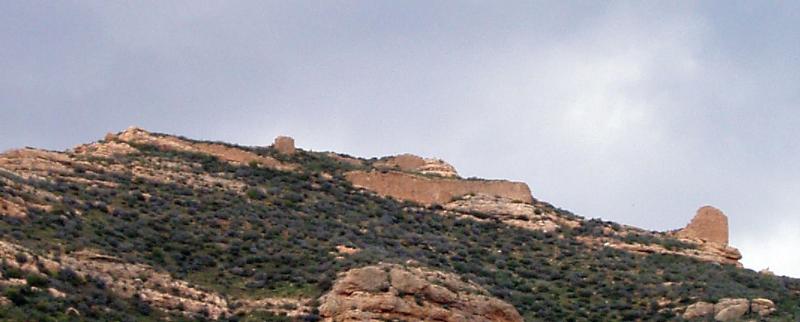
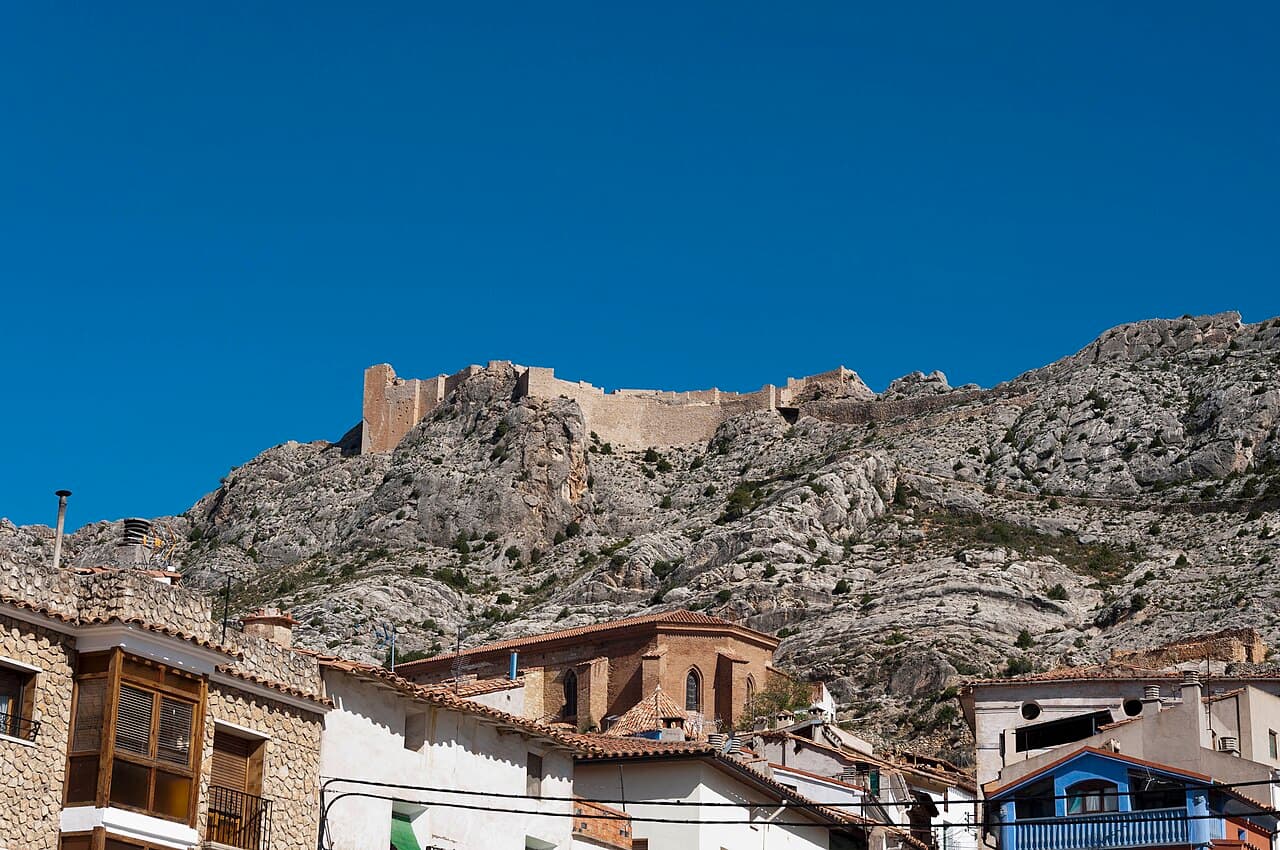
Castellote Castle is a remarkable example of a hill castle situated on a rocky outcrop overlooking the town of Castellote in Spain. Its strategic location atop a steep hill allowed it to dominate the surrounding landscape, particularly the Guadalop river gorge to the north. The castle's origins date back to the period of Muslim rule in the Iberian Peninsula, with the fortress likely established by Arabic builders before the mid-12th century. This early foundation is supported by church records mentioning Castellote as a settlement in 1148 and 1158, indicating the castle's presence by that time.
Medieval origins and religious military orders
The castle's history is closely tied to the turbulent Reconquista period. In 1168, King Alfonso II of Aragon recaptured Castellote Castle from Muslim forces, marking its transition to Christian control. By the late 12th century, around 1188, the local noble lord Gascón de Castellot joined the Order of the Holy Redeemer and transferred the castle to this religious military community. After the dissolution of this order in 1196, the property passed to the Knights Templar, a powerful and influential military order known for their role in the Crusades and castle-building across Europe.
The Templars likely undertook significant construction work, shaping the castle into the form that largely endured for centuries. Their architectural contributions included robust defensive walls, towers, and a keep designed to withstand sieges. Following the suppression of the Templars in the early 14th century, control of Castellote Castle passed in 1317 to the Knights Hospitaller, who maintained possession for over four centuries until 1769. This long tenure by the Hospitallers helped preserve the castle's military and religious significance in the region.
Architectural layout and defensive features
Castellote Castle's design is adapted to its uneven, rocky terrain, resulting in an irregular layout approximately 130 meters long and 50 meters wide. The fortress features three staggered defensive enclosures that follow the natural slope of the hill, a tactical advantage that complicated enemy assaults. Historically, the castle had four concentric defensive layers, utilizing the terrain's inclines to create narrow, elongated fortifications that maximized defense.
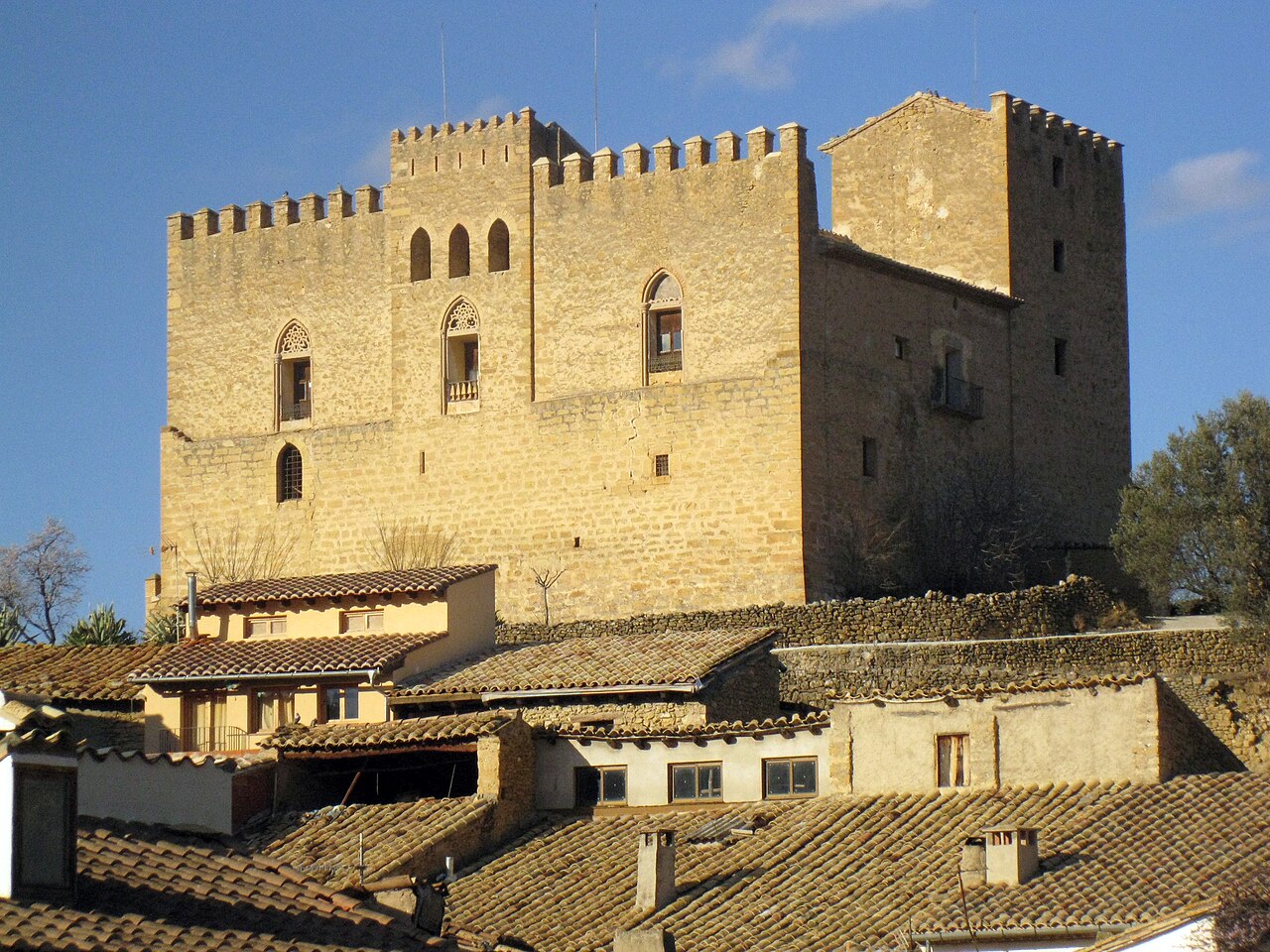
Access to the castle was originally controlled by a drawbridge, now replaced by a footpath starting near the nearby Church of San Miguel. Among the surviving structures are four towers, including the imposing main keep or tower of homage. This keep measures about 24 meters in length and 6 meters in width, with walls nearly three meters thick, indicative of its defensive purpose. The keep retains some original windows or lighting openings, suggesting it served both military and residential functions.
The other towers include three rectangular and one triangular tower, whose vestiges remain preserved and documented. The square-shaped keep occupies a commanding position overlooking the surrounding landscape, especially the critical passage through the Guadalop river gorge. This placement underscores the castle's strategic role in controlling regional movement and defending the territory.
Another notable architectural feature is a large rectangular hall approximately 25 meters long and 7 meters wide. This hall may have functioned as a chapel, as indicated by its splayed window openings topped with semicircular arches, a typical characteristic of Romanesque religious architecture. This suggests the castle was not only a military fortress but also had significant religious functions during its occupation by military orders.
19th-century military significance and destruction
The castle's military importance extended well into the 19th century, particularly during the First Carlist War (1833–1840). In 1837, the Carlist claimant Don Carlos ordered General Cabrera to modernize and expand the fortress to serve as a Carlist stronghold in the Maestrazgo region. These upgrades were overseen by Lieutenant Colonel Manuel Brusco, a Portuguese officer, who enhanced the castle's defenses to withstand contemporary artillery warfare.
In March 1840, the castle endured a significant siege by Liberal forces led by General Espartero. The siege involved intense artillery bombardment and fierce fighting, which resulted in the destruction of key defensive structures such as the Atalaya tower, bastions, embrasures, and the keep. After several days of resistance, the defenders surrendered on March 27, 1840. Following the Carlist defeat, Espartero ordered the castle to be completely dismantled, leading to its ruinous state.
Modern conservation and cultural heritage
In the 21st century, efforts have been made to stabilize and conserve the remains of Castellote Castle. Beginning in 2011, the local town council, supported by national ministries, initiated restoration work aimed at protecting the site as an important cultural heritage landmark. These conservation efforts focus on preserving the castle's historic footprint, stabilizing existing structures, and facilitating visitor access while respecting the ruins' authenticity.
Today, Castellote Castle stands as a poignant reminder of the region's complex history, from its Muslim origins through its periods under the Knights Templar and Hospitaller orders, to its role in 19th-century conflicts. The castle's ruins offer valuable insights into medieval military architecture, religious military orders, and the evolution of fortifications in response to changing warfare technologies.
Frequently asked questions (FAQ)
- How do I get to Castellote Castle?
- Castellote Castle is accessible via a footpath starting near the Church of San Miguel in the town of Castellote, Aragon, Spain. The path leads uphill to the castle ruins, which are situated on a rocky outcrop overlooking the town.
- What is the historical significance of Castellote Castle?
- Castellote Castle has a rich history dating back to Muslim rule in the Iberian Peninsula. It was later controlled by the Knights Templar and Knights Hospitaller, and played a key role during the First Carlist War in the 19th century.
- Can I visit the castle year-round?
- The castle ruins are generally open to visitors year-round, although access may be limited during adverse weather conditions. It is advisable to check local tourist information for any seasonal restrictions or guided tour availability.
- What architectural features are notable at Castellote Castle?
- Notable features include the main keep or tower of homage with thick walls and original windows, three additional towers including rectangular and triangular shapes, concentric defensive walls adapted to the terrain, and a large rectangular hall that may have served as a chapel.
- Is the castle suitable for families and children?
- While the castle ruins are an interesting historical site, the uneven terrain and steep paths may pose challenges for families with young children or those with mobility issues. Visitors should exercise caution and wear appropriate footwear.
Photo gallery

Information
Website
Visit websiteSources & official resources
Verify the information above using these authoritative references.
Loading map...
Visitor reviews
No reviews yet. Been here? Write the first review and help other travelers!
Write the first reviewVisited this castle? Share your experience
Your review helps other travelers and adds first-hand knowledge to our encyclopedia.