Morella Castle
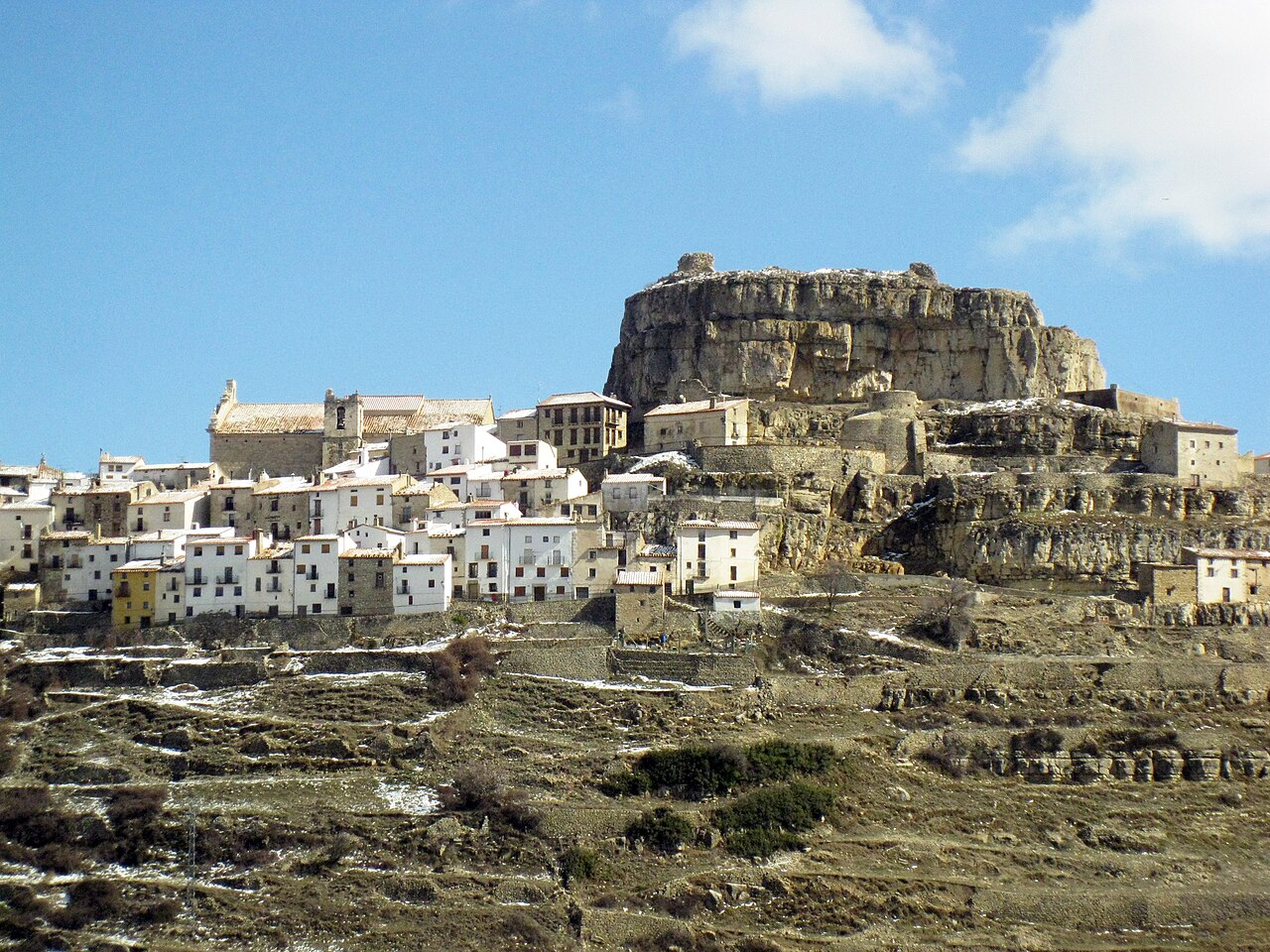
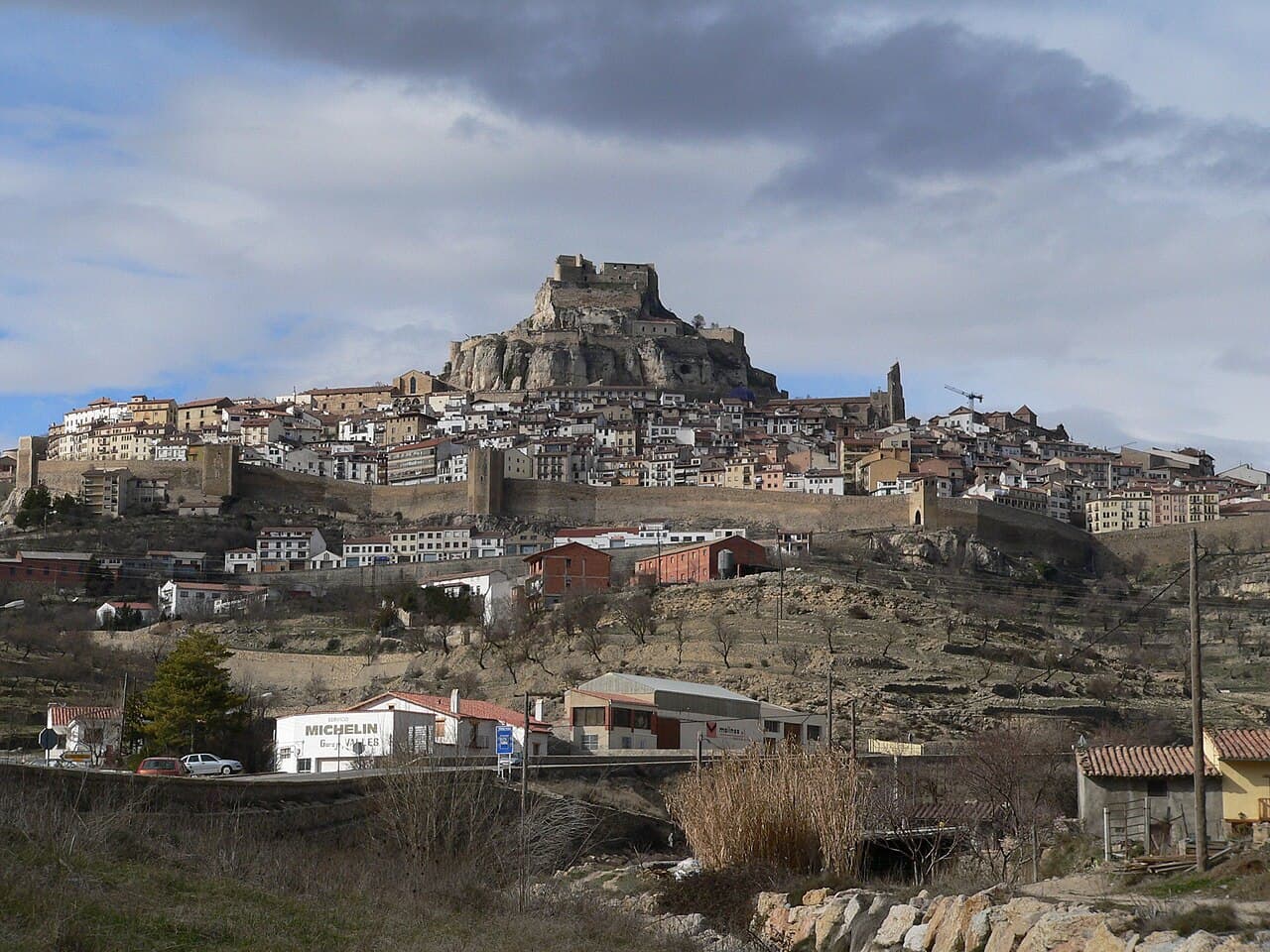
Morella Castle stands as one of the most imposing and historically rich fortresses in the region of Morella, Spain. Its commanding position atop a natural rocky promontory, known as La Mola, has made it a strategic military site since prehistoric times. Archaeological evidence reveals continuous human occupation dating back to the 3rd millennium BCE, including remains from the Neolithic, Bronze, and Iron Ages. The castle's location enabled control over the natural passage from the interior of the Iberian Peninsula to the Mediterranean coast, highlighting its importance as a military and trade stronghold throughout history.
The fortress as it appears today primarily dates from the 13th century, built during the period of Muslim rule in the Iberian Peninsula. The original Muslim builders incorporated characteristic elements of Islamic military architecture, adapting the fortress to the rugged terrain. Following the Christian Reconquista led by King Jaime I, the castle underwent significant modifications to meet the defensive needs of medieval European warfare. These adaptations included strengthening walls, adding towers, and reconfiguring internal spaces to accommodate the evolving military technology and tactics of the High Medieval period.
Historical significance and military role
Morella Castle's history is deeply intertwined with the complex political and military struggles of the Iberian Peninsula. Its strategic location made it a coveted prize for various powers. The site saw occupation and fortification by Iberian tribes, Romans, Visigoths, Muslims, and Christians, each leaving architectural and cultural imprints. Notably, the castle played a role in the legendary campaigns of El Cid, the Castilian nobleman and military leader, underscoring its importance during the medieval Reconquista.
In later centuries, Morella Castle was a key stronghold during the War of Spanish Succession in the early 18th century and again during the Carlist Wars of the 19th century. In 1838, the castle was seized by Carlist forces under the command of Ramon Cabrera, a prominent Carlist general. The following year, the fortress was modernized under the supervision of Baron Wilhelm von Radhen, a Prussian military engineer, who introduced updates to its defenses reflecting advances in artillery and siege warfare.
The castle sustained damage in 1840 during a bombardment by forces loyal to Espartero, which destroyed the powder magazine. One of the castle's towers, the Torre de la Pardala, commemorates Josefa Bosch, a local heroine who led resistance efforts against Napoleonic troops. Recognizing its cultural and historical value, Morella Castle was declared a historic-artistic monument on June 3, 1931, and it is now part of Spain's National Heritage registry.
Architectural features and layout
The castle is an exemplary hill castle that masterfully integrates the natural rocky terrain into its defensive structures. The fortress is organized into three main levels, each serving distinct military and administrative functions.
Lower level: entrance and defensive walls
The lowest level contains the main entrance and the Governor’s Palace, surrounded by robust defensive walls supported by fourteen towers. Most of these towers are semicircular and constructed using traditional stone masonry, a technique involving carefully shaped stones fitted together without mortar. Among these, the rectangular Torre del Pantó stands out as a well-preserved 15th-century structure, showcasing the castle's medieval stonework craftsmanship.
Middle level: artillery batteries
The middle tier was adapted to accommodate artillery batteries, reflecting the evolution of military technology with the introduction of gunpowder weaponry. This level's modifications demonstrate the castle's continuous use and strategic importance well into the post-medieval period.
Upper level: main castle and keep
The uppermost level houses the heart of the fortress, including the main castle and the Torre Celoquia, which served as the Christian keep during the 18th and 19th centuries. This tower, heavily bombarded in 1813, was originally constructed in the 13th century and features three vaulted floors. Interestingly, it lacks internal staircases, requiring access through adjacent buildings, a design choice common in medieval keeps to enhance defense.
Access to the upper castle is via a staircase that originally had ninety steps, with 54 steps still intact today. This stairway leads through a fortified gate into the plaza de armas, the central courtyard used for military assembly and daily activities. At the plaza's center lies a Roman-era aljibe, a cistern used for water storage, now topped by a 19th-century sentry box and flanked by remnants of a guardhouse, illustrating the layering of historical periods within the castle.
South of the plaza are remains of a building with a partial basement connected to the Torre Celoquia. This basement once housed a chapel dedicated to Santa Bárbara and Santa Magdalena until the 18th century, after which it was repurposed as a prison. The Torre Celoquia is topped with a typical medieval four-sided pitched roof designed to shed rainwater efficiently.
Preservation and visitor experience
Today, Morella Castle is well-preserved and accessible to visitors, with restoration efforts focused on conserving its extensive historical fabric. Entry to the castle is gained through the cloister of the Convent of San Francisco, adding an additional layer of historical context to the visitor experience.
The castle offers a vivid glimpse into the military architecture of the High Medieval period, enriched by centuries of modifications reflecting changing defensive needs. Visitors can explore the castle's multiple levels, towers, and courtyards, each telling stories of the various civilizations that inhabited this strategic hilltop fortress.
Morella Castle remains a symbol of the region's turbulent history and cultural heritage, attracting historians, architecture enthusiasts, and tourists alike. Its combination of natural defenses, robust stone masonry, and historical significance makes it a remarkable example of medieval military architecture in Spain.
Frequently asked questions (FAQ)
- What is the historical significance of Morella Castle?
- Morella Castle is a prominent medieval fortress located in the town of Morella, Spain. It played a crucial role in the defense of the region during various conflicts, including the Reconquista, and symbolizes the rich history and culture of the area.
- When was Morella Castle built?
- Morella Castle dates back to the 13th century, originally constructed during the time of the Christian reconquest of Spain. Over the centuries, it has undergone several renovations and expansions, reflecting the architectural styles of different eras.
- What are the opening hours for Morella Castle?
- Morella Castle is typically open to visitors from 10:00 AM to 7:00 PM during the high season, and hours may vary in the off-peak months. It is advisable to check the official website or contact local tourism offices for the most current information before your visit.
- Can I access Morella Castle with limited mobility?
- While Morella Castle offers breathtaking views and fascinating history, it is important to note that the castle's terrain includes steep paths and uneven surfaces. Accessibility can be challenging, so visitors with limited mobility should plan accordingly and may want to contact local guides for assistance.
- What is the ticket price for visiting Morella Castle?
- The entrance fee for Morella Castle is generally around €5 for adults, with discounts available for students and seniors. Family tickets and group rates may also be offered, so it's best to inquire at the ticket office upon arrival.
- When is the best time to visit Morella Castle?
- The best time to visit Morella Castle is during the spring and fall months when the weather is mild and pleasant. These seasons also feature fewer tourists, allowing for a more enjoyable and leisurely exploration of the castle and its surroundings.
- Are there any nearby attractions to visit after Morella Castle?
- Yes, the town of Morella is rich in cultural heritage, with nearby attractions such as the Church of Santa María la Mayor and the fascinating medieval streets of the town itself. Additionally, the surrounding natural landscapes offer opportunities for hiking and enjoying the scenic beauty of the region.
Photo gallery

Photo by Kriegerkalle•Public domain
Information
Website
Visit websiteSources & official resources
Verify the information above using these authoritative references.
Loading map...
Visitor reviews
No reviews yet. Been here? Write the first review and help other travelers!
Write the first reviewVisited this castle? Share your experience
Your review helps other travelers and adds first-hand knowledge to our encyclopedia.