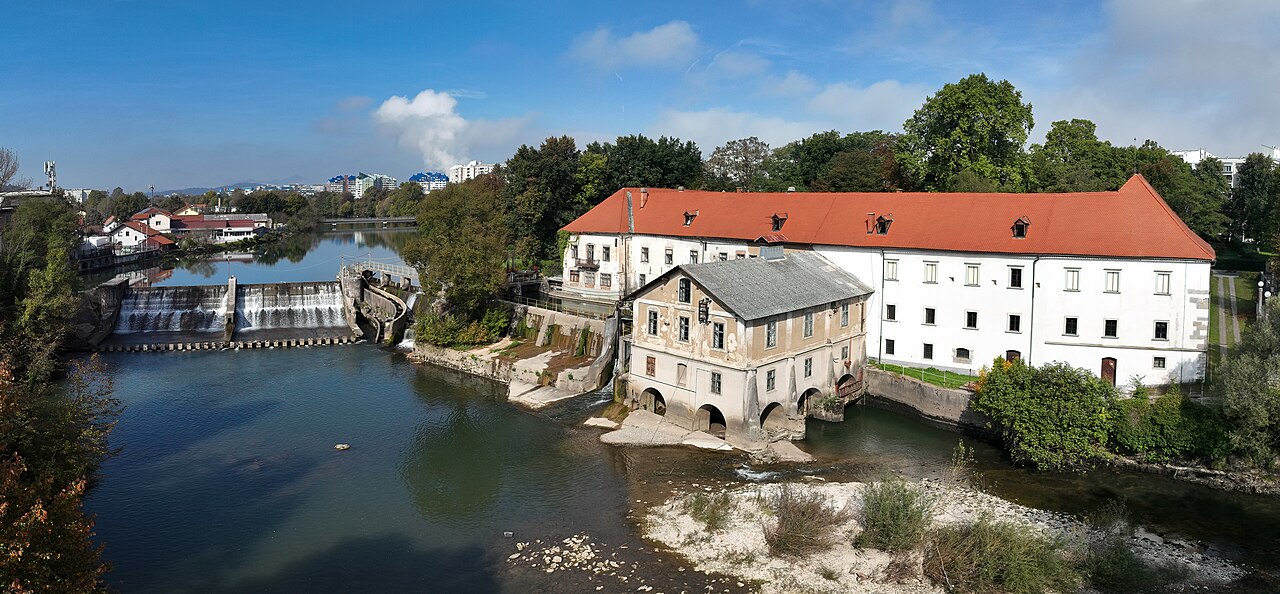
Tivoli Castle

Cast-iron dogs and tivoli castle in ljubljana
Ljubljana, Ljubljana, Slovenia
Renaissance (15th–17th c.)
Well Preserved

Tivoli Castle stands as a prominent historical mansion nestled within Tivoli Park, the largest and most cherished green space in Ljubljana, Slovenia. This castle is not only an architectural landmark but also a cultural symbol enriched with centuries of history and artistic heritage. Visitors exploring Tivoli Park often encounter the enigmatic cast-iron dogs, four statues that have become iconic guardians of the castle's entrance, each with a fascinating backstory linked to the renowned Austrian sculptor Anton Dominik Fernkorn.

The cast-iron dogs were crafted circa 1864 by Fernkorn, an acclaimed 19th-century animalier known for his detailed and lifelike sculptures. Positioned gracefully at the foot of Rožnik Hill on the staircase leading to Tivoli Castle, these statues captivate visitors with their striking presence and curious detail — notably, the absence of tongues. This missing feature has inspired a popular urban legend claiming that Fernkorn, a perfectionist, was so distraught over this oversight that he took his own life. However, historical records clarify that Fernkorn did not commit suicide but was institutionalized due to illness in 1865 and died shortly thereafter. This poignant history adds a layer of mystery and human drama to the artistic legacy of the dogs.

Historical evolution of tivoli castle

The site of Tivoli Castle has a rich history dating back to the early 15th century when a defensive tower stood above the woods near what is now Tivoli Park. This tower belonged to Georg Apfalterer, an ally of Duke Frederick, who later became Holy Roman Emperor Frederick III. The tower was destroyed in 1440 during conflicts involving Frederick II, Count of Celje. The current mansion was constructed in the 17th century atop the ruins of an earlier Renaissance-period castle, reflecting the architectural transitions of the period.

Originally owned by the Jesuit order, the mansion passed to the Diocese of Ljubljana after the Jesuits were suppressed in 1773. It served as the bishop's summer residence and was surrounded by extensive orchards, reflecting its status and the pastoral lifestyle of its ecclesiastical owners.

Neoclassical transformation and notable ownership

In the mid-19th century, the castle underwent significant changes when it was acquired by Austrian Emperor Francis Joseph I. In 1852, the emperor gifted the mansion to the esteemed Habsburg marshal Joseph Radetzky von Radetz, a celebrated military leader. Radetzky undertook a substantial renovation of the mansion, embracing the Neoclassical architectural style which shaped the castle's present-day appearance. This style is characterized by its elegant symmetry, classical proportions, and restrained decorative elements, marking a departure from the earlier Renaissance influences.

Radetzky spent much of his retirement at Tivoli Castle alongside his wife, Francisca von Strassoldo Grafenberg, a noblewoman from the local Carniolan aristocracy. His contributions extended beyond the mansion itself to the surrounding Tivoli Park, where he influenced the landscape's arrangement and public accessibility.

Radetzky statue and legacy

A full-size cast iron statue of Joseph Radetzky was prominently displayed on the steps in front of Tivoli Castle from 1882 until 1918. This statue was awarded a prize at the Great Exhibition in London in 1851 and remains a significant artifact preserved by the City Museum of Ljubljana. While the statue itself was removed, its pedestal still marks the original site, serving as a historical reminder of Radetzky's lasting influence on the area.

Modern uses and cultural significance

In 1863, the mansion was purchased by the Municipality of Ljubljana. Over the years, Tivoli Castle has served various functions, including as a poorhouse and later subdivided into condominiums, reflecting the changing social and urban dynamics of Ljubljana.

Since 1967, the castle has been the home of the International Centre of Graphic Arts, a prestigious cultural institution that hosts exhibitions, workshops, and events promoting contemporary graphic arts. This modern use highlights the castle's continued relevance as a hub of artistic and cultural activity.

Architectural features and park setting

Tivoli Castle is an excellent example of a Renaissance mansion with later Neoclassical renovations. Its elegant façade, balanced proportions, and refined decorative details embody the architectural trends of the 17th and 19th centuries. The castle is set within the expansive Tivoli Park, which combines natural beauty with designed landscapes, including orchards, walking paths, and open green spaces.

The presence of the cast-iron dogs at the entrance adds a unique artistic element to the site, blending sculpture with architectural heritage. These statues not only enhance the visual appeal but also invite visitors to engage with the local history and folklore surrounding the castle.

The cast-iron dogs: artistic and cultural importance

The four cast-iron dogs are emblematic of 19th-century sculptural art in Ljubljana and represent the skill and creativity of Anton Dominik Fernkorn. Their detailed craftsmanship and the intriguing story behind their missing tongues have made them a beloved and mysterious feature of Tivoli Park. They symbolize the intersection of art, myth, and history, attracting both casual visitors and art enthusiasts.

Visiting tivoli castle and the dogs

Today, Tivoli Castle and its cast-iron dogs are accessible to the public as part of the park's cultural attractions. Visitors can enjoy the harmonious blend of historical architecture, landscaped gardens, and sculptural art. The castle's role as a cultural center ensures that it remains a vibrant location for exhibitions and events, enriching Ljubljana's artistic landscape.

Exploring the castle and the cast-iron dogs offers a unique insight into Ljubljana's historical evolution, artistic heritage, and the stories that shape its identity. The castle's setting within Tivoli Park makes it an ideal destination for those interested in history, architecture, and outdoor leisure.

Frequently asked questions (FAQ)

What is the historical significance of Cast-Iron Dogs of Tivoli Castle?
The Cast-Iron Dogs of Tivoli Castle is a notable example of 19th-century architecture in Slovenia, reflecting the artistic trends of the period. The castle is renowned for its unique cast-iron sculptures and its role as a cultural hub during the time of the Austro-Hungarian Empire.
When was Tivoli Castle built?
Tivoli Castle was constructed in the late 19th century, specifically between 1885 and 1886. It was designed as a residence for the wealthy and has since become a significant landmark in Ljubljana.
Is it possible to visit Tivoli Castle?
Yes, Tivoli Castle is open to visitors throughout the year. Guests can explore its beautiful grounds, admire the architectural details, and learn more about its history through guided tours.
What are the opening hours for Tivoli Castle?
Tivoli Castle typically opens at 10 AM and closes at 6 PM, but hours may vary seasonally. It is advisable to check the official website for the most current information before planning your visit.
Can I purchase tickets online for Tivoli Castle?
Yes, tickets for Tivoli Castle can be purchased online through the official website. This option enables visitors to secure their entry in advance and avoid long queues on arrival.
What is the best time to visit Tivoli Castle?
The best time to visit Tivoli Castle is during the spring and early autumn when the weather is pleasant, and the gardens are in full bloom. Visiting during weekdays can also help avoid crowds.
How accessible is Tivoli Castle for visitors with disabilities?
Tivoli Castle is committed to being accessible for all visitors, with ramps and designated paths. However, some areas may have limited access due to the historical nature of the building, so it is advisable to inquire in advance regarding specific needs.
Are there any nearby attractions to Tivoli Castle?
Yes, Tivoli Castle is located near several attractions, including the beautiful Tivoli Park and the Ljubljana Zoo. Visitors can enjoy a full day of exploration in the area, taking in nature and culture.
What are the ticket prices for visiting Tivoli Castle?
Ticket prices for Tivoli Castle vary depending on the visitor's age and the type of tour selected. Discounts may be available for students, seniors, and groups, so it is worth checking the website for detailed pricing information.

Information

Palace Castle

Loading map...

Visitor reviews

No reviews yet. Been here? Write the first review and help other travelers!

Write the first review

Visited this castle? Share your experience

Your review helps other travelers and adds first-hand knowledge to our encyclopedia.
Write a review

(5/5)

0/2000 characters

Your review will be visible after admin approval

Nearby castles

1.4 km
Lublana — Slovenia castle

Lublana

Ljubljana, Slovenia

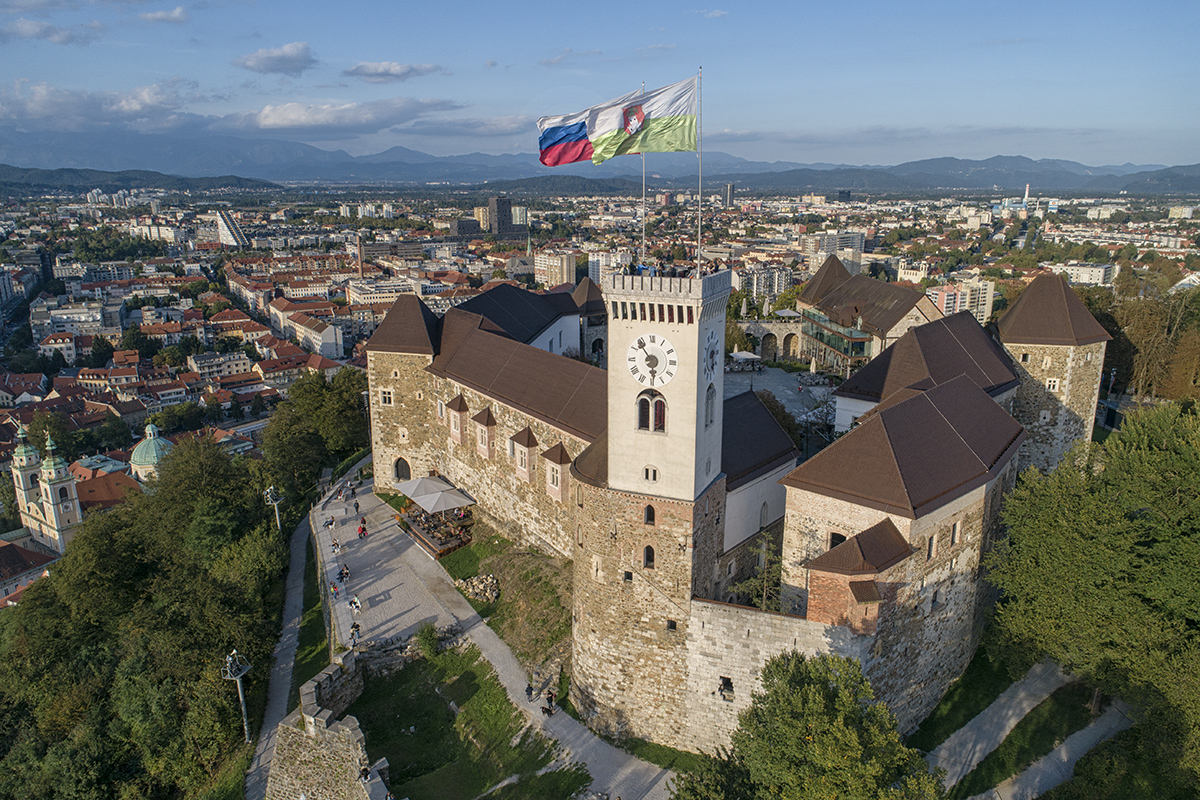
Ljubljana Castle stands prominently on Castle Hill, overlooking the downtown area of Ljubljana, the capital of Slovenia. This late-medieval bastioned fortress is not only a key historical landmark but also a vibrant cultural venue attracting visitors from around the world. Its strategic location atop the hill has made it a crucial defensive and administrative center through centuries of regional history. Ancient origins and early settlement Archaeological evidence reveals that the site of Ljubljana Castle has been continuously inhabited since around 1200 BC, during the transition from the Bronze Age to the Iron Age. Early settlers of the so-called "urn culture" likely established a fortified settlement here, protected by earthworks and wooden palisades. This prehistoric occupation reached its zenith in the 9th and 8th centuries BC. Later, between 100 and 50 BC, the Romans established a military garrison on the left bank of the Ljubljanica River, founding the settlement of Emona. Remnants of Roman defensive walls still survive, marking the area's importance in antiquity. However, Emona was destroyed in the 5th century AD during the Hunnic invasions, marking the end of Roman dominance in the region. Medieval development and the house of sponheim The early medieval history of the hill remains somewhat obscure until the 12th century. In 1106, the castle and surrounding lands came under the control of the Sponheim family, princes of Carinthia. By 1200, the settlement on the right bank of the Ljubljanica River had grown sufficiently to be granted town rights, and the Sponheims erected a castle on the hill overlooking the town. Initially, this fortress was likely constructed mainly of wood, with only the princely palatium built in stone. The Sponheim dynasty ruled the area for over 150 years until the death of Ulrich Spanheim in 1269. The following year, King Ottokar II of Bohemia seized Ljubljana and its castle. After Ottokar's defeat and death at the Battle of Marchfeld in 1278, the Habsburgs, under Rudolf I, took control of the region. Over the next century, the castle changed hands several times before becoming hereditary property of the Habsburgs in 1335. Ljubljana was elevated to the capital of the Duchy of Carniola in 1364, cementing the castle's administrative importance. Fortification against turkish invasions and architectural transformation In response to the growing Ottoman threat in the 15th century, significant defensive upgrades were undertaken. Between 1485 and 1495, the original Sponheim castle was demolished and replaced with a modern fortress adapted for artillery warfare. The new castle featured an irregular plan conforming to the hill's shape, with defensive walls integrated with the city's fortifications. The main entrance was originally approached via a northern drawbridge. The castle suffered damage during an earthquake in 1511 but was subsequently rebuilt and expanded throughout the 16th and 17th centuries. New residential, economic, and military buildings were added around the courtyard. A new southern entrance was created in a pentagonal tower, featuring a double drawbridge, enhancing the fortress's defense capabilities. Decline and changing uses from the 18th century onwards By the mid-18th century, Ljubljana Castle's military significance declined. It was repurposed as an arsenal and gunpowder storage, which posed a fire hazard. Plans to demolish the castle in the 1790s were abandoned following the French occupation in 1797. During the Napoleonic Wars, the castle served as barracks and a military hospital. After Austrian restoration in 1815, the castle was converted into a prison, a function it maintained until the 1895 Easter earthquake. During this period, the central courtyard was planted with trees and used as a prison yard. In 1905, the municipality purchased the castle and adapted parts of it for residential use, housing families until the 1960s. 20th century restoration and cultural renaissance Extensive restoration began in the late 1960s and continued for over three decades, transforming the castle into a cultural hub. Today, Ljubljana Castle hosts exhibitions, concerts, theater performances, and weddings, making it a lively center of cultural activity. The castle is accessible by road, hiking trails, and since 2006 by a funicular railway, which ascends the hill along the medieval city walls. The funicular enhances visitor access, linking the castle to the city center efficiently. Architectural highlights and notable features Castle chapel and towers The oldest surviving structure is the castle chapel, dedicated to St. George, St. Pancras, and St. Helena, originally consecrated in 1489. The chapel retains Gothic elements alongside Baroque renovations from the 18th century. Several medieval towers remain, including the Archers' Tower, Frederick's Tower, the pentagonal tower, and the Tower of Erasmus, historically used as a noble prison. The walls of the Tower of Erasmus bear carved coats of arms, including that of the notorious baron Erasmus Luegger. Defensive walls and panoramic terrace The castle's defensive walls connect the various towers and provide a panoramic terrace offering sweeping views of Ljubljana and the surrounding landscape. The terrace was historically a summer retreat and now serves as a popular vantage point for visitors. Prison and underground spaces The prison area lies between the castle walls and natural rock formations, accessed only from the courtyard level by lowering prisoners with ropes or chains. Conditions were harsh, with no roof and minimal shelter. The castle also contains cisterns and underground galleries that historically collected and stored water. Modern additions and cultural facilities The castle includes a modern building from the 1980s housing wedding rooms, a cafeteria, and a souvenir shop. The Slovenian History Museum occupies part of the former gunpowder store, and art exhibitions are held throughout the castle. The virtual museum in the panoramic tower presents the castle's history in multiple languages. Cultural events and visitor experience Visitors can enjoy free access to the castle courtyard, which features cafes and galleries showcasing Slovenian craftsmanship. The castle hosts a range of cultural events, including concerts, theater performances, outdoor cinemas, and the annual medieval day in September. Wedding ceremonies are held regularly, adding to the castle's vibrant atmosphere. The castle's location and historical significance are symbolized on Ljubljana's coat of arms, which features the castle topped by a dragon, a legendary city emblem.

Late Medieval (14th–15th c.)
Details
5.5 km
Fuzine Castle — Slovenia castle

Fuzine Castle

Ljubljana, Slovenia

Fužine Castle stands as a remarkable example of Renaissance architecture in the heart of Ljubljana, Slovenia. Constructed between 1528 and 1557, the castle was commissioned by two prominent local merchants, Veit Khisl and Hans Weilhaimer. Veit Khisl notably served multiple terms as the Mayor of Ljubljana, reflecting the castle's connection to the city's elite during the 16th century. Built strategically near a crossing point over the Ljubljanica river's rapids, the castle was designed both as a fortified residence and a symbol of wealth and power.Architectural design and fortificationsThe castle is classified as a hill castle, situated on elevated terrain to oversee the river crossing. Its defensive layout features a distinctive moat encircling the structure, which was accessible by a stone bridge leading to the main entrance. The castle's design includes five towers: one at each of the four corners and an additional tower positioned above the entrance gate. These towers served both defensive and residential functions, typical of Renaissance fortifications that combined military utility with noble living quarters.The castle's walls are thick and robust, constructed to withstand potential attacks during a period when regional conflicts and Ottoman incursions were a concern. The Renaissance style is evident not only in the castle's layout but also in its decorative elements, including wall paintings inside the castle that show a blend of Renaissance and later Baroque influences.Interior features and artistic elementsInside Fužine Castle, visitors can find remnants of Renaissance and Baroque wall paintings that decorate several rooms, offering insight into the artistic tastes and cultural influences of the castle's inhabitants. A particularly notable feature is the fragment of a ceiling painting preserved on the wooden ceiling of the castle chapel, which reflects the religious and artistic sensibilities of the period.The castle's interiors have been adapted through the centuries to various uses, but these artistic elements have been carefully preserved or restored to maintain the historical ambiance. The combination of defensive architecture and refined decoration illustrates the dual role of the castle as both a fortress and a noble residence.Historical uses and transformationsThroughout its history, Fužine Castle has undergone several functional transformations reflecting the economic and industrial development of the region. Initially built as a fortified residence, the castle later housed an iron smelting works, a smithy, a glassworks, and a paper pulping mill. These industrial uses highlight the castle's integration into the local economy beyond its original defensive and residential purposes.In the 20th century, the castle served as ancillary premises for a power plant, demonstrating further adaptation to modern industrial needs. Despite these changes, the castle's structural integrity and Renaissance character were preserved, allowing for its eventual restoration and cultural reuse.Restoration and current functionIn 1992, Fužine Castle underwent a thorough renovation led by the architect Peter Gabrijelčič. This restoration aimed to preserve the castle's historical features while adapting it for contemporary use. Since then, the castle has been home to the Museum of Architecture and Design, which showcases Slovenian architectural heritage and design innovation.The museum's presence has revitalized the castle, making it a cultural landmark in Ljubljana. Visitors can explore the castle's architectural features, view exhibitions on architecture and design, and appreciate the preserved Renaissance and Baroque artistic elements. The castle's location near the Ljubljanica river and its historical significance make it an important destination for those interested in Slovenian history and architecture.Fužine castle in the context of Slovenian heritageFužine Castle is one of the few castles in Slovenia that has retained its original Renaissance character without significant alteration to its fundamental structure. Its combination of defensive towers, moat, and decorative interiors provides valuable insight into the architectural and social history of the region during the 16th century.The castle's adaptive reuse over centuries—from a noble residence to industrial site and now a museum—reflects broader trends in the preservation and functional transformation of historic buildings across Europe. It remains a key example of how Renaissance architecture was interpreted and realized in the Slovenian context, bridging medieval defensive needs with early modern aesthetic and residential ambitions.

Renaissance (15th–17th c.)
Details
10.8 km

Jablje Castle

Loka pri Mengšu, Slovenia

Jablje Castle is a significant Renaissance castle located in Loka pri Mengšu, Slovenia. Its origins trace back to the first mention of a castle on this site in 1268, although the current structure was constructed around 1530 by the noble house of Lamberg. This castle exemplifies the architectural transition and noble residence styles of the Renaissance period in the region. Historical ownership and transformations Throughout its history, Jablje Castle changed ownership multiple times, reflecting the shifting political and social dynamics of the area. After the Lambergs, the castle passed to the Rasp family and subsequently to the barons Mosconi. From 1780 until the end of World War II, it was owned by the barons Lichtenberg, who maintained it as a noble residence. Despite the turmoil of the 20th century, including World War II, the castle survived largely intact. However, following the war, it was nationalized and suffered significant looting. The castle's function shifted dramatically during the post-war period: initially converted into apartments, it later served as an experimental facility for the Biotechnical Faculty of the University of Ljubljana. These uses impacted the castle's interior and preservation state. Architectural features and artistic highlights The castle is a fine example of Renaissance architecture in Slovenia, characterized by its robust stone construction and defensive features typical of the period. The structure includes a central courtyard surrounded by residential buildings, fortified walls, and towers that emphasize both defense and noble status. One of the castle's most remarkable artistic treasures is its set of Baroque frescoes painted by Franc Jelovšek. These frescoes are notable for their vibrant colors and unique subjects, including an unusual depiction of a camel-riding Chinese tambourine player, which stands out as a rare iconographic motif in Slovenian castle art. These artworks contribute significantly to the cultural and historical value of the castle. Modern restoration and current use Between 1999 and 2006, Jablje Castle underwent a thorough renovation that restored much of its Renaissance character and preserved its valuable frescoes. This restoration was crucial in stabilizing the structure and making it suitable for modern use. In 2008, during Slovenia's presidency of the European Union, the castle served as a major protocol site, highlighting its importance as a cultural and diplomatic venue. Today, it houses the Center for European Perspective, which hosts various events and activities related to European integration and culture. Visiting information and cultural significance The castle is recognized as a cultural monument, reflecting its historical, architectural, and artistic significance in Slovenia. It is open to visitors every other Saturday at 11:00, with additional appointments available for groups, allowing the public to explore its rich heritage and unique artworks. Visitors can appreciate the castle's blend of Renaissance architecture and Baroque artistic elements, as well as its role in Slovenian history from medieval times through the modern era. Its preservation and adaptive reuse illustrate the challenges and successes in maintaining historical sites in contemporary contexts.

Renaissance (15th–17th c.)
Details