Fuzine Castle
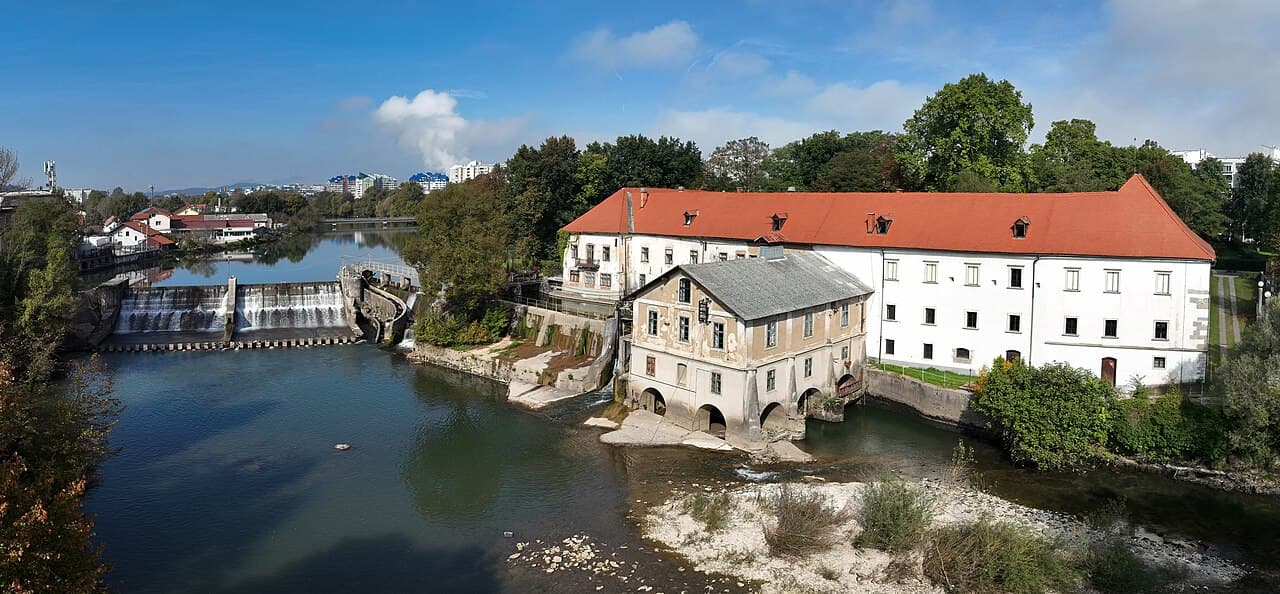
Fužine Castle stands as a remarkable example of Renaissance architecture in the heart of Ljubljana, Slovenia. Constructed between 1528 and 1557, the castle was commissioned by two prominent local merchants, Veit Khisl and Hans Weilhaimer. Veit Khisl notably served multiple terms as the Mayor of Ljubljana, reflecting the castle's connection to the city's elite during the 16th century. Built strategically near a crossing point over the Ljubljanica river's rapids, the castle was designed both as a fortified residence and a symbol of wealth and power.
Architectural design and fortifications
The castle is classified as a hill castle, situated on elevated terrain to oversee the river crossing. Its defensive layout features a distinctive moat encircling the structure, which was accessible by a stone bridge leading to the main entrance. The castle's design includes five towers: one at each of the four corners and an additional tower positioned above the entrance gate. These towers served both defensive and residential functions, typical of Renaissance fortifications that combined military utility with noble living quarters.
The castle's walls are thick and robust, constructed to withstand potential attacks during a period when regional conflicts and Ottoman incursions were a concern. The Renaissance style is evident not only in the castle's layout but also in its decorative elements, including wall paintings inside the castle that show a blend of Renaissance and later Baroque influences.
Interior features and artistic elements
Inside Fužine Castle, visitors can find remnants of Renaissance and Baroque wall paintings that decorate several rooms, offering insight into the artistic tastes and cultural influences of the castle's inhabitants. A particularly notable feature is the fragment of a ceiling painting preserved on the wooden ceiling of the castle chapel, which reflects the religious and artistic sensibilities of the period.
The castle's interiors have been adapted through the centuries to various uses, but these artistic elements have been carefully preserved or restored to maintain the historical ambiance. The combination of defensive architecture and refined decoration illustrates the dual role of the castle as both a fortress and a noble residence.
Historical uses and transformations
Throughout its history, Fužine Castle has undergone several functional transformations reflecting the economic and industrial development of the region. Initially built as a fortified residence, the castle later housed an iron smelting works, a smithy, a glassworks, and a paper pulping mill. These industrial uses highlight the castle's integration into the local economy beyond its original defensive and residential purposes.
In the 20th century, the castle served as ancillary premises for a power plant, demonstrating further adaptation to modern industrial needs. Despite these changes, the castle's structural integrity and Renaissance character were preserved, allowing for its eventual restoration and cultural reuse.
Restoration and current function
In 1992, Fužine Castle underwent a thorough renovation led by the architect Peter Gabrijelčič. This restoration aimed to preserve the castle's historical features while adapting it for contemporary use. Since then, the castle has been home to the Museum of Architecture and Design, which showcases Slovenian architectural heritage and design innovation.
The museum's presence has revitalized the castle, making it a cultural landmark in Ljubljana. Visitors can explore the castle's architectural features, view exhibitions on architecture and design, and appreciate the preserved Renaissance and Baroque artistic elements. The castle's location near the Ljubljanica river and its historical significance make it an important destination for those interested in Slovenian history and architecture.
Fužine castle in the context of Slovenian heritage
Fužine Castle is one of the few castles in Slovenia that has retained its original Renaissance character without significant alteration to its fundamental structure. Its combination of defensive towers, moat, and decorative interiors provides valuable insight into the architectural and social history of the region during the 16th century.
The castle's adaptive reuse over centuries—from a noble residence to industrial site and now a museum—reflects broader trends in the preservation and functional transformation of historic buildings across Europe. It remains a key example of how Renaissance architecture was interpreted and realized in the Slovenian context, bridging medieval defensive needs with early modern aesthetic and residential ambitions.
Frequently asked questions (FAQ)
- How do I get to Fuzine Castle?
- Fuzine Castle is conveniently located near Ljubljana, Slovenia. You can reach it by public transport or by car, with ample parking available nearby. Local bus services frequently connect the castle with the city center, making it easily accessible for visitors.
- What is the historical significance of Fuzine Castle?
- Fuzine Castle dates back to the late 14th century and has served various roles throughout its history, including as a noble residence and a military outpost. Its architecture reflects the medieval period's defensive strategies, providing insight into Slovenia's rich historical tapestry. Today, it stands as a monument to the region's cultural heritage.
- When was Fuzine Castle built?
- Fuzine Castle was constructed in the late 1300s, making it one of the oldest structures in the Ljubljana area. Over the centuries, it has undergone several renovations, which have helped preserve its historical integrity. The castle's long history is evident in its architecture and the stories it tells.
- Can I visit Fuzine Castle with children?
- Yes, Fuzine Castle is family-friendly and welcomes visitors of all ages. There are educational programs and guided tours designed for children, making it an enriching experience for the whole family. The castle grounds also provide ample space for children to explore safely.
- Why is Fuzine Castle a popular tourist attraction?
- Fuzine Castle attracts visitors due to its stunning architecture, rich history, and beautiful surrounding landscape. Its strategic location near Ljubljana makes it an ideal day trip destination for tourists. Additionally, the castle often hosts events and exhibitions, enhancing its appeal.
- Is it possible to hold events at Fuzine Castle?
- Yes, Fuzine Castle offers facilities for hosting various events, including weddings, corporate gatherings, and cultural activities. The picturesque setting and historical ambiance provide a unique backdrop for any occasion. It is advisable to contact the castle management for specific details and availability.
- What are the opening hours for Fuzine Castle?
- Fuzine Castle is generally open to visitors from 10 AM to 6 PM, but it's recommended to check their official website for seasonal variations. Special opening hours may be in effect during holidays or for specific events. Planning your visit in advance ensures you can make the most of your experience.
- What are the ticket prices for visiting Fuzine Castle?
- Ticket prices for Fuzine Castle are quite reasonable, typically ranging from €5 to €10 for adults, with discounts available for students and seniors. Children under a certain age may enter for free. It's best to check the official website for the latest pricing and any special promotions.
- What are some nearby attractions to Fuzine Castle?
- In addition to Fuzine Castle, visitors can explore several nearby attractions, such as Ljubljana's charming Old Town, Tivoli Park, and the Dragon Bridge. These sites offer a rich blend of culture, history, and natural beauty. Combining your visit can create a fulfilling day of exploration in the area.
Photo gallery

Information
Loading map...
Visitor reviews
No reviews yet. Been here? Write the first review and help other travelers!
Write the first reviewVisited this castle? Share your experience
Your review helps other travelers and adds first-hand knowledge to our encyclopedia.