Tiverton Castle
Tiverton Castle stands as a significant example of a Norman hill castle in the historic county of Devon, England. Established in the early 12th century, the castle's origins trace back to the period following the Norman Conquest when King Henry I granted the manor of Tiverton to Richard de Redvers in 1106. De Redvers constructed the initial fortification, a motte-and-bailey castle, a common Norman military architectural form characterized by a raised earthwork (motte) topped with a wooden or stone keep, and an enclosed courtyard (bailey) surrounded by a protective ditch and palisade. This strategic location overlooking the River Exe provided a commanding defensive position and control over the surrounding landscape.
The courtenay family and medieval prominence
Throughout the medieval period, Tiverton Castle became the principal residence of the influential Courtenay family, who held the title of Earls of Devon. The Courtenays were prominent nobles in southwest England, and the castle functioned as a regional power center. Notable among the family was William Courtenay, 1st Earl of Devon of his line, and his wife Katherine of York, who resided there. The castle's architecture evolved during this time to reflect both defensive needs and residential comfort, with expansions that included curtain walls, towers, and fortified gatehouses.
Transition of ownership and Tudor era changes
The castle's fortunes shifted dramatically in the 16th century following the execution of Henry Courtenay in 1539 under the reign of King Henry VIII. The property passed into the hands of several prominent figures appointed by the Crown, including John Russell, 1st Earl of Bedford, Edward Seymour, 1st Duke of Somerset, and Sir Henry Gates. Later, under Queen Mary I, the estate was restored to a new creation of the Courtenay earldom, held by Edward Courtenay. However, Edward's death without heirs in 1556 led to the division of the estate among distant relatives, marking the end of the Courtenay family's direct association with the castle.
Roger Giffard and post-medieval modifications
By the late 16th century, a quarter share of Tiverton Castle was acquired by Roger Giffard, who transformed the castle from a primarily military stronghold into a more comfortable family residence. Giffard undertook significant building works, including the addition of a distinctive projecting tower porch dated 1588, which bears his initials "RG" carved into a stone. This porch, located within the castle courtyard at the junction of the gatehouse and the 17th-century north range, exemplifies the shift in castle architecture from fortification to domesticity during the Tudor period.
Role during the english civil war and subsequent decline
Tiverton Castle played a strategic role during the English Civil War in 1645. It served as a Royalist stronghold until it was besieged by Parliamentarian forces led by Sir Thomas Fairfax. The castle's defenses, including a moat and drawbridge, were crucial in its defense. However, the siege ended swiftly when artillery fire broke the drawbridge chain, allowing Parliamentarian troops to enter. Following the siege, the castle's defensive works were deliberately dismantled by Parliamentarian forces to prevent its future military use, leading to its partial ruin.
Post-war restoration and residential adaptation
After the Civil War, the West family, who acquired the castle in the early 18th century, rebuilt parts of the structure for residential purposes. Peter West, who served as Sheriff of Devon in 1707, resided at the castle, adapting sections of the old fortifications into a country home. Later, the castle passed by marriage to the Carew family, who maintained the estate throughout the 19th century, with Sir Henry Carew recorded as owner in 1822. The castle remained in private hands until the 20th century, when it was sold and eventually acquired by Ivar Campbell in 1960.
Architectural remains and heritage significance
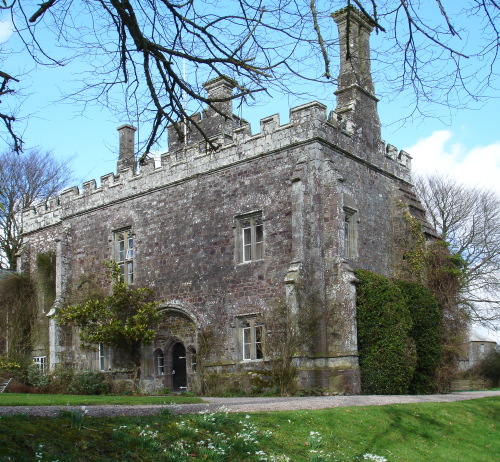
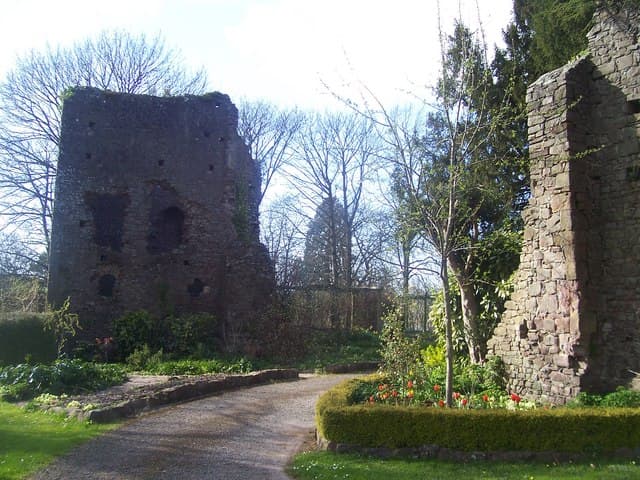
Today, Tiverton Castle survives primarily as a partially preserved ruin that reflects its long and varied history. The remnants include substantial sections of the medieval curtain walls and towers, which illustrate the castle's defensive design. The earthwork of the original Norman motte remains visible, marking the site of the early keep. The castle's layout reveals its evolution from a military fortress to a noble residence, with later additions such as the 16th-century tower porch demonstrating the Tudor period's architectural influences.
The castle's location on a hill overlooking the River Exe underscores its strategic importance through the centuries. Although much of the defensive infrastructure was destroyed after the Civil War siege, the surviving fabric offers valuable insight into medieval and early modern castle construction in Devon. Tiverton Castle remains a site of cultural heritage and historical interest, illustrating the complex social and military history of the region.
Frequently asked questions (FAQ)
- How do I get to Tiverton Castle?
- Tiverton Castle is located in the heart of Tiverton, easily accessible by car or public transport. If you are traveling by train, the Tiverton Parkway station is a short bus or taxi ride away from the castle.
- What is the historical significance of Tiverton Castle?
- Tiverton Castle dates back to the 12th century and has played a crucial role in English history. It was originally built as a defensive fortress and has witnessed many historical events, including battles and royal visits.
- When was Tiverton Castle last renovated?
- Tiverton Castle underwent significant renovations in the 19th century, which restored much of its original architecture. The castle continues to be maintained and preserved, with ongoing efforts to keep its historical features intact.
- Can I take photos inside Tiverton Castle?
- Yes, visitors are allowed to take photographs in designated areas of Tiverton Castle. However, be sure to respect any signs indicating restrictions in certain parts of the castle to maintain the privacy and integrity of the historical artifacts.
- Why is Tiverton Castle a popular tourist destination?
- Tiverton Castle is a popular destination due to its rich history, stunning architecture, and beautiful gardens. Visitors are drawn to its picturesque setting and the opportunity to explore a medieval castle that has stood the test of time.
- Is it possible to host events at Tiverton Castle?
- Yes, Tiverton Castle offers facilities for hosting a variety of events, including weddings, corporate events, and private functions. The stunning backdrop of the castle makes it a unique venue for special occasions.
- What are the opening hours for Tiverton Castle?
- Tiverton Castle is typically open to visitors from March to October, with hours varying by season. It's advisable to check the official website for the most current opening times and any special holiday hours.
- What are the ticket prices for Tiverton Castle?
- Ticket prices for Tiverton Castle vary based on age and group size, with discounts available for children and seniors. Family tickets and group rates are also offered, making it accessible for all visitors.
- What is the best time to visit Tiverton Castle?
- The best time to visit Tiverton Castle is during the spring and summer months when the weather is pleasant and the gardens are in full bloom. Additionally, many events and activities are scheduled during this time, enhancing the visitor experience.
- Are there nearby attractions to Tiverton Castle?
- Yes, there are several nearby attractions, including the Tiverton Museum and the enchanting Grand Western Canal. These sites offer additional historical and recreational opportunities, making your visit to Tiverton even more enjoyable.
Photo gallery

Information
Sources & official resources
Verify the information above using these authoritative references.
Loading map...
Visitor reviews
No reviews yet. Been here? Write the first review and help other travelers!
Write the first reviewVisited this castle? Share your experience
Your review helps other travelers and adds first-hand knowledge to our encyclopedia.