Bickleigh Castle
Bickleigh Castle stands as a remarkable testament to the layered history of medieval and post-medieval England, located in the village of Bickleigh near Tiverton, Devon. Originally established in the late 11th or early 12th century following the Norman conquest, the castle began as a classic motte-and-bailey fortification, a common form of early Norman military architecture designed for rapid construction and defense. This initial structure featured a raised earthwork mound (the motte) topped with wooden or stone defensive buildings, alongside an enclosed courtyard (the bailey) protected by palisades and ditches.
The early Norman castle was dismantled by the mid-12th century, but the site retained its strategic and residential importance. Within the bailey, a small stone chapel was established, marking the beginning of a continuous religious presence that would evolve over centuries. This chapel's origins are particularly notable, with archaeological evidence and documentary references suggesting a sanctuary predating the Norman period, possibly dating back to around AD 600, and recognized as a chapel by the 9th century. The chapel's 15th-century wagon-style timber roof and the presence of a restored 19th-century Estey organ highlight the blend of architectural eras present on the site.
Medieval transformations and noble residence
In the 15th century, the castle underwent significant transformation under the stewardship of the Courtenay family, prominent local nobility. They constructed a manor house on the grounds, integrating surviving elements of the earlier Norman fortifications. This manor, known as the Old Court, was originally built as a magistrates' court by Thomas Courtenay, the 6th Earl of Devon. The building featured a hall house with a distinctive five-arch braced jointed truss cruck roof, a traditional timber framing technique using curved timbers (crucks) for structural support. Over time, the Old Court was adapted for residential use, especially following the disruptions of the English Civil War.
The Courtenays were succeeded by the Carew family, who maintained the estate until the mid-17th century. Both families were influential in Devon's political and social spheres. During the turbulent period of the English Civil War, Bickleigh Castle served as a Royalist stronghold. The Carews' allegiance to King Charles I made the castle a target for Parliamentarian forces.
Role in the English Civil War
In 1644, the castle hosted Queen Henrietta Maria, wife of King Charles I, who stayed as a guest of Sir Henry and Lady Dorothy Carew while traveling to Exeter. Shortly after her stay, she gave birth to Princess Henrietta Anne Stuart, an event underscoring the castle's significance during this period. The castle's strategic importance was further highlighted in late 1645 when Parliamentarian forces under General Fairfax besieged the stronghold. Following the siege, the castle was deliberately slighted—damaged to prevent its further military use—reflecting the common practice of the time to neutralize Royalist fortifications.
Architectural features and surviving structures
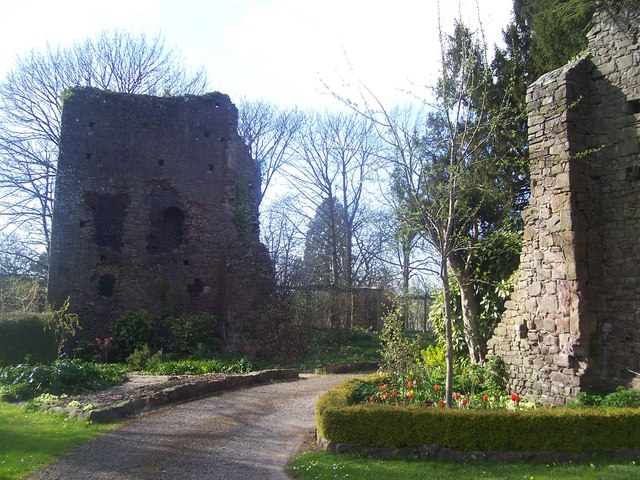
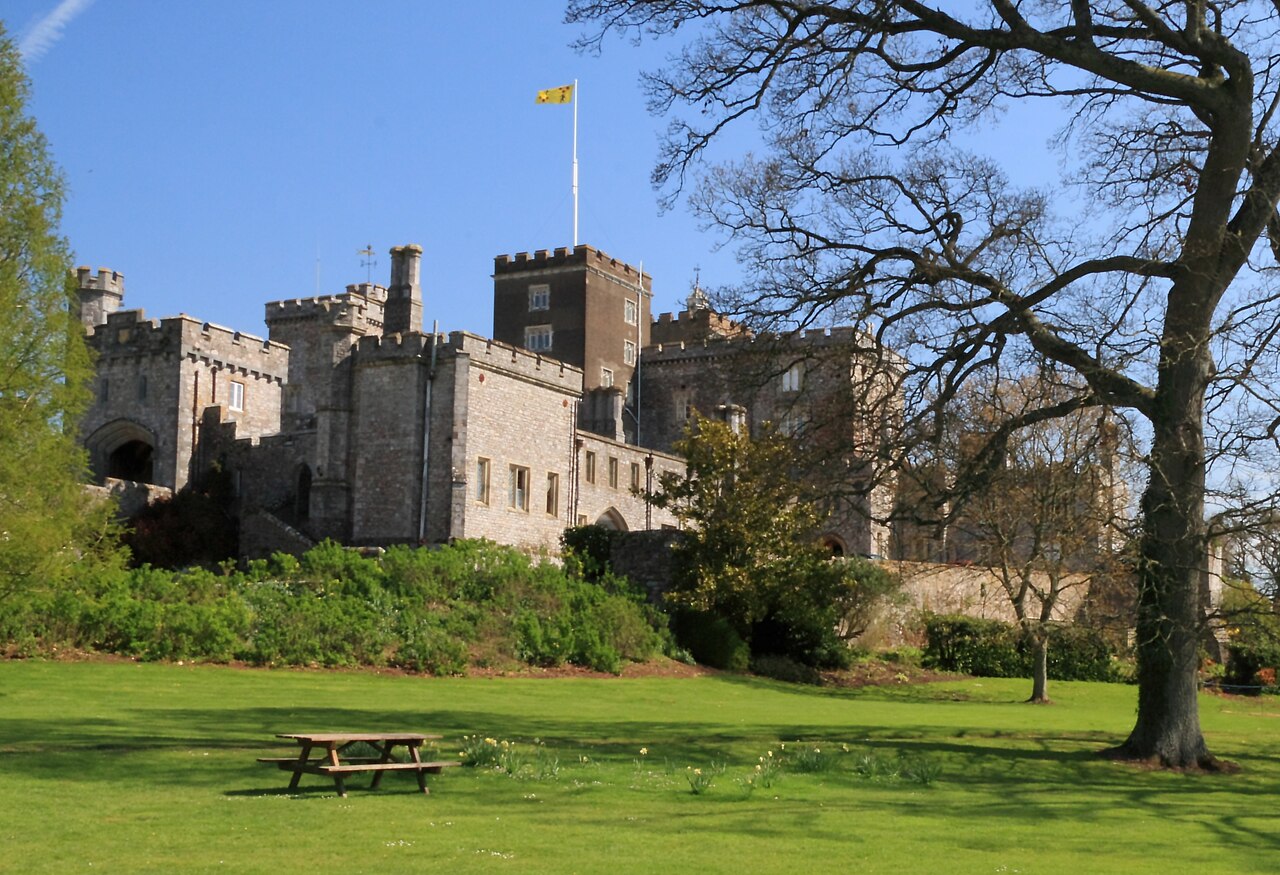
Today, Bickleigh Castle is a complex of buildings reflecting centuries of architectural evolution and adaptation. Though the western section of the original castle no longer exists, several key structures survive, including the Old Court, the north gatehouse, and the east-facing chapel near the River Exe.
The north gatehouse
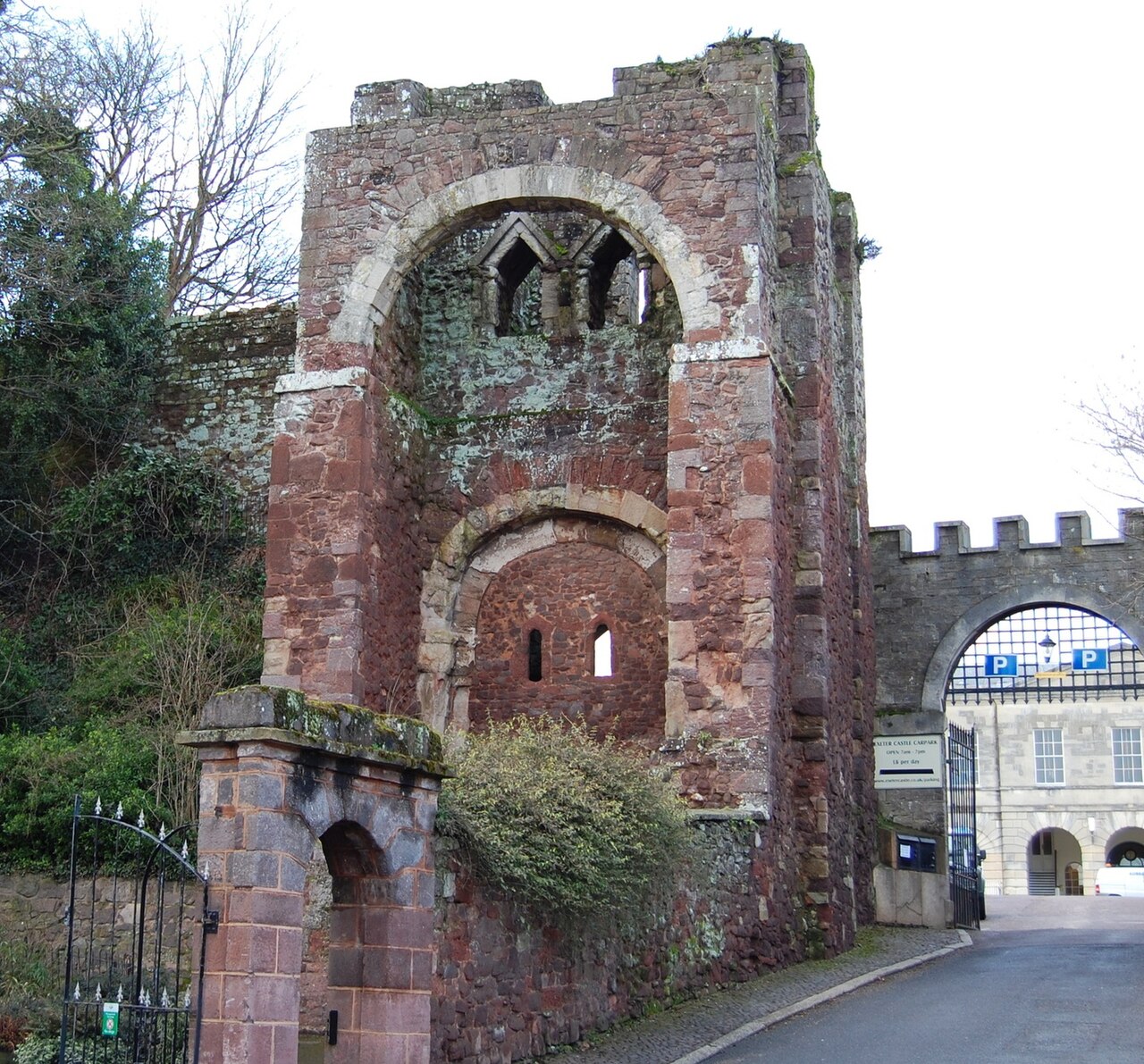
The gatehouse, dating from the early 12th century, is a three-storey stone building with a single-depth plan and an asbestos slate roof topped by turrets added in later modifications. It features a principal carriage archway providing access to the central courtyard. The gatehouse underwent substantial alterations in the 15th century and restoration efforts during the 1920s and 1930s. This structure is Grade I listed for its exceptional historic and architectural importance. Notably, one of its turrets collapsed on 30 December 2023, a recent event marking the ongoing challenges of preserving such ancient structures.
The chapel
The chapel on the eastern side of the complex is particularly significant for its early origins and continuity of use. Archaeological investigations have revealed a former dividing wall with an arch that once separated the sanctuary from the nave, which was later removed to enlarge the nave and accommodate a wooden rood screen—lost in the 19th century. The current roof is a 15th-century wagon-style timber construction, and the chapel houses a restored Estey organ installed in 1884, blending medieval and Victorian elements.
The Old Court and other domestic buildings
The Old Court remains a key feature of the castle complex. Originally a magistrates' court, it was built in the mid-15th century and later adapted for residential use. Local tradition speaks of an underground passage connecting the Old Court with the Keep Gatehouse, a feature common in medieval castles though not definitively confirmed here.
The North Range, constructed in the latter half of the 17th century, served as housing for estate workers. This two-storey, thatched building contains a remarkable 16th-century carved overmantel dating to around 1550. The intricate wood carving depicts scenes related to the Reformation, including the trial and execution of Henry Courtenay, stylized images of Exeter and Bickleigh Castle's Inner Keep, and a portrait of King Henry VIII. This artifact was safeguarded in Exeter Cathedral before being restored and reinstalled in the 1930s.
Additional structures include Moat Cottage, a late 16th-century stone and thatch dwelling north of the main complex, and a former stable block rebuilt in the 19th century. The stables, notable for their thatched roof and turret clock, have been repurposed for modern use as accommodation and reception facilities.
Landscaping and grounds
The castle grounds encompass over 60 acres, including approximately five acres of landscaped gardens. In the 18th century, Sir Thomas Carew undertook extensive landscaping projects, creating garden walls, gate piers, ornate gates, and fish ponds. These ponds were fashioned from remnants of the original Norman moat, demonstrating a creative reuse of medieval defensive features. Many of these garden elements are now recognized as listed structures due to their historical and architectural significance.
Bickleigh Castle today represents a unique palimpsest of English history, architecture, and landscape design. Its origins as a Norman motte-and-bailey, transformation into a noble manor house, role in the English Civil War, and subsequent adaptations reflect the dynamic nature of castle sites in England. The surviving buildings and grounds offer valuable insights into medieval military architecture, Tudor and Stuart domestic life, and Georgian landscaping traditions, making Bickleigh Castle a significant heritage asset in Devon.
Frequently asked questions (FAQ)
- How do I visit Bickleigh Castle?
- Bickleigh Castle is privately owned and not generally open to the public. Visitors can view the exterior and grounds from public footpaths nearby. Special events or private tours may occasionally be arranged by appointment.
- What is the historical significance of Bickleigh Castle?
- Bickleigh Castle is historically significant as a Norman motte-and-bailey site, a noble manor house, and a Royalist stronghold during the English Civil War. It hosted Queen Henrietta Maria and reflects centuries of architectural evolution.
- Can I see the chapel at Bickleigh Castle?
- The chapel is part of the castle complex but access is limited due to private ownership. Its early origins and medieval features make it a notable point of interest for those able to visit during special arrangements.
- When was the castle built?
- The original motte-and-bailey castle was constructed in the late 11th or early 12th century following the Norman conquest of England.
- Is Bickleigh Castle accessible for visitors with mobility issues?
- Due to the age and layout of the castle buildings and grounds, accessibility may be limited. Visitors with mobility concerns should inquire in advance about available accommodations during any arranged visits.
Information
Website
Visit websiteSources & official resources
Verify the information above using these authoritative references.
Loading map...
Visitor reviews
No reviews yet. Been here? Write the first review and help other travelers!
Write the first reviewVisited this castle? Share your experience
Your review helps other travelers and adds first-hand knowledge to our encyclopedia.