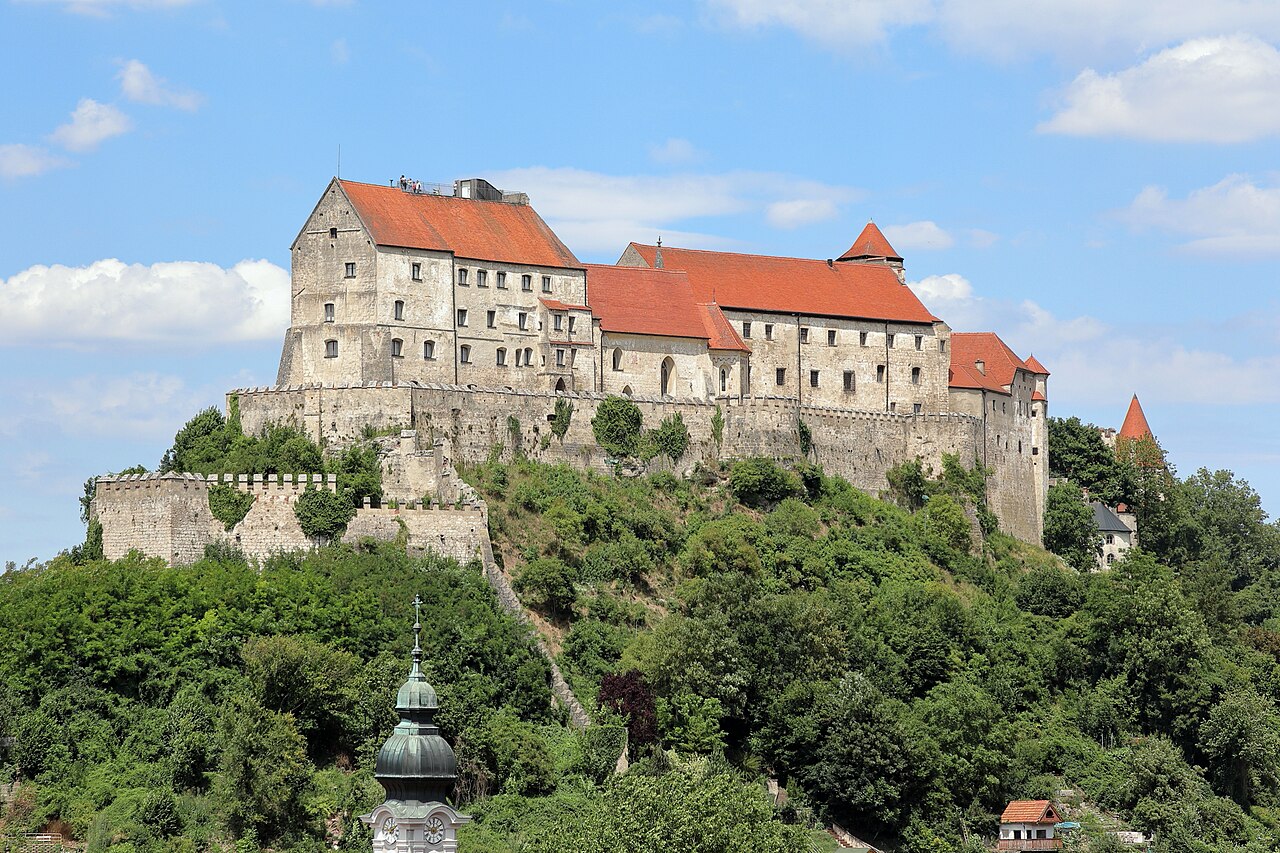
Tittmoning Castle
Tittmoning Castle stands prominently on a hill overlooking the town of Tittmoning in Bavaria, Germany. Originating in the high medieval period, the castle was constructed in the 13th century as a strategic border fortress for the Archbishopric of Salzburg. Its primary purpose was to defend the frontier against incursions from the Dukes of Bavaria, a role it fulfilled through centuries of regional conflict and political change. The castle’s architecture and function evolved significantly over time, reflecting shifts in military technology, political power, and cultural tastes.
The earliest records of the settlement of Titamanninga date back to around 790 AD, when it was under the possession of St Peter's Abbey, Salzburg. However, the castle itself first emerged as a significant stronghold after the archbishops of Salzburg gained immediate status in the late 13th century. The fortress was administered by a burgrave, with Ulrich von Wispeck documented in this role in 1282. Throughout the 14th century, the castle was managed by a succession of castellans and Pflegers, including notable figures such as Friedrich von Törring, Heinrich von Nopping, and members of the Goldegg family, who oversaw its defense and maintenance.
Medieval origins and strategic importance
Constructed as a hill castle, Burg Tittmoning’s location provided commanding views of the surrounding territory, crucial for monitoring and controlling the border with Bavaria. The fortress was a key site during regional conflicts, including the Battle of Mühldorf in 1322, when its commander Konrad von Oberndorf was captured. The castle was destroyed by Bavarian forces in 1324 but was swiftly repaired after Salzburg regained control in 1327. By 1338, extensive fortifications had been added to strengthen the castle’s defenses.
The castle's layout includes robust curtain walls enclosing several buildings arranged for both defense and habitation. Surviving architectural elements from the original construction phase include groin vaults in the ground floor of the cavalier building, which demonstrate medieval masonry techniques. A well located before the kitchen wing dates from this period, ensuring a reliable water supply for the castle’s occupants.
Late gothic expansion and renaissance modifications
In the late 15th century, Burg Tittmoning underwent significant expansion into a late Gothic fortress. From 1484, it served as the residence of the retired Archbishop Bernhard von Rohr. The castle was temporarily pawned to Bavaria during the Peasants' War in 1525 but was returned to Salzburg after four years. Mid-16th century renovations included the construction of the Traidkasten, a three-story grain store with a large hipped roof, built around 1553. This structure reflects the castle’s role in sustaining its garrison during sieges and long-term occupation.
During this period, the castle’s administration transitioned from resident castellans to Pflegers who resided in the town below, indicating a shift in the castle’s function from a frontline fortress to a more administrative and residential role.
Baroque transformation and later history
Damage sustained during the Salzburg War in 1611 led to further changes. After the castle was restored to Salzburg control in 1614, Archbishop Mark Sittich von Hohenems commissioned the architect Santino Solari to transform Burg Tittmoning into a Baroque hunting lodge. This conversion marked the castle’s transition from a military fortress to a summer residence for the Prince-Archbishops, emphasizing comfort and style over defense.
The castle chapel of St Michael was refurbished in the Baroque style between 1690 and 1694, enhancing its interior decoration and architectural detail. During the Thirty Years' War, the castle served as a base for the Salzburg militia, maintaining its military relevance despite its residential adaptations.
By the late 18th century, the castle’s military use declined, and it fell into disuse after its last commander departed in 1790. A fire in 1805, during French occupation in the Napoleonic Wars, destroyed the central keep. Following the Congress of Vienna in 1816, the castle and the Rupertiwinkel region were incorporated into the Kingdom of Bavaria.
Modern era and museum conversion
In 1852, the town of Tittmoning purchased the castle to preserve it. Since 1911, it has housed the Rupertiwinkel local history museum, which features Bavaria’s largest collection of shooting targets from 1600 to 1930 and artwork by the regional artist Johann Baptist Cetto. The museum connects the castle’s historical legacy with local culture and heritage.
During World War II, the castle was repurposed as a prisoner-of-war camp (Oflag VII-D) for officers, including British and American internees. Postwar, it served as a refugee camp. Restoration efforts culminated in the museum’s reopening in 1953, ensuring the castle’s preservation as a cultural landmark.
Architectural features and preservation
Burg Tittmoning’s architecture reflects its layered history. The medieval core with groin vaults and stone curtain walls coexists with Renaissance and Baroque additions. The Traidkasten grain store and the Baroque chapel are key features illustrating the castle’s evolution from fortress to residence.
The castle’s hilltop position continues to offer strategic views, preserving its original defensive purpose. Its well-preserved structures provide insight into medieval construction techniques, military architecture, and the lifestyle of Salzburg’s prince-archbishops.
Today, Tittmoning Castle remains a significant heritage site in Bavaria, drawing visitors interested in medieval fortifications, Baroque architecture, and regional history. Its museum exhibits and preserved buildings offer an immersive experience of the castle’s multifaceted past.
Frequently asked questions (FAQ)
- How do I visit Tittmoning Castle?
- Tittmoning Castle is open to visitors as a museum. Check local tourism websites for current opening hours and ticket prices to plan your visit accordingly.
- What is the historical significance of Tittmoning Castle?
- Tittmoning Castle was a strategic border fortress for the Archbishopric of Salzburg, playing key roles in regional conflicts from the 13th century onwards.
- Can I see the Baroque chapel inside the castle?
- Yes, the castle chapel of St Michael was refurbished in the Baroque style and is part of the museum tour, showcasing its interior decoration and architectural details.
- Is Tittmoning Castle accessible for people with mobility issues?
- Due to its medieval hilltop location and historic structure, accessibility may be limited. Visitors with mobility concerns should contact the museum in advance for specific information.
- When was the castle converted into a museum?
- The castle has housed the Rupertiwinkel local history museum since 1911, preserving and displaying its cultural and historical artifacts.
Information
Sources & official resources
Verify the information above using these authoritative references.
Loading map...
Visitor reviews
No reviews yet. Been here? Write the first review and help other travelers!
Write the first reviewVisited this castle? Share your experience
Your review helps other travelers and adds first-hand knowledge to our encyclopedia.