Tiruchirappalli Rock Fort
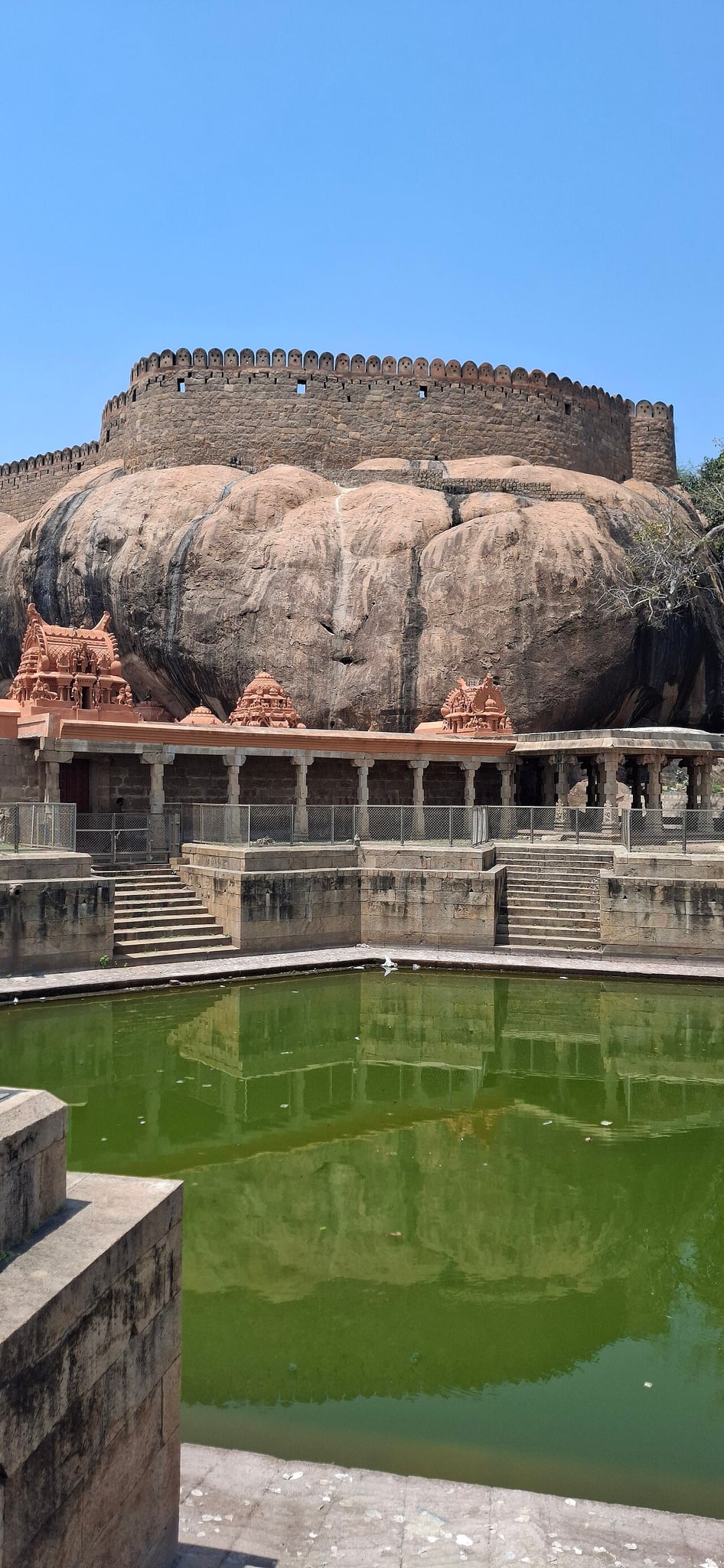
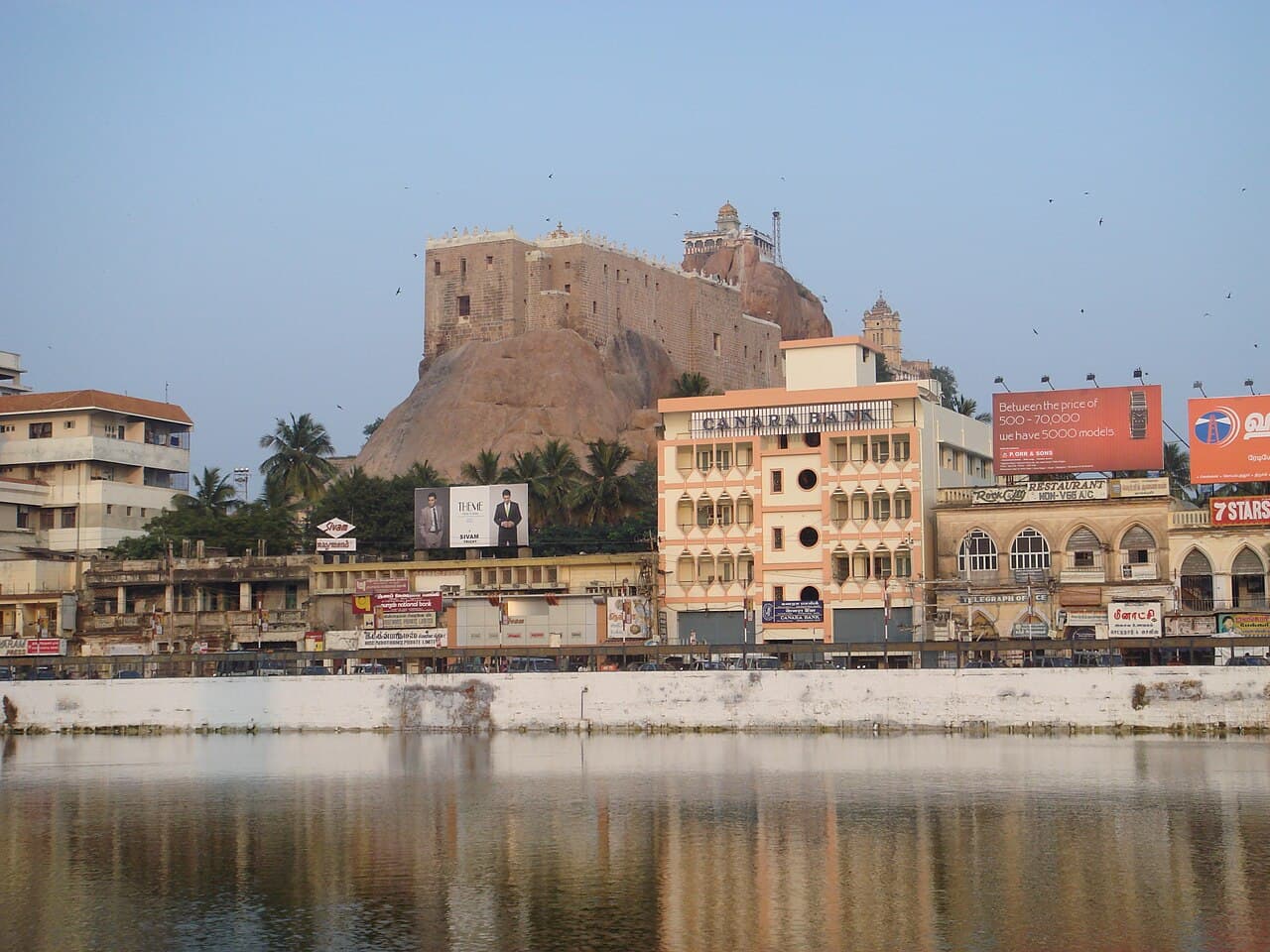
Tiruchirappalli Rock Fort, locally called Malaikottai, is a remarkable historic bastioned fortress and temple complex perched atop an 83-metre (272 ft) high rock in the city of Tiruchirappalli, Tamil Nadu, India. This imposing geological formation rises dramatically above the surrounding plains near the banks of the river Kaveri, making the fort a dominant landmark visible from afar. The site combines military architecture with religious significance, featuring two prominent Hindu temples within its precincts: the Ucchi Pillayar Temple and the Thayumanaswami Temple.
Geological and architectural significance
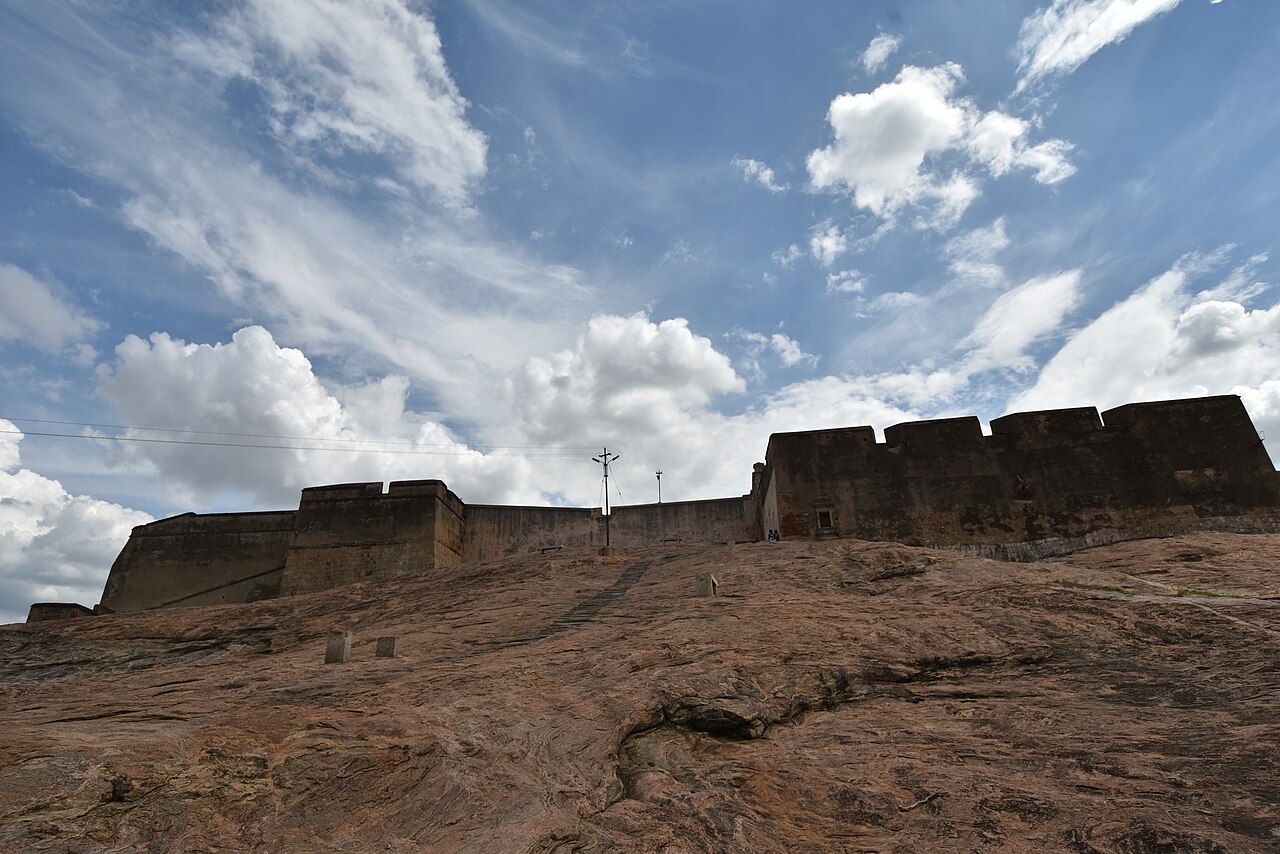
The fort is built on a massive granite rock that is one of the oldest rock formations in the world, estimated to be over a billion years old. The natural elevation provided a strategic advantage, which was enhanced by the construction of fortifications including bastions, ramparts, and defensive walls that conform to the rock’s contours. The bastioned fortress design allowed defenders to mount artillery and repel invaders effectively, capitalizing on the height and steepness of the rock.
Historical background and military importance
The fort has a long history of military and political significance. It was a contested site during the Carnatic Wars in the 18th century, which were crucial in establishing British dominance in southern India. The fort witnessed fierce battles between the Madurai Nayakas, the Adil Shahi dynasty of Bijapur, the Carnatic region powers, and the Maratha Empire. Control of the fort meant control over the strategic trade and military routes in the region.
Role in the Carnatic Wars
During the mid-18th century, Tiruchirappalli Rock Fort was a pivotal stronghold in the conflicts between the British East India Company and French forces, alongside their respective Indian allies. The fort’s robust defenses and elevated position made it a formidable obstacle in the struggle for supremacy in the Carnatic region. Its capture and defense influenced the outcome of key battles that helped lay the foundation for British colonial rule in India.
Religious and cultural features
Inside the fort complex are two important Hindu temples that attract pilgrims and tourists alike. The Ucchi Pillayar Temple is dedicated to Lord Ganesha and is located at the summit of the rock, offering panoramic views of Tiruchirappalli city. This temple is noted for its ancient Dravidian architectural style and its religious significance as a site of worship and pilgrimage.
The Thayumanaswami Temple, situated at the base of the rock, is dedicated to Lord Shiva and is revered for its mythological associations and intricate carvings. Both temples are integral to the cultural heritage of the region and reflect the fusion of military and religious architecture.
Other notable temples and structures
Within the vicinity of the fort complex are other significant temples such as the Pallava-era Ganesha temple, which dates back to the early medieval period and showcases early Dravidian sculptural art. Additionally, structures from the Madurai Nayak period illustrate the fort’s continued use and adaptation through various ruling dynasties.
Architectural style and construction phases
The fort’s architecture is a blend of military bastioned fortress design and Dravidian temple architecture. The defensive walls and bastions were constructed primarily during the Madurai Nayak period in the 16th and 17th centuries, incorporating stone masonry techniques suited to the rocky terrain. The temples themselves exhibit Dravidian architectural features such as vimanas (towering sanctum roofs), mandapas (pillared halls), and detailed stone carvings.
Current condition and tourism
Today, Tiruchirappalli Rock Fort is a well-preserved monument and a major tourist attraction. The site is maintained by local authorities and continues to be a place of worship and cultural events. Visitors can climb a series of steps carved into the rock to reach the temples at the summit, enjoying views of the city and the Kaveri River. The fort’s blend of natural geology, military architecture, and religious significance makes it a unique heritage site in Tamil Nadu.
Visitor information
The fort is open to the public throughout the year, with no significant restrictions on visiting hours. It is accessible by road from Tiruchirappalli city center. The climb to the top requires moderate physical effort due to the steep steps. Nearby attractions include the Rockfort Museum which exhibits artifacts related to the fort’s history and the region’s cultural heritage.
Frequently asked questions (FAQ)
- How do I get to Tiruchirappalli Rock Fort?
- Tiruchirappalli Rock Fort is located in the heart of Tiruchirappalli city, Tamil Nadu. It is easily accessible by road and local transport from the city center.
- What are the main temples inside the Rock Fort?
- The main temples inside the fort are the Ucchi Pillayar Temple dedicated to Lord Ganesha at the summit, and the Thayumanaswami Temple dedicated to Lord Shiva at the base of the rock.
- When was the fort built and by whom?
- The fort's origins date back to ancient times, but the major fortifications were constructed during the Madurai Nayak period in the 16th and 17th centuries.
- Is the climb to the top difficult?
- The climb involves steep steps carved into the rock and requires moderate physical fitness. It is manageable for most visitors with reasonable mobility.
- What role did the fort play in Indian history?
- Tiruchirappalli Rock Fort was a strategic military site during the Carnatic Wars and witnessed battles between the Madurai Nayakas, Adil Shahi dynasty, Maratha forces, and European colonial powers.
Photo gallery

Information
Loading map...
Visitor reviews
No reviews yet. Been here? Write the first review and help other travelers!
Write the first reviewVisited this castle? Share your experience
Your review helps other travelers and adds first-hand knowledge to our encyclopedia.