Thirumayam Fort
Thirumayam Fort is a significant 17th-century bastioned fortress located in the town of Thirumayam on the Pudukkottai-Karaikudi Highway in Tamil Nadu, India. Spanning approximately 40 acres, the fort was originally constructed in 1687 by Vijaya Raghunatha Sethupathi, the then Raja of Ramnad. This fortress exemplifies the military architecture of the period, built to serve both defensive and administrative purposes in the region.
Historical background and ownership
The fort was commissioned during a time when regional powers in southern India were consolidating their territories and fortifications were essential for protection against rival kingdoms and colonial forces. After its construction, the fort was handed over to Raghunatha Raya Tondaiman, who was the brother-in-law of Vijaya Raghunatha Sethupathi. The Tondaiman family played a crucial role in the governance and military affairs of the area, using the fort as a strategic base.
Architectural features and layout
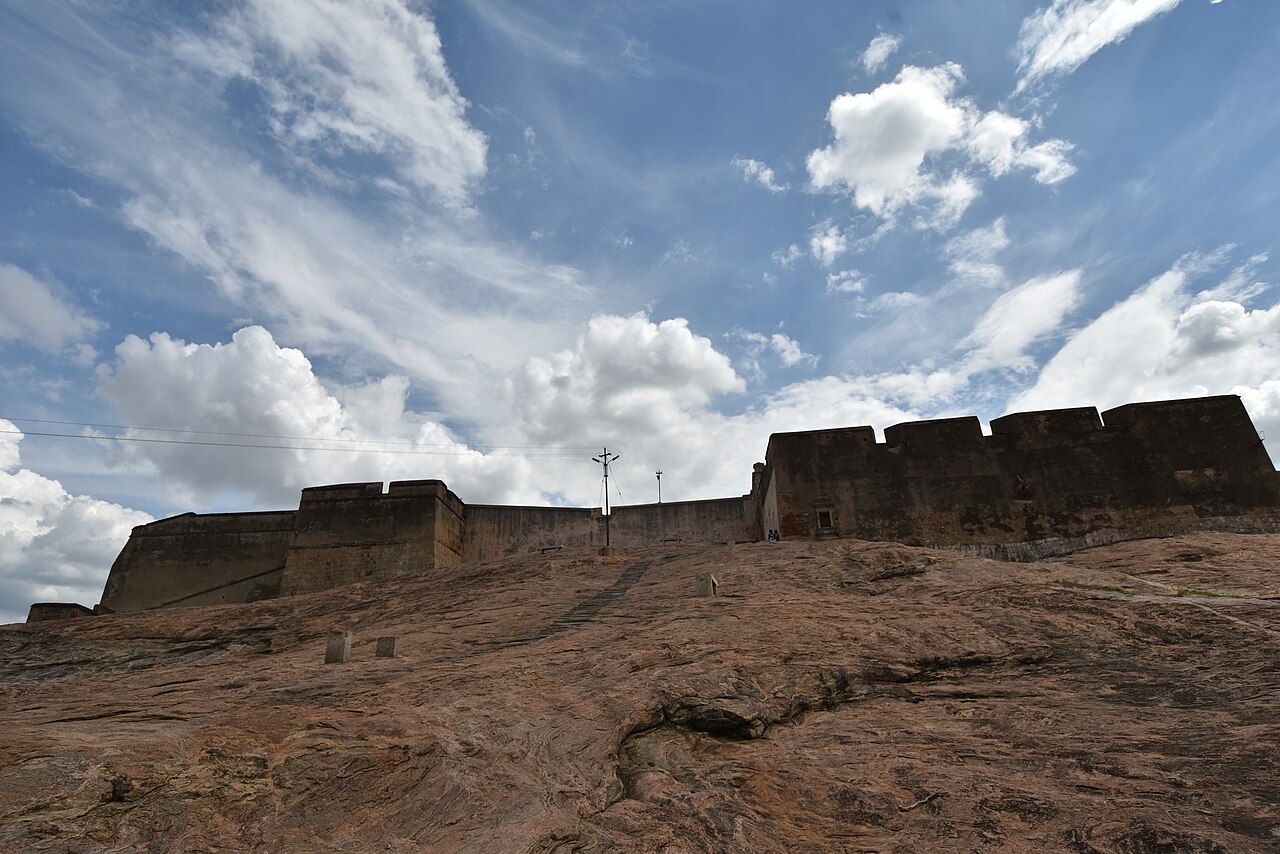
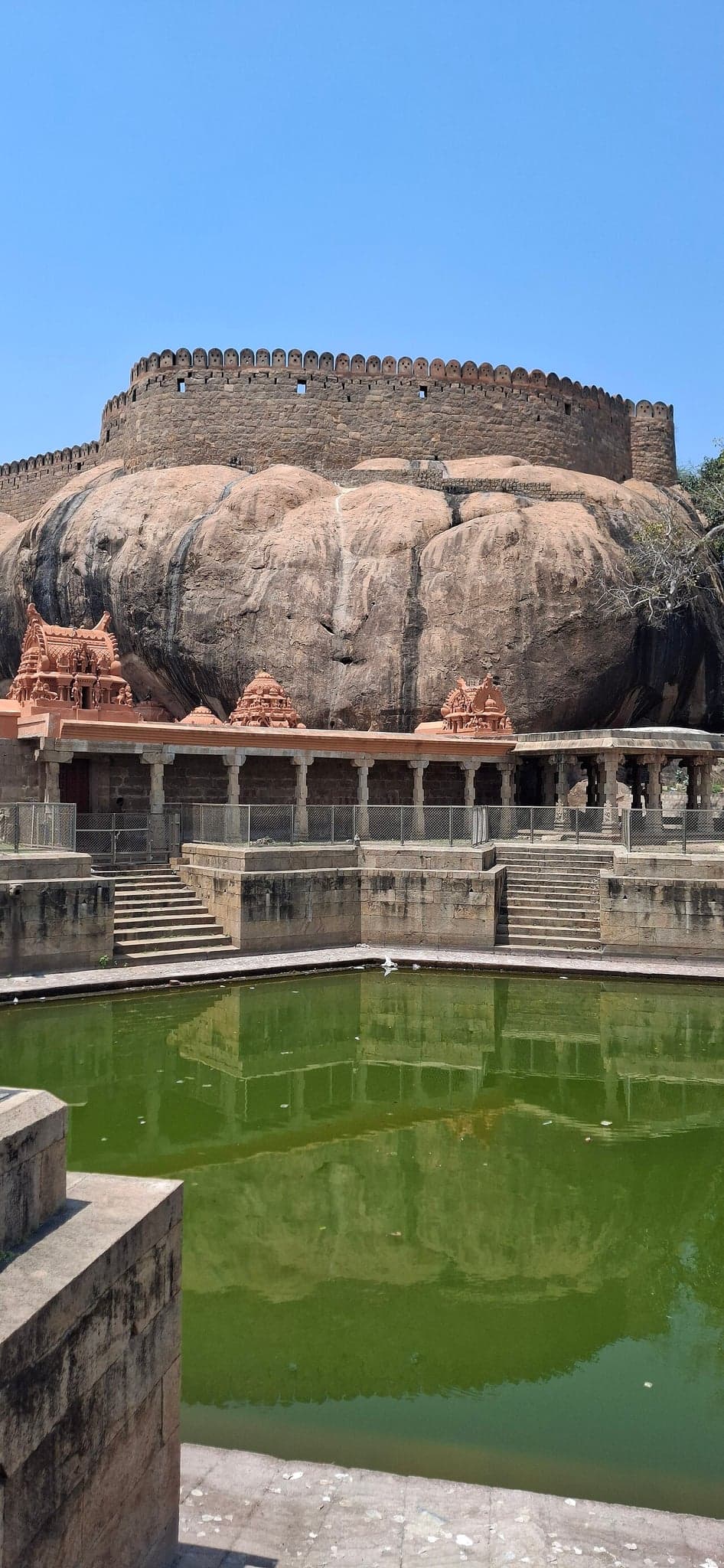
Thirumayam Fort is classified as a bastioned fortress, a style characterized by angular bastions projecting from the main walls, designed to provide overlapping fields of fire and eliminate blind spots. The fort's extensive walls enclose a large area of 40 acres, encompassing various structures such as ramparts, gateways, watchtowers, and inner courtyards. The bastions are robustly constructed to withstand artillery attacks, reflecting the military technology and architectural knowledge of the late 17th century.
The fort's design incorporates traditional South Indian fortification elements combined with influences from contemporary military architecture, which may include European bastion designs adapted to local conditions. The walls are built from locally sourced stone and mortar, with careful attention to durability and defense.
Defensive structures
The bastions are positioned at strategic intervals along the perimeter, allowing defenders to cover the entire fort with crossfire. The main entrance is fortified with heavy gates and guard chambers to control access. Inside, the fort contains storage facilities, barracks, and administrative buildings, essential for sustaining a garrison during prolonged sieges.
Renovation and preservation efforts
In recent years, the Archaeological Survey of India (ASI) undertook extensive renovation work on Thirumayam Fort in 2012. These efforts aimed to stabilize the structure, restore damaged sections, and preserve the fort's historical integrity. The restoration has helped to maintain the fort as a cultural heritage site and a tourist attraction, enabling visitors to explore its architectural grandeur and historical significance.
Significance and cultural heritage
Thirumayam Fort holds an important place in the history of Tamil Nadu and southern India. It represents the military and political strategies of regional rulers during the late 17th century and serves as a tangible link to the era's architectural advancements. The fort's preservation allows for ongoing study and appreciation of South Indian fortifications and their role in the region's history.
Visitors to the fort can observe the impressive bastions, sturdy walls, and remnants of internal structures that offer insights into the daily life and defense mechanisms of the time. The site also contributes to the cultural tourism of Pudukkottai District, drawing interest from historians, architects, and travelers alike.
Frequently asked questions (FAQ)
- When was Thirumayam Fort built and by whom?
- Thirumayam Fort was built in 1687 by Vijaya Raghunatha Sethupathi, the Raja of Ramnad, as a military fortress.
- What are the key architectural features of Thirumayam Fort?
- The fort is a bastioned fortress featuring robust bastions, ramparts, fortified gateways, and inner courtyards designed for defense and administration.
- Is Thirumayam Fort open to visitors and what are the visiting hours?
- Yes, Thirumayam Fort is open to visitors. While specific hours may vary, it is generally accessible during daylight hours. Visitors should check local sources for current opening times.
- What restoration efforts have been made at Thirumayam Fort?
- The Archaeological Survey of India extensively renovated the fort in 2012 to preserve its structural integrity and historical features.
- Why is Thirumayam Fort historically significant?
- The fort reflects the military strategies and regional governance of southern India in the late 17th century and is an important cultural heritage site.
Photo gallery

Information
Address
Pudukkottai-Karaikudi Highway, Thirumayam, Pudukkottai District, Tamil Nadu, India
Loading map...
Visitor reviews
No reviews yet. Been here? Write the first review and help other travelers!
Write the first reviewVisited this castle? Share your experience
Your review helps other travelers and adds first-hand knowledge to our encyclopedia.