Fort Vijf Sinnen
Fort Vijf Sinnen, also known as Vyf Sinnen—Dutch for "the five senses"—was a bastioned fortress constructed by the Dutch East India Company in the late 17th century in Nagapattinam, located in the present-day Indian state of Tamil Nadu. This fortification was a significant military and trading installation during the period when the Dutch sought to secure their commercial interests along the Coromandel Coast, an important region for European colonial powers competing in Asia.
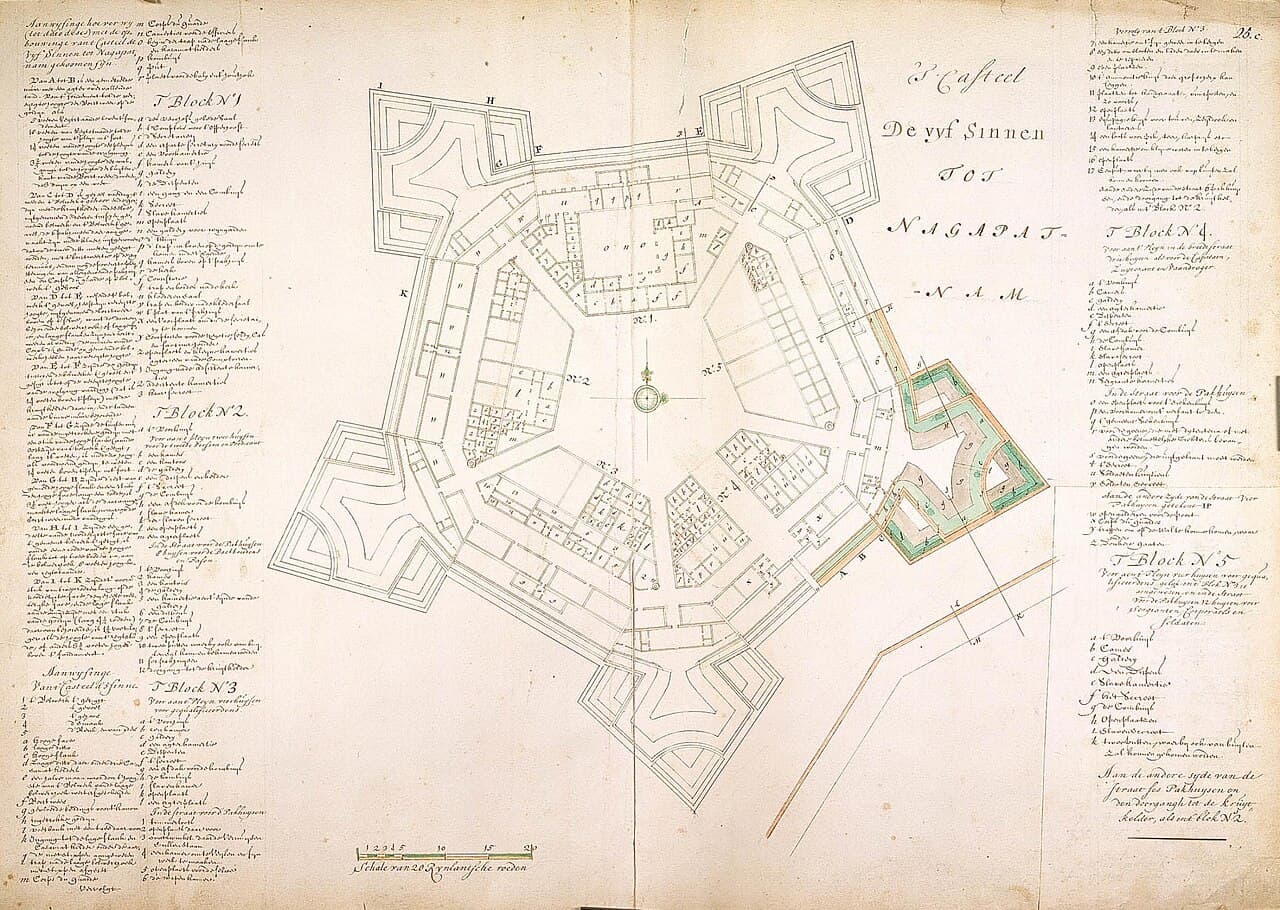
The construction of Fort Vijf Sinnen began in 1687 and was completed around 1690. It was built to replace Pulicat as the capital of the Dutch Coromandel colony, reflecting a strategic shift in the Dutch East India Company's operations. The fort was designed as a bastioned fortress, a style characterized by angular bastions projecting from the curtain walls, allowing defenders to cover all approaches with overlapping fields of fire. This design was typical of European military architecture of the period, intended to withstand artillery sieges and provide robust defense.
Architectural features and design
The fort's layout was a classic example of bastioned fortification principles, featuring thick stone walls with bastions at the corners. These bastions allowed defenders to fire along the walls, eliminating blind spots. The fort was surrounded by a moat, enhancing its defensive capabilities against infantry assaults. Inside, the fort contained barracks, warehouses, armories, and administrative buildings necessary to support the Dutch trading operations.
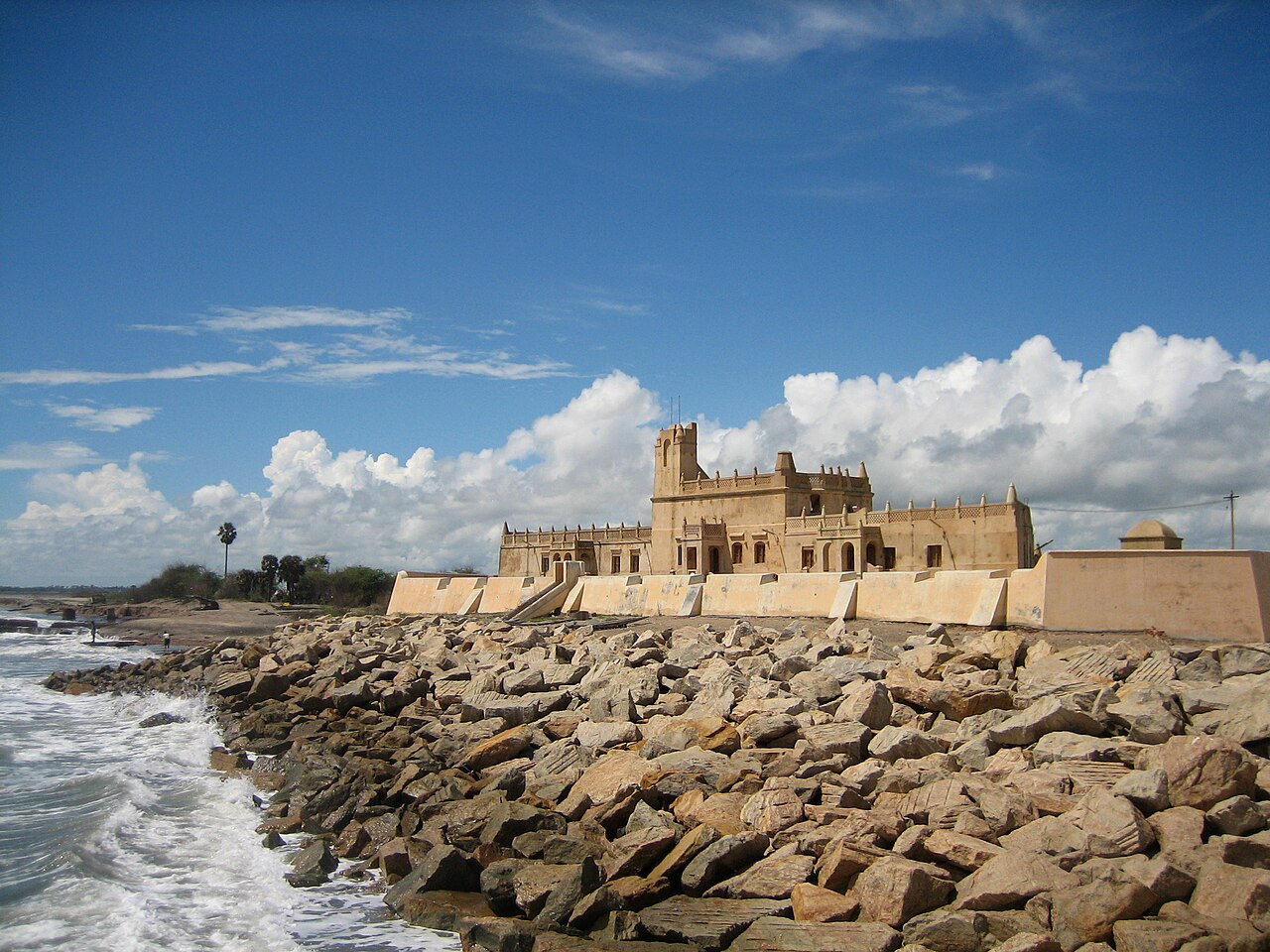
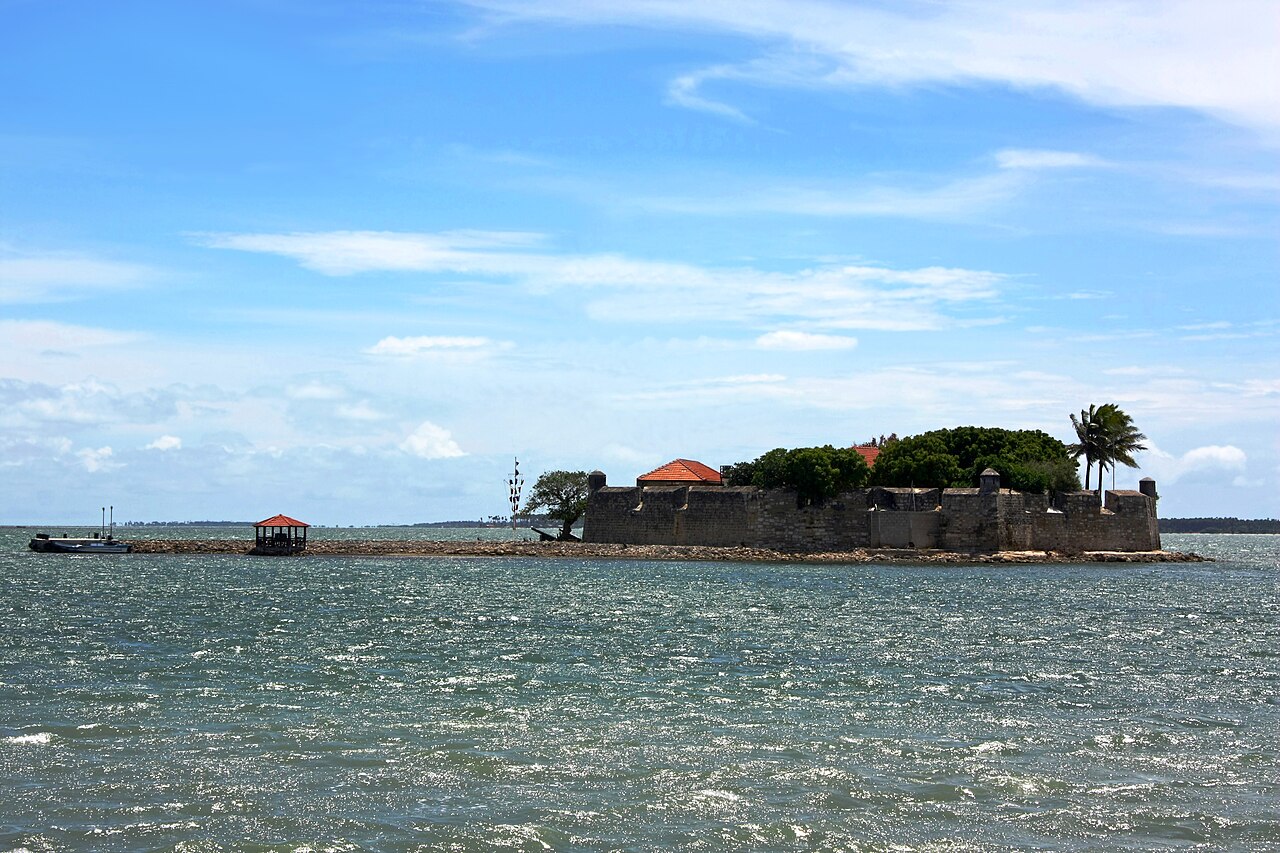
Its location on the coast facilitated control over maritime trade routes and provided a harbor for Dutch ships. The fort was heavily armed with cannons positioned on the bastions, intended to repel naval attacks and protect the valuable trading post.
Historical significance and military engagements
Fort Vijf Sinnen played a central role in the Dutch East India Company's presence in India from the late 17th century until the late 18th century. It was a symbol of Dutch colonial power in the region and served as the administrative center for the Coromandel Coast trade.
Despite its formidable defenses, the fort was captured by the British during the Siege of Negapatam in 1781, part of the larger conflict known as the Fourth Anglo-Dutch War. The British forces laid siege to the fort, which ultimately fell after a determined assault. The loss of Fort Vijf Sinnen marked a significant blow to Dutch influence in India.
Following the war, the Treaty of Paris in 1784 formalized British control over Nagapattinam, and the Dutch colony's headquarters were moved back to Pulicat. The fort's military importance declined thereafter, and it eventually fell into disuse.
Legacy and current status
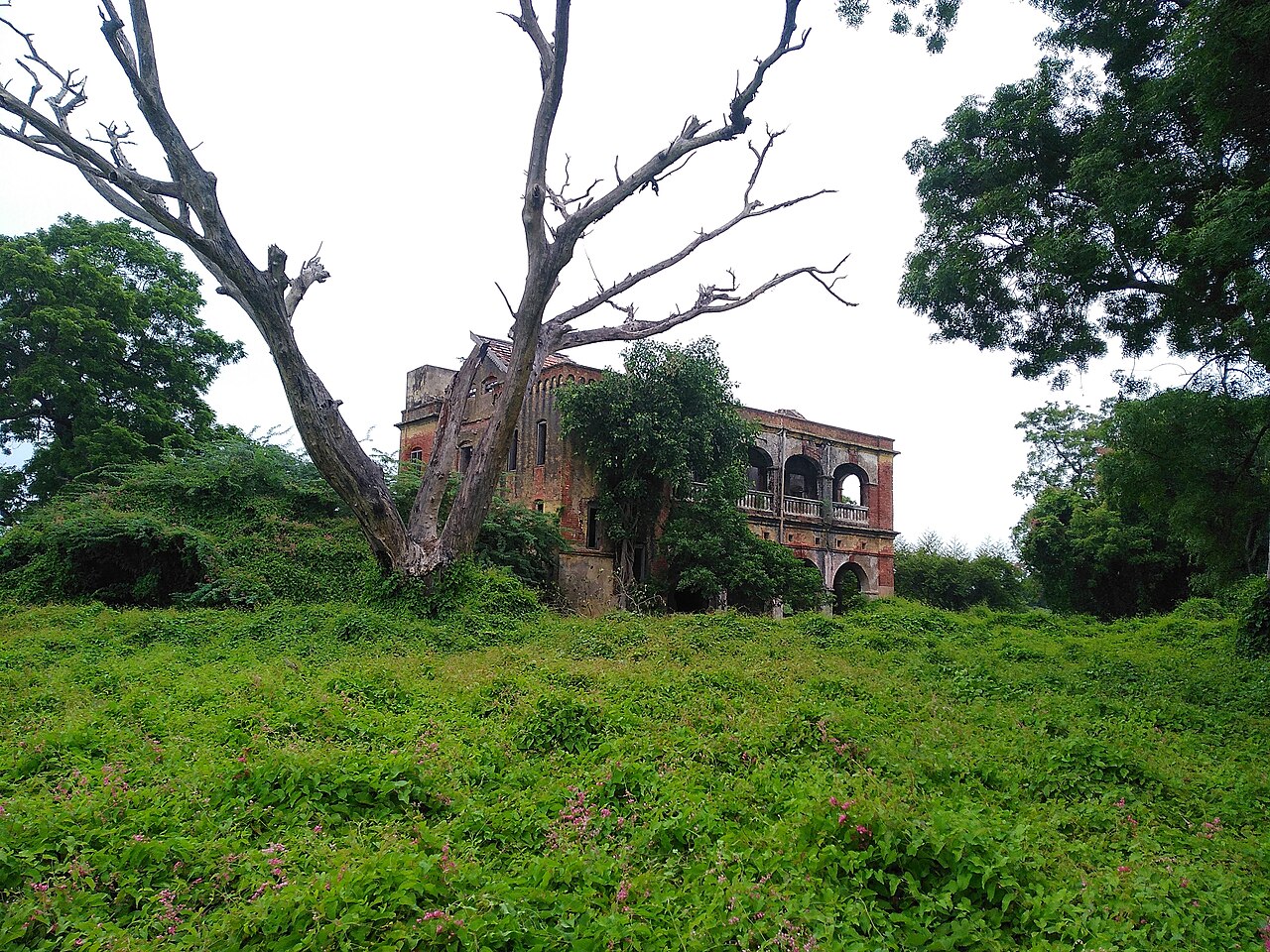
Today, Fort Vijf Sinnen stands as a historical site reflecting the complex colonial history of the Coromandel Coast. While much of the original structure has not survived intact, the remains provide valuable insights into 17th-century European military architecture in India.
The fort's history illustrates the intense rivalry between European powers for control over trade in Asia and the strategic importance of fortified trading posts during the colonial era. It also highlights the Dutch East India Company's efforts to establish and maintain a foothold in the Indian subcontinent amidst competing imperial interests.
Context within Dutch colonial architecture
The fort exemplifies the Dutch adaptation of bastioned fortress design principles, which were widespread in Europe during the Renaissance and early modern period. These fortifications combined geometric precision with practical defensive features, such as angled bastions, moats, and thick walls, to resist cannon fire and infantry attacks.
Fort Vijf Sinnen's construction reflects the Dutch emphasis on securing their trading posts with strong military installations, ensuring the safety of their commercial enterprises against rival European powers and local resistance.
Frequently asked questions (FAQ)
- What is the historical significance of Fort Vijf Sinnen?
- Fort Vijf Sinnen, located in Nagapattinam, India, was originally built in the 17th century by the Dutch to protect their trade routes in the region. It played a crucial role during colonial times, serving as a strategic military base. Today, the fort stands as a testament to the rich history of Dutch colonialism in India.
- When was Fort Vijf Sinnen constructed?
- Fort Vijf Sinnen was constructed in 1660 by the Dutch East India Company. Its architecture and layout were designed to enhance defense capabilities against rival colonial powers and local forces. The fort's construction reflects the military engineering practices of the 17th century.
- Can I visit Fort Vijf Sinnen?
- Yes, Fort Vijf Sinnen is open to visitors who are interested in exploring its historical architecture and scenic views. Guided tours are available to provide insights into the fort's history and significance. Be sure to check local guidelines for any restrictions or requirements before your visit.
- What are the opening hours for Fort Vijf Sinnen?
- Fort Vijf Sinnen is typically open to visitors from 9 AM to 5 PM, seven days a week. However, it’s recommended to verify the current hours before planning your visit, as they may vary based on local holidays or events. Early morning visits can provide a quieter experience.
- Is it possible to access the fort with mobility aids?
- While efforts have been made to improve accessibility at Fort Vijf Sinnen, some areas may present challenges for visitors with mobility aids. It is advisable to contact the local tourism office for detailed information about accessibility features. They can provide guidance on the best routes and access points.
- What is the best time to visit Fort Vijf Sinnen?
- The best time to visit Fort Vijf Sinnen is during the cooler months from November to February when temperatures are more pleasant for exploring. This period also coincides with various local festivals, enhancing your experience. Summer months can be quite hot and humid, making visits less comfortable.
- Are there any nearby attractions to visit after Fort Vijf Sinnen?
- Yes, after exploring Fort Vijf Sinnen, you can visit the nearby Nagapattinam beach, which offers beautiful coastal views and relaxation spots. Additionally, the nearby Church of Our Lady of Good Health (Velankanni Church) is a significant pilgrimage site worth exploring. These attractions provide a well-rounded experience of the area.
- What are the ticket prices for visiting Fort Vijf Sinnen?
- The ticket prices for Fort Vijf Sinnen are quite affordable, with nominal fees for both adults and children. Special discounts may be available for students and senior citizens. It’s best to check the official website or contact local tourism offices for the most up-to-date pricing information.
Photo gallery

Photo by Isaak de Graaf•Public domain
Information
Loading map...
Visitor reviews
No reviews yet. Been here? Write the first review and help other travelers!
Write the first reviewVisited this castle? Share your experience
Your review helps other travelers and adds first-hand knowledge to our encyclopedia.