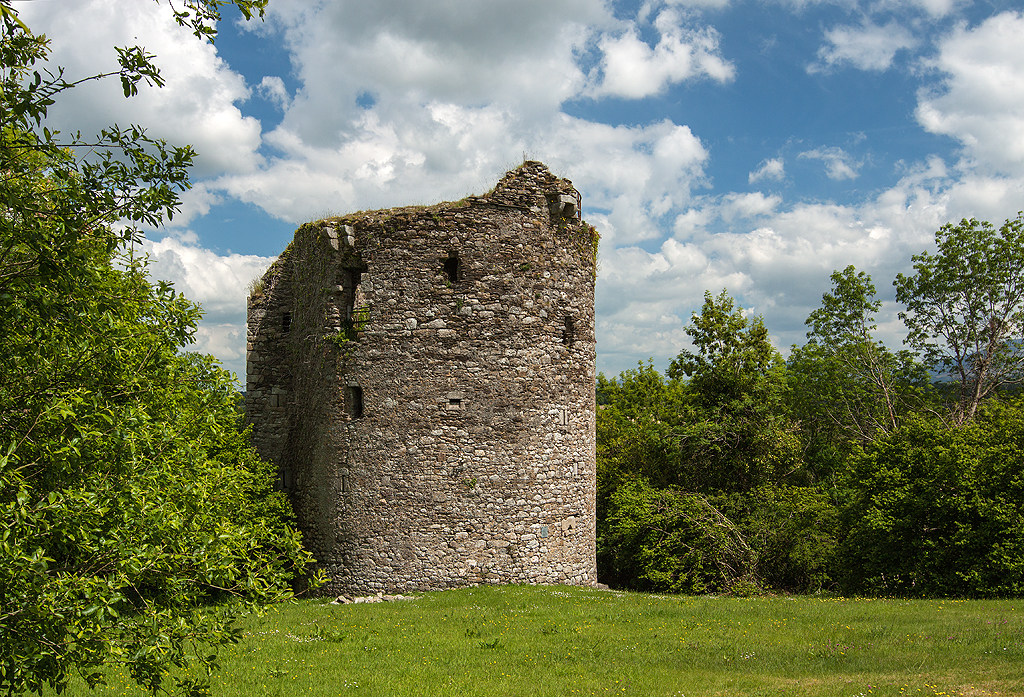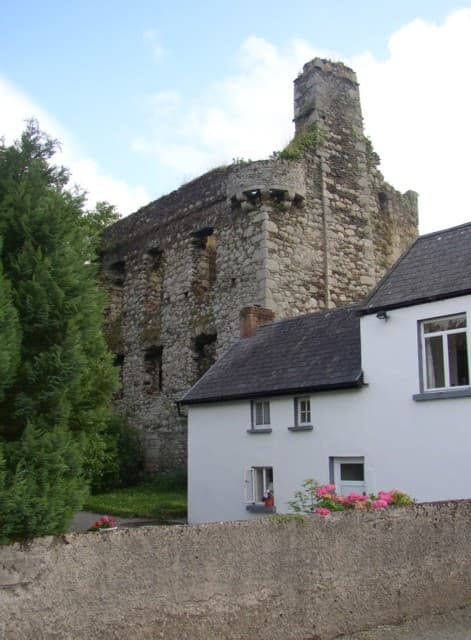
Tinnahinch Castle (Irish: Caislean Tigh na hInse) stands as a notable example of a ruined tower house located near the River Barrow in Tinnahinch, County Carlow, Ireland. This castle is characteristic of the fortified residences built by Gaelic and Anglo-Norman lords during the late medieval period in Ireland. Its strategic position near the river allowed control over the surrounding lands and waterways, which was vital for defense and local governance.
Architectural features and layout
The castle exhibits a rectangular plan typical of Irish tower houses, with a prominent stair tower positioned at the southwest angle. This stair tower provided access to the upper floors and was a common defensive feature, allowing defenders to move quickly between levels while maintaining a stronghold. Between the angles of the main tower and the stair tower, there is a machicolation—an overhanging parapet with openings through which defenders could drop stones or boiling liquids on attackers attempting to breach the doorway. This defensive design element highlights the castle's purpose as a fortified residence rather than a simple dwelling.
On the northeast angle, a bartizan projects from the wall. These small overhanging turrets were used for observation and defense, allowing guards to watch the surrounding area and provide flanking fire against assailants. The presence of a bartizan indicates the importance of surveillance and protection in the castle's design.
All of the windows on the north wall have been removed or stolen over time, which has contributed to the castle's current ruined state. The loss of these windows has exposed the interior to the elements, accelerating the decay of the structure.
Defensive structures and river proximity
At the eastern corner closest to the river, there was a barbican—a fortified outpost or gateway designed to protect the entrance to the castle. This barbican was constructed on corbels projecting from the walls, which allowed defenders to cover the northern and eastern sides effectively. Barbicans were critical in medieval fortifications, serving as the first line of defense and controlling access to the main building.
The castle's location near the River Barrow was strategically chosen to utilize the natural defensive advantages of the waterway. Rivers often served as natural moats, hindering attackers and providing a supply route. The proximity to the river also meant the castle could oversee and control river traffic, which was important for trade and military movements.
Historical context and significance
Tinnahinch Castle dates from the late medieval period, a time when tower houses were widespread across Ireland. These structures combined residential and defensive functions, reflecting the turbulent political and social conditions of the era. Local lords built such castles to assert their power, protect their estates, and withstand attacks from rival clans or invading forces.
While specific historical records about Tinnahinch Castle's builders or occupants are limited, its architectural features align with those commonly found in Irish tower houses constructed between the 15th and 17th centuries. These castles were often the centerpieces of rural lordships, serving as administrative hubs and symbols of authority.
Current condition and preservation challenges
Today, Tinnahinch Castle remains in a state of ruin. The removal of windows and ongoing exposure to weather have contributed to its deterioration. Safety concerns have led to plans for the tower's destruction, highlighting the challenges faced in preserving such historic structures, especially those on private or less accessible lands.
Despite its ruined state, the castle offers valuable insights into medieval Irish architecture and defensive design. Archaeological studies of the site can provide further understanding of construction techniques and the lifestyle of its inhabitants.
Visiting information and cultural heritage
As an archaeological ruin, Tinnahinch Castle is of interest to historians, architects, and visitors fascinated by Ireland's medieval past. While it may not have extensive visitor facilities or guided tours, the site contributes to the cultural landscape of County Carlow and the broader region.
Visitors should exercise caution due to the castle's fragile condition and respect any access restrictions. The surrounding area offers scenic views along the River Barrow, enriching the experience of exploring Ireland's historic fortifications.
Frequently asked questions (FAQ)
- What is the historical significance of Tinnahinch Castle?
- Tinnahinch Castle is a late medieval Irish tower house that served as a fortified residence for local lords, reflecting the defensive needs and social structure of the period.
- Can visitors access Tinnahinch Castle?
- The castle is a ruin with safety concerns, so access may be restricted. Visitors should check local guidelines and exercise caution if visiting the site.
- What architectural features are notable at Tinnahinch Castle?
- Notable features include the rectangular layout, stair tower at the southwest angle, machicolation over the doorway, bartizan on the northeast angle, and a barbican near the river.
- Why was the castle built near the River Barrow?
- The proximity to the River Barrow provided natural defense, control over river traffic, and strategic advantage in monitoring the surrounding area.
- What is the current condition of Tinnahinch Castle?
- Tinnahinch Castle is in ruins, with missing windows and structural decay, and there are plans for its destruction due to safety concerns.
Photo gallery

Information
Loading map...
Visitor reviews
No reviews yet. Been here? Write the first review and help other travelers!
Write the first reviewVisited this castle? Share your experience
Your review helps other travelers and adds first-hand knowledge to our encyclopedia.