Tinboeth Castle
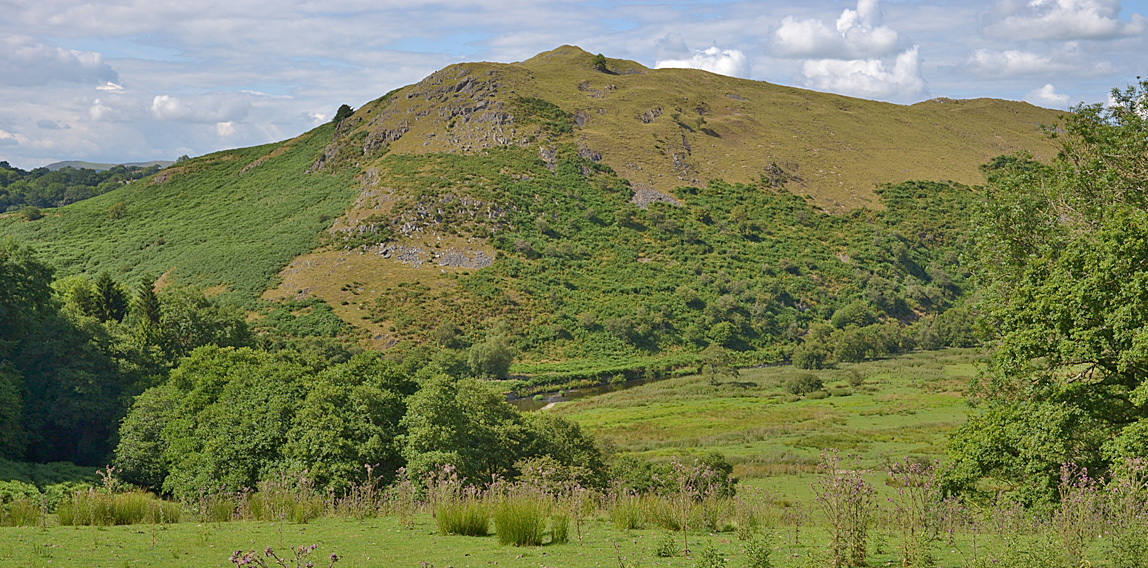
Tinboeth Castle is a medieval fortress located near Llandrindod Wells in Wales, United Kingdom. Constructed during the 13th century, it is believed to have been built by the powerful marcher lord Roger Mortimer. The castle occupies a strategic position within an earlier Iron Age hillfort, which provided a natural defensive advantage. This location measures approximately 100 metres in diameter, encompassing both the castle's inner and outer baileys.
Historical context and construction
The castle was established during the high medieval period, a time marked by frequent conflicts along the Welsh-English border. Roger Mortimer, a prominent figure in the Welsh Marches, constructed Tinboeth Castle as part of his efforts to consolidate power and control the surrounding territory. The castle's placement within an Iron Age hillfort reflects a common medieval practice of reusing ancient defensive sites to maximize natural fortifications.
Architectural features and layout
The remains of Tinboeth Castle suggest a complex fortification system. The outer bailey incorporated the existing hillfort ramparts, enhancing the castle's defensive perimeter. Inside, the inner bailey was enclosed by a stone wall, which was accessed via a notable twin-towered gatehouse situated at the north-east corner. This gatehouse would have served as the main entrance and defensive strongpoint, controlling access to the inner ward.
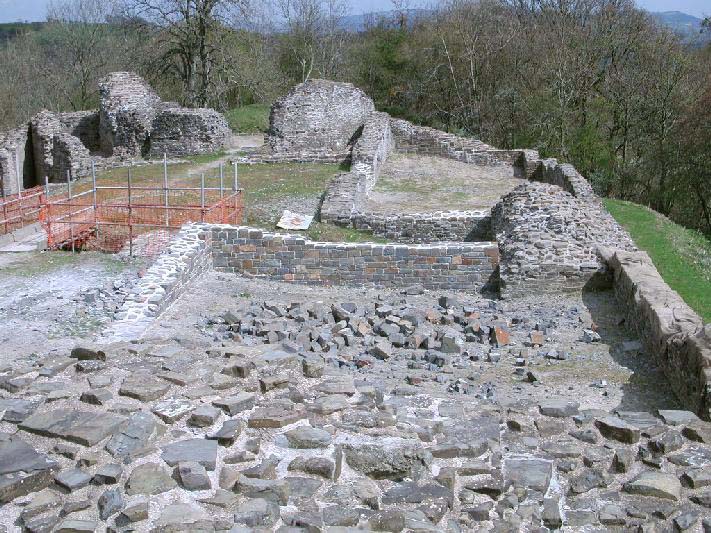
Although much of the stonework has collapsed, some earthworks remain visible, including what is believed to be the remnants of a wall. The overall design reflects typical high medieval castle architecture, combining natural topography with constructed defenses to create a formidable stronghold.
Decline and current condition
Following the death of Roger Mortimer, Tinboeth Castle fell into disuse and gradually deteriorated. Over the centuries, the structure succumbed to ruin, leaving only fragments of the original fortifications visible today. The most prominent surviving feature is the collapsed remains of the twin-towered gatehouse. The site is currently classified as ruins, with limited stonework above ground and significant earthworks marking the castle's former extent.
Archaeological significance
The castle's location within an Iron Age hillfort adds an important archaeological dimension, linking medieval military architecture with earlier prehistoric defensive strategies. The site has been documented by the Royal Commission on the Ancient and Historical Monuments of Wales, which highlights the castle's historical and architectural value despite its ruined state. The combination of medieval masonry and ancient earthworks provides valuable insights into the evolution of fortifications in this region of Wales.
Visiting Tinboeth Castle
Today, Tinboeth Castle is accessible to visitors interested in medieval history and archaeology. While the castle remains are limited, the site offers a tangible connection to the turbulent history of the Welsh Marches during the 13th century. Visitors can explore the earthworks and the gatehouse ruins, appreciating the strategic significance of the hillfort location and the castle's defensive design.
Information
Loading map...
Visitor reviews
No reviews yet. Been here? Write the first review and help other travelers!
Write the first reviewVisited this castle? Share your experience
Your review helps other travelers and adds first-hand knowledge to our encyclopedia.