Cefnllys Castle
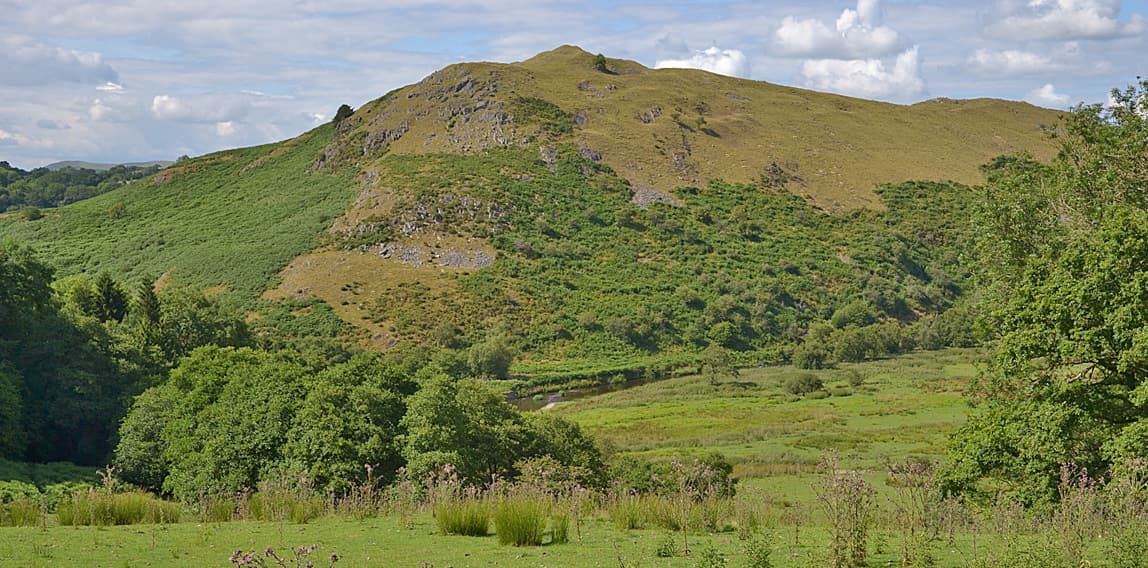
Cefnllys Castle is a significant example of a medieval spur castle located in Radnorshire, now part of Powys, Wales. Positioned strategically on a ridge called Castle Bank above the River Ithon, the site controlled vital communication routes into the highlands of Mid Wales. The castle's history is closely tied to the turbulent political landscape of the Welsh Marches during the High Middle Ages, reflecting the ongoing conflicts between native Welsh princes and Anglo-Norman lords.
The castle complex evolved from an early wooden motte-and-bailey fortification constructed by the Normans to two successive masonry castles built in the 13th century. These stone castles replaced the wooden structure and stood prominently on the ridge, symbolizing the power of the Mortimer family, who were influential Marcher lords. The Mortimers' control over Cefnllys was a key factor in the region's contested lordship and cantref of Maelienydd.
Early fortifications and the mortimer legacy
The earliest known fortification at Cefnllys was a motte-and-bailey castle erected approximately 1.6 km north of Castle Bank. This initial structure was established by Ralph Mortimer, an Anglo-Norman baron, during the early stages of the Norman invasion of Wales in the late 11th or early 12th century. This marked the beginning of a long association between the Mortimer family and the lordship of Cefnllys.
By around 1242, after a century of intermittent warfare and political instability in the region, Ralph Mortimer II commissioned the construction of a stone castle on the north-east flank of Castle Bank. This castle was designed to consolidate Mortimer dominance and served as a principal symbol of their hegemony in Wales. The choice of the spur castle design took advantage of the natural topography, using the ridge to enhance defensive capabilities.
Military conflicts and political significance
Cefnllys Castle was a focal point during the conflicts between the Welsh princes and the English crown. In 1262, the castle was captured and deliberately damaged (slighted) by Llywelyn ap Gruffudd, the Prince of Wales and Gwynedd, during his campaigns against King Henry III of England. This event underscored the castle's strategic importance and featured prominently in the Treaty of Montgomery in 1267, which temporarily recognized Llywelyn's authority over much of Wales.
Further tensions arose when Roger Mortimer constructed a new castle on the south-east side of Castle Bank. This act was perceived as a challenge by Llywelyn ap Gruffudd and contributed to his refusal to swear fealty to Edward I in 1275. The resulting conflict escalated into the Welsh Wars of 1277, which culminated in Edward's conquest of Wales.
Later history and decline
The castle may have suffered damage during the later Welsh revolts, including those led by Madog ap Llywelyn (1294–1295) and Owain Glyndŵr (1400–1415). Despite these upheavals, Cefnllys remained occupied until at least the mid-15th century, as evidenced by references in the poetry of the bard Lewys Glyn Cothi.
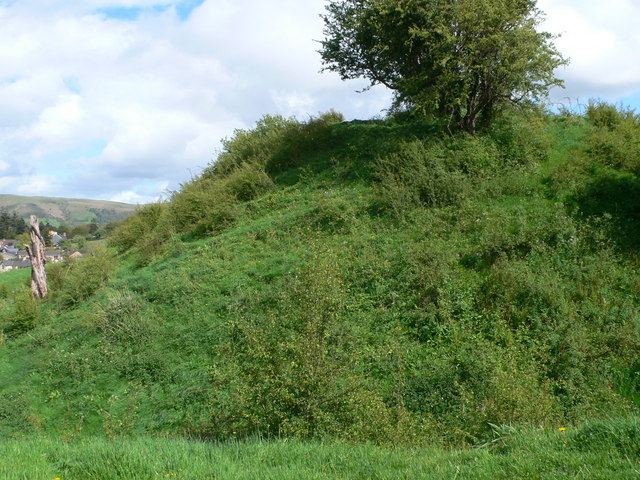
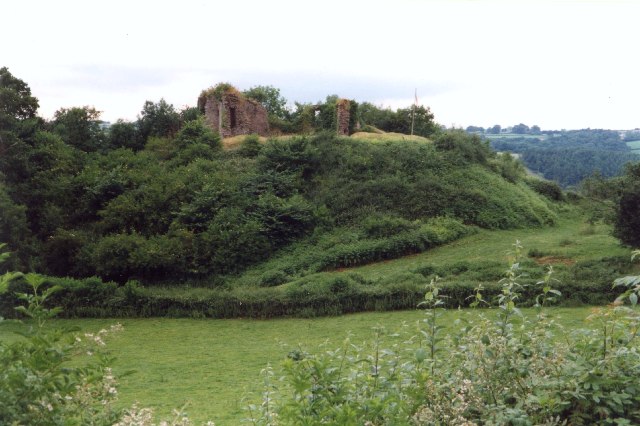
Both masonry castles on Castle Bank are now in ruins, with only earthworks and masonry fragments surviving. The sole medieval structure still standing at Cefnllys is St Michael's Church, which served the original medieval borough that developed near the castle.
The medieval town and borough
Cefnllys was not only a military stronghold but also the site of a medieval town and borough. The town was established to support the castle and the lordship's administration, but it struggled due to its remote location and economic challenges. The population was further devastated by outbreaks of the Black Death and subsequent bubonic plague epidemics.
These factors, combined with changing military and political conditions along the Welsh border, led to the town's decline and eventual disappearance. Nonetheless, Cefnllys retained its borough status until the 19th century, reflecting its historical administrative importance despite its physical decline.
Archaeological and historical significance
Castle Bank has been suggested as the site of an Iron Age hillfort, though no definitive archaeological evidence confirms this. There is also speculation that the area may have hosted the princely court of a native Welsh ruler, highlighting its longstanding regional significance before the Norman conquest.
Today, Cefnllys Castle's ruins and the surrounding landscape provide valuable insights into the military architecture and border politics of medieval Wales. The castle's history exemplifies the complex interactions between Welsh princes and Norman-English lords during a formative period in Welsh history.
Frequently asked questions (FAQ)
- How do I get to Cefnllys Castle and is it accessible to visitors?
- Cefnllys Castle is located on Castle Bank near the River Ithon in Radnorshire, Wales. The site is accessible by rural roads and footpaths, but as it is a ruin, visitors should be prepared for uneven terrain and limited facilities.
- What is the historical significance of Cefnllys Castle?
- Cefnllys Castle was a key military stronghold in the Welsh Marches during the High Middle Ages, involved in conflicts between Welsh princes and Norman lords. It played a central role in the power struggles of the Mortimer family and Welsh rulers like Llywelyn ap Gruffudd.
- Are there any remains of the original castle structures at Cefnllys?
- Both masonry castles on Castle Bank are now in ruins with only earthworks and masonry fragments visible. The only surviving medieval building is St Michael's Church nearby.
- When was Cefnllys Castle built and who built it?
- The original motte-and-bailey castle was built in the 11th century by the Anglo-Norman baron Ralph Mortimer. The stone castles were constructed in the 13th century by his descendants, notably Ralph Mortimer II and Roger Mortimer.
- Can I visit the medieval town site near Cefnllys Castle?
- The medieval town associated with Cefnllys Castle no longer exists due to decline from plague and economic factors. However, the borough status persisted until the 19th century, and visitors can explore the general area around the castle ruins.
Photo gallery

Information
Loading map...
Visitor reviews
No reviews yet. Been here? Write the first review and help other travelers!
Write the first reviewVisited this castle? Share your experience
Your review helps other travelers and adds first-hand knowledge to our encyclopedia.